

























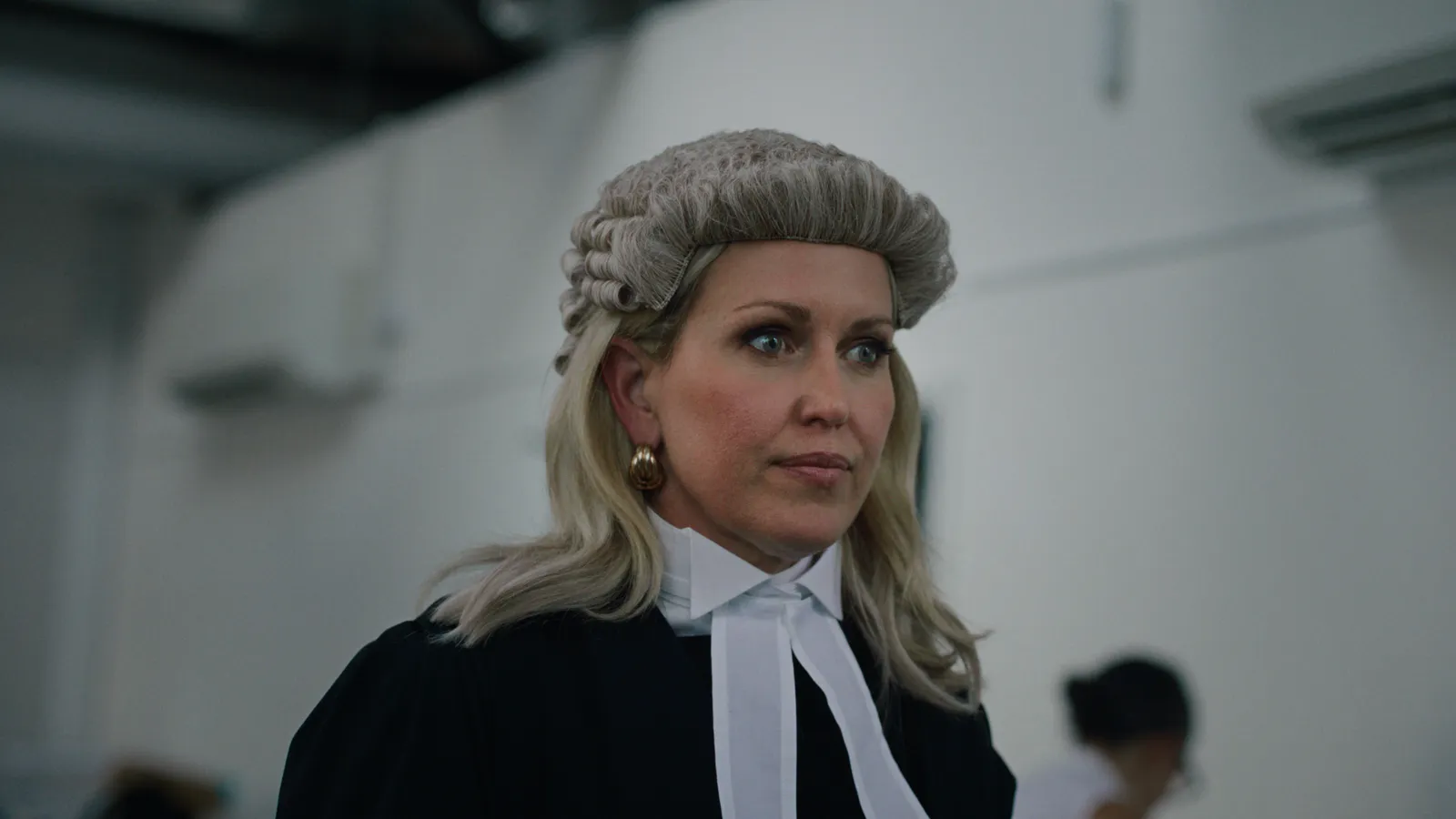

Selina Miles arrived at the 2026 Sundance Film Festival with a document that reads like a clinical autopsy of cultural reversal. Silenced tracks the shift from the early optimism of the #MeToo era to the refined legal machinery now used to punish public testimony. The film frames speech as an event with an afterlife. Words land, and the weight arrives later: filings, hearings, expenses, headlines, insinuations. Miles positions that weight as the real subject, the pressure that begins once a person has already spoken.
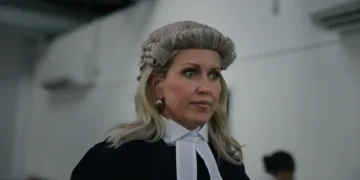
Her primary guide is Jennifer Robinson, an Australian human rights barrister who supplies the film’s intellectual scaffolding. Miles builds the narrative around Robinson’s explanations, turning the documentary into an inquiry into recalibrated legal systems that treat testimony as a liability.
The investigation moves across London courtrooms and Australian political corridors, and it reaches into judicial struggles in Colombia and South Africa. Robinson holds the line through a world where speech triggers punishment. The film keeps an urgent pulse, mapping a shift in institutional power that uses litigation to achieve the same end social pressure once pursued. Law becomes a second site of trauma, and the courtroom becomes a stage for a formalized assault on a survivor’s reality.
From Swords to Statutes
The film roots its argument in the historical DNA of defamation law, and the lineage carries a chill. Robinson traces legal origins to an era that classified women as the property of husbands, stripped of independent standing. She describes a modern courtroom that inherits the logic of the medieval duel. The duel’s violence changes form. Physical conflict gives way to verbal combat, and the process crowns a legal “winner” as the holder of truth. Justice becomes secondary to victory, and the system reads like combat in respectable clothing.
Robinson draws on research from her book How Many More Women to show how present-day burdens of proof stack the field. The court demands documentation that private encounters rarely generate, and that demand shapes the outcome before testimony begins. Miles presents this period as a backlash era, with litigation used as an instrument calibrated for financial and emotional depletion.
Male-dominated legislative frameworks carry systemic bias into procedure, keeping the machinery aligned with existing hierarchies. In this model, exhaustion of the claimant functions as an objective. The film treats that exhaustion as design. Survivors face impossible standards of proof while confronting the immense resources of powerful men, and the state’s structure makes legal silencing efficient. The gavel tends to fall toward the status quo, signaling danger to women who step across the line drawn by power.
The Global Price of Speech
The human cost appears with sharp clarity in the film’s profile of Amber Heard. Her presence carries an exhaustion that reaches beyond the specifics of any single dispute. She says relentless litigation and public scrutiny have stripped away her desire to speak, and the film uses that admission as a bleak measure of what a public cautionary tale does to a person. The “Don’t be an Amber” social media campaign becomes a grim example of digital culture weaponizing ridicule to deter future disclosures. Miles presents this pattern as portable, repeating with grim consistency across borders, turning suppression of speech into an industry with global reach.
In Australia, Brittany Higgins describes a revolving door of criminal and civil trials that ends in financial ruin. Her account shows the state acting as a participant in the harassment of its own citizens, extending punishment through procedure and duration. In Colombia, journalist Catalina Ruiz-Navarro faces a triple lawsuit strategy that forces simultaneous defense in criminal, civil, and constitutional courts. The effect is saturation. Litigation fills the calendar, drains resources, and erodes attention and health. Miles frames the strategy as sensory and financial overwhelm by design.
The film places these stories beside parallels in the UK with Nicola Stocker and in South Africa through the work of Sibongile Ndashe. Each case emphasizes massive fees and the psychological toll demanded to maintain a public stance. The documentary argues that judicial harassment teaches a brutal lesson: silence costs less. It presents a form of calculated warfare aimed at breaking the person bringing the claim. Merits fade behind attrition. The resulting chill extends beyond the women on screen, sending a message to anyone watching that justice carries a price few can meet.
Aesthetic Choices and Structural Gaps
Miles adopts a style that sometimes clashes with the gravity of her subject, producing tension between message and medium. The film’s treatment of Jennifer Robinson leans on slow motion and stylized close-ups that frame the lawyer as a heroic figure. The gloss risks turning grim material into spectacle, and the sheen can blunt the rough edges of the cases the film describes. The score by Chiara Constanza carries a triumphant tone that can flatten the complexity of an ongoing struggle. The music swells in moments that seem to call for quiet and room to think.
The documentary also strains under thematic diffusion. It tries to carry an enormous volume of cases and post-script updates in a single sitting, and the breadth sometimes dilutes impact. The focus stays largely on high-profile individuals with significant social capital, while the film offers brief glimpses of victims in Mexico City who lack legal and financial resources. That imbalance implies a bleak hierarchy: protection of speech reads as a luxury purchased by the elite.
A pointed irony sits inside the production itself. A film about mechanisms of silencing carries an executive producer credit for its primary subject, a choice that invites questions about the portrait’s objectivity. The final scene, focused on Robinson’s grandmother, supplies an anchor the film needs. It ties present legal battles to a longer lineage of female survival and endurance.
She speaks about her own history, including nervous breakdowns and the hidden labor involved in helping others escape abuse. The moment turns abstract arguments into lived pain, reminding the audience that fights for voice stretch across generations, long before modern movements and long after the credits. The film frames silence as ancient, and it presents the tools that enforce it as updated instruments for a new century.
Silenced is an urgent and clinical documentary that premiered at the 2026 Sundance Film Festival as part of the World Cinema Documentary Competition. Directed by the acclaimed Selina Miles, the film investigates the global legal backlash following the #MeToo movement, specifically focusing on how defamation laws are being weaponized to penalize survivors who speak out. The narrative is anchored by international human rights barrister Jennifer Robinson, who guides the audience through high-profile legal battles spanning Australia, the United Kingdom, Colombia, and South Africa. As of late January 2026, the film is primarily available through festival screenings and select digital platforms associated with Sundance, with a wider theatrical and streaming rollout expected via its international distributors later this year.
Full Credits
Title: Silenced
Distributor: Sharmill Films, Together Films
Release date: January 24, 2026
Running time: 97 minutes
Director: Selina Miles
Writers: Selina Miles
Producers and Executive Producers: Blayke Hoffman, Sarah Noonan, Jennifer Peedom, Jennifer Robinson, Malinda Wink, Shaun Richards, Jo-anne McGowan
Cast: Jennifer Robinson, Amber Heard, Brittany Higgins, Catalina Ruiz-Navarro, Sibongile Ndashe, Nicola Stocker
Director of Photography (Cinematographer): Michael Latham
Editors: Bernadette Murray
Composer: Chiara Costanza
The Review
Silenced
Silenced serves as a sobering examination of the legal architecture used to dismantle the progress of recent social movements. While the film occasionally drifts into hagiography regarding its central figure, its strength lies in the global tapestry of survivors it profiles. It effectively demonstrates that the law is frequently a weapon rather than a shield. The documentary is a necessary, if sometimes structurally cluttered, look at the high cost of truth in a system designed to protect power. It demands attention for its intellectual rigor and the undeniable bravery of its subjects.
PROS
- Rigorous historical and legal analysis.
- Broad global scope across four continents.
- Compelling, intimate access to high-profile survivors.
- Strong connection to generational female resilience.
CONS
- Occasional hero-worship of the central subject.
- Triumphant score clashes with somber themes.
- Thematic diffusion from covering too many cases.
- Less focus on victims without financial resources.