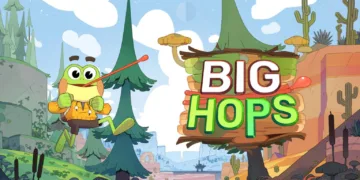


























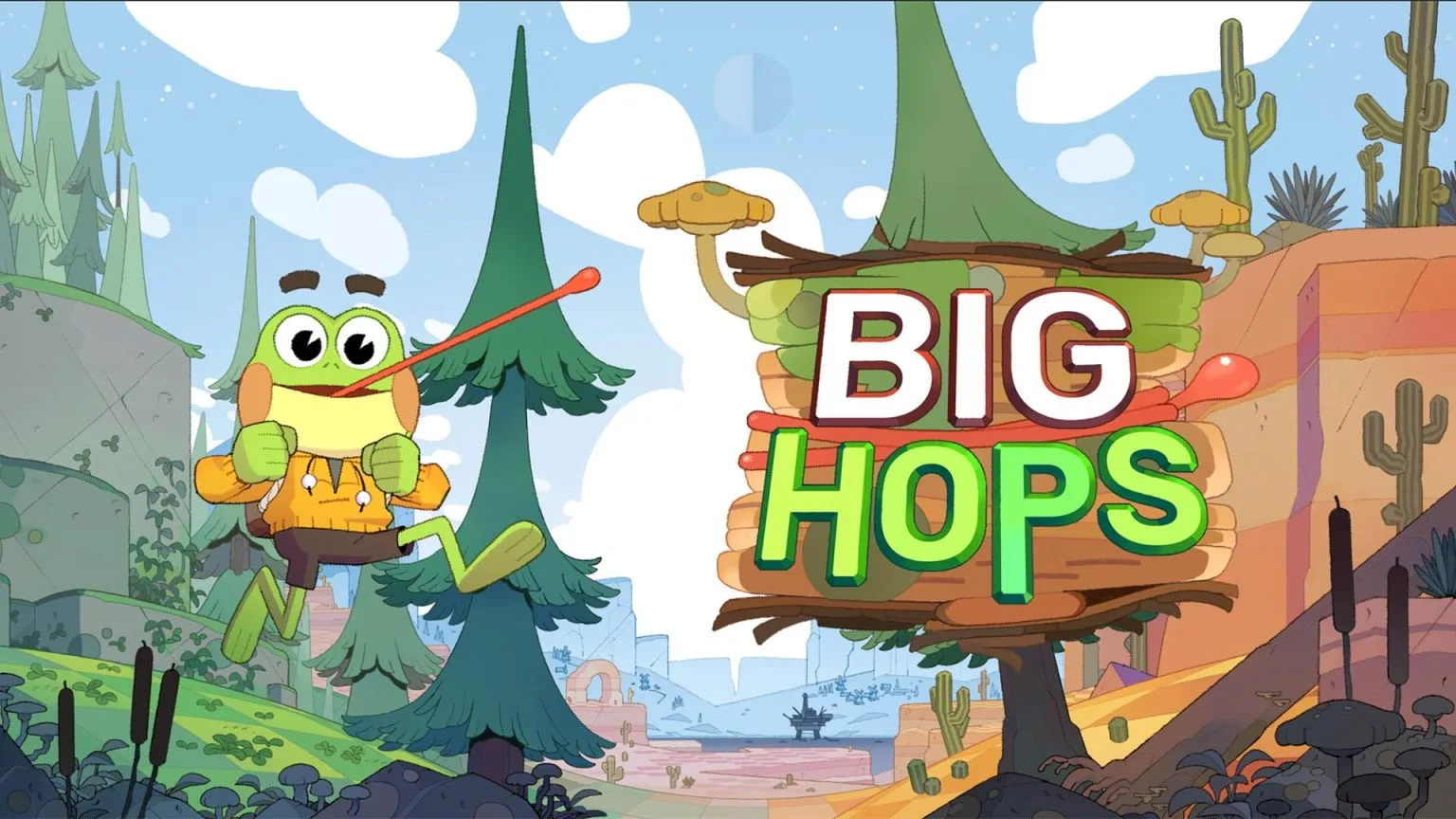

Hop is a small frog who enjoys a quiet life in his forest home, until a mysterious imp named Diss shows up and yanks him into the Void, a hub connecting a collection of strange worlds. Hop ends up separated from his family and needs a way back to his mother and sister. The route home runs through an airship that needs repairs, which means tracking down missing parts scattered across multiple regions.
While Hop hunts for those components, Diss pushes a second requirement: gather purple orbs called Dark Drips. The story follows Hop as he moves from world to world, helping different animal civilizations with local problems while building the path toward repairing the ship.
Each region presents its own situation for Hop to untangle, giving the adventure a straightforward structure that fits a 3D platforming campaign. The game leans on familiar jumping fundamentals, then builds on them with environmental tools that shape how you approach obstacles. Progress hinges on keeping Diss satisfied with Dark Drips while also securing the parts that make escape possible.
Mastery of Momentum
The controls will click quickly for anyone who grew up with classic 3D platformers. Hop has a solid baseline kit: jumping, diving, and crouch-jumping, with responsiveness that recalls the tight feel of Super Mario 64. After a dive, a belly-slide lets Hop carry forward speed, and that emphasis on physics gives movement a pleasing sense of weight. From there, the game layers in parkour options that widen the traversal vocabulary.
Hop can wall-run and scale vertical surfaces, and the climbing system runs on a stamina meter that works like the one in The Legend of Zelda: Breath of the Wild. You have to watch that resource if you want to reach high ledges, stretch climbs to their limit, and avoid running out at the worst moment.
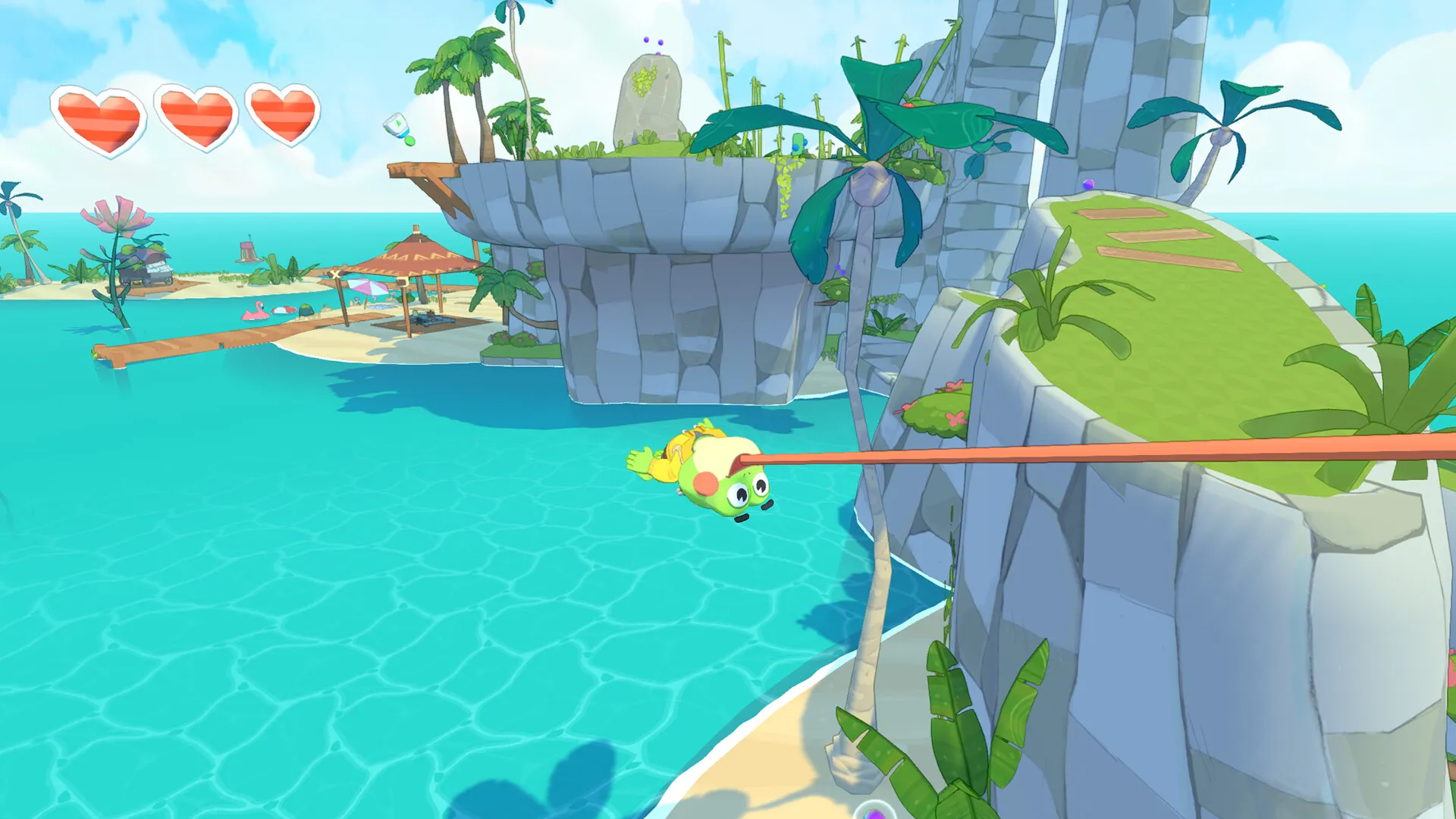
Hop’s tongue is the other major piece of the movement puzzle, and it earns its keep. It works as a grapple for swinging from hooks and for snagging items from a distance, which turns traversal into a rhythm you can refine. You might wall-run into a jump, dive into a slide to keep speed, then fire the tongue to swing across a gap and keep the chain going.
Linking moves like that creates a smooth flow through spaces, and the freedom in how you cross terrain starts to feel competitive with modern open-air games. The simple act of getting from one place to another becomes its own skill, and the game pays that off by rewarding players who learn to preserve momentum and stitch the move set together cleanly.
Botanical Problem Solving
Plants and vegetables act as your main toolkit for interacting with the environment, and Hop finds them growing on trees throughout the biomes. Each item has a clear purpose. Acorns sprout into tall vines that open climbing routes. Mushrooms work as portable bounce pads for extra height. Red peppers burn through hay bales and similar blockages.
The flux plant creates pockets of low gravity that change how you jump and land. That spread of effects supports multiple solutions for environmental puzzles, especially once you start thinking about how items can complement your movement options. Carrying capacity puts a cap on that flexibility at first, since Hop stores plants in a backpack with limited space. Upgrades that expand storage quickly become a practical goal because they let you bring more tools into longer stretches of exploration.
The design also gives you a strong sense of agency while solving problems. You can stockpile vegetables and build your own routes through an area, including shortcuts that feel like clever finds. The game’s structure encourages that experimentation, and it helps that combat plays a small role.
Enemies are rare, so the challenge comes through terrain, timing, and using the right plant at the right moment. Keeping the focus on traversal and item use makes each new region feel like a fresh ruleset built from its local flora. Learning what each plant can do matters if you want to uncover every secret, and the loose approach to solutions keeps obstacles playful without locking you into a single intended answer.
A Living World with Rough Edges
Hop’s trip through the Void spans several distinct biomes: a desert inhabited by rabbits, an island chain home to otters, and a mountain range filled with bats. Each region has a theme and its own conflict to address. The desert arc involves residents dealing with a gang of troublemakers, while the islands revolve around a dispute with an oil company.
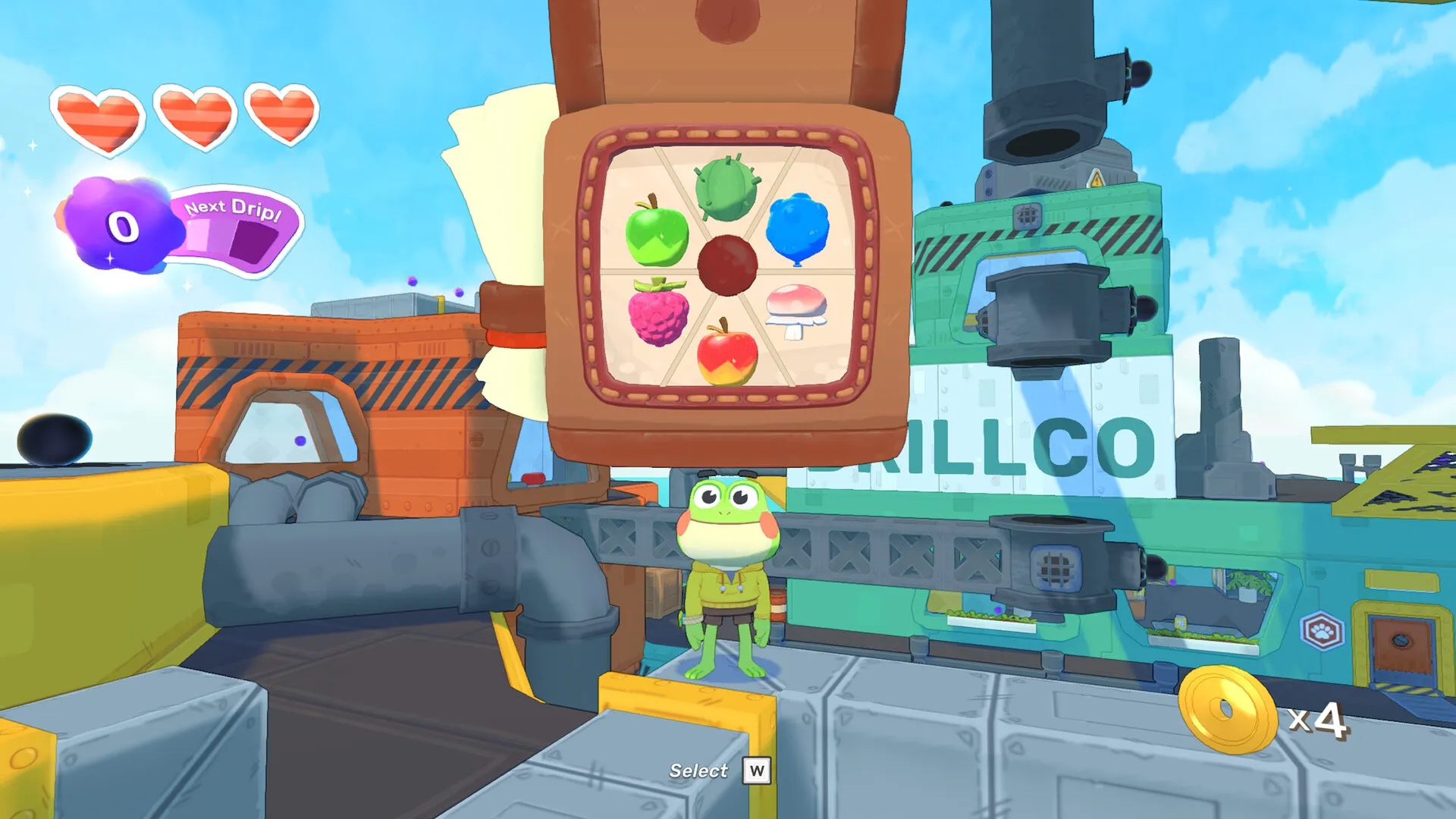
Strong voice acting helps sell these places and their problems, and the cast includes veteran actors Steve Blum and Ben Diskin. That attention to presentation gives NPCs clear personalities, and even minor characters tend to land a funny line or a small detail that makes them feel less like background dressing.
Progression stays tied to exploration. Dark Drips can be traded to Diss for trinkets that function as perks, improving health or stamina. Coins serve a different purpose, letting you buy cosmetic outfits for Hop. Both reward tracks encourage you to comb through each map and poke into corners that might otherwise blend into the scenery. Technical performance can get in the way of that momentum, depending on platform.
On PS5, stuttering and clipping show up, and Hop can occasionally fall through the ground. Fast parkour sequences also push the camera in ways that can make precise movement harder than it should be. The structure adds another pressure point: once you finish a world, you cannot go back. That makes thorough exploration in the moment feel mandatory if you want everything before moving on. The bright, colorful art and a steady supply of charming character beats help the worlds stay inviting, even when the rougher technical moments surface.
The Review
Big Hops
Big Hops provides a refreshing take on 3D platforming. The focus on momentum and environmental tools allows for immense player freedom. While technical bugs and camera issues occasionally disrupt the flow, the core movement remains joyful. The charming animal cast and high quality voice work create a world that feels alive. It rewards creativity and exploration through its flexible veggie system. This title is a strong entry for the genre in 2026.
PROS
- Fluid parkour and momentum.
- Creative plant-based puzzle solving.
- Excellent voice acting.
- Bright world design.
CONS
- Camera struggles during fast movement.
- Occasional clipping and crashes.
- No backtracking to previous worlds.