


























Fox steps back into survivalist television with Season 2 of Extracted, shifting the contest from British Columbia to the harsher stretches of northern Ontario. The setup still treats endurance as a family project under stress. Twelve teams of three compete for a $250,000 prize, and the work is split across a physical and digital divide. One member of each team is dropped into remote wilderness with only a canteen.
Their two partners stay in a high-tech headquarters, watching a 24/7 video feed of their loved one’s suffering in crisp detail, from shaking hands to stomach cramps. The series builds its drama through the strain this arrangement creates: one person absorbs cold, hunger, and fear, and two people absorb the responsibility of watching it happen. The show turns private devotion into public decision-making, and it asks what kind of sacrifice families will accept when money, cameras, and national attention are all part of the same equation.
Strategic Scarcity and the Commodity of Comfort
Season 2 plays like a two-level resource game. In the Ontario woods, danger presents itself as immediate and physical, reinforced by frequent black bear sightings that place the contestants in a clear hierarchy of vulnerability. Many participants arrive without basic training, and the season repeatedly shows how quickly that gap becomes a threat. Fire and shelter stop being goals and become a deadline. Failure means rapid extraction.
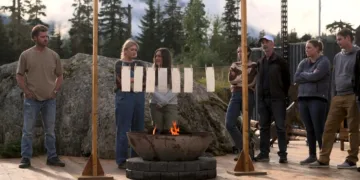
At headquarters, survival gets translated into negotiation, social pressure, and calculated risk. The bunker setting turns family members into managers of discomfort, and the show frames comfort as something that can be priced, traded, and withheld. The “Emergency Blanket” scenario puts that logic into a simple mechanism. Accessing the supply drop requires breaking glass, and the choice triggers a loud alarm that immediately alerts every team.
The format removes secrecy and replaces it with public bargaining. Families get a ten-minute window to trade for critical items like matches or fishing lines, and the scramble feels like a live auction for basic needs. The show underlines how quickly ethical instincts buckle under the game’s incentives. A father can treat a child’s warmth as an asset that buys a better tool, and the moment lands as a blunt portrait of competition reshaping family language.
Because so many contestants lack fundamental outdoor skills, the bunker decisions carry outsized consequences. A single trade can decide whether the person in the woods gets through the night or ends up leaving on medical grounds. The mechanics also track with a trend in reality TV that has become harder to ignore on streaming-era schedules: the action happens through mediation. Someone else watches, interprets, and intervenes through technology, and the show treats that distance as part of the challenge. Extracted builds tension from remote oversight, then uses that structure to mirror a culture that increasingly manages physical hardship through screens, alerts, and secondhand control.
Generational Friction and the Red Button
The “Extract” button hangs over the season as a standing offer of surrender. Its presence turns family love into a repeated test performed for viewers, and it reshapes the usual survival narrative into an ongoing referendum on loyalty. Season 2 puts a spotlight on generational conflict, especially in the relationship between twenty-year-old Olsen and his father, Kevin. Olsen confronts fear in its most direct form, including the nearby threat of a bear.

Kevin treats the ordeal as training, framing it as a necessary rite that proves traditional manliness. The series draws pointed attention to the imbalance: Kevin watches from a climate-controlled room and critiques his son’s grit, and Olsen pleads for release from the field. The dynamic reads like a televised argument about what resilience is supposed to look like, and who gets to define it.
That theme continues in the team made up of Rhoman, Dallas, and their mother, Lynsey. Miscommunication in headquarters leaves Rhoman without fire, and the failure is tied to quieter domestic tensions. The show links the mistake to subtle sibling rivalries and the favoritism Lynsey struggles to manage, turning a practical breakdown into a family systems problem. In that way, Extracted treats survival as a lens on familiar social patterns, including how parents distribute attention and how siblings interpret fairness under pressure.
The season also stresses that cold is not the only threat. Silence in the woods becomes a psychological weight. Contestants sit alone with their thoughts, and the camera keeps returning to the knowledge that the people with power are far away. The survivalist’s agency gets reduced to endurance, and the authority to end the ordeal sits with those who remain comfortable. That hierarchy is hard to miss, and the show keeps it visible. Pain becomes measurable through the feed, then negotiable through the bunker’s choices, and the format invites viewers to think about how often modern hardship gets filtered through family, technology, and public judgment.
Reputation as a Liability in the Wild
The bunker’s social order shifts once established reality television figures enter the cast. The season makes clear that prior visibility changes how the game gets played, especially for Sandra Diaz-Twine and her daughter, Nina. They arrive with a reputation for strategic maneuvers, and other contestants respond by treating them as a threat before any new move is made. The label of “villainous” gameplay follows them into this new setting, and the series turns that reflex into commentary on how fame sticks. Past narratives shape present opportunity, even in a contest that claims to reset everyone at the starting line.
That reputational gravity affects supplies and alliances. People read motives into routine decisions, and suspicion becomes a currency that can be traded as easily as gear. In the woods, skill still matters, and the season draws sharp distinctions through what contestants can actually do.
Luke demonstrates competence by building shelter and fire. Jessica-Rey looks overwhelmed by the scale of the Ontario environment, and the footage emphasizes how quickly confidence can collapse in a landscape that offers little margin for error. An early team departure reinforces the severity of the setting, suggesting that even a production with resources cannot make nature gentle.
Headquarters politics can also punish missteps at speed. Daniel and David attempt to manipulate the group, and the move backfires dramatically. In a small, closed social system, perceived shadiness spreads fast and produces isolation just as fast. The season presents survival as a mix of physical problem-solving and social visibility management.
Contestants contend with cold, hunger, and animals, and they also contend with how they are read by the people controlling supplies and by the peers sitting across the room. That dual pressure speaks to a current direction in competitive storytelling: identity and reputation shape outcomes as much as competence does, and the show treats that reality as part of the game’s design.
Extracted Season 2 premiered on January 26, 2026, on the Fox Network, continuing the high-stakes survival format that captivated audiences in its debut year. The series is currently available for streaming on Hulu in the United States and Crave in Canada, with episodes airing weekly on Monday nights. This season ups the ante by moving the production to the grueling wilderness of northern Ontario, where eleven untrained contestants must endure extreme conditions while their families monitor them from a remote headquarters, holding the literal power to “extract” them from the competition.
Full Credits
Title: Extracted Season 2
Distributor: Fox Network, Hulu, Disney+, Crave
Release date: January 26, 2026
Rating: TV-14
Running time: 45 minutes
Director: Quinn Saunders, Harbinder Singh
Writers: Rhett Bachner, Brien Meagher
Producers and Executive Producers: Rhett Bachner, Brien Meagher, Sylvester Stallone, Braden Aftergood, Kourosh Taj, Lauren Taylor Harding, Dan Bree, Rob Buchta
Cast: Sandra Diaz-Twine, Nina Twine, Analyse Talavera, Eric Rivera, Jessica-Rey, Luke Olson, Olsen Kroeger, Polly, Rhoman, Amey, Dallas, Lynsey, Daniel, David
Director of Photography (Cinematographer): Devin Armstrong, Sean Harvey
Editors: Sean Hubbert, Eric Kenehan, Michael Burke, Matt Cluett
Composer: Ron Wasserman, Tammy Ari
The Review
Extracted Season 2
Extracted Season 2 is a fascinating, if occasionally uncomfortable, study of human endurance and familial loyalty. By separating physical labor from strategic decision-making, it exposes deep-seated generational tensions and the cold reality of codependency. While the survival elements are harrowing, the true drama lies in the headquarters, where loved ones must quantify suffering for a paycheck. It is a sharp, psychological addition to the survival genre that reflects our current obsession with digital oversight and the commodification of resilience.
PROS
- Compelling "Dual-Front" gameplay structure.
- High-stakes psychological tension between families.
- Authentic survival challenges in a brutal setting.
- Insightful look at modern generational divides.
CONS
- Repetitive "aggro" voice-over narration.
- High level of manufactured interpersonal drama.
- Low prize pool relative to the risks involved.
- Some casting feels like "rinse and repeat" tropes.