








![Kingdom Hearts Collection [I-III] Review](https://gazettely.com/wp-content/uploads/2026/10/Kingdom-Hearts-Collection-I-III-1-360x180.webp "Kingdom Hearts Collection [I-III] Review: KHII Holds Steady as Newer Entries Fluctuate 33")






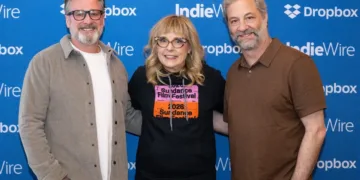
Comedian Maria Bamford and filmmaker Judd Apatow used their stop at the Sundance Film Festival to talk through an unusual collaboration: a feature documentary that starts with a doorstep pitch and expands into a portrait of an artist whose act has long pulled from vulnerability. Paralyzed by Hope: The Maria Bamford Story, co-directed by Apatow and Neil Berkeley, premiered at Sundance and is now seeking U.S. distribution.
The film’s opening frames the approach. Berkeley filmed as Apatow arrived at Bamford’s home with fruit and a small cash offer, then asked her to let cameras follow her life and work. Bamford later described agreeing to the project as partly “ego,” adding, “This was a little bit outside my wheelhouse.”
Sundance’s program description says the documentary blurs performance and personal crisis, tracking how Bamford turns her mental health experience into material while the filmmakers build the story around stand-up, archives, and interviews. In the film, Conan O’Brien describes talking with Bamford “like talking to a lobster whose shell has been removed,” a line Berkeley repeats as shorthand for her candor.
Berkeley said he and Apatow filmed for about three years with a small footprint, letting bits play out and prioritizing Bamford’s rhythms rather than forcing a rigid structure. Reviews out of Park City have split on the execution—some praising the access and emotional clarity, others calling the format familiar—even as many point to Bamford’s willingness to sit with discomfort as the film’s engine.
The documentary also folds in recent loss and stressors, including Bamford’s parents’ deaths and the impact of a 2025 wildfire near her home in Altadena, details that play as lived reality rather than retrospective packaging. Accessibility groups have flagged the film’s audio description and caption options at the festival, a practical note for audiences who want to catch it during its next screenings.