




























Mihail lives in Montreal, where he has successfully rebranded himself as Michel. For thirty years, he has worked as a high level art consultant, a gatekeeper of aesthetic value who keeps a sterilized distance from his Bulgarian origins. That curated life gets disrupted when a wealthy collector hires him for a specialized assignment.
A viral video of an eight year old girl named Nina has set the art world on fire with her abstract canvases. Mihail has to travel back to a remote Bulgarian village and determine if the child is a genuine prodigy or a clever fabrication engineered by opportunistic adults.
His Canadian life runs on a quiet, persistent friction. His daughter, Roza, carries the ache of a severed heritage. She wants her own son to know the language and history Mihail has spent decades burying. Mihail treats the upcoming trip like a cynical job, a professional verification of yet another “child genius” narrative, and keeps any idea of roots at arm’s length. He holds a heavy skepticism toward his homeland, viewing it as a backward place. He heads back with the chill detachment of a man revisiting a crime scene he once escaped.
The Architecture of Internal Stagnation
Exile produces a “phantom self,” the shadow person who stayed behind to live the life you refused. Mihail’s return to Bulgaria forces him into the same room as that secondary identity, with the door locked from the outside. He clings to French as a psychological shield, a kind of linguistic armor against the emotional weight carried by his mother tongue.
I think of this as “exilo-aphasia,” my term for the deliberate muting of an original culture as a survival tactic inside a new one. He moves through his homeland like a stranger. The locals mock his accent and call him “Canada,” stamping him as foreign in the place that formed him.
The film favors an elliptical narrative, leaving key stretches of his departure in the dark. The sense of “in-betweenness” comes through images, not neat explanatory speeches. Mihail is haunted by textures from a world he tried to erase, especially memories of his late wife. Montreal’s clinical, intellectualized air feels distant from the raw, earthy reality of the Bulgarian landscape.
The homecoming plays like a pilgrimage toward a lost version of the self, where crumbling walls and whispered songs retrieve suppressed history. It becomes a grueling reconciliation with the psychological toll of long term displacement, the kind that sits in the body and refuses to become a footnote.
Proxies and Progenies
Galin Stoev gives a performance of “wounded gravity.” His face reads like a map, full of storied lines and textures that reward sustained scrutiny. He says very little, and his silence still steers the direction of each scene.
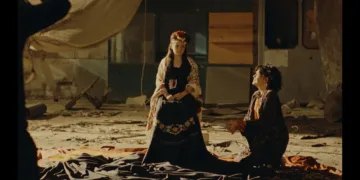
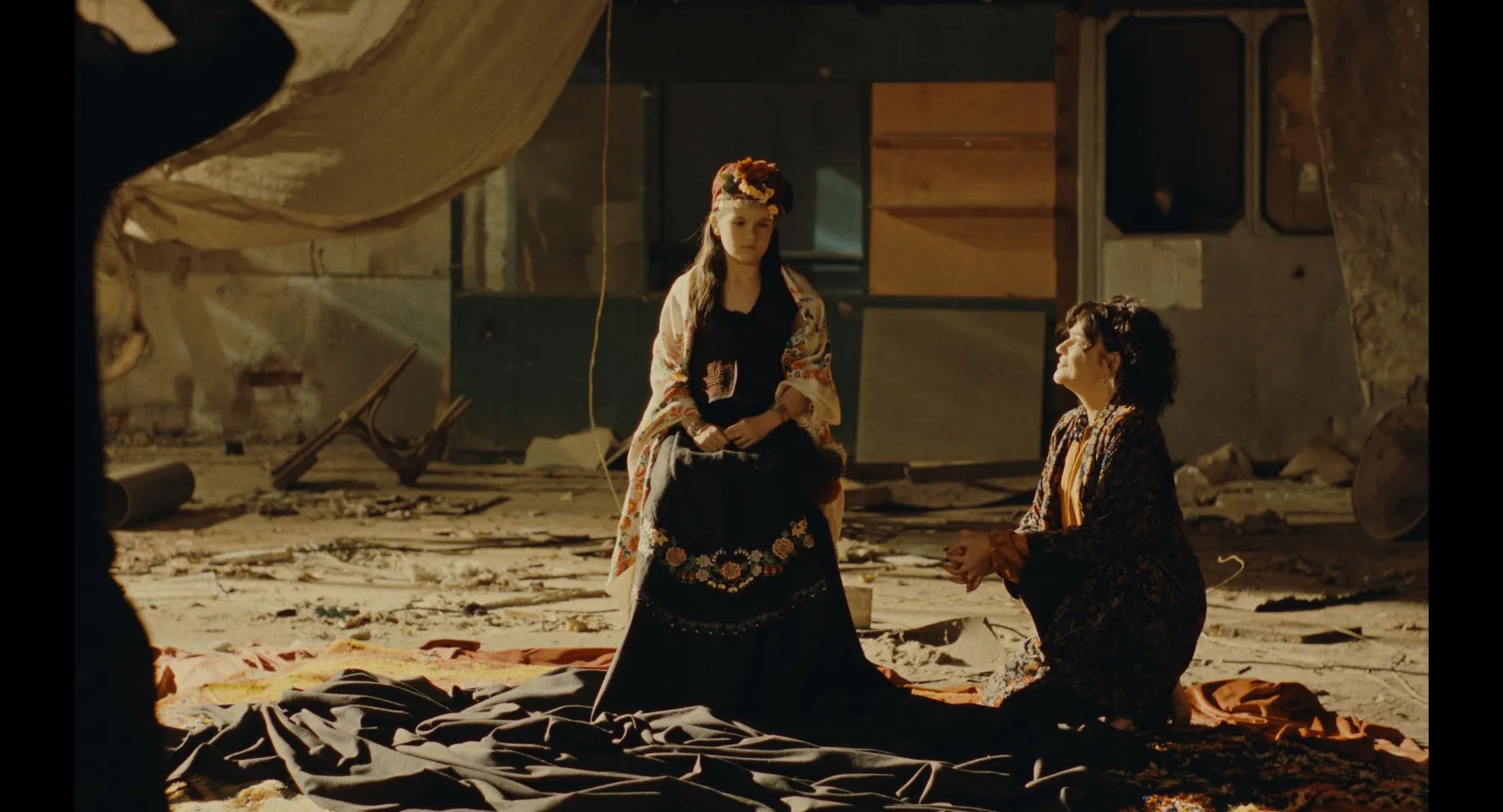
In Nina, played by twins Ekaterina and Sofia Stanina with disconcerting ferocity, Mihail finds a living reflection of his daughter at the age he uprooted her. Nina is wily and resistant, a child who wants friends and playtime, not a packaging job for the European elite.
The emotional peak hits during an acrid reunion with his sister, Svetlana. Her vituperative resentment speaks for the ones who stayed behind and read his departure as betrayal. “Who told you I wanted to see you?” she spits, snapping any fantasy of a warm welcome.
As Mihail watches the Italian dealer, Giulia, try to exploit Nina’s talent, his professional cynicism starts to fracture. A protective paternal instinct surfaces. He begins to see the protection of a child’s memory and artistic identity as the priority, above authenticating a painting for a collector’s portfolio. The investigator shifts into a guardian, and the film lets that change land with a sting.
Pigments of the Soil
Alexandre Nour Desjardins photographs the Bulgarian countryside through warm, ochre filters and bronzed magic hour light. The look creates a nostalgic, almost liquid atmosphere that presses against Mihail’s clinical resolve.
The sound design often cuts to engulfing silence, amplifying a deep sense of isolation. When that silence breaks, it gives way to Joseph Marchand’s evocative score or vintage Soviet era pop ballads. Those choices pin the film to a specific cultural history that Mihail’s “Michel” persona cannot fully outrun.
The film presents a nuanced critique of the global art industry. Nina uses natural pigments made from local soil, tying her genius to the environment that produced it. This “eco-aesthetic” pushes back against the transactional logic of the art market, which wants to uproot talent for profit.
Visual motifs like the spiral of a pottery wheel or the geometry of a snail’s shell connect human creation to the organic world. The film frames art as the essential architecture we build to shelter ourselves from the weight of history, while still acknowledging that history seeps through the cracks.
The film questions the price of mobility. A move abroad risks the loss of a piece of the self. Staying put carries the risk of a missed opportunity. Either choice demands payment, and the film collects its fee without mercy.
Nina Roza premiered at the 76th Berlin International Film Festival on February 16, 2026, where it competed for the Golden Bear. The story follows a Bulgarian-Canadian art curator who returns to his homeland after three decades to verify the authenticity of a young girl’s viral paintings. While the film began its journey on the international festival circuit, it is scheduled for a wider theatrical release in Canada through Entract Films starting April 24, 2026. Viewers interested in this meditative drama should look for it at major film festivals or upcoming theatrical screenings in select territories.
Full Credits
Title: Nina Roza
Distributor: Entract Films
Release date: February 16, 2026
Running time: 103 minutes
Director: Geneviève Dulude-De Celles
Writers: Geneviève Dulude-De Celles
Producers and Executive Producers: Fanny Drew, Sarah Mannering, Lorenzo Fiuzzi, Bardo Tarantelli, Lubomira Piperova, Nikolay Mutafchiev, Etienne Hansez, Benoît Hansez
Cast: Galin Stoev, Ekaterina Stanina, Sofia Stanina, Chiara Caselli, Michelle Tzontchev, Christian Bégin, Svetlana Yancheva, Nikolay Mutafchiev, Tsvetan Todorov, Elena Atanasova
Director of Photography (Cinematographer): Alexandre Nour Desjardins
Editors: Damien Keyeux
Composer: Joseph Marchand
The Review
Nina Roza
Nina Roza is a haunting, elliptical study of the "phantom self" left behind in the wake of migration. While its deliberate pacing and sparse dialogue might test those seeking traditional drama, the film succeeds as a sensory exploration of heritage. It treats art as a bridge between a clinical present and a repressed past. Galin Stoev’s gravity and the film's tactile imagery create a moving, if somber, pilgrimage toward self-reconciliation. It is a quiet triumph of atmosphere over artifice.
PROS
- Galin Stoev delivers a masterclass in internal storytelling through facial textures and silence.
- The cinematography uses magic-hour light to create a deeply nostalgic, immersive environment.
- A nuanced critique of how the global art market commodifies cultural authenticity.
- The twin casting of Nina adds a subtle, wily complexity to the child prodigy trope.
CONS
- The slow pacing and narrative gaps may feel distancing for some viewers.
- Secondary subplots, such as Roza’s life in Montreal, remain somewhat underdeveloped.
- The solemn tone occasionally leans into familiar European art-house archetypes.







