


























Robert Sarkies’ Pike River (2025) reconstructs the aftermath of the 2010 mining tragedy in New Zealand with an eye for what happens after the headline fades. On November 19, an explosion at the coal mine trapped twenty-nine men underground, from a teenager on his first day to grandfathers with years behind them. Disaster films often build their momentum around the blast itself.
Sarkies builds his around time, and the way time hardens people into organizers. The film tracks a decade of resistance led by Anna Osborne and Sonya Rockhouse, played by Melanie Lynskey and Robyn Malcolm, as a community reels under corporate negligence and then refuses to accept the silence that follows.
Years of public inquiries and legal hurdles stack up, and the story keeps returning to the same brutal pressure point: families denied the recovery of their loved ones and forced to live inside that refusal. Sarkies stages it as a sober, meticulous account of persistence against systemic cover-ups, along with the quiet grief that settles over a rural town once the cameras pack up.
A Landscape of Looming Deception
The opening plants unease in the scenery, and Gin Loane’s cinematography makes the natural world feel like an accomplice. Dense forests and rugged mountains hang over the miners as they head underground for a routine shift, and the frame carries a sense that something is waiting. When the first explosion hits on November 19, the film pivots fast from earth and rock to conference rooms and practiced language.
Sarkies then lays out the later methane explosions on November 24, 26, and 28, the chain of events that leads to the mine being sealed. In those days, the depiction of CEO Jonathon Hendry becomes the film’s clearest portrait of corporate dishonesty: he feeds the families false hope, insisting there is enough air underground to last several days. It is a narrative move with a sharp purpose. The film makes the lie part of the structure, a hinge that turns panic into something longer and uglier.
Sarkies grounds the community’s first grasp of the “incident” in a local pub, where confusion curdles into horror as phones start ringing. The scene works as a compressed version of the film’s method: ordinary spaces, sudden rupture, then the slow arrival of information that never feels complete. From there, the story stresses the lack of safety regulations and the owners’ refusal to give direct answers.
The decision to seal the mine without recovering the bodies becomes the wound the film keeps circling, because it is the choice that converts tragedy into a prolonged fight. Sarkies treats these early hours like a clinical breakdown of how liability gets protected and people get managed. The pacing stays deliberate, matching the agonizing wait the families endure and setting the pattern for the years that follow.
The Anatomy of Shared Grief
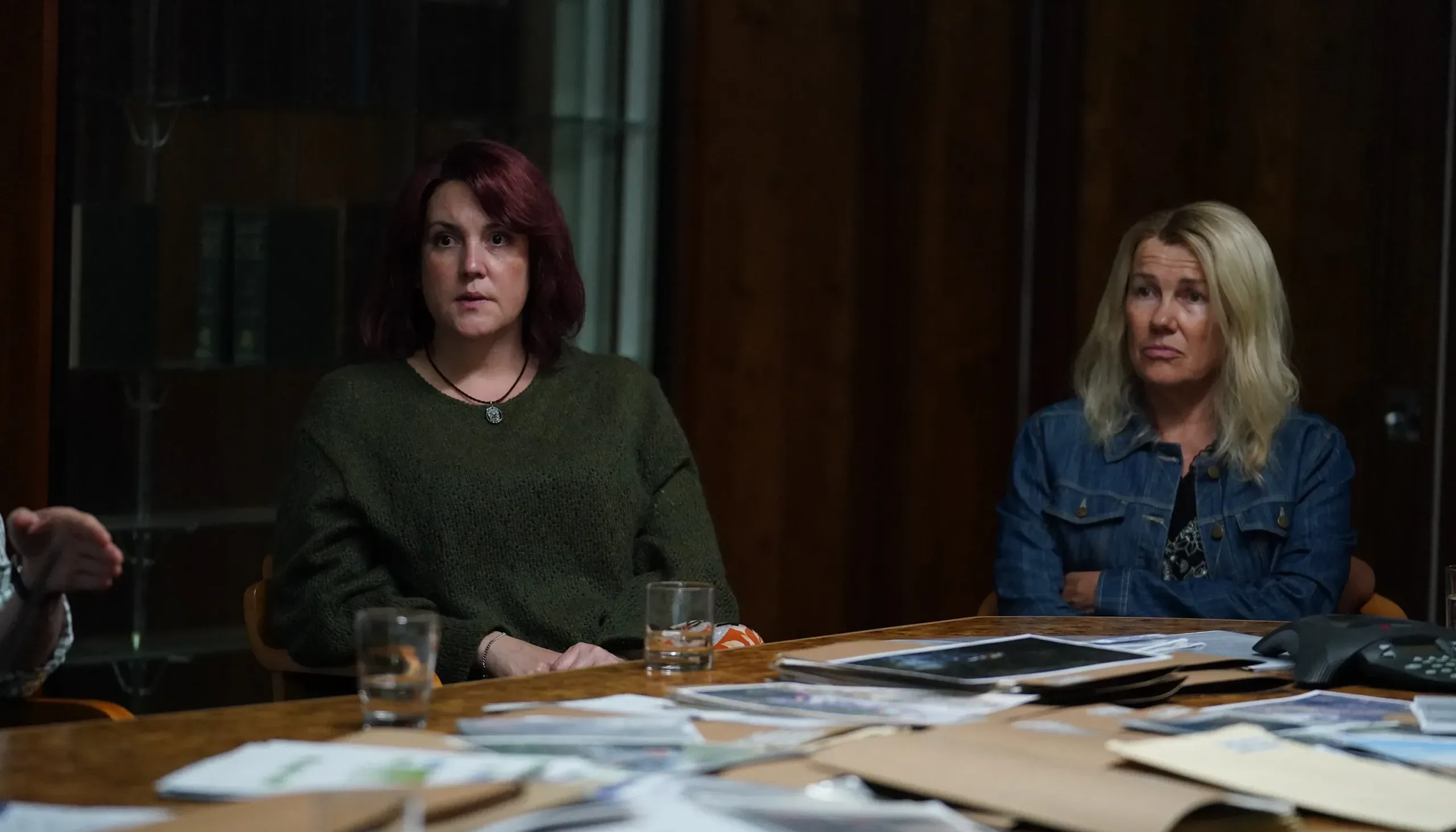
The film’s emotional architecture rests on Lynskey and Malcolm, and Sarkies gives both actors room to let change happen in small, accumulating shifts. Lynskey plays Anna Osborne with quiet intensity that keeps building until it tips into radicalization. Her arc moves from soft-spoken mother to a leader who refuses to back down, and the film keeps her health struggles in view as part of the cost of staying in the fight.
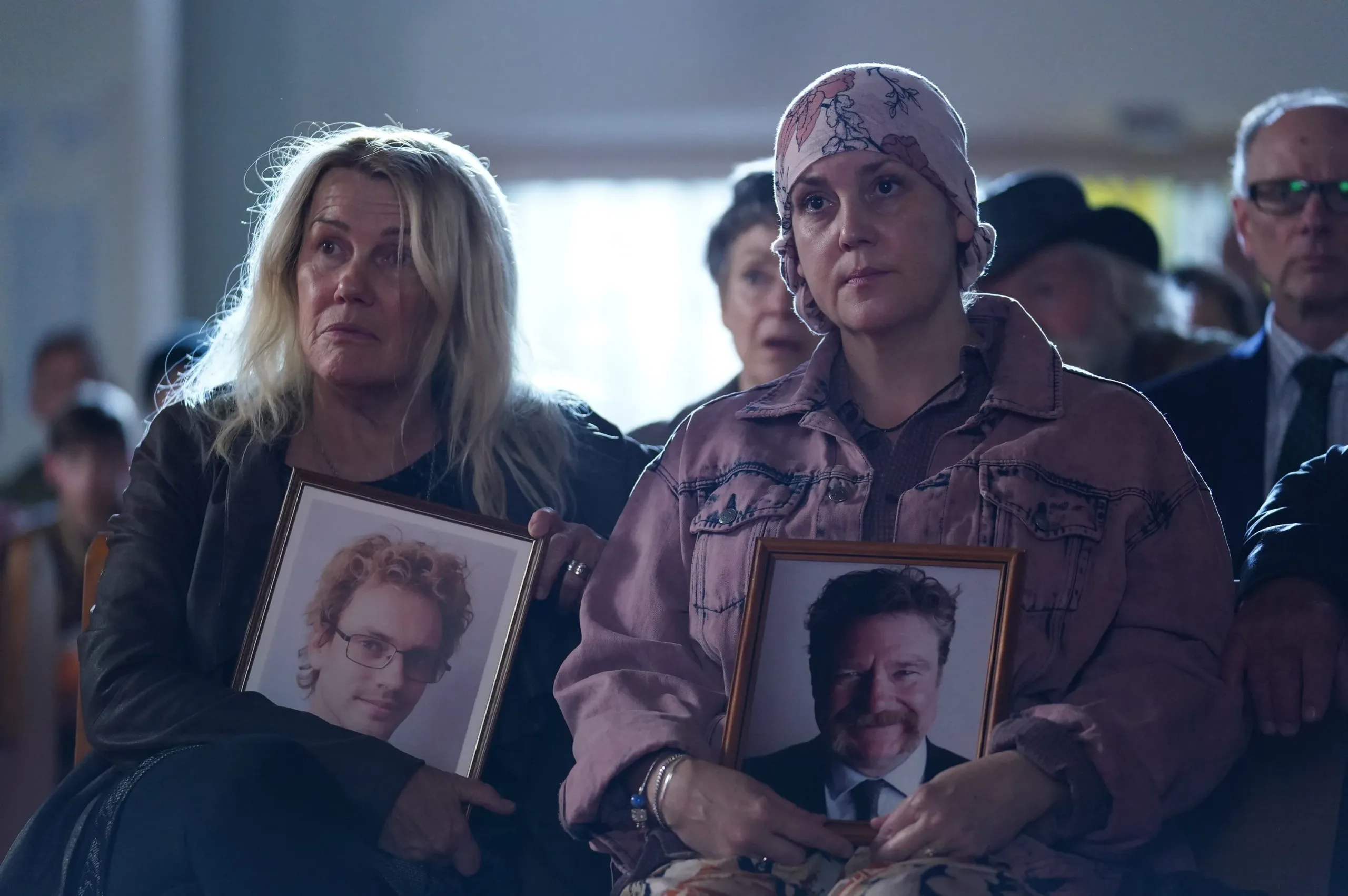
Malcolm’s Sonya Rockhouse arrives with a guarded skepticism, a person who has lived with authority long enough to know how it sounds when it wants compliance. Over time, she has to shed a lifetime of trust in those figures, including the mining industry and her own ex-husband. The writing treats that unlearning as labor. It takes time, repetition, and plenty of anger.
Their connection grows over ten years, and the film frames that bond as something built, not discovered. They begin as strangers linked by the same trauma, then become partners who keep each other upright through stretches that would flatten either one alone. Sarkies also makes a pointed choice to let Sonya be frustrating and, at times, hard to like. That edge matters because it keeps the story from smoothing trauma into a tidy shape. Grief here looks messy, stubborn, and often exhausting to be around.
Supporting figures broaden the film’s sense of community action, including Lucy Lawless as union leader Helen Kelly. Lawless brings grounded gravitas, and her presence connects the women to the labor movement while helping them handle the demands of media attention. The chemistry between Lynskey and Malcolm keeps the film from turning legal repetition into pure procedure. Each hearing and setback lands as another scene in a relationship story, where stamina has to be renewed again and again.
The Slow Path to Incremental Justice
Sarkies shows strong narrative restraint, and that restraint shapes the film’s tone as much as any single performance. He steers clear of feel-good sentimentality and builds the story on a factual approach that respects the timeline. That choice pays off in structure: the film carries the weight of seven years of hearings while holding tight to the central throughline of Anna and Sonya’s campaign.
Shooting in the town where the disaster occurred adds a heavy sense of authenticity to the images, and the production manages a large supporting cast without losing track of who the story belongs to. The cumulative effect is fatigue by design. Accountability is presented as work, and the film makes sure the audience feels how long that work lasts.
Near the end, the political terrain shifts, and the film includes Jacinda Ardern appearing as herself. The moment clarifies how private grief can push its way into national policy once it refuses to stay private. The film frames the victory as partial and hard-won, the product of constant, exhausting pressure that extracts a high personal cost.
Sarkies closes on somber reality, keeping triumph at a distance and honoring the sense that this story keeps moving even after the credits. The final shape of the film fits what it has been arguing all along: truth-seeking rarely moves in a straight line, and persistence often looks like returning to the same fight on a new day.
Pike River premiered in New Zealand theaters on January 30, 2025. As of February 18, 2026, the film is available for purchase or rental on digital platforms such as Apple TV and Google Play. The narrative provides a factual account of the families of the twenty-nine miners and their decade of effort to find accountability.
Where to Watch Pike River (2025) Online






Full Credits
Title: Pike River
Distributor: Madman Entertainment
Release date: January 30, 2025
Rating: M
Running time: 131 minutes
Director: Robert Sarkies
Writers: Fiona Samuel, Robert Sarkies
Producers and Executive Producers: Vicky Pope, Timothy White, Kelly Rogers, Alistair Schirmer, Robert Sarkies, Fiona Samuel
Cast: Melanie Lynskey, Robyn Malcolm, Lucy Lawless, Tim Gordon, Arthur Ranford, Jordan Mooney, Jonathon Hendry, Jeff Kingsford-Brown
Director of Photography (Cinematographer): Gin Loane
Editors: Annie Collins
Composer: Victoria Kelly
The Review
Pike River
Pike River is a disciplined piece of filmmaking that avoids the hollow thrills of the disaster genre to focus on the grit of long-term activism. Melanie Lynskey and Robyn Malcolm deliver grounded, powerful performances that elevate a procedural story into a deeply human one. While the pacing mirrors the slow, exhausting nature of legal battles, the result is a rare, honest look at grief and accountability. It honors the victims by refusing to simplify their families' struggle for truth.
PROS
- Powerful, unglamorous performances from the lead actors.
- Avoidance of typical Hollywood sentimentality.
- Authentic atmosphere created through on-site filming.
- Foreboding cinematography that captures the isolation of the setting.
CONS
- Methodical pacing might feel slow to some viewers.
- A large supporting cast that is sometimes hard to track.
- Requires a baseline understanding of the historical events.