

























![Kingdom Hearts Collection [I-III] Review](https://gazettely.com/wp-content/uploads/2026/10/Kingdom-Hearts-Collection-I-III-1-360x180.webp "Kingdom Hearts Collection [I-III] Review: KHII Holds Steady as Newer Entries Fluctuate 37")



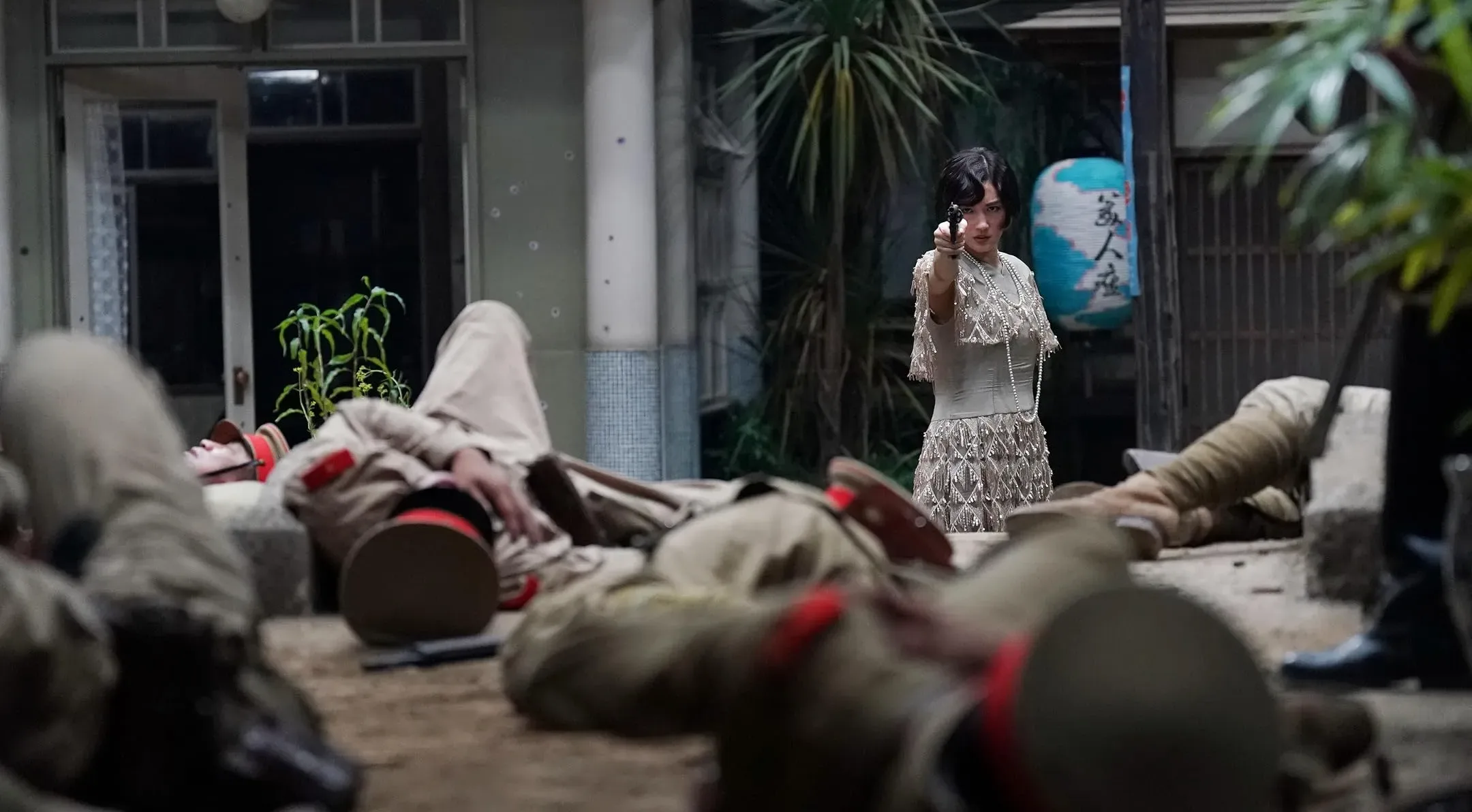

The 1920s in Tokyo feel like a tenuous crossing from a feudal past toward an industrial future. In 1924, steam engines and steel-framed buildings start to crowd the skyline, and the social fabric still carries the silk-draped manners of the Taisho era. Yuri Ozone lives inside that overlap with a polished, careful ease. She once moved through the intelligence world like a ghost.
Now she runs an elegant establishment, keeping a lethal history tucked under the daily responsibilities of a brothel madam. That controlled life breaks the moment she hears about a massacre aimed at the Hosomi family. Shinta, a young boy, survives, and he holds the key to a sweeping financial secret that could shift the balance of power between the Imperial Army and the Navy.
Their lives crash together on a soot-stained train, a space that matches the story’s forward drive. Yuri chooses to step in, and the change hits fast and hard. The proprietor disappears and a protector takes over, jumping from moving carriages and meeting armed units with immediate resolve. This is a Japan sliding toward a darker era, with coal smoke in the air and systemic violence pressing closer.
The Ghost in the Chamber
Haruka Ayase gives Yuri Ozone a deep, tired soul. The performance stays away from easy period-thriller types and plays Yuri through a lived-in melancholy. Yuri understands the price of taking a life, and that knowledge shows in each measured movement. You can read that conflict in her tactics, especially in her signature six-shooter and her choice to wound instead of kill.
That commitment acts as a moral anchor for her, and it can also tip action beats into something bordering on absurd during larger confrontations. Trained soldiers drop while clutching shoulders or legs, and the film’s grit starts to drift toward theatrical territory with a faintly surreal edge. The intention still lands: Yuri is fighting to hold onto her humanity inside a world that treats her as a weapon.
Her bond with Shinta supplies the emotional spine of the film, built as a partnership shaped by shared tragedy. They move like two survivors under pressure, in a hostile environment that wants both of them dead. Ayase’s physical background comes through in the brawls, in the way she plants her feet and refuses to give ground. Her screen presence sells Yuri’s lethality as something rooted in character, not a flashy exercise in choreography.
The Sunset of the Taisho Democracy
The story frames its chase as a critique of rising nationalist sentiment that would later feed global conflict. It tracks the friction between civilian government and an expansionist military, with the fight over the Hosomi fortune serving as a miniature version of that contest. The visuals underline the idea by setting paper-walled rooms and traditional interiors against armored cars, heavy artillery, and cold metal.

The narrative starts as a slow-burning mystery, patiently stacking questions around the financial documents Shinta carries. The middle stretch brings real pacing problems. Extended dialogue runs and dense flashbacks can drain momentum between action sequences and make the film ask for more patience than it has earned in the moment. The same material also supplies the groundwork for Yuri’s eventual philosophical compromise.
A key beat arrives when she realizes her commitment to non-violence has become a luxury she cannot keep paying for. Survival begins to look like surrendering to a primal, animalistic impulse, and that shift plays as a tragic pivot rather than a triumphant release.
The film ties that turn to the era’s larger sadness: hopes for a peaceful, “economical” Japan get methodically stripped away by people invested in superiority through force. That thematic weight helps the violence register as something connected to real historical anxiety, not just noise between plot points.
The Art of the Shootout
Isao Yukisada comes across as an unexpected pick for action, and his drama background gives the film a strong sensory identity. He uses static framing to hold tension in a face-off, letting silence gather heft before the first shot. Then the film snaps into fluid, high-octane camera movement that follows escapes and brawls through their chaos. One standout set piece unfolds in heavy fog, with images that lean into a stylized, painterly look.
Sound design hits with force as well, as gunfire roars through scenes and keeps the stakes audible. Editing stays precise and keeps combat sequences moving with a firm rhythm, up through a final-act shift that changes the feel. The climax pivots into a digital, exaggerated style that loses the earlier grounded grit.
That change reads as a turn away from the tone the film spent time establishing, though it cannot wipe out the craft that came before it. Production values stay high throughout, from intricate costume work to expansive sets. Silk kimonos and grimy alleyways build a lived-in setting, anchoring the thriller inside a world that looks beautiful and feels dangerously unstable.
Revolver Lily is a stylish historical action thriller that takes place in 1924 Tokyo, following a former elite assassin turned brothel madam who is thrust back into a world of violence to protect a young boy. Originally released in Japanese theaters on August 11, 2023, the film has recently made its way to North American audiences. It premiered on Digital and Video on Demand platforms on January 27, 2026, through Well Go USA, and is scheduled for a physical Blu-ray and DVD release exclusively via Amazon on February 10, 2026.
Where to Watch Revolver Lily 2023 Online










Full Credits
Title: Revolver Lily
Distributor: Toei, Well Go USA
Release date: August 11, 2023 (Japan), January 27, 2026 (North American Digital)
Running time: 139 minutes
Director: Isao Yukisada
Writers: Tatsuo Kobayashi, Kyô Nagaura, Isao Yukisada
Producers and Executive Producers: Muneyuki Kii, Kazutoshi Wadakura, Daisuke Takahashi, Kota Ishizuka, Mihoko Mizohata
Cast: Haruka Ayase, Hiroki Hasegawa, Jinsei Hamura, Kavka Shishido, Kotone Furukawa, Hiroya Shimizu, Jesse, Jiro Sato, Mitsuru Fukikoshi, Asahi Uchida, Itsuji Itao, Isao Hashizume, Renji Ishibashi, Sadao Abe, Mansai Nomura, Etsushi Toyokawa
Director of Photography (Cinematographer): Keisuke Imamura
Editors: Tsuyoshi Imai
Composer: Yoshihiro Hanno
The Review
Revolver Lily
Revolver Lily is a stylish exercise in period action that succeeds through the magnetic presence of Haruka Ayase. The film balances historical anxiety with high-octane shootouts, even if the pacing occasionally stalls under the weight of dense exposition. While the non-lethal gimmick feels thin, the sensory experience of 1920s Tokyo remains a highlight. It is a solid entry for fans of the genre who appreciate a slower, character-driven build before the bullets fly. The final shift toward digital spectacle is a minor distraction from a mostly grounded thriller.
PROS
- Commanding physical performance by Haruka Ayase.
- Atmospheric and detailed 1920s production design.
- Visually striking action choreography.
- Impactful sound design and cinematography.
CONS
- Inconsistent pacing with long narrative lulls.
- Improbable non-lethal combat gimmick.
- Sudden drop in visual quality during the final act.







