
























![Kingdom Hearts Collection [I-III] Review](https://gazettely.com/wp-content/uploads/2026/10/Kingdom-Hearts-Collection-I-III-1-360x180.webp "Kingdom Hearts Collection [I-III] Review: KHII Holds Steady as Newer Entries Fluctuate 37")



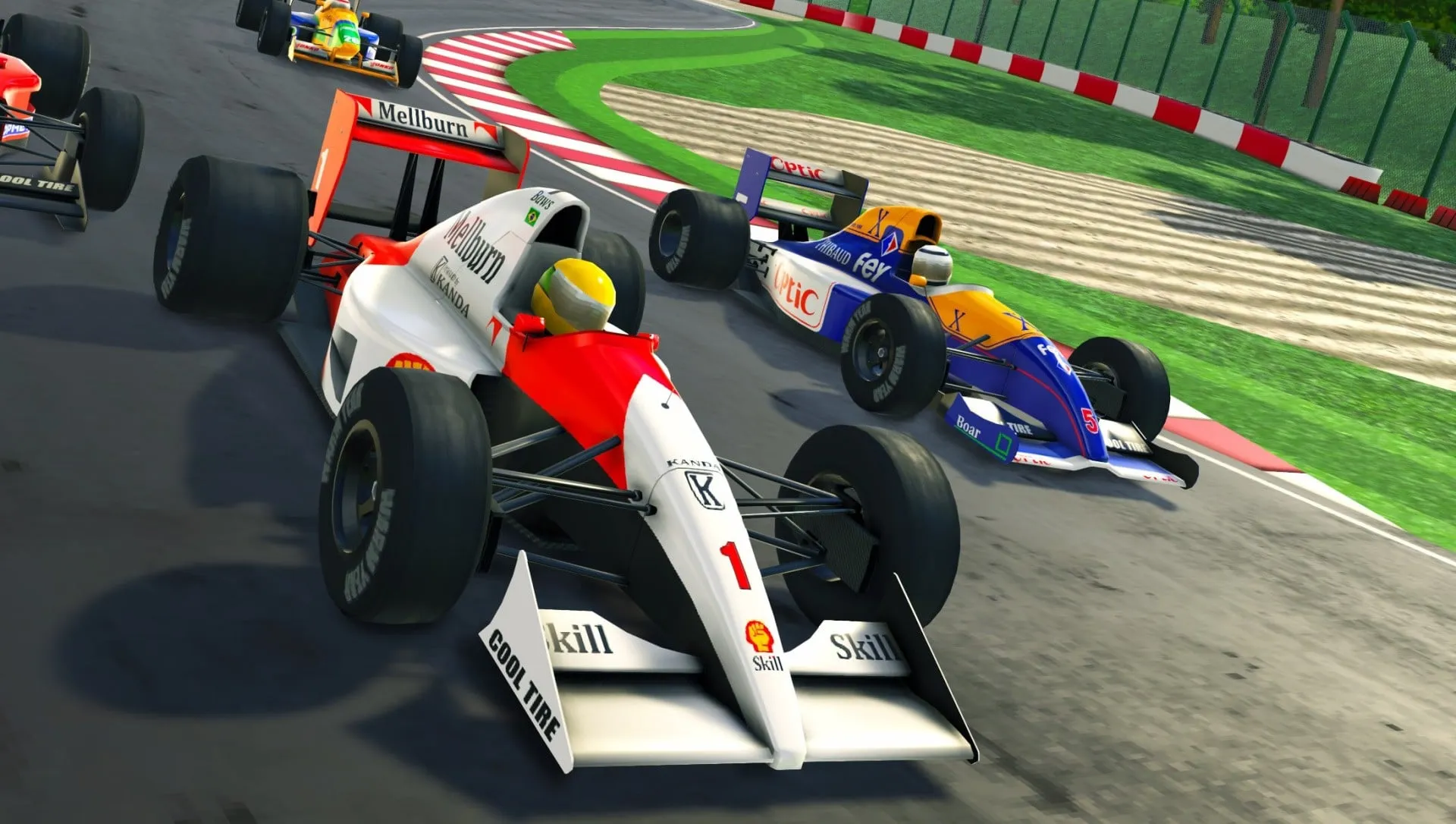

4PGP is a high-speed salute to 90s arcade racers, built to chase the snap and immediacy of classic open-wheel games. Developed by Vision Reelle, it aims for the feel of cabinet-era racing where reflexes and repetition matter as much as raw speed. The team’s credits help explain that mindset.
Kenji Sasaki’s background includes Sega Rally Championship and Ridge Racer, and that lineage comes through in the emphasis on tight handling and relentless pace. The soundtrack comes from Tomoyuki Kawamura, drawing on experience from Virtua Racing.
The release targets Nintendo Switch and the new Switch 2 hardware, with a clear pitch toward players who want fast, tactile arcade action. Visually, it leans into low-poly shapes and saturated color. The intent is modern hardware running an old-school idea: coin-op racing energy from the 32-bit era, translated into a home format that prizes high frame rates and local multiplayer. Difficulty tiers push skill and track memorization, and the presentation keeps circling back to the look and feel of cabinet-linked racers. The design lands on mechanical mastery and clean execution.
Precision Control and the Strategy of the Pit
Driving in 4PGP leans hard into feel. Analog input is tuned for extreme precision, letting you make tiny corrections in dense pack racing and commit to wide, sweeping turns without fighting the car. That responsiveness keeps the focus on your hands and your timing, with the sense that the vehicle reacts directly to intent.
The HUD supports that clarity with a tire condition indicator and a nitrous boost meter, and both systems ask for planning rather than impulse. Nitrous is not tied to drifting tricks or near-miss gambling. Speed reserves come back through the pit lane.
That pit lane is built as an active skill check. When you enter, a wheel appears with a moving pin, and a button press needs to land the pin in a specific slice. Hit the timing and both tires and nitrous refill instantly. The result is a real decision point: stay out to protect position, or commit to a stop and chase the advantage that refill can bring.
Collision physics sharpen the risk on track. Heavy contact can spin the car 180 degrees or stop it dead, so every overtake attempt carries weight. The championship climb rewards clean lines and disciplined control, with little patience for sloppy contact.
Progression Curves and Global Circuits
4PGP offers 14 tracks, presenting fictionalized versions of famous layouts adapted for high-velocity arcade play. The shapes echo Circuit de Spa-Francorchamps, Suzuka Circuit, and Silverstone Circuit, with corners and rhythms that feel familiar even after the translation into this game’s speed profile. Structure comes through four difficulty tiers: Rookie, Novice, Veteran, and Expert.
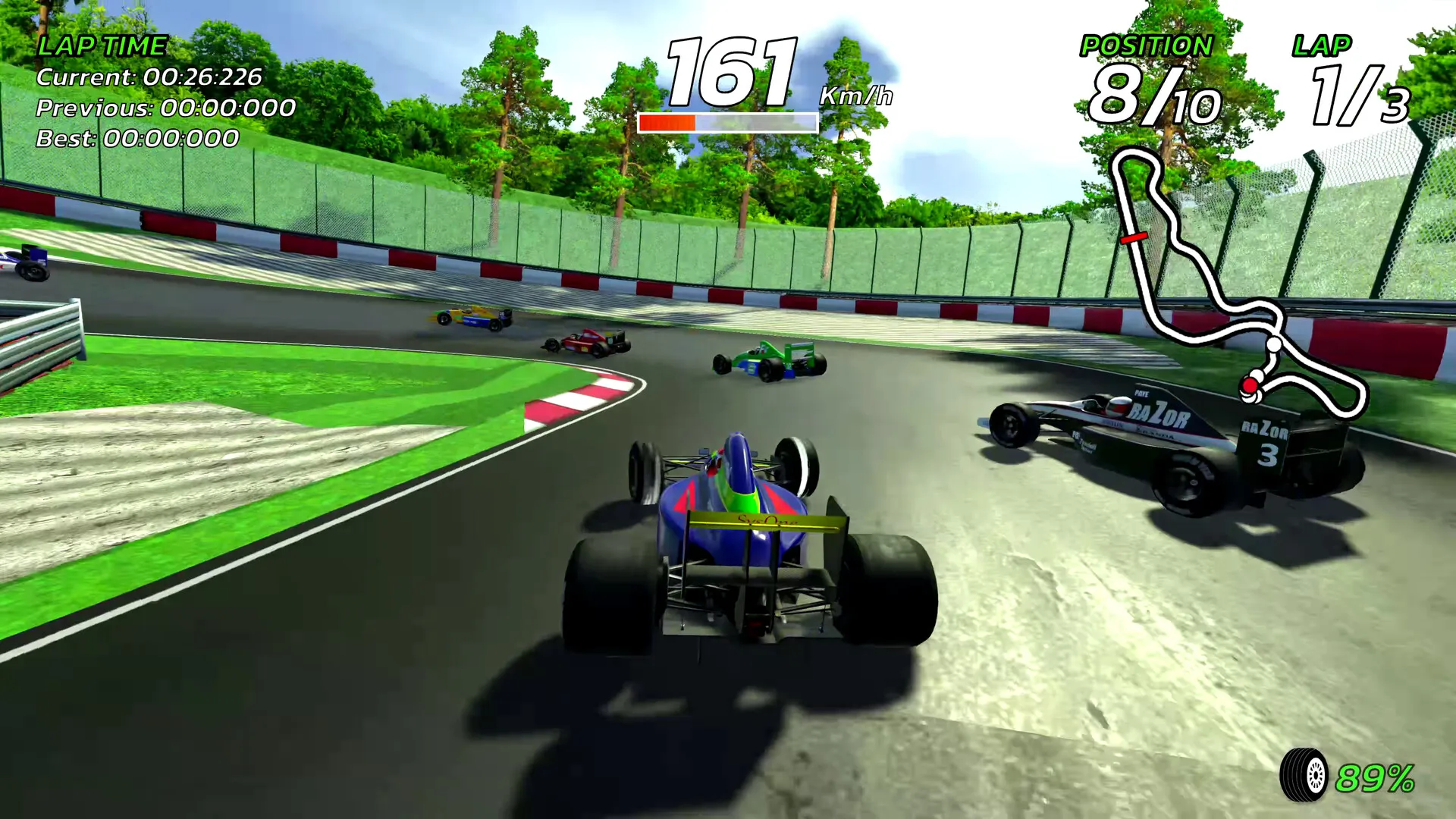
Climbing that ladder changes the AI in a noticeable way, with computer drivers getting sharper and more aggressive at each step. Championship Mode sits at the center of progression, using multi-race cups as the main path forward. Win cups and the garage expands with 10 additional cars.
The progression logic uses strict linear power scaling. Each new car arrives with better stats than the last, and that choice carries a clear gameplay implication: the starter car has trouble staying competitive once you reach high-difficulty events. Keeping pace means upgrading as the AI tightens its performance.
Track knowledge still ends up being the most valuable tool you have. Cars move at a blistering clip, lap times often fall under a minute, and every apex and braking point starts to matter. The loop is simple and effective: unlock faster machines, then learn tighter execution at higher speeds, with growth measured in cleaner laps and shrinking margins.
Technical Performance and Shared Experiences
4PGP reads the Nintendo Switch family well. On Switch 2, it reaches 4K resolution in docked play and holds 120 FPS, keeping latency low and motion smooth in a way that feeds the sensation of speed. The original Switch version targets 60 FPS across modes and still comes across as stable and responsive. Local play keeps the genre’s social side alive through 4-player split-screen. With four players on Switch 2, the frame rate shifts to 90 FPS to keep performance steady, and the image stays readable even when the track gets crowded.
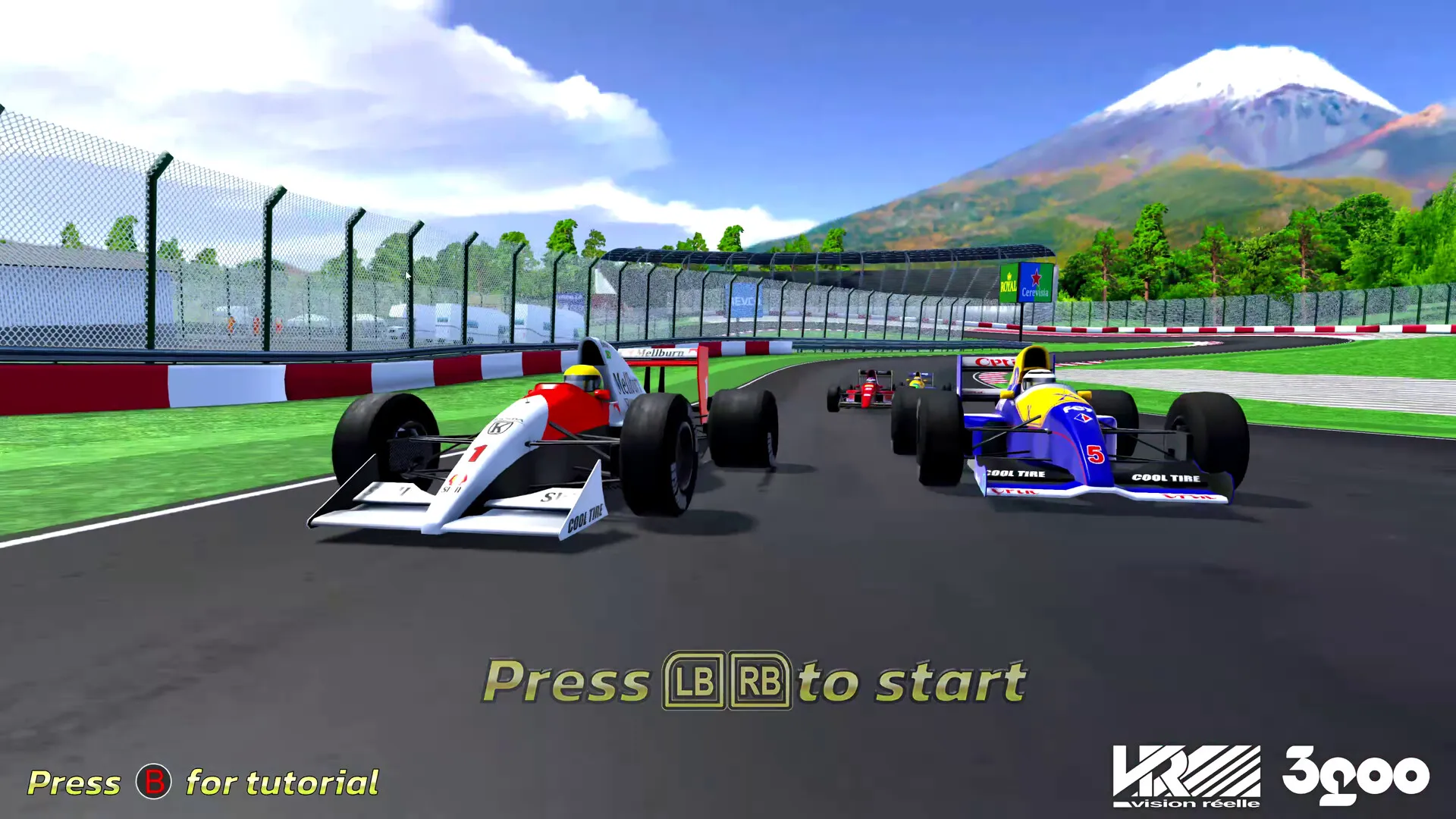
Connectivity support includes GameShare and local GameChat. Online play has a hard limit: there is no matchmaking for random opponents, and online races are restricted to friends-list play, with local multiplayer as the other main option. Audio design carries functional intent as well.
Music does not run as a continuous loop; short, punchy cues mark each new lap, and the full score breaks out on the final lap, nudging your brain into endgame mode as the finish approaches. Camera options include bumper and hood views. There is no cockpit view, which leaves a gap for players who want that extra layer of immersion, even as the game keeps its attention on clean racing and the pull of local competition.
The Review
4PGP
4PGP delivers a focused, high-speed experience that prioritizes mechanical mastery and local competition. While the linear car progression feels rigid, the tactile handling and technical polish on Switch 2 make every lap rewarding. It captures the visceral energy of 90s arcades with impressive modern stability. This is a must-play for those seeking pure, unadulterated racing without the weight of modern simulation bloat.
PROS
- Exceptional 120 FPS performance on Switch 2 hardware.
- Responsive analog controls built for precision navigation.
- Engaging interactive pit lane management mechanics.
- Authentic 90s arcade aesthetic and audio cues.
CONS
- Linear vehicle power creep limits tactical variety.
- Complete lack of online matchmaking for solo players.
- Punishing collision physics can feel overly frustrating.







