




















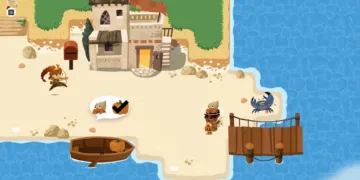
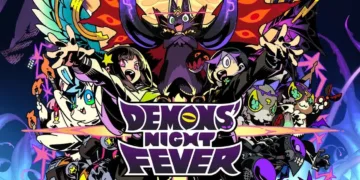

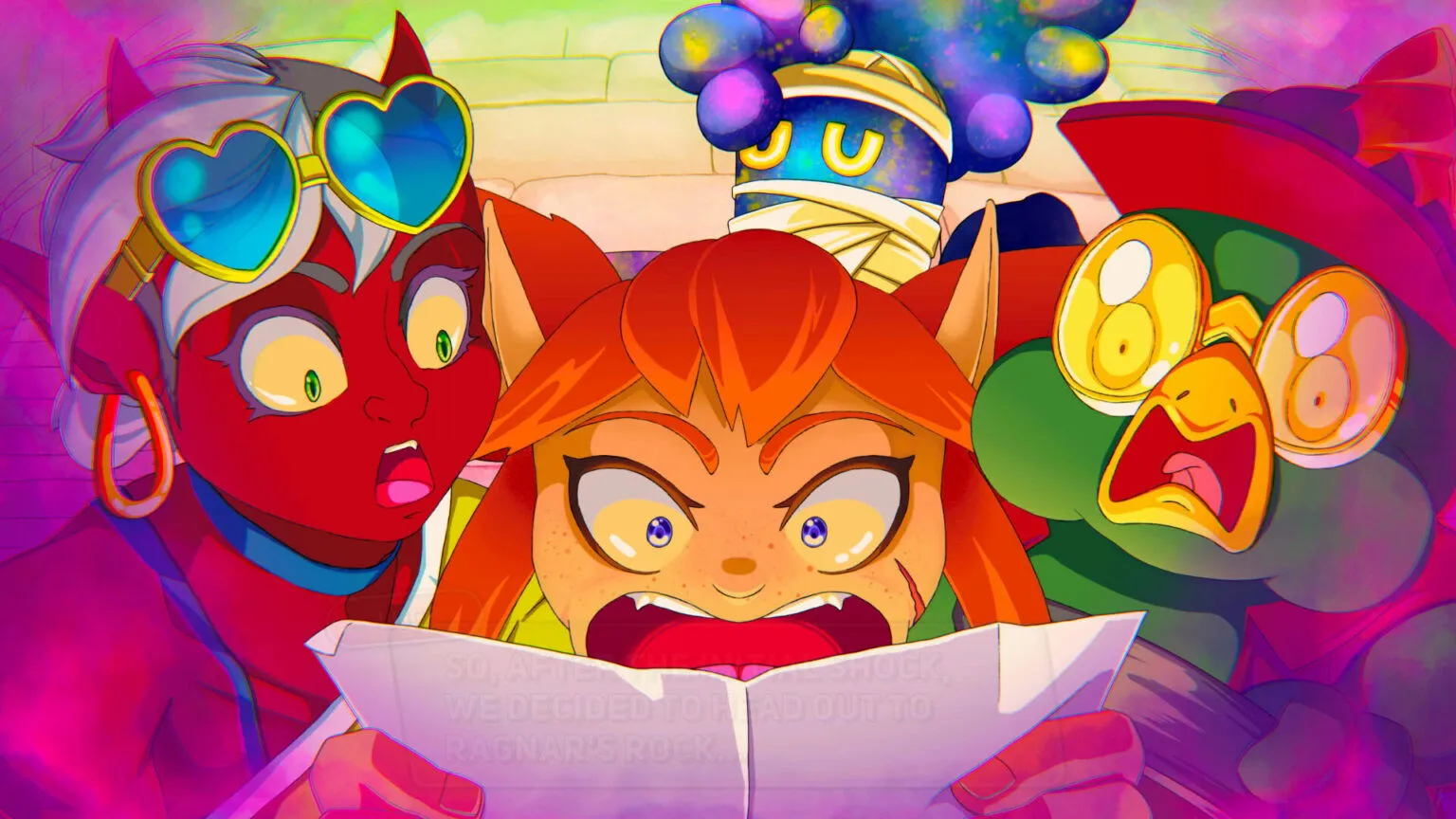

Demon Tides moves the series into fully 3D environments. The developers leave behind the earlier 2.5D sprite style and build a polygonal world with full spatial depth. Beebz returns in the lead role, still the demon teenager who has already taken the Underworld throne. This chapter shifts the action to Ragnar’s Rock, an archipelago surrounded by huge stretches of ocean.
Beebz travels there after an invitation from her estranged father, Ragnar, and the visit turns violent almost immediately. A shipwreck leaves her stranded inside a territory controlled by a severe monarchy. The waters are threatened by a floating castle and spreading red coral, while a bizarre jester drives chaos across the region.
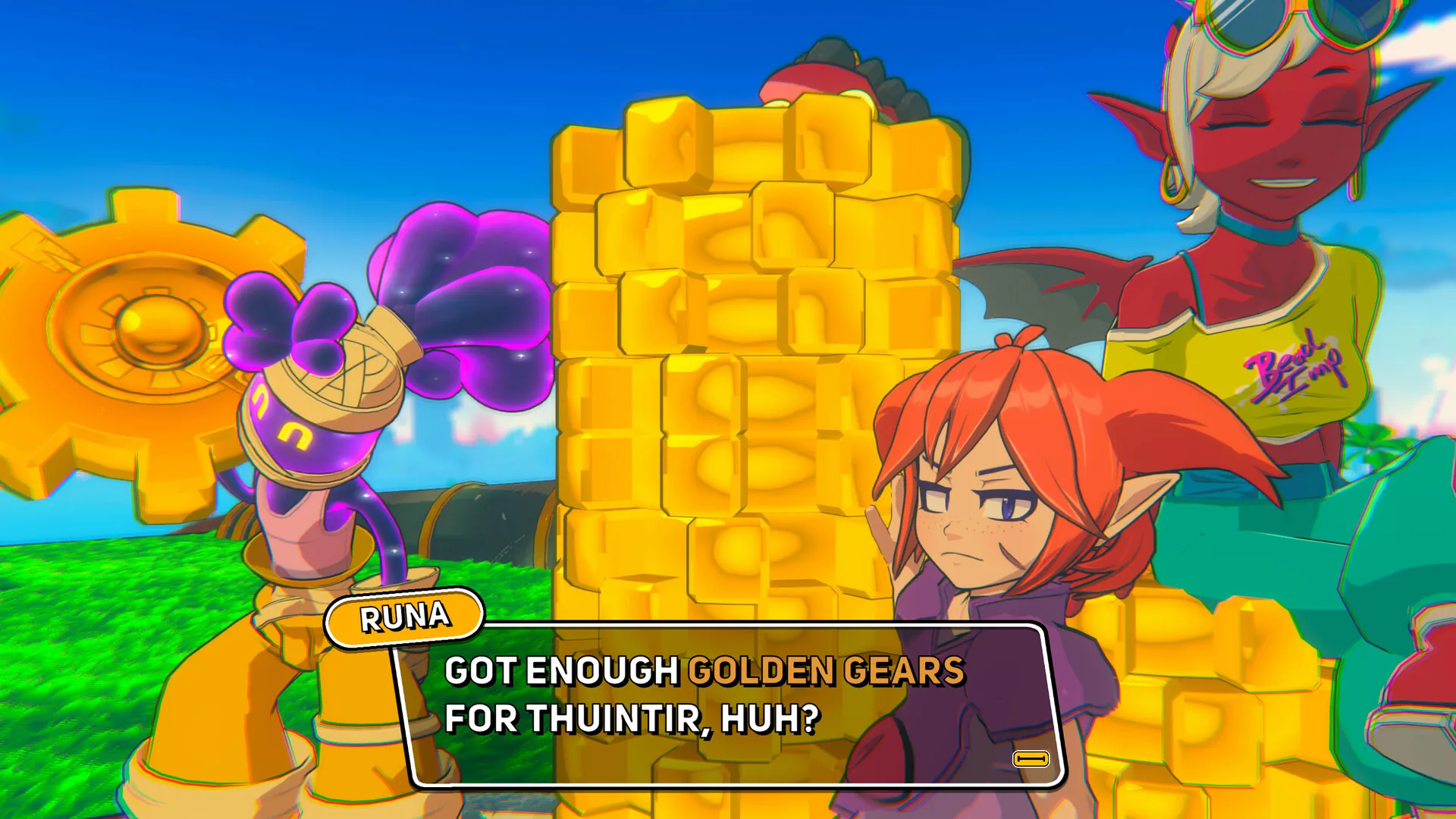
The punk rock look remains intact, and characters like DK speak in contemporary internet slang. That comedic tone sits beside a family conflict story focused on Beebz confronting her past. She becomes part of a revolution aimed at toppling the ruling power, and progress depends on collecting Golden Gears to fuel a giant cannon.
The Technical Art of Momentum
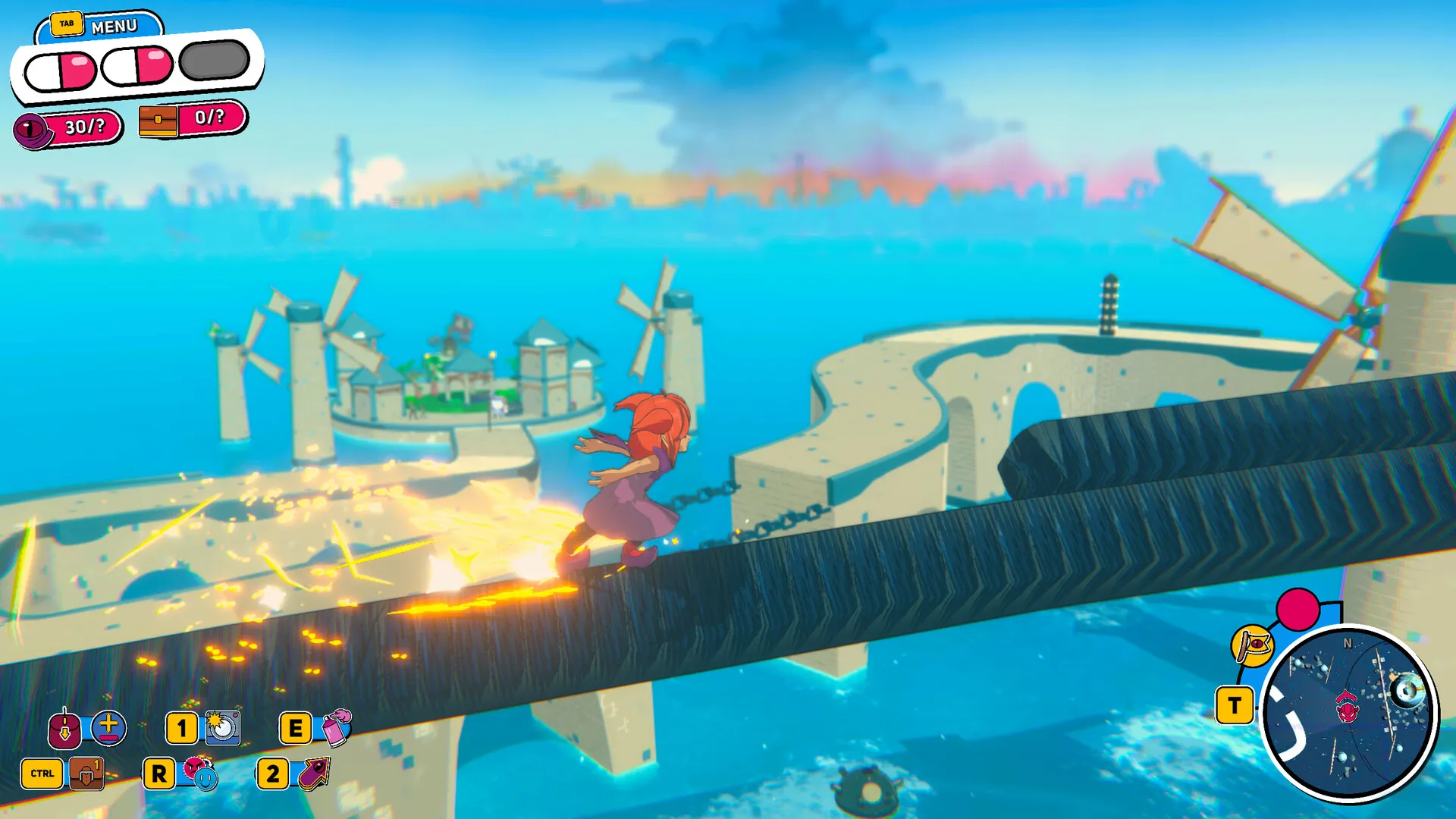
Movement is the game’s strongest system, and everything is built around expressive control. Beebz starts with a core moveset that includes jumping, spinning, wall running, and rail grinding. These actions feel smooth and reactive, which gives the player confidence during fast sequences. Three main transformations extend what she can do. Bat form adds a double jump and hover. Snake form grants high speed movement for dashing on land and swimming through water. Drill form lets Beebz spin in place for a short float or make precise landings.
Traversal gains depth through the way these forms connect. Chaining them well produces major gains in speed and distance. Using Drill form before switching into Bat form creates strong horizontal momentum, which turns a standard jump into a long launch.
The game limits players to one boost or transformation during a jump sequence, so timing matters on every attempt. A reset crystal placed in midair is the only method for refreshing those abilities before landing. That single rule creates a real skill layer in platforming routes, since players must read spacing, plan form usage, and commit to a line.
The checkpoint system reinforces experimentation. Players can place a mobile flag in almost any location and create a custom respawn point. That feature makes risky jumps and shortcut attempts much easier to test. It cuts down on repetition across longer stretches and encourages players to keep probing the movement system.
People who spend time learning the physics can bypass large parts of a stage through advanced routing. The result is a game where travel itself becomes the highlight. Moving through space feels rewarding at every level of mastery, from basic traversal to high-skill skips.
Archipelago Exploration and Progression Loops
Ragnar’s Rock spans more than 30 locations divided across three ocean regions. Some are small islands built around short challenges. Others are larger spaces with layered vertical design that asks players to read height, route, and momentum. Golden Gears function as the main progress currency. Collecting them opens fresh zones and pushes the main story forward. The gears appear in chests and as rewards for completing platforming trials, which ties progression directly to exploration and execution.
The map stays active through side content. Beebz can run time trial races and help return baby Kappas to their mother. Players can also clear red coral corrosion from islands, making those areas safer to cross. A graffiti system adds a communal touch by letting players place tags on surfaces to point out secrets or warn others about hard-to-reach spots. The mechanic reads like a clear nod to soulslike messaging systems, translated into this game’s style and movement-heavy design.
Fast travel helps the world’s scale remain manageable. Crossing the ocean between islands stays quick enough that the archipelago still feels large without dragging the pace. The open structure supports player-driven routing. If one island becomes a wall, another objective is easy to pursue. That flexibility helps the game keep momentum in the same way its traversal mechanics do. Exploration, progression, and challenge selection all feed a loop centered on discovery and skill growth.
Personalizing the Revolution
Customization has a direct effect on play, since Beebz’s loadout changes how she handles movement challenges. Talismans work as equipable modifiers tied to her abilities. Roller Skates deliver huge momentum while changing how she handles on the ground. The Bubble gives Beebz an aerial float that can carry her across gaps. The Infernal Engine boosts speed sharply, with a cost: stopping movement causes damage. Each option asks the player to make a trade between control, risk, and route potential, which keeps personalization tied to mechanical decision-making instead of cosmetic preference alone.
The Optica system adds area-specific power-ups that push her abilities past the standard setup. That gives each region a slightly different feel and supports experimentation with tools that fit local challenges. Combat takes a smaller role than it did in the previous game, and it is handled with less complexity. Most regular enemies go down in one melee hit, which keeps the game’s attention on platforming flow.
Boss fights against each biome’s Champions introduce a slower pattern. These encounters focus on reading attacks and waiting for openings before striking. Returning characters such as Mr. Mint provide the hardest gauntlets for experienced players, and these optional fights test the full moveset with much tighter demands.
Visual customization expands player expression in a separate lane. Costumes and hair dyes are scattered across the islands, giving players rewards that change Beebz’s appearance during the campaign. The costumes are distinct outfits instead of simple recolors, so each discovery feels like a real style change. That design choice fits the game’s larger focus on expression. Movement tools, challenge routing, talismans, optional trials, and cosmetic choices all point toward the same idea: the player shapes how Beebz fights, travels, and pushes through the revolution.
The Review
Demon Tides
Demon Tides succeeds by transforming its predecessor's mechanical depth into a vast, expressive 3D playground. The freedom of the "schmoovement" system and the strategic variety of the Talismans create a rewarding loop that outshines the occasional camera frustrations and corny dialogue. While boss encounters feel less inspired, the joy of carving original paths through the archipelago makes this a standout title for the genre. It is a bold, technically impressive leap forward that prioritizes player creativity above all else.
PROS
- Exquisite and highly expressive movement system.
- Creative "place-anywhere" checkpoint mechanic.
- Deep customization through impactful Talismans.
- Vibrant and technically polished 3D open world.
CONS
- Repetitive and sometimes sluggish boss battles.
- Wonky camera behavior in tight spaces.
- Dialogue and humor may feel grating to some.