





























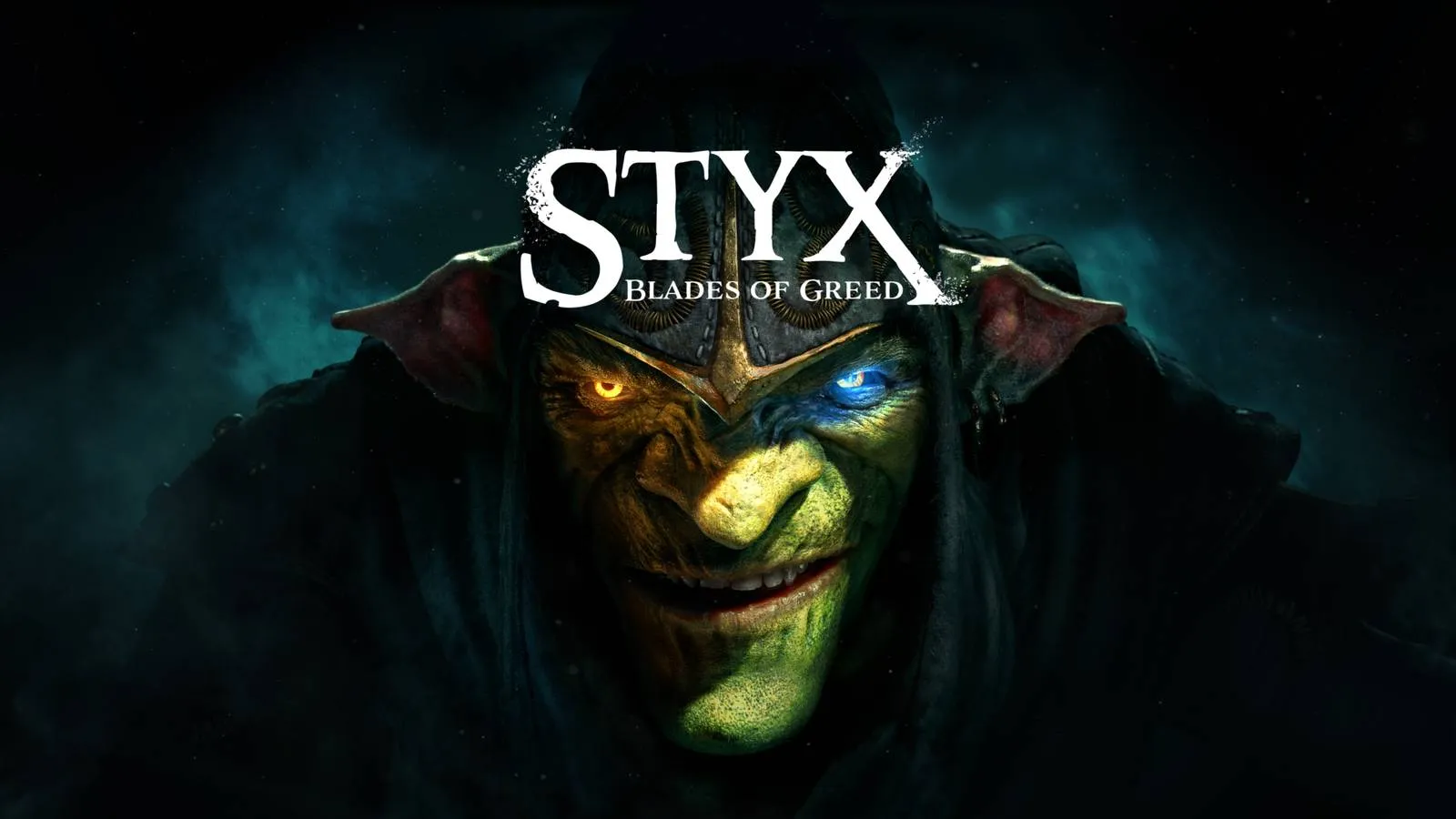

Styx has no interest in saving the world out of virtue. He is chasing a craving. Quartz has taken Amber’s place as the drug he needs, and this green, foul-mouthed thief wakes to a world reshaped by that new energy. His small goblin body becomes a natural conduit for it. He has a zeppelin now. He runs with a crew of misfits across towering fortifications and untamed ruins. Styx hunts in the shadow of giants, living off bile, blades, and darkness.
The story resumes exactly where the last chapter stopped and assumes you still remember what is at stake. It throws you straight into stealing. Your starting point is a zeppelin hub that links missions together, and the airship doubles as a social space where Styx can check in with his crew.
Helledryn and Djarak return, filling in support and context as you move from job to job. The game makes its stance clear right away. Styx is a working thief chasing his next fix, and the opening locks that tone in from the first minutes.
Spatial Freedom and Vertical Complexity
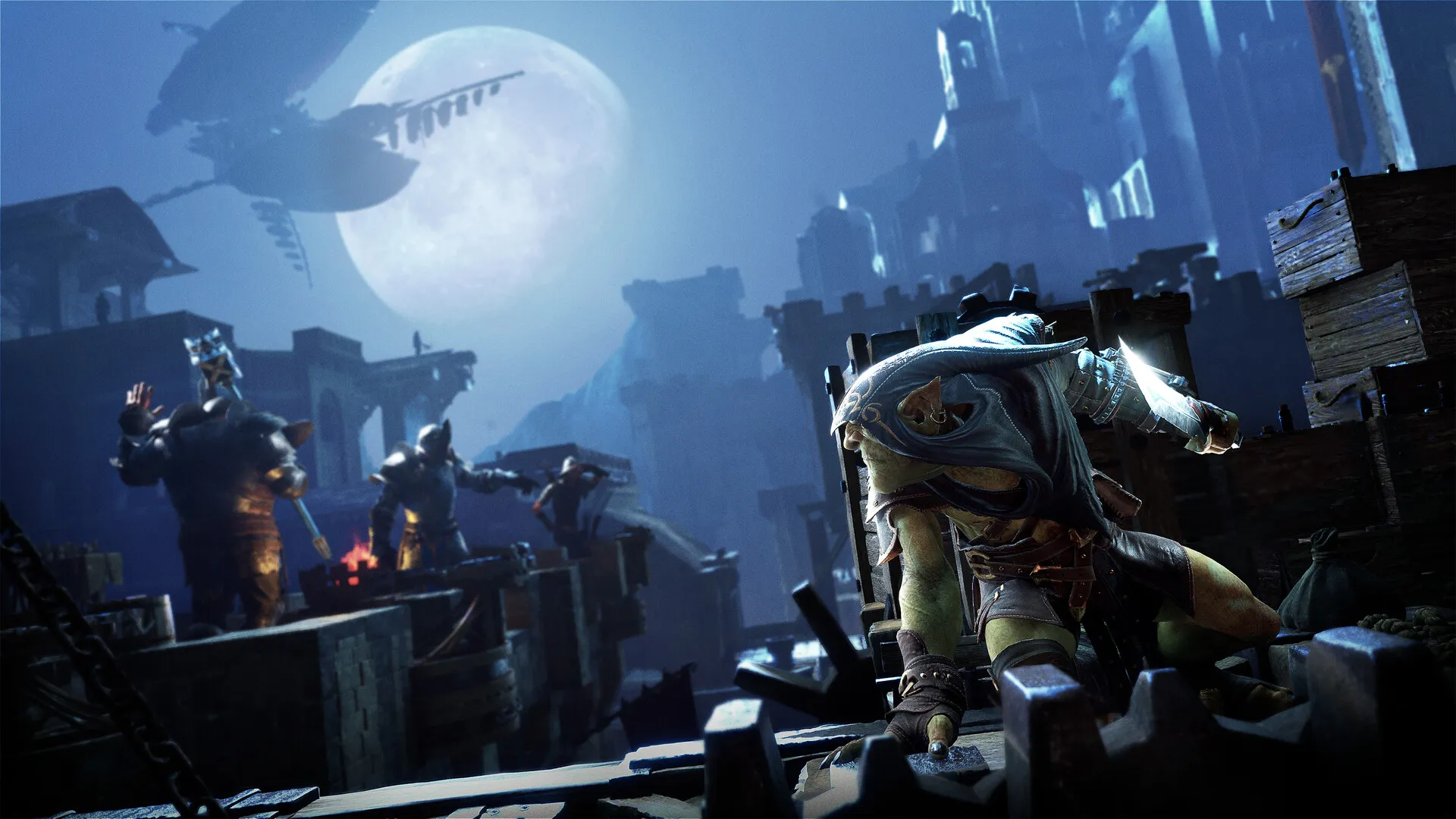
The game is built around three large, open-ended zones. The Wall is a massive stone garrison, packed with rooms and walkways, watched by human soldiers. Turquoise Dawn shifts the pressure in a different direction. It is a natural space where Orcs and smaller creatures roam. The Akenash Ruins lean into decayed construction and push you to think vertically, with climbs and drops shaping the route more than clean hallways ever do.
You will notice what the game refuses to give you. There is no mini-map. There is no compass. That missing layer forces attention onto the space itself. You read the environment for guidance, then build your own mental map. You scan for chimneys, rafters, and tucked-away tunnels. Height becomes protection. Staying above guard lines keeps you alive, and the vertical routes feel like the default language of movement.
The zeppelin sits at the center of this structure as the place you return to between runs. You head back, choose missions, then head out again. Objective order sits in your hands, and that freedom matters because the zones are designed for repeat visits. You come back to the same three areas more than once, then find that newly earned tools change what you can do there. A route that felt sealed the first time can turn viable later, and familiar layouts start offering new reads once your kit expands.
Each objective supports multiple approaches. You might scale a wall and slip through a window. You might drop low and crawl through a sewer. The route is yours to select, and the level design backs that up with real entry points instead of decorative options. Fast travel follows the same philosophy. Balloons can move you across the city, yet the system makes you earn that convenience. You have to locate the ports yourself, and nothing highlights them on your screen. That choice keeps exploration active. Time goes into searching for these access points while you keep out of patrol sightlines.
The environments stay dense through all of this. Space rarely feels wasted. You can stumble into collectibles or crafting materials while scouting a safer approach, and the maps reward slow reading. The game keeps asking you to look, remember, and test routes, then it pays you back with options that open through observation and repetition.
The High Stakes of Silence
Styx cannot take a stand-up fight. He is small. He breaks fast. When multiple guards get eyes on him, death usually follows. Combat reinforces that reality. Attacks require a target lock, and the swings carry weight and commitment that make brawling a bad plan. The game pushes you toward stealth by making the alternative feel like a trap.
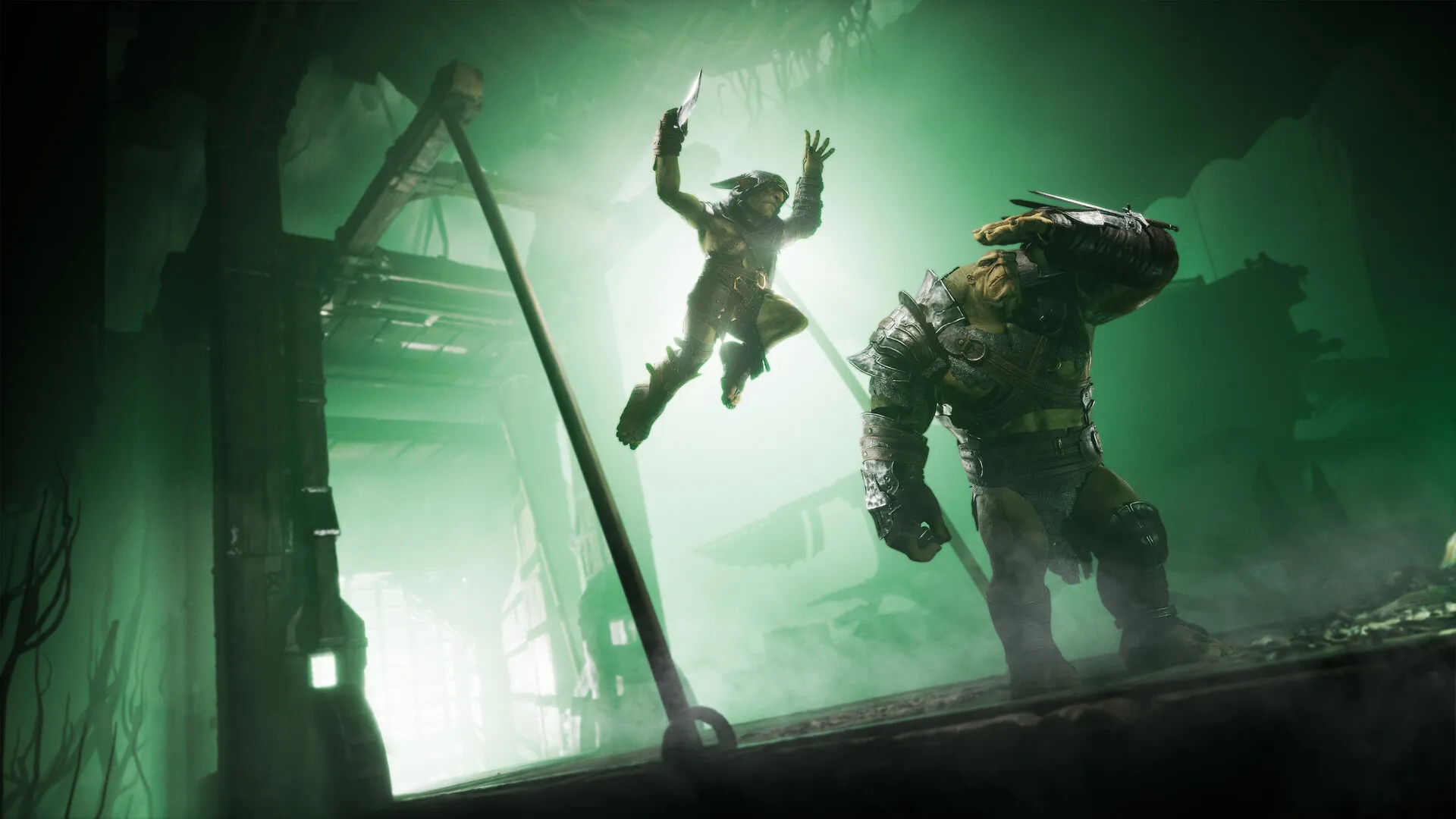
Light becomes the key threat. Darkness becomes the tool. You can snuff torches with your hand. You can throw sand to kill a light from farther away. Hiding spots keep showing up in practical forms: trunks, barrels, tables, corners where Styx can tuck himself out of view. Movement often turns into quick, low scuttles under furniture, then a pause to let danger pass.
Guard AI adds bite to every decision. Patrols do not sleepwalk through their routes. They check under tables. They open closets. A discovered body brings consequences, since guards call for help once they find proof something is wrong. The game treats stealth as a system you have to respect, not a vibe you can coast on.
Noise matters as much as sight. A UI indicator tracks how loud you are, putting a clear number on a mistake. You can throw bottles to pull attention away. You can whistle to draw a guard toward a planned spot. Bile expands the toolbox even further, letting you poison food or put out flames. The Acid Mine becomes one of the sharpest tools in that kit: plant it, whistle to bring a guard onto it, then watch them disintegrate once they step on the trap. When killing needs to happen up close, you can drag a guard into a closet and finish the job silently.
Success rests on patience and timing. You study patrol patterns, then move on the exact beat that opens a lane. The game’s fairness comes from clarity. The rules read cleanly once you understand them, so failure rarely feels like a mystery. Guards can even find angles to throw knives at you if you wedge yourself into an alcove, and that kind of behavior keeps you on edge. They act with enough logic that you stay alert, and every risky choice has a traceable cause.
Evolving the Goblin Arsenal
Quartz introduces a new power set, and it stands apart from the Amber skills that came before. Progression is split into three skill trees. One aims at physical movement and XP gains. Another uses Amber for magic. A third leans on blueprints found out in the world, tying power growth to crafting knowledge.
Classic stealth tools remain part of Styx’s identity. Clones and invisibility return and still serve as the backbone for misdirection. Quartz adds flashier options on top. You can seize control of an enemy’s mind. You can march a guard off a high ledge. You can slow time long enough to sprint through a bright corridor that would normally get you caught. These powers hit hard, yet they come with limits, so the game turns resource management into a constant background calculation. Magic cannot solve every room. You need to decide when to spend it.
Movement expands later. A grappling hook and a paraglider show up late in the campaign, and their arrival changes the way you read the ruins. They open longer crossings, let you clear wide gaps, and smooth out travel through spaces that once felt tight or punishing. The game gates these tools at the ends of story acts, turning mobility into a reward that marks each major step forward. Your growth feels tangible because old spaces become easier to traverse once you have the right gear.
The zeppelin supports that growth through crafting. You can return to the crew, build better equipment, then head back out. Side missions matter here because they provide materials you need. Another welcome system choice is respec freedom. You can reset ability points on the airship with no cost, which invites real experimentation. One mission can lean into mind control. The next can focus on stealth fundamentals. The baseline challenge still runs high even on normal, and you will die often while learning how to put the new tools to work.
Gritty Aesthetic and Sonic Precision
The visuals lean toward mood over raw technical flex. Lighting does real work, carving out deep shadows that function as safe space, not decoration. Textures stay readable, so stone walls and viable hiding spots register quickly at a glance. Styx also carries much of the entertainment value through performance. His dialogue runs on sarcasm and dark humor, and he talks to himself during missions in a way that sharpens his personality.
Console performance holds steady. On Xbox Series X, frame rate stays smooth and screen tearing does not show up. Visual issues still appear in spots. Strange boxy artifacts can show up around objects in the sky, and texture quality can dip during some airship sequences. A few glitches can slip through. Styx might cling to a wall when you want him running, or he can drop through geometry during a climb. These moments sound worse than they feel because they stay rare.
Sound design does heavy lifting moment to moment. You can hear guard footsteps through walls, and distant chatter becomes a practical warning system that hints at enemy placement. Silence matters, too. The game uses audio cues to signal danger, and that feeds straight back into how you play. Every step asks for intent. Walk too loudly and a pulsing circle calls it out. Environmental audio becomes part of each decision, pushing you to wait for a clean pocket of quiet before you move, then locking tension into the stealth rhythm.
The Review
Styx: Blades of Greed
Styx: Blades of Greed is a masterclass in pure, uncompromising stealth. By embracing massive vertical maps and rejecting modern combat safety nets, it rewards players who value patience and environmental mastery. The shift toward more open environments breathes new life into the series, though repetitive objectives and minor technical glitches occasionally break the immersion. Even with these flaws, the expanded toolkit and the protagonist’s gritty charisma make this a standout experience for the genre. It is a challenging, rewarding return for a character that continues to prove that shadows are the ultimate weapon.
PROS
- Expansive, vertical level design that rewards exploration.
- New Quartz-powered abilities like mind control and time manipulation.
- Pure stealth focus that demands high discipline.
- Stable console performance with strong art direction.
- Highly customizable playstyles through a free skill reset system.
CONS
- Awkward, rigid combat that feels like a last resort.
- Repetitive Quartz-hunting missions in the later acts.
- Absence of an in-game map can lead to frustration in large zones.
- Key movement tools are locked behind late-game story progression.