





























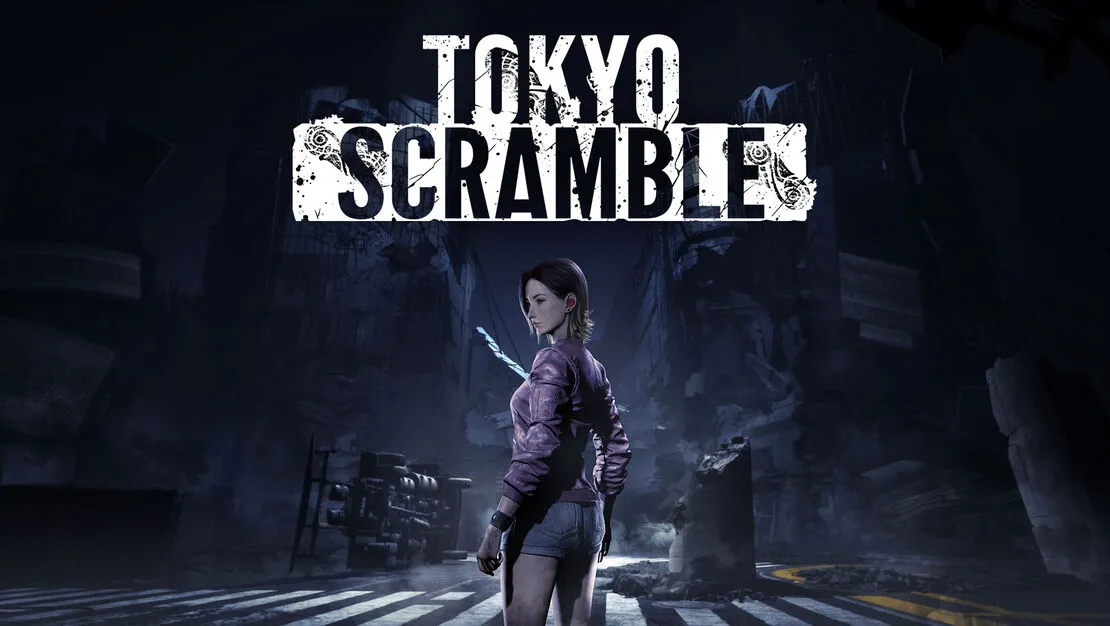

Tokyo Scramble opens on two kinds of collapse at once: the physical break in the city and the personal break in Anne’s sense of safety. Anne is a typical teenager moving through Tokyo’s modern sprawl, and her ordinary commute becomes disaster when a massive sinkhole swallows her subway train.
She wakes in a tight, underground space where the neon efficiency above gives way to skeletal ruins and forgotten caverns. The tunnels read like a graveyard for urban ambition, with shattered infrastructure left behind and claimed by something older. Prehistoric predators called Zinos patrol these derelict routes, treating the broken metro as territory.
Anne has no combat training and no heroic backstory to lean on. She survives because she stays alert and keeps moving. The mood stays heavy with the fear of being hunted inside a maze that feels alien while still echoing the rhythms of a familiar commute. The Zinos turn a routine subway ride into a primitive survival problem. Progress depends on moving through the darkness without drawing attention from the creatures that control the city’s underside.
The Digital Shield and Biological Burden
Life underground runs on two systems that keep rubbing against each other: the tools of modern tech and the limits of a human body under stress. Anne cannot fight Zinos head-on. Contact leads to a swift, ceremonial end, so the game pushes a passive style of defense. Players crouch for silence with ZL and use the D-Pad to peek around corners, treating every hallway like a question that needs a careful answer.
Her anchor is Diana, a high-spec smartwatch that acts as her central interface. Its flash app becomes the key survival tool, firing a blinding burst that stuns predators for a short window. That edge comes with strict limits. Flash use drains a battery, and the battery forces regular detours to charging stations scattered through the tunnels. Even basic movement carries a cost.
ZR triggers a sprint, and sprinting raises Anne’s heart rate while increasing the noise she makes. A sustained spike in heart rate leads to exhaustion, slowing her down at the moment she needs speed. The game frames these risks through clear UI indicators and sound cues that signal when a predator has picked up her presence. The result is a steady loop built around restraint: tech offers bursts of control, and biology keeps setting the terms.
Taxonomic Puzzles in the Metro Ruins
The Zinos are not a single threat with a single answer. Each species has a specific profile, and the game turns that taxonomy into level design. Goblins serve as raptor-like sentries, moving along set patrol routes with balanced senses. Lurkers operate like bat-like monstrosities with no sight and extremely sensitive hearing, pushing players into an agonizingly slow crawl. The Slendermantis has demon-like eyes that cut through the dark and registers none of Anne’s movement, which changes how every corridor must be approached.

These differences turn each segment into a strict environmental puzzle. Anne uses Diana to manipulate what remains of the subway system in ways that match the predators’ senses. She can trigger a vending machine or a popcorn maker to pull sound-sensitive enemies away from an exit. Some interactions lean into the absurd: an escalator can trap a running Goblin in a loop, and heavy cranes can be used to block a route.
Timing and pattern memorization matter, since each encounter asks the player to learn patrol behaviors and act within narrow margins. Deeper progression reveals signal spots where Anne can update her apps, improving the range and effectiveness of her tools. The structure stays rooted in trial and error, with patience and observation rewarded far more than impulsive risk-taking.
Narrative Connectivity and Shared Control
Even underground, communication keeps the shape of surface-level social life. Anne stays in contact with her brother Ray and her bandmates through a steady stream of text-message bubbles. That delivery method underlines her isolation while keeping a thin line to the life she came from, as if the habits of the city follow her down into its ruins.

The game is organized into 22 chapters and runs about six hours on a standard playthrough. It grades performance with a system that hands out S-ranks based on completion speed, retries, and the discovery of optional lore notes. Players who want harsher conditions can choose Despair difficulty, which sharpens enemy senses and tightens Anne’s physical resources.
The biggest mechanical twist arrives through GameShare multiplayer. Up to four players can split control of Anne herself: one handles movement, while others manage the camera, Diana’s apps, or specific actions such as sprinting.
That shared control changes the texture of the experience from solitary horror into coordination under pressure. The underground becomes a space where reflexes need group alignment, with the prehistoric danger under the Neon City acting as the constant referee.
The Review
Tokyo Scramble
Tokyo Scramble is a courageous yet clumsy descent into a prehistoric underworld. It succeeds in establishing a haunting atmosphere and inventive gadget-driven stealth, but these flashes of brilliance are frequently buried by repetitive trial-and-error puzzles and a jarring narrative tone. It remains a fascinating anomaly that prioritizes ambition over technical polish.
PROS
- Striking creature designs.
- Innovative smartwatch mechanics.
- Tense subterranean atmosphere.
CONS
- Frustrating trial-and-error gameplay.
- Inconsistent enemy AI.
- Tone-deaf narrative delivery.