


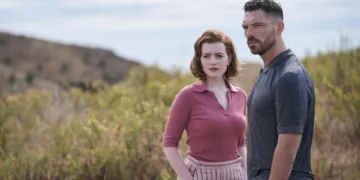






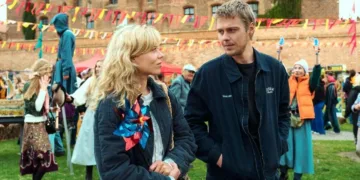







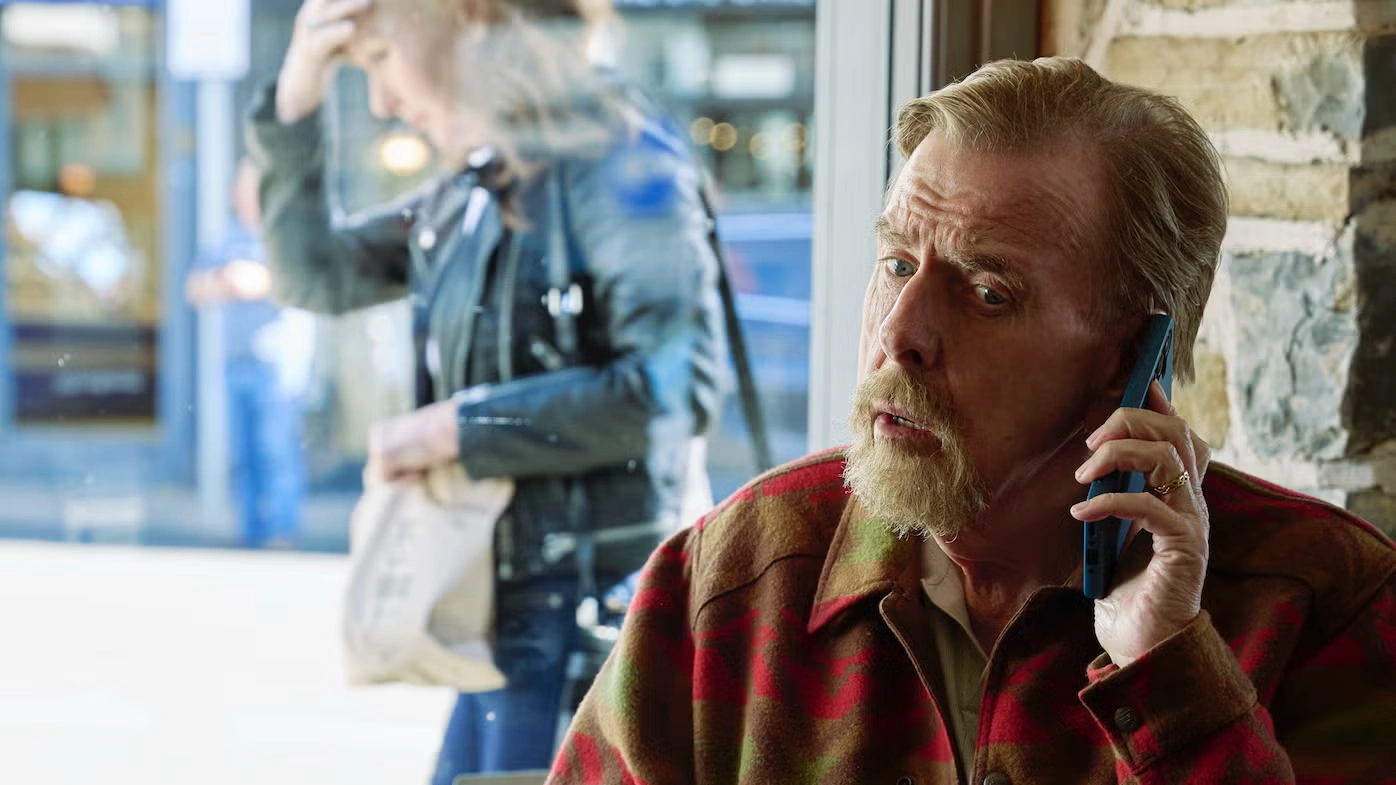

The second season of the BBC One mystery drama drops us back into the postcard-green Welsh valleys, where murder apparently keeps a busier calendar than the local council. Its premise remains pleasingly odd: awkward newly promoted Detective Inspector Janie Mallowan, played with fizzy, flustered energy by Gwyneth Keyworth, works alongside John Chapel, Timothy Spall’s wonderfully pompous retired actor turned police consultant.
The series keeps its episodic, low-stakes homicide cases moving with a theatrical wink, treating its own setup as both mystery engine and punchline. This season sets professional irritation against messy personal boundary shifts in a small provincial world where everyone seems one gossip away from the next corpse. The production favors soothing rhythms, Welsh valley charm, and an arch spin on small-town crime. The body count could make prestige drama jealous. The mood still has the soft landing of Sunday night television.
Echoes of Action: Growth, Grief, and Bad Timing
Janie’s promotion to Detective Inspector gives her new authority, then immediately hands her a psychological bill. Imposter syndrome has moved in and unpacked. She tries to square her goofy tactlessness with the stiff posture of senior rank, which is tricky for someone still testing whether “J-Dog” belongs anywhere near a crime scene. Her family life adds its own procedural headache.
John is dating her mother, Yvonne, which makes him persona non grata at the station and turns domestic awkwardness into workplace static. The return of her estranged father brings a sharper emotional charge. That arc gives the lighthearted series a surprising tug of gravity, testing Janie’s resilience and giving her story personal stakes with a real sting.
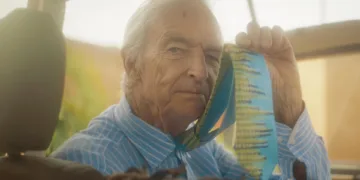
John Chapel has shed the gloomy recluse act and stepped back toward the lights, probably hearing applause that nobody else can detect. In this season, he is chipper, eager, and gloriously hungry for a spotlight. His official consultant status lets him treat criminal investigation like a rehearsal room with better paperwork. He throws himself into absurd undercover jobs with total conviction.
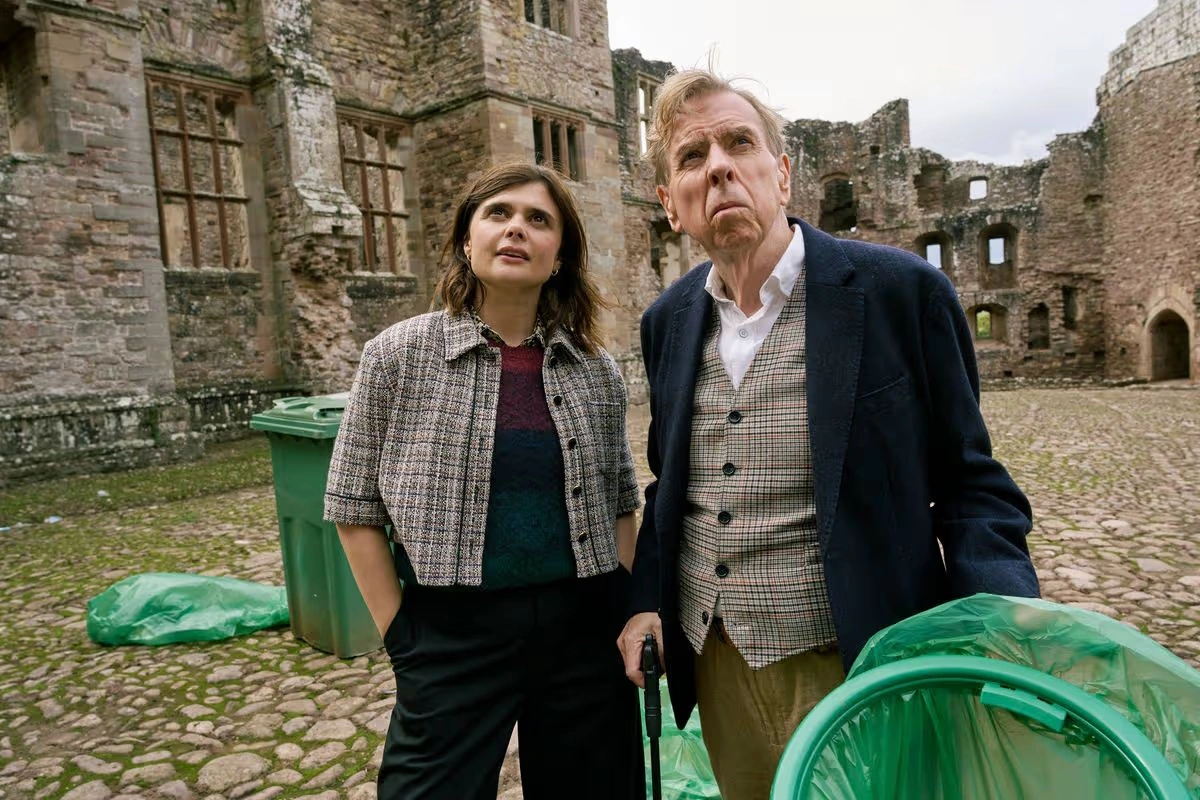
Spall in high-visibility gear, infiltrating a court-mandated community service group, is comedy with a straight face and a litter-picker. He carries that tool with the grandeur of a Shakespearean lead holding a prop sword. John’s identity still clings to his former television fame in the fictional detective series Caesar, and he keeps letting that old role steer his methods, much to the local police department’s daily exhaustion.
The central partnership moves toward a layered pseudo father-daughter bond, built from affection, irritation, and the kind of bickering that sounds like care wearing a bad hat. Spall and Keyworth give the series its emotional pull. Their timing is sharp, their rhythms click, and the warmth beneath the arguments keeps the absurd premise from floating away like a stage flat in a storm.
The Stage in the Stones: Meta-Textual Mischief
The script has enormous fun with meta-textual humor and internal Easter eggs. It keeps poking at detective-show habits from inside the machine. Characters call out “needlessly theatrical” reveals and label John’s delivery “a bit hammy,” which is fair, and perhaps generous.
John approaches suspects as a literal dramatis personae. Forensic science gets less attention than “character inconsistencies,” because apparently the soul of policing is close reading. This reliance on stagecraft turns the whodunnit format into a running joke about television performance and the old magic of an actor making evidence sound like a soliloquy.
The Welsh setting gives the series one of its best running visual gags: the Vale of Glamorgan looks serene enough for a tourism advert, yet local murder rates appear wildly enthusiastic. The direction uses lush green countryside to soften the frame and make the violence feel oddly cushioned.
The pacing keeps that balance steady, offering cozy pre-watershed comfort viewing with a satirical, near-parodic spin on classic television detectives. The editing lets the cases breathe in familiar episodic beats, and the tone lands with a wink that rarely overstays its welcome.
The writing threads in theatrical references that sharpen John’s character. He complains about the banality of mainstream television, then quotes Keats at petty criminals, which feels exactly like his idea of public service. The script also drops sly references to rival detective programs, giving the series a knowing place in television history. It invites viewers to laugh with the genre, at the genre, and occasionally at John, who might consider those three categories artistically identical.
Schemes and Scenery: The Mechanics of Cozy Crime
The weekly mysteries follow a clean, formula-heavy design. The season opener sets the pattern with a suspicious plunge from a twelfth-century castle parapet during a community payback detail. From there, the story glides from a thin motive to a string of wonderfully stagey deductions.
Later episodes widen the regional canvas. The duo moves through a coastal fishing village shaped by a deadly restaurant rivalry, a sustainable living commune, and the competitive world of regional rugby. The cases have the tidy snap of cozy crime, where structure matters as much as surprise and timing does half the lifting.
The direction leans on coordinated climactic reveals between the two leads, staging them with deliberate theatrical polish. The camera knows these moments are performances, then gives them room to preen. The supporting cast keeps the comedy grounded, especially Steffan Rhodri as DCI Barry Clarke. His deadpan delivery keeps the show from drifting into full pantomime.
Jane Horrocks, Alexandra Roach, and Mark Lewis Jones appear in guest roles, bringing quick bursts of ambiguity to plots that remain light and feather-thin by design. Are these mysteries intricate puzzles demanding intense intellectual labor, or delightful stages built so Timothy Spall can chew the scenery with professional-grade teeth?
The hit Welsh comedy-crime drama returned for its highly anticipated second season on May 17, 2026. This sophomore outing picks up with newly promoted Detective Inspector Janie Mallowan struggling under her fresh leadership duties while continuing her reluctant, chaotic partnership with eccentric retired actor turned police consultant John Chapel. Audiences in the United Kingdom can watch the episodic whodunnit broadcast weekly on BBC One, or they can choose to stream the entire six-part series box set immediately on BBC iPlayer.
Where to Watch Death Valley Season 2 Online








Full Credits
Title: Death Valley Season 2
Distributor: BBC One, BBC iPlayer
Release date: May 17, 2026
Rating: TV-PG
Running time: 45 minutes per episode
Director: Simon Hynd, Claire Winyard
Writers: Paul Doolan, Ian Jarvis, Sian Harries, Nina Metivier
Producers and Executive Producers: Nicki Wilson, Madeline Addy, Tracie Simpson, Paul Doolan
Cast: Timothy Spall, Gwyneth Keyworth, Steffan Rhodri, Melanie Walters, Alexandria Riley, Rithvik Andugula, Jane Horrocks, Mark Lewis Jones, Alexandra Roach, Hammed Animashaun, Roisin Conaty, Jim Howick, Hannah Daniel, Asim Chaudhry, Mike Bubbins
Director of Photography (Cinematographer): Simon Ridgway
Editors: Final cut assembly managed by the BBC Studios post-production team
Composer: Television score orchestrated by the BBC comedy-drama music department
The Review
Death Valley Season 2
Death Valley Season 2 thrives on its own cheerful absurdity. While the central mysteries are feather-light and highly formulaic, the production functions flawlessly as a comfort-blanket parody of the cozy crime genre. The narrative succeeds because it prioritizes character over complex plotting, anchoring the silliness in genuine emotional stakes. Driven by the superb, bickering chemistry between Gwyneth Keyworth and a wonderfully theatrical Timothy Spall, the series remains delightfully unpretentious entertainment. It knows exactly what it wants to be and delivers it with absolute confidence.
PROS
- Infectious, synchronized comedic chemistry between Timothy Spall and Gwyneth Keyworth.
- Sharp, self-aware meta-humor that cleverly parodies cozy detective tropes.
- Strong deadpan supporting performances and high-quality guest stars.
- Picturesque, soothing visual presentation of the Welsh countryside.
CONS
- Highly schematic, predictable, and feather-thin mystery plots.
- John Chapel’s pompous, eccentric behavior may polarize some viewers.
- Intuitive leaps occasionally leave the actual police work looking a touch adrift.