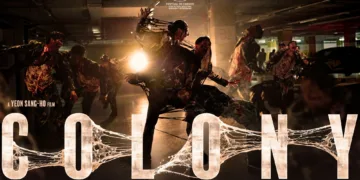






















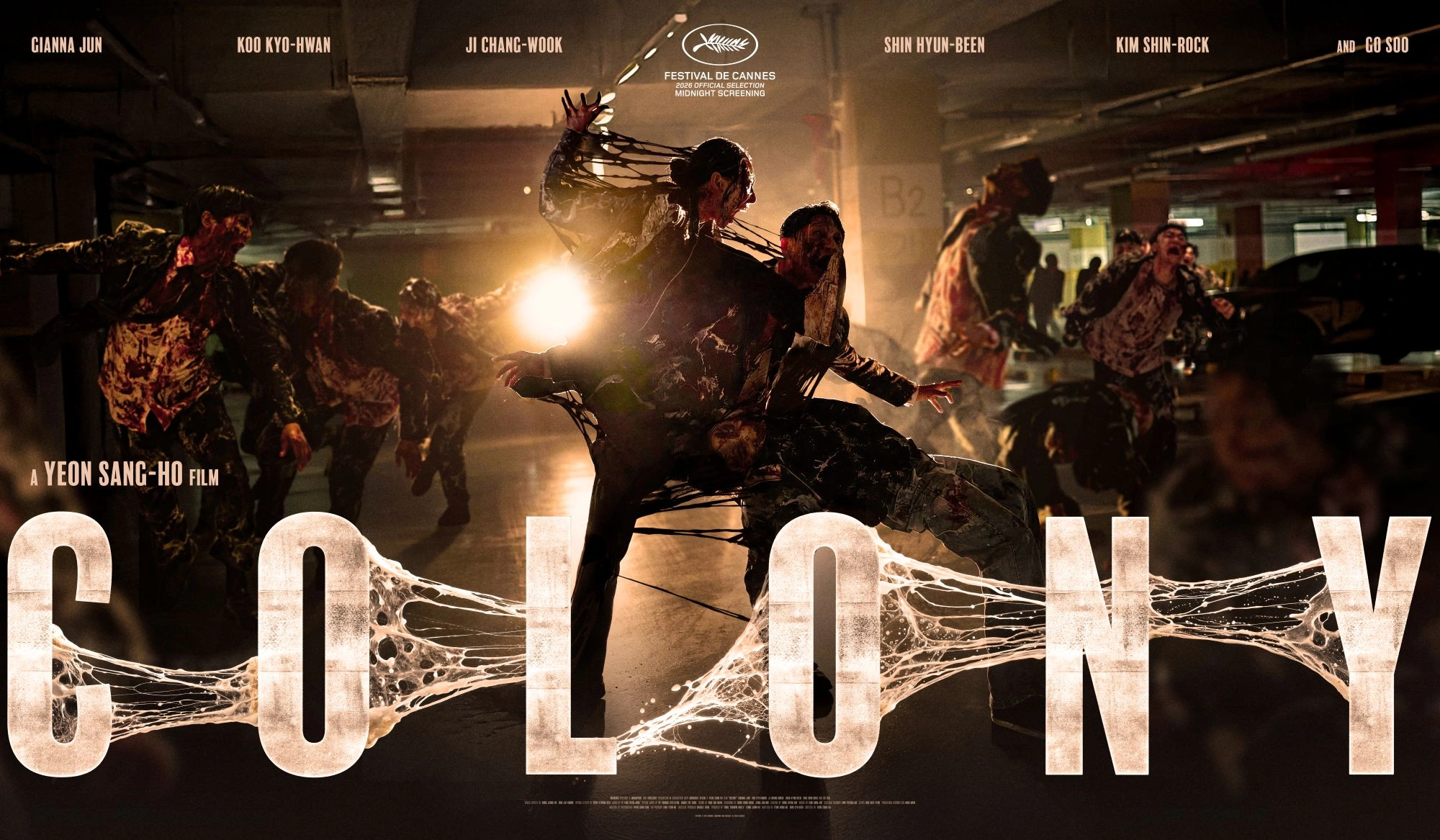

The cinematic high-rise has long served as a vertical laboratory for psychological isolation, and director Yeon Sang-ho treats the thirty-story Doongwoori Building in downtown Seoul as a sterile monument to institutional hubris. The narrative ignites within the clinical confines of a high-profile corporate biotechnology conference, sealing the architectural perimeter with immediate dramatic force and dispensing with the slow-burn exposition typical of the genre.
A manufactured pathogen, deployed by a vengeful former researcher, transforms the skyscraper from an asset of late-stage capitalism into a closed-system trap. The true structural divergence from traditional monster lore lies in the nature of the infection itself. The screenplay discards the mindless, solitary hunger of the classic undead, introducing a localized collective intelligence that operates with the synchronicity of a distributed algorithmic network.
These creatures process physical and behavioral updates instantaneously, evolving from frantic quadrupedal crawlers into highly coordinated bipedal hunters. Survival within this vertical fortress demands an intentional ascent through distinct corporate strata. An isolated assembly of civilians must climb the rising levels to reach a rumored rescue team on the rooftop, their existential stakes tethered to a frantic hunt for the rogue scientist who carries the singular biological cure inside his own veins.
The Vertical Architecture: Spatial Design as Narrative Pacing
The screenplay, co-written by Yeon Sang-ho and Choi Gyu-seok, marks a significant spatial transition from the horizontal, linear locomotive of their previous genre entries to a vertical, compartmentalized skyscraper. This structural pivot creates immediate geographic compression, trapping the characters within an architectural grid where escape is dictated by concrete floors and reinforced elevator shafts.
Production design utilizes distinct commercial zones to dictate narrative pace, transforming standard corporate layouts into expressionistic sites of terror. The lower levels feature expansive, gleaming mall environments characterized by vast open spaces and a clinical, oversaturated corporate fluorescence. These areas evoke classic consumerist horror backdrops; the camera applies a cold, neo-noir detachment that emphasizes the emptiness of the glass and steel structures.
As the survivors ascend, the architecture tightens, forcing the camera into cramped corporate suites, security cubicles, server rooms, and damp industrial basements. This spatial progression maximizes claustrophobic tension, utilizing classic expressionistic framing where shadows slice across uniform office desks and fluorescent fixtures flicker with unpredictable rhythms. The physical environment becomes an active antagonist, a geometric maze where every corner offers a dead end and every glass partition reveals a potential vulnerability.
The human ensemble moves through this vertical ascent with varying degrees of internal friction and psychological wear. Kwon Se-jeong, a detached biotechnology academic portrayed by Gianna Jun, serves as the intellectual anchor of the group, with her contribution leaning heavily on real-time analytical exposition about the evolving threat. Her emotional detachment is challenged by the unexpected presence of her protective ex-husband, Han Gyu-seong, whose attempts to manage her career create a bitter domestic undercurrent amidst the surrounding catastrophe.
This clinical, high-concept atmosphere gains a crucial grounding through the physical struggles of security guard Choi Hyun-seok and his sister Hyun-hee, an IT worker who uses a wheelchair. Their sibling dynamic introduces genuine pathos to the narrative, offering a fragile human centerpiece amid the metallic indifference of the corporate background. Opposing them all is Dr. Suh Young-chul, an antagonist driven by professional theft and corporate betrayal, who transforms his personal workplace grievance into a sweeping biological crusade.
The film experiences noticeable pacing hitches during its middle act. Following a rapid, breathless opening sequence, the momentum stalls within the mid-level office floors. The screenplay falls back on repetitive survivor strategies, where characters retreat to security hubs to formulate identical escape plans, only to be disrupted by frustratingly illogical human errors.
Protagonists bicker openly about tactical routes while in direct proximity to a captive antagonist who can mentally alert the horde, a writing shortcut that transparently functions to prolong the passage across the two-hour runtime and underscores a screenplay architecture built on convenient plotting and mechanical contrivance.
Algorithmic Dread and the Rationalization of the Monster
The evolutionary mechanics of the infected horde introduce a speculative exploration of algorithmic dread, shifting the genre away from supernatural chaos toward a terrifyingly rationalized threat. The creatures discard the traditional mechanics of random predation, demonstrating an ability to instantly transmit situational data across the entire swarm. When one entity encounters a human defense mechanism or a structural barrier, the information cascades through the collective mind with the speed of an automated system update.
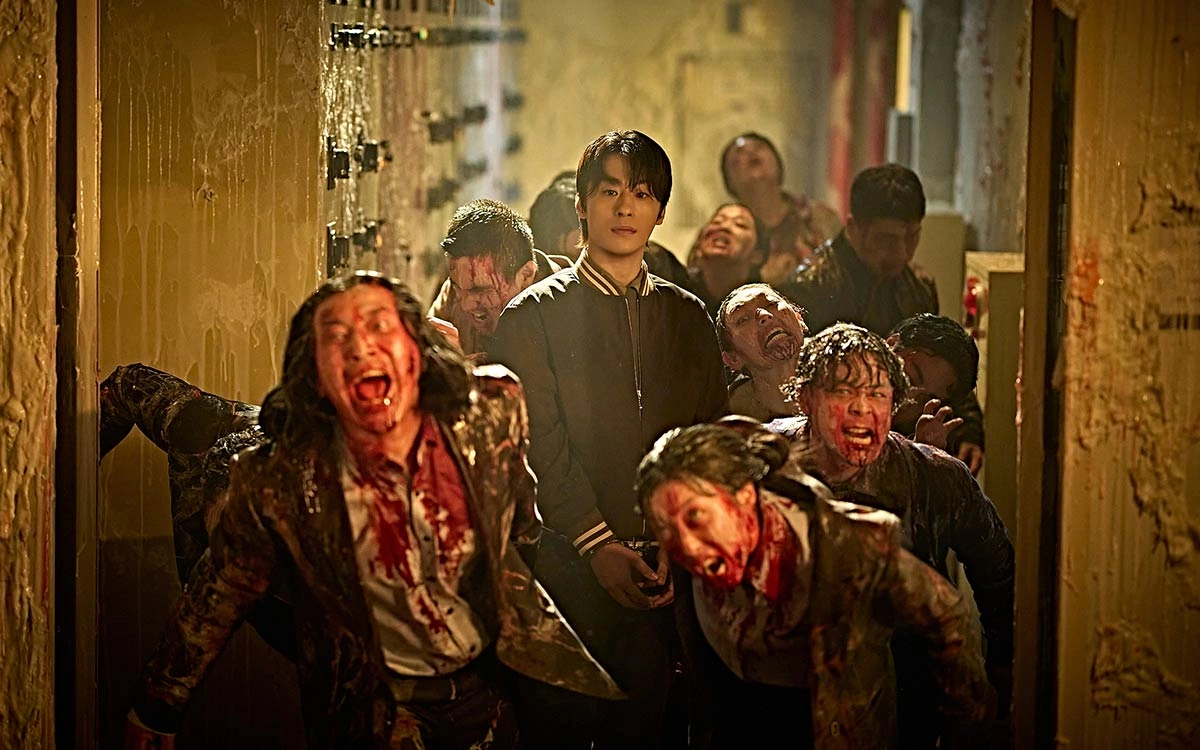
The physical transformation reflects this cognitive evolution; the monsters adjust their posture, adopt sophisticated team-based flanking tactics, and systematically isolate target zones. They operate as a single living organism, transforming individual physical destruction into a minor network anomaly that the collective easily bypasses.
Dr. Suh Young-chul treats this biological mutation as a forced cognitive revolution, a view that provides a complex layer of moral ambiguity to his villainy. He perceives the perfectly communicating horde as a superior evolutionary branch, a collective entity liberated from the inefficiencies of human speech and emotional deception.
By injecting himself with the primary strain while retaining his human consciousness, he functions as an absolute director, conducting the movements of the undead like a dark orchestra to block escape routes and manipulate survivor psychology. The film positions his tyranny as an extreme extension of corporate efficiency, where individual autonomy is entirely subsumed by the goals of the network.
This conceptual framework serves as a speculative mirror for contemporary societal anxieties, mapping the fears of digital surveillance, information control, and corporate biomedical overreach onto a visceral horror canvas. The virus functions as a physical manifestation of a digital network, an invasive system that colonizes the body and draft-enlists the mind into a perpetual data stream.
The public authority lockdown protocols depicted on the periphery offer a bitter look at institutional management, showing how rapidly state apparatuses isolate populations and how easily public anxiety translates into an acceptance of total containment.
The film handles these heavy speculative concepts with a formalist distance that occasionally leaves an emotional void within its structure. The narrative frequently prioritizes literal exposition and mechanical demonstrations of the hive mind, bypassing a deeper thematic critique of their implications.
Ideas regarding perfect data transmission dominate the screenplay’s attention; human communication functions as a tactical asset, stripped of its complexity as a social ritual. The philosophical inquiries into free will and collective conformity remain somewhat decorative, applying an intellectual sheen to kinetic action sequences and stopping short of genuine integration into the primary character arcs.
Technical Craft: The Chiaroscuro of Mutation
Cinematographer Byun Bong-sun establishes a stark, expressive visual language that underscores the film’s underlying themes of corporate alienation. Utilizing deep chiaroscuro and expressionistic framing, the camera treats the office landscape as a site of psychological dread, casting long, geometric shadows across wide corridors and trapping characters in the corners of the frame.
The color palette maintains a sharp contrast between the cold, unnatural blues and greens of the corporate neon lighting and the wet, organic textures of human vulnerability. Wide-angle shots emphasize the oppressive scale of the skyscraper, rendering the human survivors small and insignificant against the towering glass partitions, while tight close-ups capture the sweat and panic of individual realization.
The physical production benefits immensely from a comprehensive approach to movement choreography, employing multiple specialized physical trainers and stunt performers to define the behavior of the horde. The zombie choreography favors jarring skeletal contortions, sudden back-snapping shifts, and erratic physical movements that convey a sense of a body being violently overridden by an external signal, dispensing with generic running patterns entirely.
One of the visually arresting sequences involves an encounter with an inactive, frozen cluster of the infected, capturing them in a motionless, twisted state that resembles a grotesque sculpture garden. This imagery provides a distinct aesthetic identity, blending horror with a dark, kinetic grace.
The auditory design constructs a highly immersive atmosphere that actively manipulates audience anxiety. Sound mixer Julien Paschal and designer Kim Sok-won focus heavily on the close-up amplification of physical sound, ensuring that every wet bone snap, muscular lurch, and guttural click resonates with a stomach-churning clarity. The soundscape builds tension through localized audio cues: the echo of frantic footsteps in concrete stairwells and the low, rhythmic hum of the building’s ventilation system.
Head of makeup Kim Hyun-jung complements this auditory realism by focusing on tangible, textured facial prosthetics and real performer expressions. The production anchors its approach in these physical materials, ensuring that the degradation of the infected remains grounded, tactile, and consistently present within the frame.
Formalist Synthesis and Descriptive Constraints
A formalist, highly analytical perspective remains the appropriate critical lens for this production, one that foregrounds the meticulous dissection of cinematic space, physical composition, and the psychological impact of lighting techniques. Maintaining deliberate critical distance keeps the examination objective, scholarly, and focused entirely on the film’s formal attributes and their thematic resonances.
The sentence structures deployed throughout this analysis vary naturally in length and rhythm, preserving a clean, unfragmented typographic flow and ensuring that the prose remains as architecturally precise as the building it scrutinizes.
The South Korean action-horror feature Colony made its international debut at the Cannes Film Festival on May 15, 2026, ahead of its domestic theatrical release in South Korea on May 21, 2026. Audiences in Western markets will be able to watch the film on the big screen later this year, with a scheduled United States theatrical release set for August 28, 2026, via distributor Well Go USA Entertainment.
Full Credits
Title: Colony
Distributor: Showbox, Well Go USA Entertainment
Release date: May 15, 2026 (Cannes Film Festival), May 21, 2026 (South Korea), August 28, 2026 (United States)
Rating: MA 15+
Running time: 122 minutes
Director: Yeon Sang-ho
Writers: Yeon Sang-ho, Choi Gyu-seok
Producers and Executive Producers: Kim Yeon-ho, Yoomin Hailey Yang
Cast: Jun Ji-hyun, Koo Kyo-hwan, Ji Chang-wook, Kim Shin-rock, Shin Hyun-been, Go Soo, Kim Hyung-mook, Lee Jung-ok
Director of Photography (Cinematographer): Byun Bong-sun
Editors: Han Mee-yeon
Composer: Kim Suk-won
The Review
Colony
Colony is a visually commanding, intellectually ambitious entry into the modern zombie catalog, pairing striking architectural isolation with an unsettling, algorithmic reinvention of the undead horde. While the screenplay encounters mid-film narrative stagnation and prioritizes cold exposition over deep emotional intimacy, the technical execution remains flawless. Byun Bong-sun’s clinical cinematography, coupled with staggering physical choreography, creates a terrifyingly rationalized vision of corporate horror.
PROS
- Innovative hive-mind zombie mechanics that modernize traditional monster behavior.
- Stunning, claustrophobic neo-noir cinematography and visceral sound design.
- Exceptional physical choreography and practical makeup effects.
- A grounded, emotionally resonant sibling dynamic that provides a necessary human anchor.
CONS
- Noticeable pacing drops and repetitive structural strategies during the middle act.
- Frustratingly illogical character decisions used as convenient plot devices.
- Thematic ideas regarding communication occasionally feel decorative rather than fully realized.