








Yellowstone ended the way many long-running American dramas do: messily, with contractual tensions spilling into narrative ones, and a protagonist killed off to accommodate a star who’d rather be making his own Western epic. Kevin Costner’s John Dutton was dispatched, the flagship series wrapped, and the question of what came next fell to the franchise’s surviving characters. Two spin-offs emerged. Marshals took Kayce Dutton to a CBS procedural that felt, by most accounts, like a transplant that never quite took. Dutton Ranch, the second attempt, is a different proposition altogether.
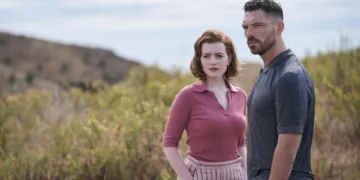
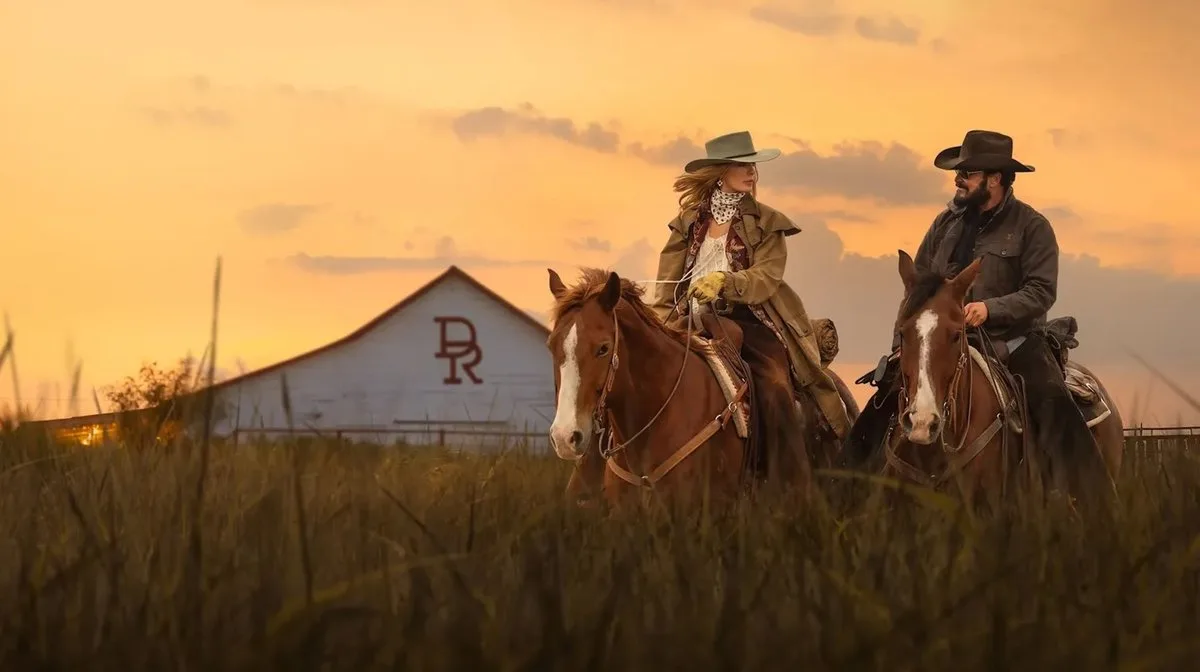
Created by Chad Feehan (Lawmen: Bass Reeves) and directed by cinematographer Christina Voros, the Paramount+ series follows Beth Dutton (Kelly Reilly) and Rip Wheeler (Cole Hauser), the couple who spent the back half of Yellowstone quietly stealing it from its nominal lead. A wildfire destroys their Montana homestead. They relocate to Rio Paloma, a small South Texas town an hour north of the Mexican border. There, they encounter the Jacksons, the area’s ruling ranching dynasty, led by the formidable Beulah (Annette Bening). The frontier, it turns out, doesn’t care how famous you used to be.
“We Start Again”: The Architecture of Displacement
Beth says those three words within the first twelve minutes of Episode 1, and they function as both plot summary and thesis statement. The Montana chapter closes fast: a wildfire, a phone call to an unlikely old contact, a purchased property that hasn’t even changed hands on screen yet. The Edwards Ranch becomes Dutton Ranch somewhere between episodes, as if the show decided that dwelling on paperwork was beneath it.
This compressed approach is simultaneously the series’ smartest structural choice and its most frustrating one. The momentum is real. The earned weight is not. There’s something slightly vertiginous about watching a family settle into a new home, new landscape, and new set of enemies before the audience has had a chance to grieve the old ones.
The narrative framework will be familiar to anyone who sat through Yellowstone’s first season. An established local power controls the land. Outsiders arrive and refuse to submit. A body turns up before the audience has learned everyone’s name. Here, the body is Rob-Will Jackson’s doing, deposited on Dutton land, and Rip’s response to it is entirely in character. The Jacksons, led by Beulah and her two sons, are the new antagonists, and their corruption is established quickly, if not yet deeply.
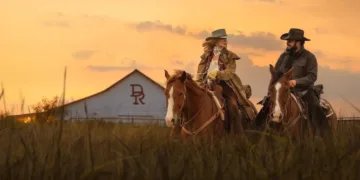
What the show takes its time with is the texture of ranching life itself. Voros brings a sharp eye to the sun-bleached South Texas landscape. The palette is drier and browner than Montana’s mythological greenery, and the montage sequences meant to replicate Yellowstone’s sweeping land-and-labor poetry feel slightly rushed in this new terrain. The show hasn’t yet made Texas feel sacred the way Montana did. It’s working on it.
The political scale has shrunk, which helps. Nobody is running for governor. The conflict is territorial and personal, grounded in cattle and money and pride. Episode 4 is where the series begins to demonstrate real emotional range, suggesting the show has a higher ceiling than its first three hours imply. Small-town South Texas, with its proximity to the border, its pockets of old money and newer cruelty, offers a social landscape Yellowstone never explored. A line poking at performative Christianity lands with quiet sharpness. The show is paying attention to something.
The Duttons, Unfortified
The most significant creative decision Dutton Ranch makes is to strip Beth and Rip of their protective mythology. In Montana, the Dutton name was armor. In Rio Paloma, nobody has heard of them. They arrive as civilians, which is a genuinely disorienting thing to watch.
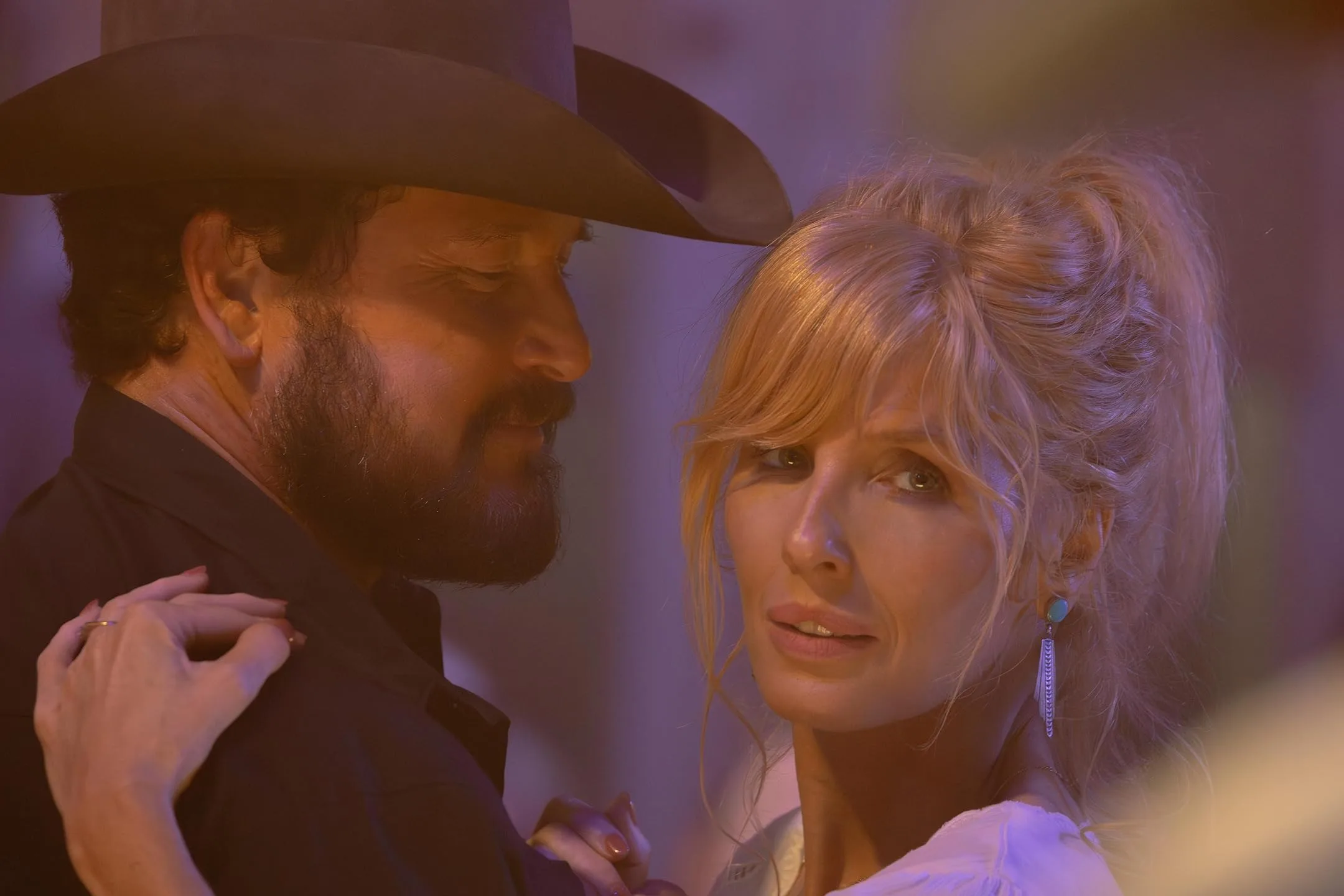
Kelly Reilly’s Beth remains formidable. She still clocks a restaurant owner who disrespects his staff, still treats Beulah’s extortion offer with the contempt it deserves, still says things that make you slightly nervous for whoever is standing nearby. The overexaggerated volatility of Yellowstone’s final seasons, particularly the punishing dynamic with adopted brother Jamie, has been retired. This Beth apologizes to Carter when he calls her a liar. Quietly. Without doubling down. It’s a small moment, and Reilly plays it with the kind of restraint that suggests she’s been waiting for the writing to get out of her way.
Rip (Cole Hauser) handles the new terrain with characteristic economy of speech and an occasional willingness to punch someone in a gas station parking lot. His decision to dispose of Rob-Will’s discarded murder victim rather than involve local law enforcement is not a failure of moral imagination. It’s a man acting from deep conditioning, repeating what worked in an insular world where police were never allies. His line, “This life here is gonna work,” is less a declaration than a prayer.
Then there’s Carter (Finn Little), now a young adult with a romantic subplot and considerably more screen time than his role in Yellowstone ever warranted. His budding relationship with Oreana (Natalie Alyn Lind), a beautiful girl from a powerful family with a difficult boyfriend and a rebellious streak, follows a template so familiar it practically fills itself in. The scenes are not bad, exactly. They are simply the least interesting thing happening in any given episode, and there are several of them per hour.
The Town Has Its Own Ideas
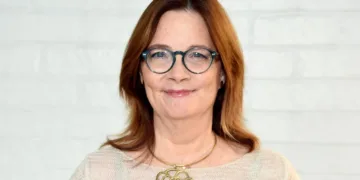
Annette Bening’s Beulah Jackson is the best thing that could have happened to this show. She arrives swirling whiskey and dispensing terms, and you initially think: fine, a villain, understood. Then the show starts pulling at the seams of that reading. Beulah is afraid. She’s built an empire that requires constant maintenance and has a son, Rob-Will (Jai Courtney), who treats it like a demolition site. Her ruthlessness is real, but so is the exhaustion underneath it. Bening finds both registers without announcing the transition. Her scenes with Reilly carry the quality of two people who recognize something dangerous in each other and haven’t yet decided what to do about it.
Ed Harris plays Everett McKinney, local veterinarian, Vietnam veteran, Navy Seawolves hat apparently a permanent fixture, and keeper of the town’s institutional memory. He is warm to the Duttons, connected to the Jacksons, and loyal to no one in any obvious way. Harris makes every line feel like a considered decision rather than a scripted one. There is a scene where Everett is called onstage at a bar to sing. The camera cuts away before a single note is heard. It is, among other things, a perfect encapsulation of the show’s habit of gesturing toward depth and then relocating.
The bunkhouse offers its own satisfactions. J.R. Villarreal’s Azul, a ranch hand inherited from the previous owners, brings a lightness to scenes that might otherwise calcify under the weight of Rip’s silences. Marc Menchaca’s Zachariah, a reformed man fresh from prison, earns the season’s most poignant moment with almost no dialogue: he steps outside, looks up at the stars for the first time in years, and says, tearfully, “yeah.” That’s the whole scene. It lands.
Rob-Will departs after Episode 2, vacating the narrative’s most volatile presence. Joaquin (Juan Pablo Raba) fills the vacuum but draws comparisons, including from Beth herself, to the late Jamie Dutton. They are not flattering ones.
A Worthy House for Difficult People
The underdog repositioning works. This is not obvious. Beth and Rip spent years as Yellowstone’s most powerful players, and power, on television, tends to breed a kind of dramatic immunization. If the audience knows the protagonists will never truly lose, tension becomes theater. Dutton Ranch breaks that contract early, and the Jacksons represent a threat that Beth and Rip’s combined ferocity cannot simply dissolve. The audience knows what these two are capable of. The Jacksons don’t. That asymmetry is where the show finds its best energy.
The relationship between Beth and Rip remains the anchor. The show makes no attempt to threaten their marriage with artificial drama. It doesn’t need to. Their dynamic, built across years and seasons of shared catastrophe, generates tension in quieter registers: how they process fear separately before returning to each other, how Rip’s protectiveness and Beth’s self-sufficiency occasionally pull in opposite directions without pulling apart. Reilly and Hauser have been playing off each other long enough that even their silences carry information.
Pacing remains the primary liability across the first four episodes. The Jacksons and Duttons spend considerable time orbiting each other without direct collision, and the Carter subplot absorbs screen real estate that might have gone to developing Everett’s genuinely ambiguous position in the town’s power structure. The Texas landscape, visually competent, hasn’t yet earned the near-mythological status Yellowstone granted Montana.
Feehan’s reported departure before the premiere raises fair questions about Season 2’s creative continuity. Season 1 was completed before he left, and what’s on screen reflects a coherent, if occasionally sluggish, vision. Dutton Ranch may not have arrived as the franchise’s finest hour, but it’s the first spin-off that genuinely feels like it belongs in the same conversation as the show that preceded it.
The highly anticipated Yellowstone spin-off series Dutton Ranch officially premiered on May 15, 2026. Serving as a modern-day sequel to the main franchise, the series follows the iconic couple Beth Dutton and Rip Wheeler as they leave Montana behind to build a new life and empire on a 7,000-acre ranch in South Texas. Audiences can watch the continuous drama, intense rivalries, and Western grit of the nine-episode first season on the streaming platform Paramount+, with the show additionally broadcasting on the Paramount Network.
Where to Watch Dutton Ranch









Full Credits
Title: Dutton Ranch
Distributor: Paramount+
Release date: May 15, 2026
Rating: TV-MA
Running time: 45–60 minutes per episode
Director: Christina Alexandra Voros, Greg Yaitanes, Jessica Lowrey, Phil Abraham
Writers: Chad Feehan, Taylor Sheridan, John Linson, Hayley Tibbenham, Hilary Bettis, J. Todd Scott, Jacob Forman, K.C. Scott
Producers and Executive Producers: Chad Feehan, Taylor Sheridan, John Linson, Art Linson, David Glasser, Bob Yari, Ronald Burkle, Christina Alexandra Voros
Cast: Kelly Reilly, Cole Hauser, Finn Little, Ed Harris, Annette Bening, Jai Courtney, J.R. Villarreal, Juan Pablo Raba, Marc Menchaca, Natalie Alyn Lind, Morgan Wade
Director of Photography (Cinematographer): Todd McMullen, Christina Alexandra Voros
Editors: Chad Feehan
Composer: Brian Tyler
The Review
Dutton Ranch
Dutton Ranch earns its place in the Yellowstone universe by doing something the franchise needed: returning its best characters to genuine vulnerability. Reilly and Hauser remain exceptional, Bening and Harris are inspired additions, and the smaller-scale conflict suits the show's strengths. The pacing drags across the early episodes, Carter's subplot tests patience, and Texas hasn't yet claimed the mythological weight Montana carried. Still, the foundation is solid, the emotional investment is real, and the promise of a proper Beth-versus-Beulah reckoning makes the wait bearable.
PROS
- Reilly and Hauser deliver career-best work, with refreshingly stripped-back characterizations
- Bening and Harris are perfectly cast, bringing genuine dramatic weight to the new ensemble
- The underdog repositioning of Beth and Rip revitalizes the central conflict
- Smaller political scale keeps the drama personal and grounded
- Episode 4 signals real emotional range and a higher ceiling than the premiere suggests
CONS
- Pacing is sluggish across the first four episodes; major confrontations remain frustratingly deferred
- Texas hasn't yet earned the near-mythological landscape identity Montana held in Yellowstone
- Carter's romantic subplot is formulaic and consumes disproportionate screen time
- Montage sequences feel rushed and perfunctory
- Feehan's departure raises unresolved questions about Season 2's creative direction