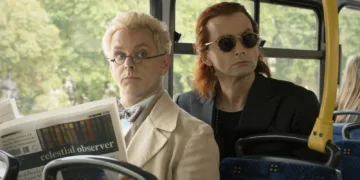

























The arrival of this feature-length finale carries the air of divine intervention. Moving from a serialized format to a 97-minute cinematic climax, the production exchanges the leisurely pacing of prior years for a concentrated burst of narrative energy. The story gathers the emotional wreckage of the rift between the angel Aziraphale and the demon Crowley.
Aziraphale now occupies the pristine, sterile corridors of Heaven, serving as architect of Operation Second Coming, a bureaucratic project designed to sanitize and manage the return of Jesus Christ to Earth. Crowley endures terrestrial exile, wandering the streets of Soho, distant from the infernal hierarchy that once defined his existence.
Crisis arrives when the Messiah, the Metatron, and the Book of Life vanish, triggering a frantic search across cosmic and earthly planes. The film examines the friction between rigid divine mandates and the messy reality of human compassion, asking how a partnership forged over millennia might survive the literal end of all things.
Velocity and the Physics of a Compressed Apocalypse
The shift from a six-episode structure to a single high-velocity narrative fundamentally alters the rhythm of the storytelling. The 90-minute format demands clinical efficiency. The first act moves at a breathless speed, resolving established plot points from the previous season with a swiftness that prizes momentum, allowing little time for reflection.
The time-sensitive nature of the Second Coming drives the plot forward relentlessly, and every scene carries the weight of an impending deadline. This urgency prevents the narrative from sinking into the exposition of celestial law. The film operates with a sharp, dual-track approach, following the political maneuvering within the offices of Heaven alongside a grounded, gritty search across London.
The visual and tonal separation of these two worlds is absolute. Heaven’s environment consists of cold, white spaces emphasizing the detachment of the angelic host, sterile rooms where the end of the world registers as a ledger entry. Soho’s pubs carry a sensory richness of their own: neon lights and the smell of stale spirits define the spaces where Crowley seeks refuge.
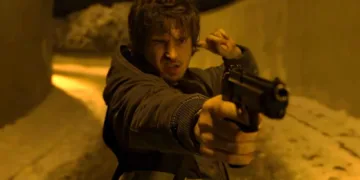
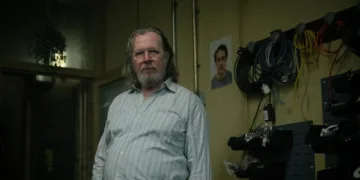
The subplot involving a crime boss and Crowley’s temporary indebtedness provides necessary weight, grounding the supernatural stakes in the mundane reality of human debt and consequence. These terrestrial sequences offer relief from the high-concept drama of the divine offices, reminding the viewer of precisely what is at risk during this planned Armageddon.
Pacing challenges emerge with the supporting ensemble. The condensed runtime demands the sacrifice of several side stories. Characters like Muriel, who previously held significant space, appear only briefly. Other familiar faces from earlier seasons register as little more than cameos, and a palpable sense of missed opportunity arises.
A brief scene involving a cryptic crossword competition hints at the kind of episodic richness a full season would have provided, suggesting a larger story just beyond the edges of the frame. The film keeps its lens trained tightly on the central mystery, producing a narrative that feels spare and purposeful. It sidesteps the narrative gluttony that occasionally slowed the middle chapters of the series. The result is a work of lean precision that honors the urgency of the premise.
Divine Bodies and the Art of the Archangel Editor
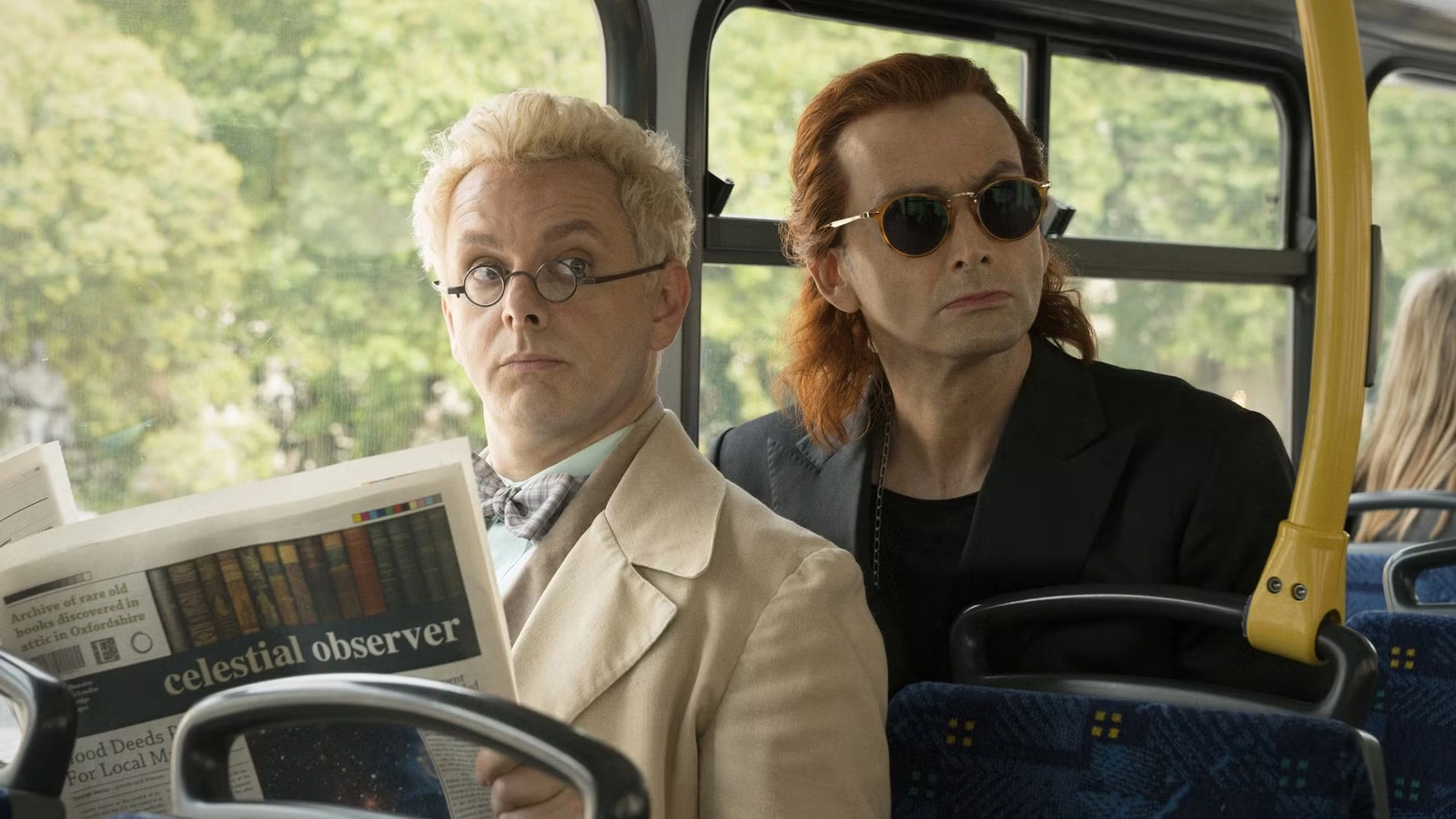
The central partnership remains the foundation of this final chapter. Michael Sheen delivers a performance that redefines Aziraphale as an archangel editor, approaching the apocalypse as a text requiring heavy revision, sanding down the sharp edges of divine judgment with the fussiness of a middle manager.
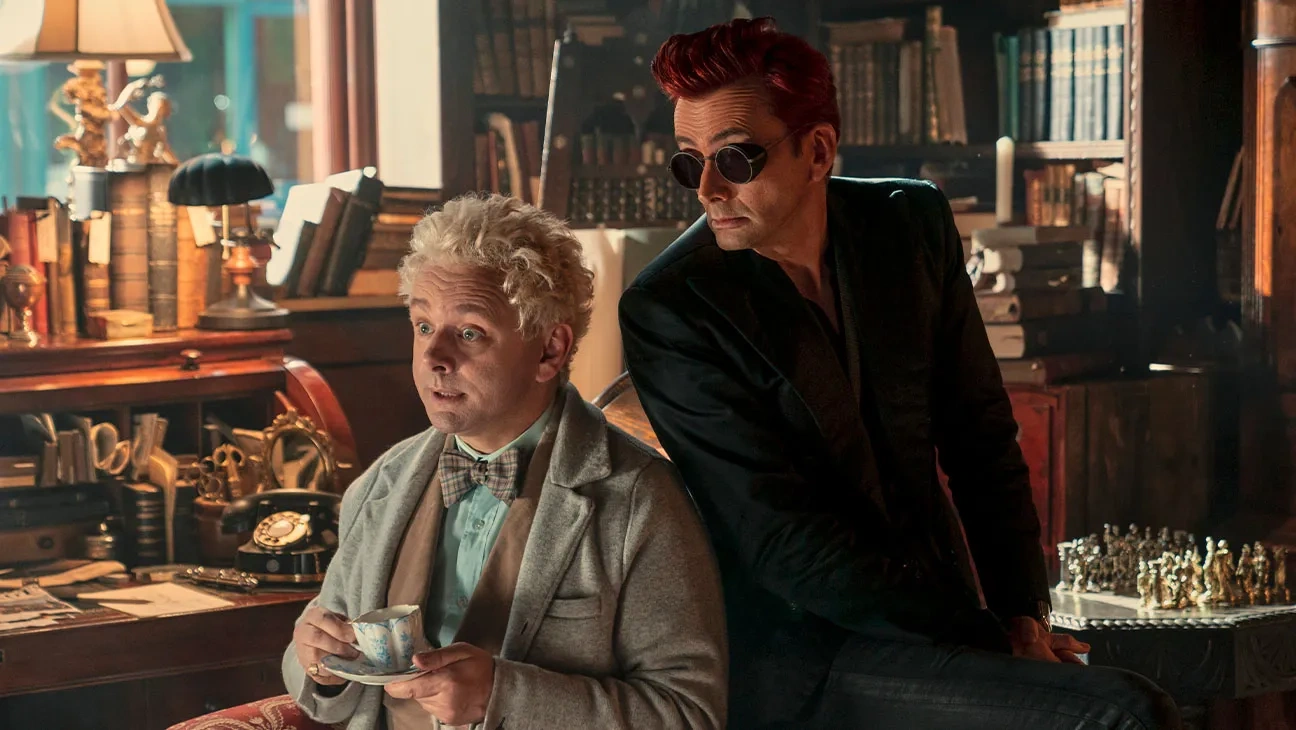
This portrayal highlights the tension of an entity trying to remain moral within an inherently rigid system. David Tennant brings visceral force to a grieving, inebriated Crowley, deploying physical comedy to mask a deep sense of isolation. His physicality has collapsed into the heavy, slumped posture of someone who has lost his place in both the celestial and earthly realms.
The development of their reconciliation feels earned within the shortened format. The script allows their interactions to unfold with a natural friction, each exchange weighted by their shared history. Their banter maintains the rhythmic quality audiences have come to expect, and this verbal synergy underscores why this pairing anchors the series. They pursue the search for the Book of Life with the energy of a classic buddy film, infusing the high-stakes drama with welcome lightness.
Bilal Hasna introduces a new dimension to the series as the Messiah. This version of Jesus radiates compassion and profound confusion, stripped of the traditional markers of divine authority. He wanders the Earth as a man trying to remember his own identity, performing mundane acts of kindness, sharing day-old pizza with strangers, and attempting to relate to modern people through fish-related parables that fail to land.
The character serves as a mirror for the themes of free will and memory, representing a divinity that is deeply human. The performances across the cast anchor the high-concept theology. The actors manage the emotional gravity of the final act with quiet intensity, ensuring the ending feels like a personal victory anchored in human-scale emotion. Their chemistry remains the primary reason to engage with this world.
The Visual Geometry of Heaven and the Grain of Soho
The technical execution of this finale relies on a sharp visual language. The cinematography emphasizes the distance between the hallowed and the hollow. Heaven’s offices are depicted with a stark, over-lit whiteness that feels aggressive, projecting total exposure and erasing both shadow and complexity.
The London sequences fill the frame with rich, shadowed textures. The sobering neon lights create an atmosphere of urban melancholy, reflecting the internal state of Crowley, a figure lost in the grain of the city. These visual choices carry narrative weight, highlighting the disconnect between the divine planners and the world they claim to protect.
The production deploys CGI selectively, concentrating resources on a few significant sequences. The depiction of the War in Heaven is visually arresting, providing a sense of scale that earlier seasons rarely achieved. Other supernatural events remain off-screen or are conveyed through dialogue, keeping the shown effects polished and effective. The visual world feels coherent and lived in.
The sound design supports the escalating chaos of the Second Coming, building an auditory atmosphere of tension that mirrors the narrative urgency. Silence plays a vital role during the intimate scenes between Aziraphale and Crowley, allowing the emotional weight of the performances to take center stage. The auditory atmosphere moves from the comical inefficiency of the bureaucracy into high-stakes tension during the climax, a transition handled with precision and restraint.
The musical cues support the emotional arc of the characters throughout. Every technical choice serves to emphasize the central relationship. The visual and auditory elements work in tandem, creating a cinematic experience that feels both grand and personal. The film looks and sounds like a fitting finale.
Ethical Reboots and the Failure of Bureaucratic Grace
The narrative functions as a satire of divine bureaucracy, depicting Heaven and Hell as corporate entities defined by their own inefficiency. God serves as the ultimate boss; the angels are middle managers struggling to implement a script they did not write and do not fully understand. This depiction parodies the arrogance of large organizations that lose sight of their original purpose. The story opts for a human cosmology rooted in agency and compassion, aligning with a tradition of satirical fantasy that punches up at the structures of power.
The theme of reconciliation runs parallel to the act of saving the world. The characters occupy a middle space, too virtuous for Hell and too worldly for Heaven, a duality that makes them the only figures capable of seeing the flaws in the planned apocalypse.
The Second Coming is treated as a kinder, gentler reboot, a project that fails by ignoring the complexity of human choice. The plot suggests that no amount of divine editing can account for the unpredictability of free will. This philosophical layer gives the film an intellectual depth that survives the rapid pacing.
The final minutes carry significant weight. The resolution maintains careful emotional restraint, addressing the themes of responsibility established in the first season. The ending serves the nature of the series by focusing on the flaws of its divine protagonists, suggesting that the most meaningful acts of grace occur on a personal level. Saving a partnership registers as a victory equal to saving the universe.
The story ends on a note both quiet and profound, acknowledging that the rigidity of cosmic order cannot diminish the fluid, transformative quality of bonds between individuals. This focus on the intimate and the personal gives the story its most lasting impact. The final image presents two beings who have chosen each other, setting aside the demands of their origins. It is an ending that honors the history of the characters and provides a definitive close to their trajectory.
Good Omens Season 3 is scheduled to premiere this Wednesday, May 13, 2026. This finale provides a conclusion to the long-standing saga of the angel Aziraphale and the demon Crowley. The story picks up after the emotional separation that occurred at the end of the previous season. It is presented as a single feature-length special that resolves the remaining plot threads of the ineffable partnership. You can watch this final chapter exclusively on Amazon Prime Video.
Where to Watch Good Omens Season 3 Online


Full Credits
Title: Good Omens Season 3
Distributor: Amazon Prime Video
Release Date: May 13, 2026
Rating: TV-MA
Running Time: 97 minutes
Director: Rachel Talalay
Writers: Neil Gaiman, Michael Marshall Smith, Peter Atkins
Producers and Executive Producers: Sarah-Kate Fenelon, Chris Newman, Rob Wilkins, Josh Cole, Rachel Talalay
Cast: Michael Sheen, David Tennant, Bilal Hasna, Doon Mackichan, Gloria Obianyo, Liz Carr, Paul Chahidi, Quelin Sepulveda, Derek Jacobi
Director of Photography (Cinematographer): Gavin Finney
Editors: Emma Oxley, Claire Anderson
Composer: David Arnold
The Review
Good Omens Season 3
This finale operates as a high-velocity distillation of the central partnership. The transition to a feature format sacrifices secondary depth for emotional precision. While the pacing feels hurried, the chemistry between Sheen and Tennant provides a stable anchor. It provides a satisfying end that prioritizes character resolution over cosmic spectacle. The film succeeds by placing intimacy before the infinite.
PROS
- Exceptional performances by Michael Sheen and David Tennant.
- Striking visual contrast between the celestial and terrestrial settings.
- Effective thematic resolution for the main characters.
- Lean narrative structure that avoids unnecessary bloat.
CONS
- Underutilization of the supporting ensemble.
- Accelerated pacing that limits atmospheric reflection.
- Omission of previously established subplots.