

























![Kingdom Hearts Collection [I-III] Review](https://gazettely.com/wp-content/uploads/2026/10/Kingdom-Hearts-Collection-I-III-1-360x180.webp "Kingdom Hearts Collection [I-III] Review: KHII Holds Steady as Newer Entries Fluctuate 37")



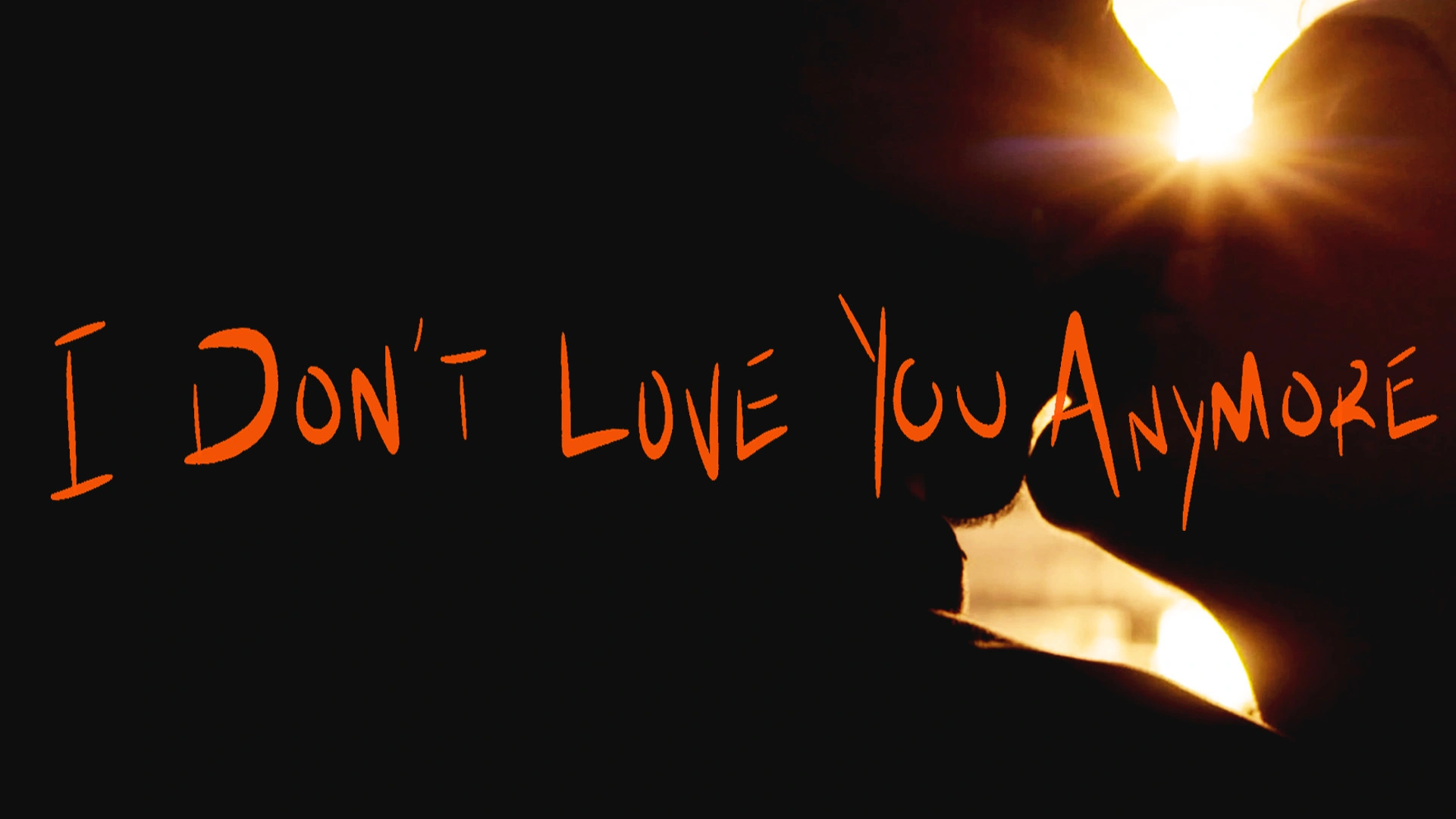

Fluorescent lights buzz over a sterile interrogation room while a detective keeps a husband and wife in separate isolation. I Don’t Love You Anymore opens with the chill of procedure, a space where marriage becomes evidence. Brett and Angie give an account of a home invasion involving Kevin, an unhoused man whose entry into their house turns fatal.
According to their story, a struggle led Kevin to take Brett’s firearm, shoot himself, and fall into the backyard pool. That violent incident begins a 75-minute investigation built from pressure, memory, and omission. Henri Esteve gives Brett a nervous, protective charge. Hope Lauren plays Angie with guarded stillness, the bearing of someone worn down by long private exhaustion.
Marcus Henderson’s Kevin becomes the figure whose arrival cracks the couple’s domestic order. The film starts as chamber drama, then tightens into psychological thriller. Its cultural grammar comes from the Western domestic thriller, with independent cinema’s lean economy shaping its rhythm. The short runtime creates a brisk, confrontational pace, asking viewers to assemble truth at the same tempo as the interrogator.
Triangulated Perspectives and the Architecture of Omission
The narrative structure moves through fracture. Chronology gives way to three testimonies, each one a layer in a concealed history. This design makes watching the film feel close to reading a case file from several unreliable sources. Brett’s version carries deliberate absences. His language protects the image he wants to preserve.
Angie and Kevin speak from desperate positions, with candor shaped by loss and depletion. Flashbacks connect the police station to the night of the shooting, then reach further back to a college graduation ten years earlier. That memory reveals the car accident that caused Angie’s physical disability. The older trauma becomes the ground under the present crisis, linking marriage, guilt, and bodily change into a single domestic record.
The film’s fractured order gives subjective memory real dramatic force. One person’s tragedy becomes another person’s secret, and truth changes shape according to who is speaking. That structure keeps sympathy unstable. It also places the film near a global independent mode, where small rooms and sparse locations can carry large emotional histories.
The edits work like forensic sorting. The viewer gathers details from biased accounts and tries to construct a full picture from partial testimony. In that sense, the home becomes culturally legible as a Western symbol of privacy, safety, and ownership, then turns brittle under pressure. Secrets supply its real architecture. The family unit, often treated as a source of stability in domestic thrillers, appears here as a fragile system held together by silence.
Visual Tension and the Economy of Independent Direction
Director Mitch Marcus uses contrast in space, light, and color to stretch the film’s limited scale. The interrogation rooms feel cramped and airless. Poolside and beach imagery opens the frame, creating a shift in scale that reflects the characters’ movement between confinement and memory.

The cinematography favors darkness, sharp lighting, and exact framing. Faces fall into shadow during the questioning, which gives the testimony a visual uncertainty that matches the story’s moral uncertainty. The film’s sharp editing keeps momentum across the 75 minutes, making the investigation feel compressed without turning rushed.
Sound carries unusual weight. Paul McCrane’s detective exists through voice, which gives the interrogation an authority that feels almost institutional. His unseen presence turns language into pressure. The score raises tension with restraint, supporting the dread without overwhelming the performances. The production value comes from precision: tight framing, careful lighting, and a clear sense of where to place the viewer.
This resourceful method belongs to independent cinema’s practical tradition, where limitation can become style. The sterile white of the police station clashes with the deep blues of the swimming pool, separating the cold present from the chaotic past through color. Each shot contributes to the growing dread. The thriller energy rises from atmosphere, silence, and the pause between questions.
Physicality and the Dissolution of Domestic Fidelity
Hope Lauren gives Angie a hard, lucid stillness. She resists sentimentality and lets the character’s cold demeanor speak for emotional patience already spent. Angie feels like a woman who processed her grief before anyone asked for her statement. Her wheelchair presence creates a stillness Brett cannot equal, and the performance turns physical constraint into psychological command.
Marcus Henderson gives Kevin dignity and grounded realism, steering the role away from outsider clichés. His connection to the couple feels plausible, intimate, and tragic. Henri Esteve plays Brett with controlled vulnerability, showing a man working to keep his manufactured reality intact under questioning.
The brief face-to-face encounter between Brett and Angie brings the performances to their sharpest point. Years of silence and resentment become visible in the smallest shifts of presence and response. Through these performances, the film studies guilt and the cost of hidden history. A single act of negligence defines a decade of marriage.
Their relationship’s collapse reflects anxiety about suburban stability, a theme familiar to Western domestic thrillers and legible to global audiences through the shared fear that private life can break under one violent event. Each actor carries a separate truth.
They show love as something that can vanish while obligation remains in place. The character study traces how trauma reshapes identity across time. The most dangerous intruder is the one already inside the house. The performances keep the plot turns rooted in human pain.
Released on February 20, 2026, I Don’t Love You Anymore is a clinical and intense psychological crime thriller that utilizes a non-linear narrative to deconstruct a single violent event. The story follows a couple, Brett and Angie, who are interrogated by a detective after a man is found dead in their swimming pool. Inspired by classic deception-driven narratives like Dial M for Murder, the film explores the fragmentation of truth and the rot beneath the surface of a domestic life. It is currently available for streaming and digital purchase on platforms such as Amazon Video, Apple TV, Google Play, and Hoopla.
Where to Watch I Don’t Love You Anymore (2026) Online








Full Credits
Title: I Don’t Love You Anymore
Distributor: Freestyle Digital Media
Release date: February 20, 2026
Rating: NR
Running time: 73 minutes
Director: Mitch Marcus
Writers: Mitch Marcus
Producers and Executive Producers: Mitch Marcus, Zachary Kingham-Seagle, Elisabeth Rudolph
Cast: Marcus Henderson, Hope Lauren, Henri Esteve, Paul McCrane, Dionne Lea
Director of Photography (Cinematographer): Daniel Marks
Editors: Mitch Marcus
Composer: Mitch Marcus
The Review
I Don't Love You Anymore
The film succeeds as a disciplined exercise in perspective and tension. It transforms a standard domestic tragedy into a sharp study of human unreliability. The performances anchor the shifting timelines. The emotional weight remains grounded. The narrative logic feels strained at points. Technical precision and a brisk pace provide a satisfying experience. It serves as a reminder that effective thrillers rely on character and atmosphere.
PROS
- Strong lead performances from Hope Lauren and Marcus Henderson.
- Effective non-linear structure creates tension.
- High production value for an independent budget.
- Tense atmosphere within the interrogation scenes.
CONS
- Unrealistic plot developments.
- Thin secondary motivations for minor characters.








Dead on review! Thank you!
Thank you for the note, Mitch! We really appreciate you taking the time to read the review and share your feedback. Wishing you and the film continued success!