



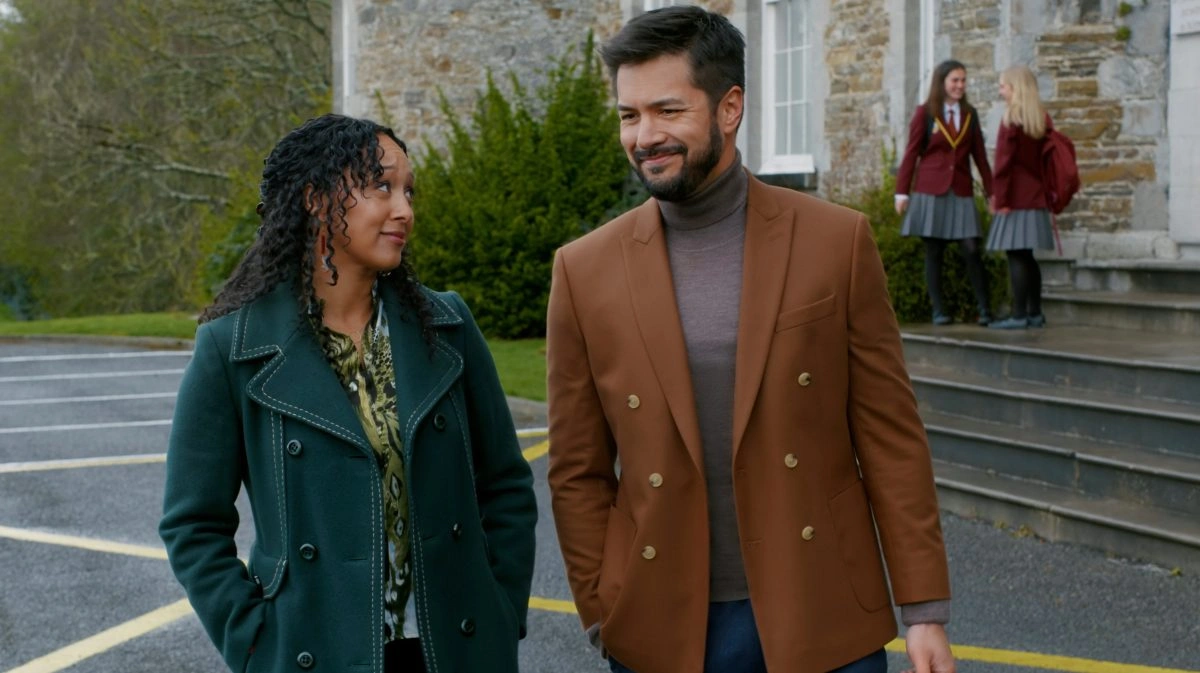
The Haunted Harmony Mysteries franchise on the Hallmark Channel occupies curious territory: a cozy mystery that takes the supernatural seriously as a structural device, anchoring its stories in the ghost-inhabited Irish countryside adapted from Alexia Gordon’s Gethsemane Brown Mystery novels. Key to the Castle, the third installment, continues this with confidence. Music teacher Gethsemane Brown (Tamera Mowry-Housley) lives and works in Ireland, where she can see and speak with the dead.
This ability is treated with the same matter-of-fact warmth the genre usually reserves for a protagonist’s talent for spotting a misplaced clue. The Irish setting, a mist-draped coastal town and an ancient castle, feeds into a visual and cultural language where the line between the living and the dead has long been culturally porous. The film streams on Hallmark+, and while it carries the polish and rhythm of a Hallmark production, the supernatural conceit gives it a texture that separates it from the formula. The fantastical here is structural, the load-bearing wall of the entire story.
A Ghost Who Doesn’t Know He’s the Victim
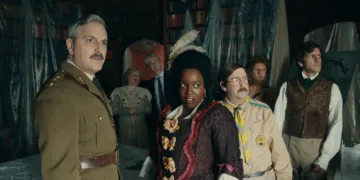
Gethsemane is invited to observe the filming of a paranormal reality TV show, Before and Afterlife, which has set up production inside a local Irish castle. The show is co-hosted by Ciara and Kent, a formerly married couple still bound together professionally, their working relationship carrying the residue of a dissolved marriage. When Kent is found dead on set, the film produces one of its cleverest moments: Gethsemane gradually understands that the man she has been conversing with during a castle tour is already a ghost. The reveal is quiet and effective.
What follows is structurally inventive. Gethsemane now has two ghost partners: Eamon (Risteárd Cooper), her longtime spectral companion, and Kent, the newly deceased victim of the crime she is trying to solve. The complication, and this is where the franchise’s internal logic does real work, is that ghosts here do not retain clear memories of their own deaths. Kent cannot simply identify his killer. Gethsemane must gather physical evidence herself while her spectral allies scout locations she cannot physically access: interrogation rooms, suspects’ private spaces.
The premise carries a self-aware satirical current. A paranormal reality TV crew, skeptics and true believers arguing over what constitutes evidence of the afterlife, operates at the scene of an actual supernatural investigation. Suspects form a web of grievances: professional rivalry, romantic obsession, and buried secrets from Kent’s past. A quieter subplot threads a love triangle involving Inspector O’Reilly (Adam Fergus) and fellow teacher Griff (Marco Grazzini) through the background without disrupting the mystery’s momentum.
The Living and the Dead, and Why Their Friendship Is the Film
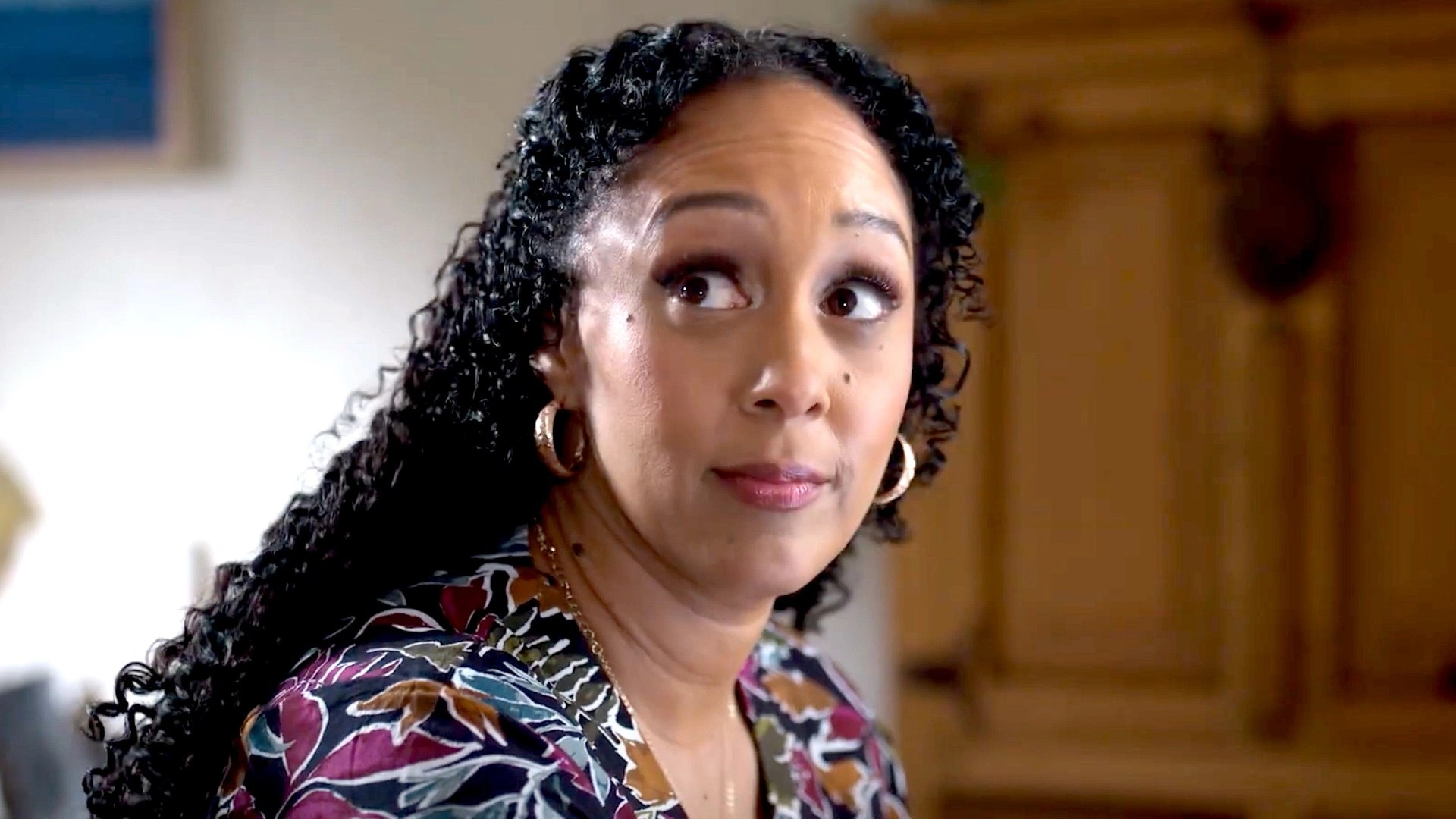
Tamera Mowry-Housley brings warmth and physical intelligence to Gethsemane. The role requires her to hold two conversations at once: one with the visible world, one with Eamon, who only she can see. This is a performance demand that goes unacknowledged in the text but is constant in execution. She makes it look natural, which is its own accomplishment. In the Hallmark context, Mowry-Housley has often been handed material that rests on familiar templates. Here she has found something that genuinely exercises her range, a character with history, wit, and a specific emotional landscape.
Risteárd Cooper is the film’s most valuable presence. He plays Eamon as a fully realized human being who happens to be dead, rather than as a spectral abstraction. His observations on the afterlife are delivered with a dry, theatrical quality that makes them oddly consoling. He gets the best lines, and he earns them. His energy sits opposite to Gethsemane’s: where she is warm and present, he is cool and observational. The balance between them gives the film its comic and emotional rhythm.
The friendship between Gethsemane and Eamon is the franchise’s actual foundation. It functions as a genuine relationship built on history, affection, and honest friction. The romantic subplots, while pleasant, operate at a lower temperature. Adam Fergus as Inspector O’Reilly is likable and professional, with a relationship to Gethsemane still finding its shape. Marco Grazzini’s Griff is given so little to do that his role as a competing romantic interest feels like a narrative promissory note. Director Linda-Lisa Hayter maintains the film’s tone with steady hands, keeping the pace clean and the emotional register consistent.
What the Franchise Gets Right, and Where the Cracks Show
The Irish setting offers genuine atmospheric value. A castle carries specific cultural weight, particularly in Irish storytelling traditions where the boundary between worlds has long been conceived as permeable. The mystery is well-built, parceling out misdirection with patience and arriving at a reveal that pays off the setup. The supernatural element functions as a constraint rather than a convenience: because the ghosts cannot simply solve the crime themselves, the investigation must be active and earned.
Some things work less well. A key scene involving the castle is undone by noticeably low-budget visual effects that briefly shatter the atmosphere the film has been carefully building. The killer’s unmasking is explained at excessive length, as if the script lost confidence in the audience’s ability to connect what they had already been shown. And for all the beauty of the Irish countryside, much of the film is staged indoors; the landscape that could deepen the story’s cultural texture remains mostly outside the frame. Griff’s minimal presence leaves the love triangle structurally lopsided.
For viewers new to the franchise, Key to the Castle holds together as a standalone. For those who have followed Gethsemane’s story from the beginning, it is a satisfying return to a world the series has built with genuine care and consistency.
Haunted Harmony Mysteries: Key to the Castle is a charming supernatural cozy mystery movie that officially premiered on the Hallmark Channel on May 30, 2026. The film follows music teacher Gethsemane Brown as she navigates her life in a scenic Irish town alongside her unexpected companion—the ghost of the home’s former occupant, Eamon. In this third installment of the franchise, a ghost-hunting television show visits the town, only for its host to be mysteriously murdered. Gethsemane and Eamon must team up once again to crack the case and help the newly departed spirit safely cross over. For viewers looking to enjoy this blend of humor, romance, and lighthearted suspense, the film is readily available to stream online through Hallmark+.
Where to Watch Haunted Harmony Mysteries Key to the Castle (2026) Online




Full Credits
Title: Haunted Harmony Mysteries: Key to the Castle
Distributor: Hallmark Channel, Hallmark+
Release date: May 30, 2026
Rating: TV-PG
Running time: 84 minutes
Director: Jessica Harmon
Writers: Kraig Wenman, Alexia Gordon
Producers and Executive Producers: Charles Cooper, Edwina Forkin, John Norton
Cast: Julie Lamberton, Adam Fergus, Sarah Gallagher, Marco Grazzini, Tamera Mowry-Housley, Ryan Murray, Aidan Redmond
Director of Photography (Cinematographer): Ciarán Tanham
Editors: Braden Oberson
Composer: Jeff Tymoschuk
The Review
Haunted Harmony Mysteries Key to the Castle
Key to the Castle is a confident, charming installment that earns its place in the franchise. The central friendship between Gethsemane and Eamon remains the series' sharpest asset, and the ghost-investigating-a-ghost premise is clever enough to feel genuinely fresh within the cozy mystery genre. Some rough edges, thin supporting roles, and underused scenery keep it from reaching its full potential. Reliable, warm, and frequently funny.
PROS
- Risteárd Cooper's performance as Eamon is exceptional
- The murder reveal is genuinely clever
- Strong central friendship with real comedic and emotional weight
- The supernatural conceit is structurally sound, not decorative
- Consistent tone and pacing throughout
CONS
- Visual effects in the castle scene are noticeably low-budget
- The killer's reveal is over-explained
- Marco Grazzini is significantly underused
- The Irish landscape is underexplored visually