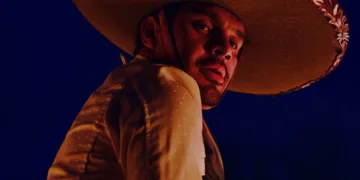


















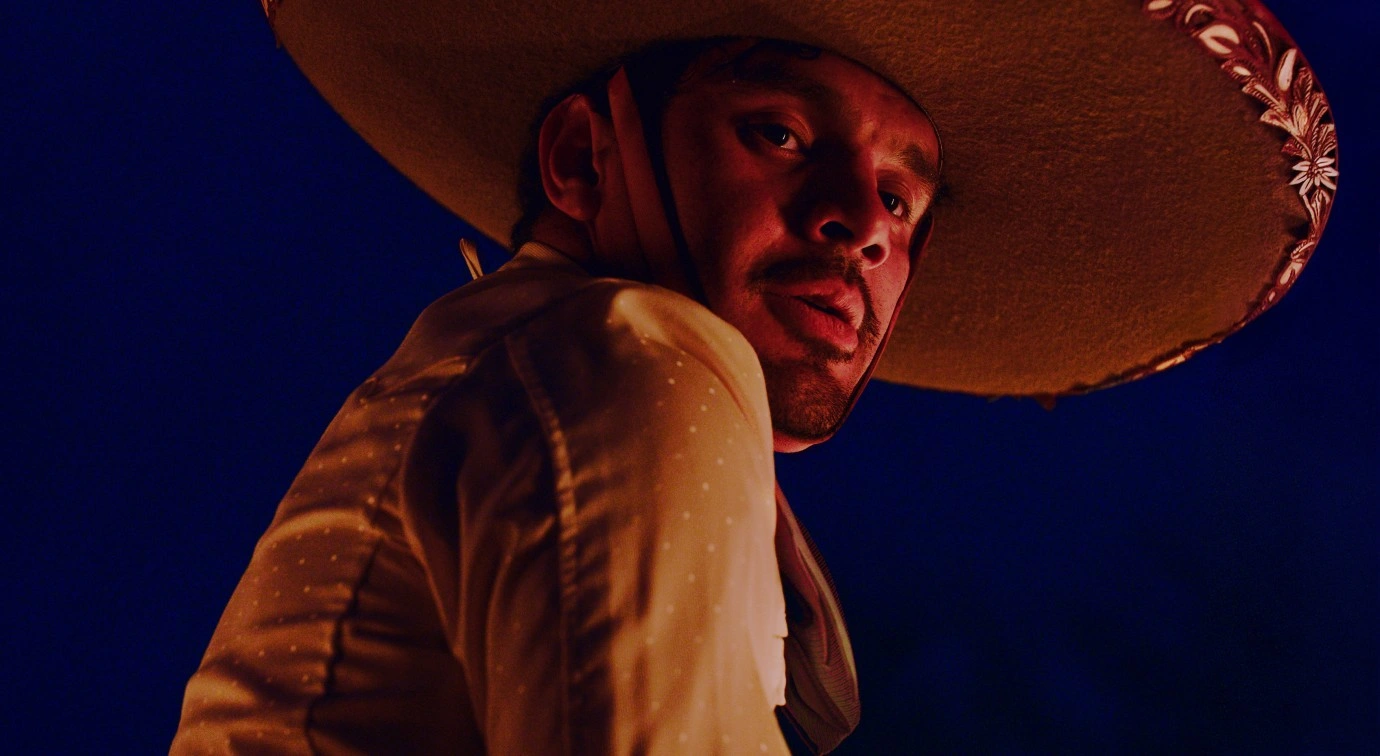

In the sun-baked plains of Michoacán, Mexico, the jaripeo unfolds as both ritual and spectacle. Dust rises around bucking bulls and thundering hooves, tequila bottles glint in the afternoon light, and men test themselves against beasts and tradition alike.
This is a culture steeped in hyper-masculinity, a pageant of bravado, strength, and inherited ritual. Into this world, filmmakers Efraín Mojica and Rebecca Zweig bring an intensely personal lens. Mojica, who grew up partly in the region, returns to document a community that shaped their own queer identity, examining the interplay of desire, secrecy, and camaraderie in a space dominated by macho spectacle.
Jaripeo blends vérité footage with impressionistic sequences, from Super-8 collages that feel frayed and tactile to stylized nocturnal interludes awash in neon and strobe light. The film lingers on gestures, on glances, on the tension between a hand brushing against leather and the roar of the crowd.
It is both immersive and intimate, capturing the thunder of bulls alongside the subtle erotic currents that ripple beneath the surface of this rural tradition. Every frame conveys a charged atmosphere, balancing the thrill of public performance with glimpses of private longing, inviting viewers to inhabit a space where masculinity, sexuality, and community converge.
Characters and Personal Narratives
Mojica’s dual role as filmmaker and participant shapes much of the narrative. Childhood memories of waiting in the sun for seats at family jaripeos give way to adolescent awareness of homoerotic tension among the riders. Their narration guides the viewer through a subculture defined by coded gestures and fleeting intimacies, illustrating how queer identities are negotiated within a space that celebrates aggressive masculinity.
Noé embodies the paradox of this environment. Burly and tautly muscled, he navigates the jaripeo as both participant and observer, revealing his sexuality in private spaces while conforming publicly to expectations of strength and reserve. His reflections are candid, sometimes awkward, and imbued with a vulnerability rarely captured in documentary.
Joseph presents a contrast: openly queer, flamboyant, and visually expressive, he dons makeup and occasionally drag to perform, mentoring a small community of peers while negotiating his attraction to men who embody traditional masculinity.
Interactions among the participants emphasize both secrecy and solidarity. Conversations unfold in hushed tones or playful exchanges, revealing desires, boundaries, and the silent understanding of shared experience. The diversity of perspectives underscores how the jaripeo subculture accommodates multiple expressions of gender and sexuality, shaped by local traditions, personal histories, and communal bonds. These narratives transform the rodeo from a simple sporting event into a window on complex social and emotional landscapes.
Visual Style and Cinematic Techniques
The film’s formal language amplifies both spectacle and introspection. Cinematographers Josué Eber Morales and Gerardo Guerra employ a vérité approach in the arena, following riders with tracking shots, capturing the crowd’s energy, and lingering on spontaneous interactions. Wide landscape shots frame the jaripeo within Michoacán’s rolling terrain, allowing moments of reflection that contrast with the chaos of the ring.
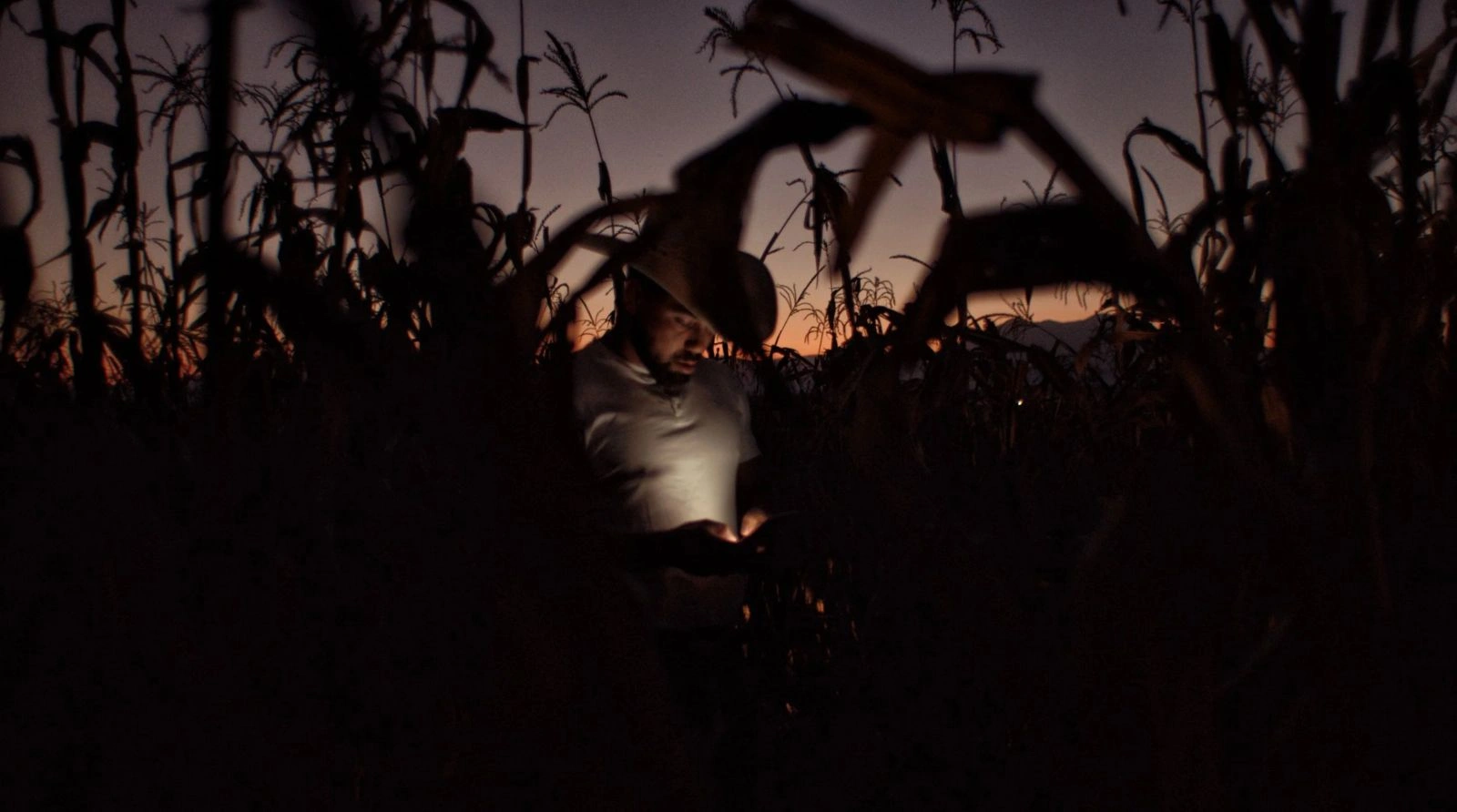
Super-8 footage punctuates the film with a tactile, frayed texture, evoking memory and intimacy. Its grain and softness contrast with the clarity of digital sequences, emphasizing Mojica’s personal gaze while maintaining visual rhythm.
Editing oscillates between pulse-racing montages of bulls and riders, slow meditative sequences observing gestures and expressions, and stylized fantasy vignettes, from strobe-lit cornfields to dreamlike nightclubs. These sequences transform private desire into visual poetry, highlighting the tension between public display and inner life.
Sound design and score reinforce these layers. Synth-based electronic passages pulse alongside traditional norteño rhythms, blending diegetic sounds of cheering crowds, hooves, and murmured conversations. Music and ambient noise modulate between the adrenaline of performance and moments of private reflection. Together, imagery, editing, and sound construct a world that is at once sensory and introspective, portraying masculinity, sexuality, and sociality as intertwined and dynamic forces within the jaripeo landscape.
Cultural Context and Thematic Exploration
The jaripeo operates as a stage for deeply ingrained Mexican machismo, Catholic tradition, and rural festivity. Within this framework, queer identities emerge through subtle gestures, coded language, and shared networks that negotiate visibility and secrecy. The film illustrates how masculinity is performed, contested, and eroticized, showing that traditional expectations are neither monolithic nor impermeable.
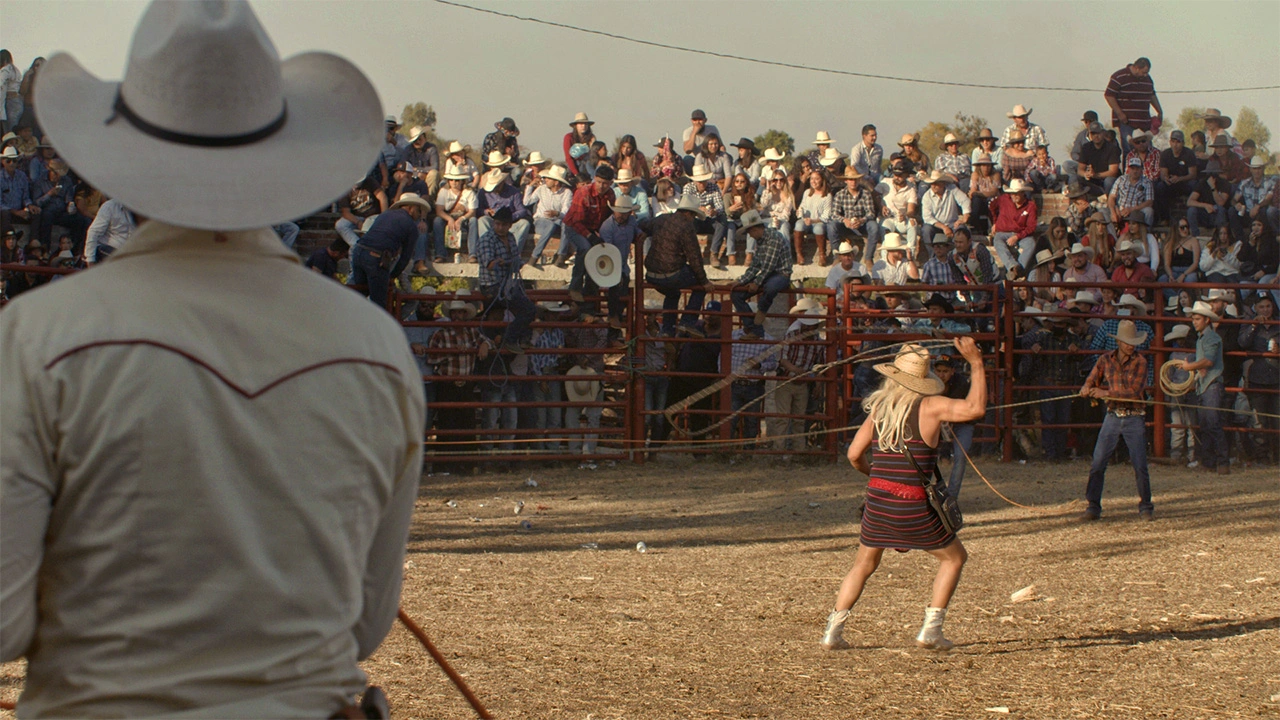
Family, community, and religious structures exert pressure, shaping choices around desire, expression, and self-presentation. Noé’s discretion and Joseph’s flamboyance exemplify different strategies for navigating these expectations. The documentary emphasizes the elasticity of gender norms, highlighting moments where public performance and private desire diverge.
Jaripeo situates these personal narratives within a broader cultural moment. It explores how individuals reconcile identity with social belonging, examining tensions between longing and conformity without moralizing. By focusing on affect, gesture, and spatial dynamics, the film conveys how cultural structures inform behavior, desire, and relationships. In doing so, it captures a community in motion, offering a portrait of rural queer life that is intimate, complex, and in dialogue with longstanding traditions.
Jaripeo is a hybrid documentary feature that celebrated its world premiere at the Sundance Film Festival on January 25, 2026, before making its international debut in the Panorama section of the Berlin International Film Festival. The project journeys into the heart of traditional rural Mexican rodeos in Michoacán to reveal an unexpected, underground queer subculture thriving beneath a hypermasculine spectacle. Cinema audiences can catch the film as it tours prestigious regional events, including the Seattle International Film Festival and the Calgary Underground Film Festival, ahead of its planned public broadcast and digital streaming release on ITVS and partner public media channels.
Full Credits
Title: Jaripeo
Distributor: Independent Television Service (ITVS), Misfits Entertainment, Arte
Release date: January 25, 2026
Running time: 70 minutes
Director: Efraín Mojica, Rebecca Zweig
Writers: Efraín Mojica, Rebecca Zweig
Producers and Executive Producers: Sarah Strunin, Jun Stinson Yamagishi, Carine Chichkowsky, Gerardo Guerra, Juan Pablo González, Carrie Lozano, Lizzie Gillett, Ian Bonhôte, Natanael Guzman
Cast: Efraín Mojica, Noé, Joseph
Director of Photography (Cinematographer): Josué Eber Morales, Gerardo Guerra
Editors: Analía Goethals
Composer: Emilia Ezeta, Marton Radics
The Review
Jaripeo
Jaripeo is a sensorial and intimate exploration of queerness within a hyper-masculine Mexican rodeo. Mojica and Zweig craft a lyrical, immersive portrait that balances visceral spectacle with moments of private reflection. The film excels in revealing the complexity of desire, community, and identity against a backdrop of tradition and ritual. Its inventive editing, evocative cinematography, and immersive soundscape make it an emotionally resonant and visually striking documentary that lingers long after the credits.
PROS
- Lyrical and immersive cinematography capturing both spectacle and intimacy
- Honest, nuanced portrayals of queer identities within a rigidly masculine culture
- Inventive use of Super-8 footage and stylized sequences
- Rich sound design and evocative score
- Strong narrative perspective from filmmaker-participant Mojica
CONS
- Limited scope may feel like a “slice of life” rather than a broader cultural study
- Stylized sequences may occasionally disrupt the documentary’s grounding in reality