












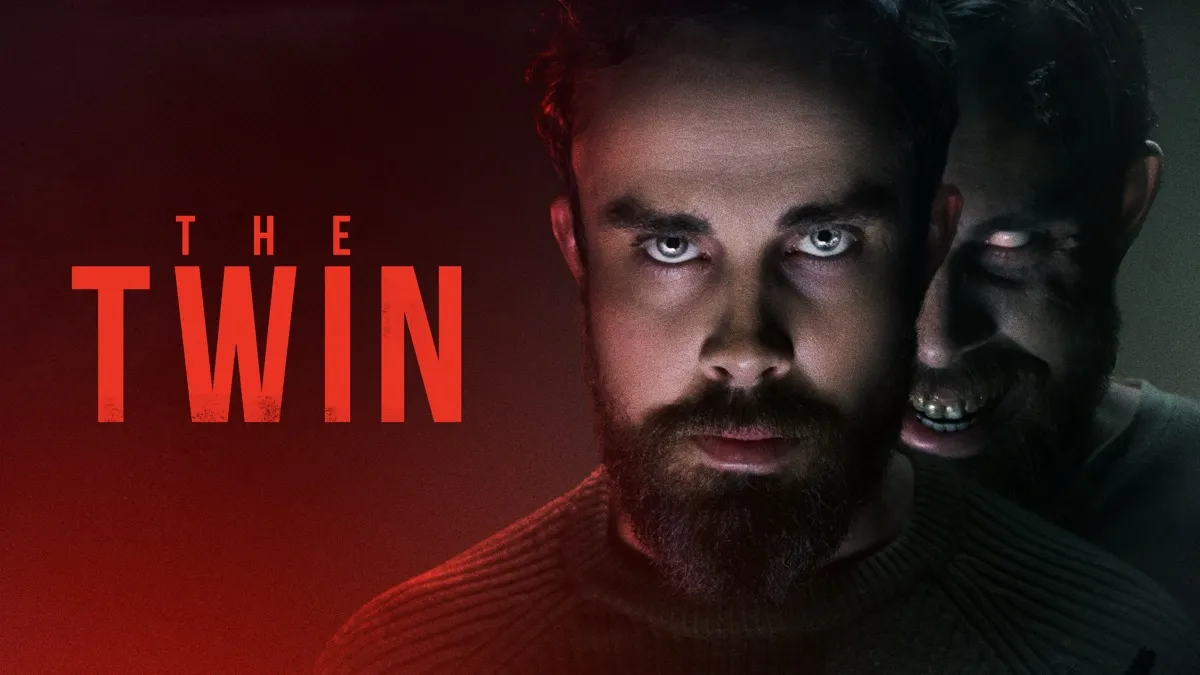

The film opens on a scene of domestic tranquility so perfectly composed it feels fragile, a prelude to rupture. We meet Nicholas and Charlie, a couple whose life with their cherubic son, Jacob, is rendered in warm, soft-focus tones that all but scream “before.”
The narrative architecture is classical, almost cruel, in its establishment of an idyll it has no intention of maintaining. The inevitable break comes not with a slow tear but a violent shatter: a household accident, swift and unceremonious, erases the child from the frame.
This sudden void sends Nicholas into a tailspin of guilt so profound that he follows it with a desperate, failed attempt to exit his own life. The film’s palette shifts instantly from warm to clinical, its tone to a low, persistent hum of dread.
As Nicholas returns from institutional care to the now-cavernous family home, the camera lingers on empty doorways and silent rooms, framing him as a ghost in his own history, waiting for a new horror to fill the silence.
The Tyranny of the Self
Left to marinate in his grief after his wife, Charlie, makes a necessary but brutal exit, Nicholas becomes a specimen under the care of Dr. Beaumont, a psychiatrist whose methods seem as much an art as a science. It is here, in the suffocating quiet of the house, that the film’s psychological machinery begins to grind.
The home, a character in its own right, transforms into a gothic prison, its shadows stretching into accusatory fingers. J.C. Doler’s direction cultivates a creeping paranoia, using a spare soundscape where floorboards creak with malevolent intent and whispers ride the edge of hearing, a classic noir technique that externalizes internal chaos.
Also Read




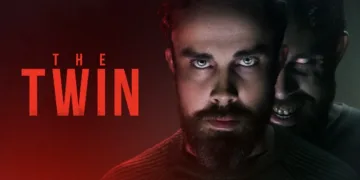
The antagonist, when it appears, is a masterstroke of uncanny horror: a “Fetch,” a doppelgänger from Irish lore, that is Nicholas’s own face contorted by decay and malice. It’s a concept that pulls from a deep well of literary terror, from Poe to Dostoevsky, the horror of meeting an alternate, corrupted self.
The central tension is not whether the monster is real, but whether the distinction matters. Is this a literal demon feeding on sorrow, or the pure, uncut manifestation of Nicholas’s own self-loathing? The film walks this tightrope with grim precision for much of its runtime.
The Fetch weaponizes his memories, using the spectral image of his son not as a comfort but as a tool of exquisite torture. It is survivor’s guilt given form, a relentless creditor arguing that Nicholas’s life is a debt that has come due.
This entity embodies the most terrifying Socratic notion: the unexamined life is not worth living, but the over-examined one might be impossible to survive. The horror is intimate, a civil war waged within a single psyche, where every victory for the self is also a defeat.
An Anatomy of Decay
The film rests its considerable weight on the shoulders of Logan Donovan, who delivers a performance of harrowing duality. As Nicholas, he is a study in implosion, his posture perpetually curled inward as if to contain his fracturing mind. His anguish is etched into every line of his face, a canvas of exhaustion and terror.
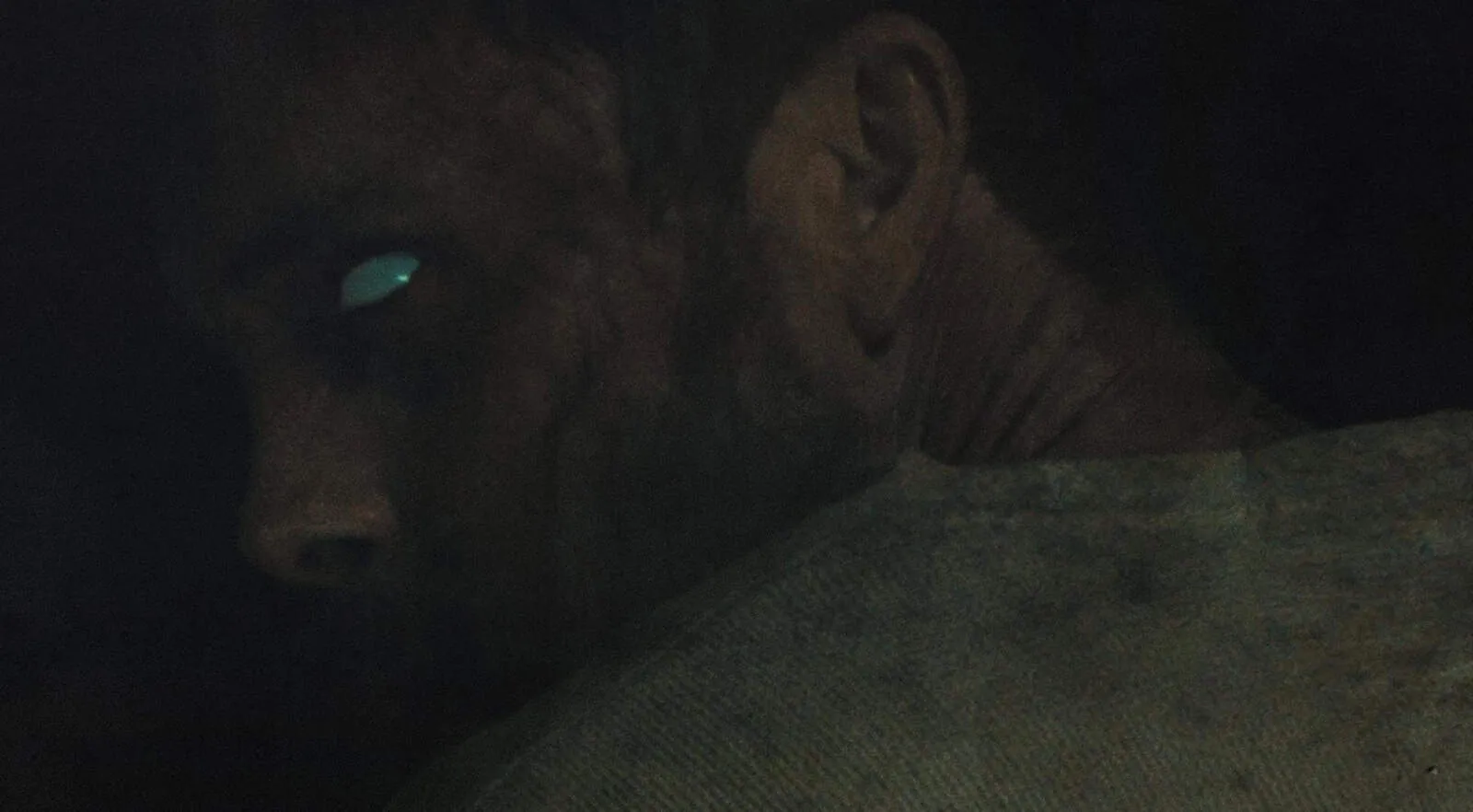
As the Fetch, he is transformed by Lisa O’Neal’s superb practical makeup into a figure of physical menace, a being whose movements are both familiar and horribly wrong—a predatory straightening of the back, a subtle, knowing smirk. The performance is a technical marvel, a man at war with his own reflection.
The supporting cast provides essential ballast, preventing the film from collapsing into solipsism. Aleksa Palladino’s Charlie is a portrait of grief’s isolating power; her departure is not an act of cruelty but of desperate self-preservation, a choice that introduces a fascinating layer of moral ambiguity. She leaves a void that is both physical and emotional, her absence a constant, silent rebuke.
Robert Longstreet’s Dr. Beaumont is an eccentric anchor, his folksy pragmatism a strange but necessary counterpoint to the unfolding nightmare. He, too, carries his own past sorrows, which adds a compelling texture to his interactions with Nicholas, blurring the line between clinical observation and genuine empathy.
Doler’s direction favors a gothic sensibility, trapping his characters in the low, oppressive light of the family home. The cinematography employs classic expressionistic framing, with canted angles and figures dwarfed by their surroundings, visually reinforcing Nicholas’s psychological instability. The house itself, with its cluttered rooms and Nicholas’s art studio, becomes an extension of his fractured mind, a physical archive of pain and memory that suffocates the present.
The Blueprint of Fear
The Twin succeeds powerfully as an unflinching allegory for the monstrous nature of grief. It uses the grammar of horror to articulate a profound, internal devastation, externalizing a man’s battle with his own soul. Yet, some of its narrative choices invite scrutiny.
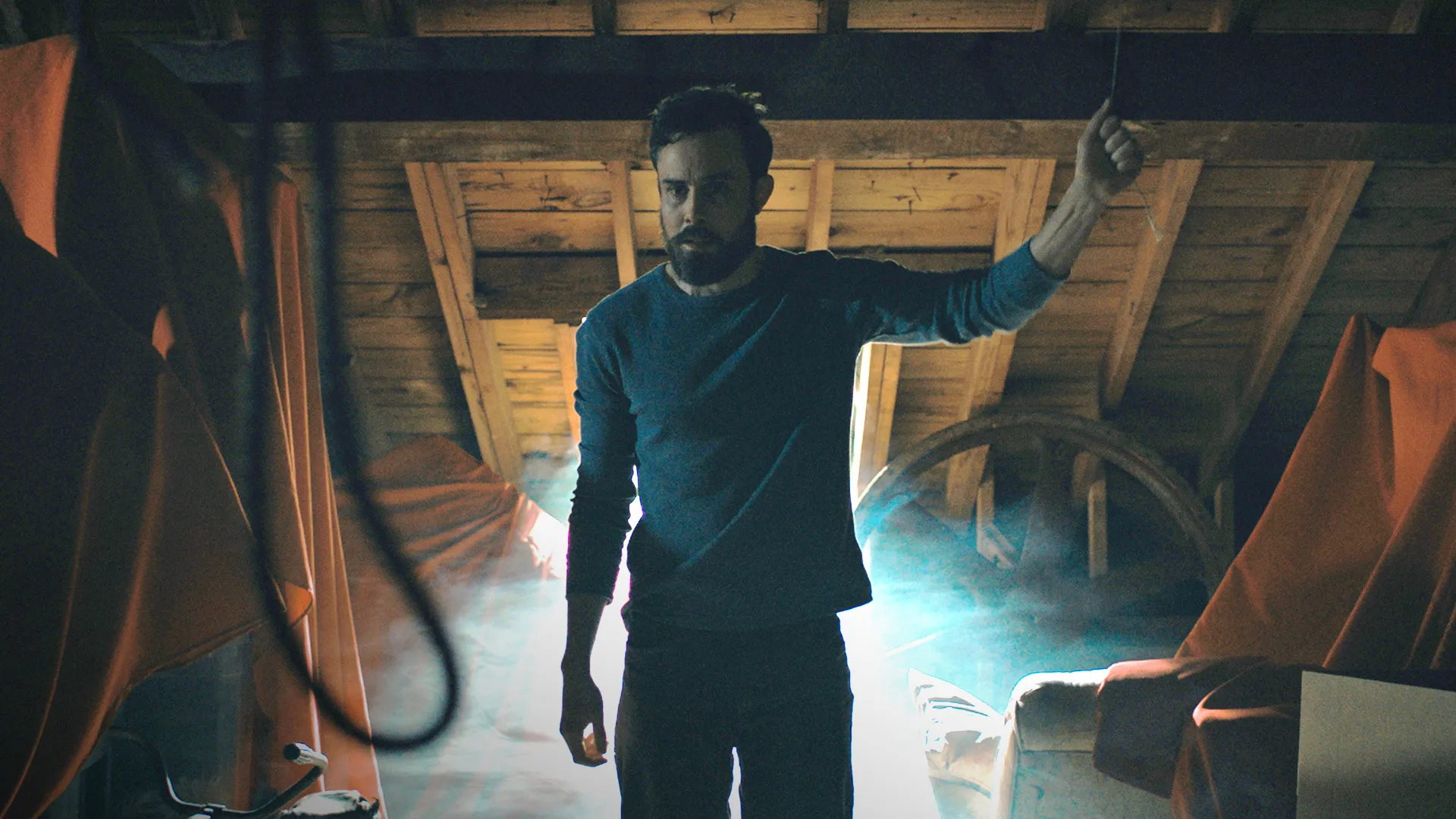
The decision to sideline Charlie early on, while psychologically sound for her character, leaves the central conflict feeling somewhat hermetic. It robs the film of a crucial emotional sounding board and risks reducing the stakes to the fate of one man, making the audience observers rather than participants in a shared tragedy. This choice, however bold, contains the horror within Nicholas, when its tendrils might have been more terrifying had they threatened to ensnare others.
A more significant point of contention arises in the final act. After masterfully balancing the psychological and the supernatural, the script makes a definitive choice, confirming the entity’s external reality. One must question the necessity of this reveal.
The terror was arguably more potent when it lived in the ambiguous space between mind and matter, forcing the audience to confront the terrifying possibility that the most fearsome monsters are the ones we create ourselves.
By providing a concrete answer, the film sacrifices a richer, more unsettling philosophical question for a moment of narrative clarity. It trades existential dread for a simpler, more conventional monster movie logic. It remains a bleak and emotionally punishing film, a potent fusion of psychological drama and visceral horror that lingers long after the credits, even if it ultimately chooses the easier path.
“The Twin (2024),” a horror film, was released in a limited theatrical run on July 4, 2025, and became available for streaming on July 1, 2025.
Full Credits
Director: J.C. Doler
Writers: Paul Petersen, J.C. Doler
Producers: J.C. Doler, Logan Donovan, Chris Alan Evans, Brittany Fallow, Alexander Jeffery, Paul Petersen, Lindsey Pellette
Executive Producers: Tamra Corley, Tamra Corley Davis, Holger Fuchs, Ben Hoeller, Andrew Schwartzberg, Jaime Schwartzberg, Andrew Schwarzberg
Cast: Logan Donovan, Aleksa Palladino, Robert Longstreet, Shannon Cochran, Pam Dougherty, Tucker Grumbles, Tripp Toupal
Director of Photography (Cinematographer): Joel Froome
Editors: J.C. Doler, Chris Lyon
Composer: Zviad Mgebry
The Review
The Twin
A haunting and often brilliant examination of grief's monstrous power, The Twin is anchored by a stunning lead performance and a palpable, gothic atmosphere. While its narrative courage falters in a final act that trades chilling ambiguity for conventional clarity, the film remains a deeply unsettling and emotionally raw piece of psychological horror. It's a taxing but memorable journey into the dark, one that succeeds more than it stumbles.
PROS
- A tour-de-force dual performance from Logan Donovan.
- Masterful creation of a dread-filled, gothic atmosphere.
- Superb practical makeup effects for the Fetch creature.
- A powerful and unflinching allegorical take on grief and trauma.
CONS
- Key supporting characters feel underdeveloped or sidelined.
- The third-act reveal sacrifices psychological depth for a standard monster explanation.
- Pacing may feel slow for those seeking traditional horror thrills.