

























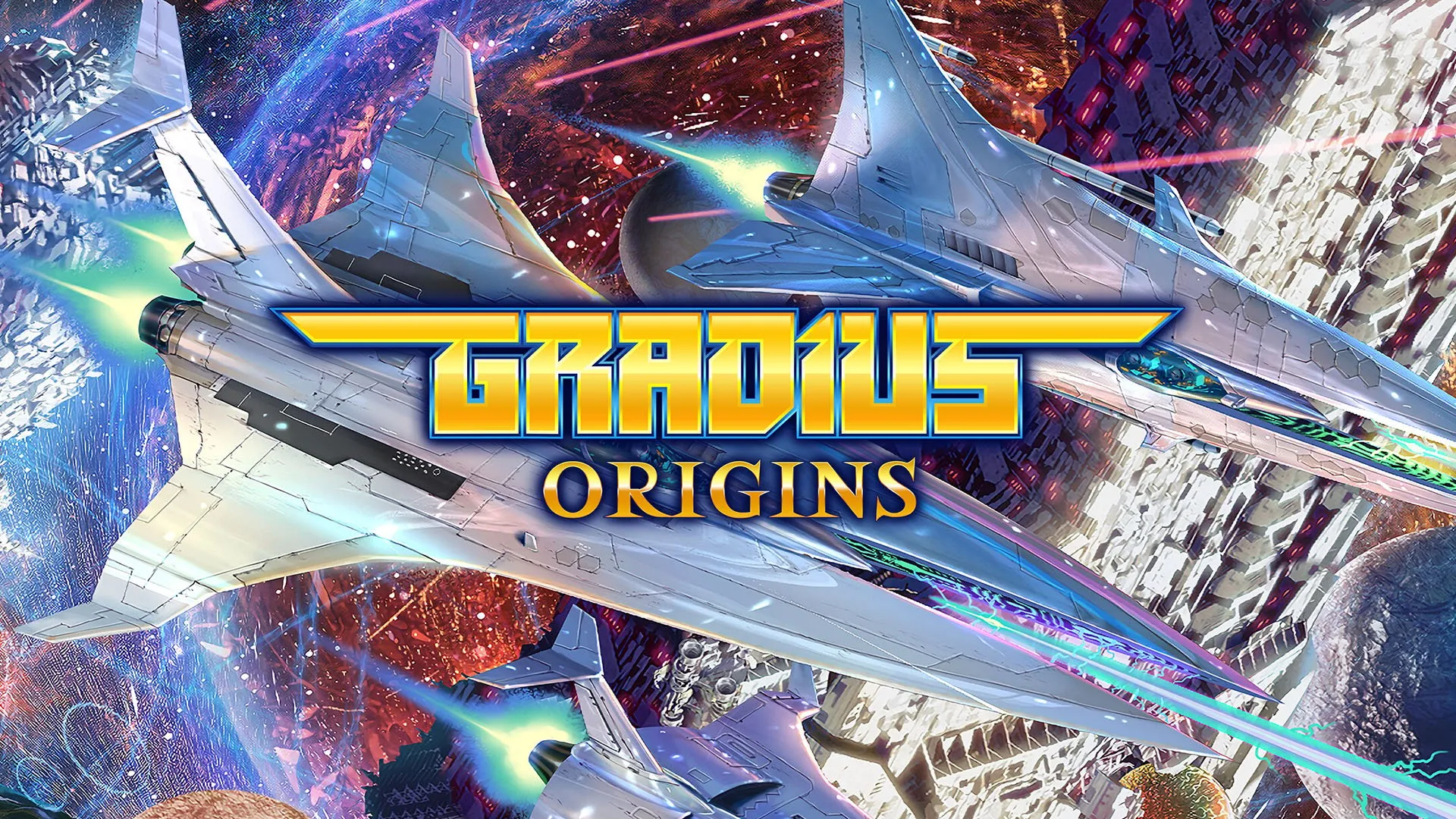

The Japanese arcade of the 1980s was a crucible of digital innovation, a space where new forms of entertainment were forged. Out of this environment came Scramble in 1981, a title that established the template for the side-scrolling shooter. Its direct descendant, Gradius, perfected it.
The game’s central image—a solitary Vic Viper starship against an endless alien armada—became an iconic piece of media, a narrative of defiance that resonated far beyond Japan’s shores. Gradius Origins is a modern anthology collecting these foundational arcade texts.
It presents these artifacts not merely as playable software, but as cultural documents from a distinct era of game design. The collection asks a contemporary global audience to engage with a design philosophy born from a specific time and place, testing the durability of its core mechanical language.
The Grammar of Destruction
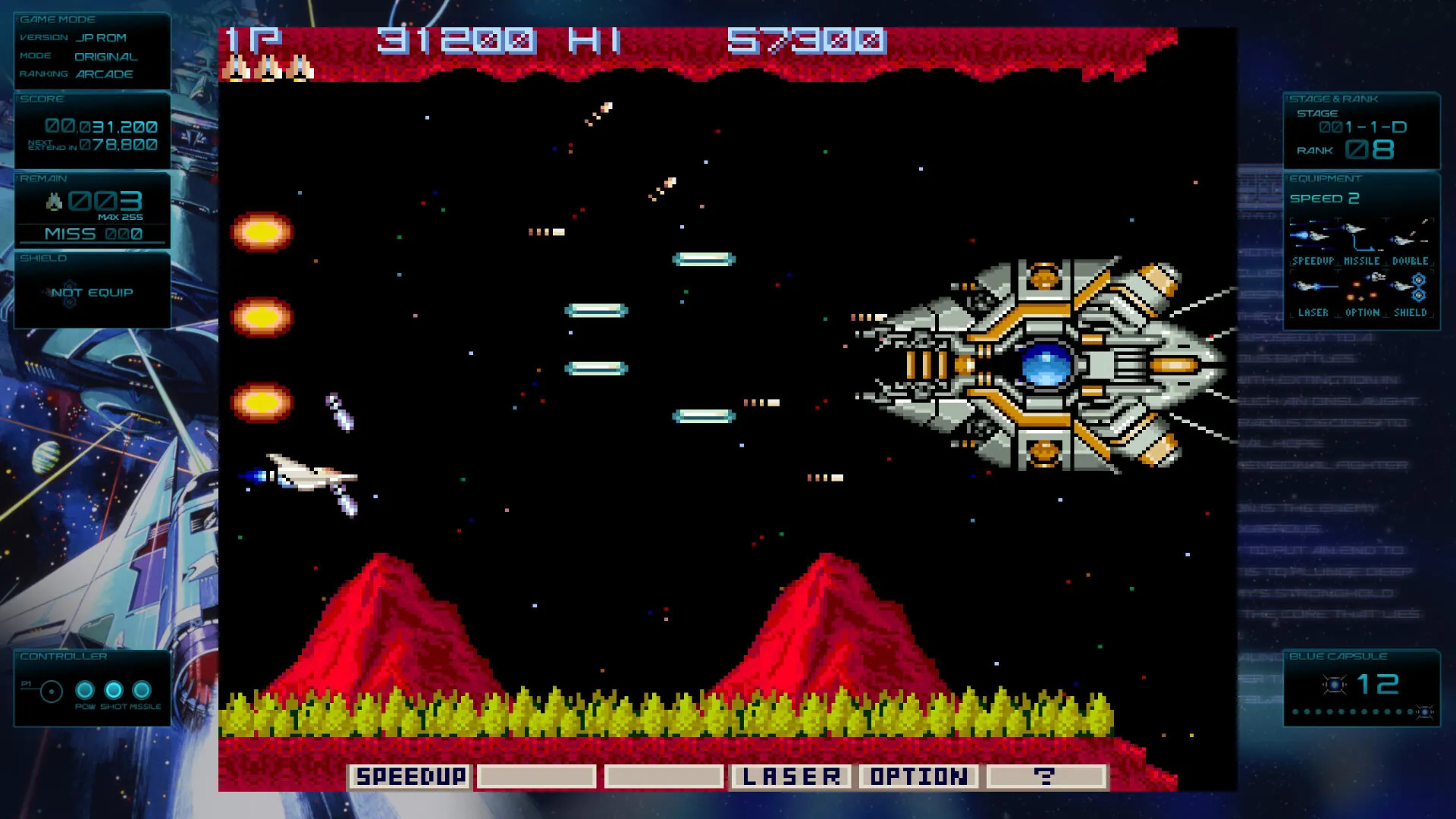
The dialogue between a player and a game is written in its mechanics, and Gradius Origins showcases two distinct dialects of the shooter language. The primary dialect, that of the core Gradius titles, is defined by its Power Meter. This simple bar at the bottom of the screen is a testament to a design philosophy that values foresight, patience, and delayed gratification.
Collecting the glowing orange capsules from defeated enemies does not grant power directly; it is a preparatory action. Each capsule advances a selector one space along the meter, presenting the player with a menu of potential upgrades: Speed Up, Missile, Double, Laser, the indispensable Option, and Shield. The player must then press a separate button to actualize their choice, consuming all collected capsules for a single upgrade.
This system transforms play into a series of calculated risks. The first choice, Speed Up, is fundamental but also a potential trap. Too much speed can make the pixel-perfect navigation required by the game’s tight corridors an impossibility, reflecting a design ethos where balance, not maximum power, is the goal.
Also Read






The other choices on the meter build upon this foundation. Activating Missile adds a new axis of engagement, forcing the player to consider the topography of the level in their attack patterns. The choice between Double, a weapon firing a second shot at a 45-degree angle, and Laser, a powerful beam that pierces through multiple enemies, is a strategic decision between crowd control and focused force.
The correct choice is dictated entirely by the enemy formations and environmental hazards of a given stage. At the apex of the meter sits the Option, a small, invincible orb of energy that follows the player’s ship and mimics its attacks. The Option is more than a weapon; it is a force multiplier that redefines the player’s spatial relationship with the game world. With multiple Options active, the player’s area of influence expands dramatically, creating a shield of pure offense.
The journey up the Power Meter creates a distinct narrative arc within every single life: a tense, methodical climb from utter vulnerability to overwhelming power, all of which can be lost with a single mistake. This mechanical loop can be seen as a form of kata, the choreographed patterns of Japanese martial arts. Success requires mastering a prescribed sequence of actions, a mechanical form that must be perfected through repetition.
In sharp contrast to this methodical approach is the dialect spoken by the Salamander games. Here, the Power Meter is absent. Power-ups are granted instantly upon collection. This design choice fundamentally alters the psychological contract with the player.
The cognitive load of managing the meter is removed, allowing the player to enter a state of pure reactive flow. The experience becomes more visceral, a non-stop barrage of action that prizes reflexes and aggression over long-term strategy.
It is the mechanical equivalent of a free-form spar, or kumite, where instinct reigns over prescribed form. The existence of both systems within one anthology reveals a fascinating internal dialogue within Konami’s design culture of the era, a conversation between two different philosophies of how to structure challenge and create meaning through play.
A Museum of Code and Comforts
As an act of digital preservation, Gradius Origins is astonishingly meticulous. The package assembles the arcade versions of Gradius, Gradius II, Gradius III, Salamander, its alternate version Life Force, and Salamander 2. This curatorial decision is deliberate, presenting the games as they were first experienced in the public, communal spaces of arcades, rather than the edited forms that later appeared on home consoles.
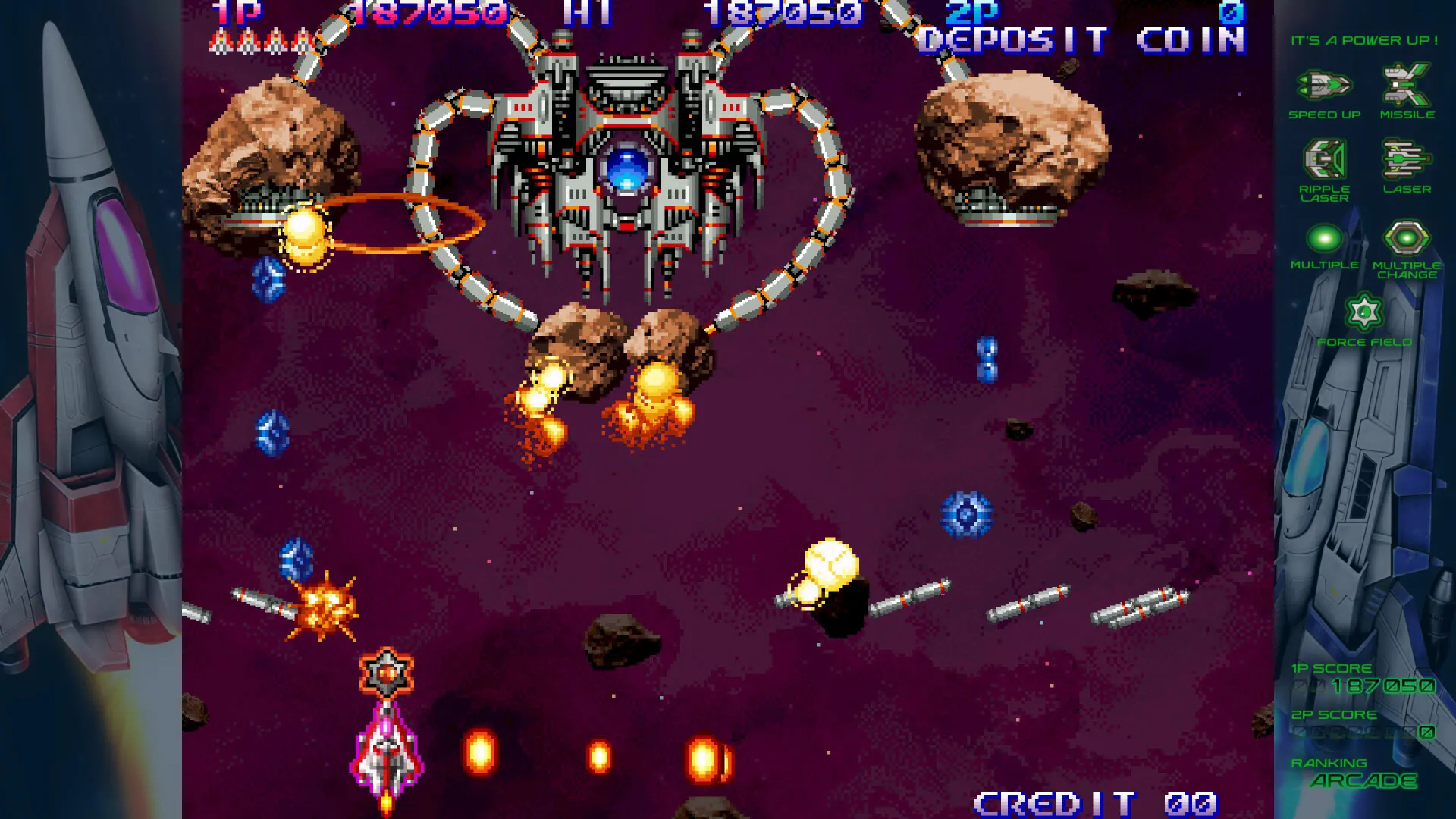
This focus on the arcade source code gives the collection a distinct historical argument. The package’s centerpiece, however, is a piece of living history: Salamander III, a brand-new game developed by the emulation masters at M2. This is not a modern reboot but an act of profound historical empathy, a “lost work” created with the tools and design constraints of the past. It is akin to a modern classicist completing a lost ancient text by perfectly replicating the original author’s style and vocabulary.
The result feels authentic, yet it subtly incorporates modern sensibilities, such as allowing ship selection in single-player mode and giving players a brief window to recollect lost power-ups after death—a small but significant concession to contemporary design expectations.
The collection’s role as a cultural translator is most evident in its approach to regional variations and modern enhancements. It includes a vast library of nearly 18 different versions of its core games, accounting for the specific revisions released in Japan, North America, and Europe. This is more than a novelty; it is a direct look at the practice of mechanical localization.
The subtle shifts in difficulty, enemy placement, and scoring systems reveal how a cultural product was adapted for different markets, reflecting publishers’ assumptions about the tastes and skills of different audiences. To bridge the generational gap, the collection provides a suite of modern comforts. A rewind function allows players to undo critical mistakes, fundamentally reframing the relationship between the player and the game.
The original arcade design was partly an economic one, engineered to consume quarters. The rewind feature removes this economic stake, turning a trial of survival into a puzzle to be deconstructed and solved. Save states and adjustable difficulty modes further lower the barrier to entry, allowing the core design to be appreciated without the punitive harshness of its original context.
A comprehensive digital museum, filled with sound galleries, concept art, and detailed enemy data, completes the package, firmly positioning these games not just as entertainment, but as historical artifacts deserving of close study.
A Story with Missing Chapters
The narrative of the Gradius series presented by this collection is a rich, deeply researched, but ultimately authored and incomplete one. As a historical document of the franchise’s first decade in the arcade, the package is an unparalleled success. The emulation is flawless, capturing the precise feel of the original hardware, and the creation of Salamander III is a monumental gift to the community.
Yet the collection’s title, Gradius Origins, makes a promise of comprehensiveness that its contents cannot fulfill. The curation is highly specific, and its omissions are as telling as its inclusions. By focusing exclusively on the arcade releases, the collection crafts a particular history, one that champions the experience of the Japanese game center as the most authentic.
This choice effectively erases the experience of millions of international players who were introduced to the series through its home console ports. For a generation, the Nintendo Entertainment System port, with its unique level layouts and the legendary Konami Code, was Gradius. To omit this version is to ignore a major branch of the series’ cultural diaspora, akin to telling the history of a globally famous novel by only analyzing its original manuscript and ignoring the translated editions that made it famous.
The specific gaps in the timeline are equally significant. The most glaring is the absence of Scramble, the game that directly preceded and informed the creation of Gradius. To release a collection named “Origins” without this foundational text feels like starting a historical account on its second chapter. It is a direct contradiction of the package’s stated purpose.
Furthermore, the history presented here is frozen in time, refusing to engage with the series’ later evolution. The exclusion of Gradius Gaiden, a PlayStation title celebrated for its creative depth and customizable power-up system, removes a key example of the series’ own internal innovation.
Most critically, the story cuts off before Gradius V, the PlayStation 2 masterpiece developed by the legendary studio Treasure. Widely regarded as the artistic and mechanical zenith of the series, Gradius V represents the successful modernization of the classic formula. To end the retrospective before this entry is like ending a filmmaker’s biography before they created their masterwork.
It leaves the player with a brilliant but truncated narrative. Consequently, this collection speaks most clearly to a specific audience: the digital historian, the archivist, and the series purist who can appreciate the subtle differences between each regional revision.
For the uninitiated, the accessibility features provide a welcoming entry point, but the core repetition across the early titles may feel daunting without the necessary historical context. Gradius Origins is a masterful telling of the series’ first act, but one that constantly reminds you that the rest of the epic saga remains unwritten.
The Review
Gradius Origins
Gradius Origins is a masterclass in digital preservation, offering a flawless recreation of the series' arcade genesis. Its value is immense for historians and purists who will appreciate the many regional versions and the excellent new Salamander III. However, its curated history is frustratingly incomplete, omitting essential titles like Gradius V and its true progenitor, Scramble. This creates a package that is brilliant in its execution but flawed in its scope, celebrating a legacy while ignoring some of its most important chapters.
PROS
- Flawless, authentic emulation of arcade classics.
- Includes the brand-new and well-crafted Salamander III.
- An exhaustive collection of regional and revised game versions.
- Excellent modern features like save states and rewind make the games accessible.
CONS
- Missing key sequels (Gradius IV, V, Gaiden) and console versions.
- The absence of Scramble feels like a major omission for an "Origins" collection.
- The gameplay loop can feel repetitive for those new to the series.
- The curated scope can feel misleading.