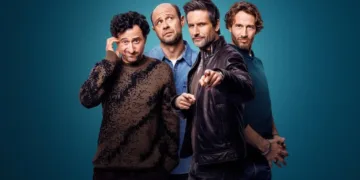

















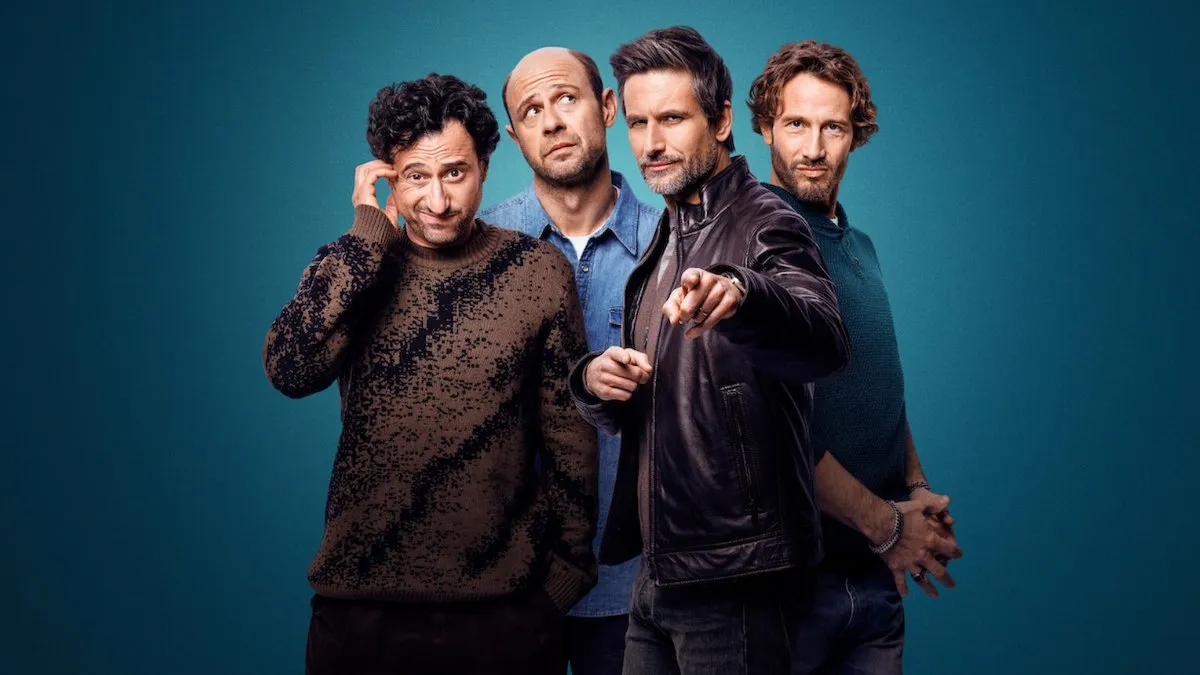

The scene is a sterile seminar room, a place for reluctant confessions. Four men sit in a circle, shifting uncomfortably as they talk about the difficulty of being a man in the 2020s. This is the starting point for Dudes, a series that positions itself as a comedic examination of modern masculinity in crisis. The men are Ulf, a deposed executive; Andi, a tired husband; Erik, a commitment-shy playboy; and Cem, a therapist who struggles with the truth.
Their participation in this course on toxic masculinity is the narrative frame for a story that follows their unraveling lives. The show’s premise is built on a simple, potent idea: what happens when men who have built their identities on outdated ideals are forced to confront a world that no longer values them? Their subsequent personal and professional disasters are meant to be the source of the show’s humor and insight.
A Quartet of Character Flaws
The story’s architecture is built around its four protagonists, each a case study in a specific type of male fragility. The narrative introduces their core dilemmas quickly, but then fails to develop them beyond their initial setups. Ulf represents the classic alpha whose identity is fused with his career. He is a handsome, successful executive who has spent two decades climbing the corporate ladder. When the CEO position he believes is his birthright is given to a younger, more progressive woman, his entire worldview collapses.
His response is not introspection but a petulant, ego-driven resignation. This single act sends his life into a tailspin, forcing him into the humiliating position of hiding his unemployment from his influencer wife while pretending to still be a titan of industry. The character is a vessel for exploring professional obsolescence, yet the script rarely moves past the initial injury to his pride.
Andi is the picture of domestic exhaustion. A police officer and father, he is so worn down by the demands of life that his libido has vanished completely. This is not a source of deep marital discussion but a recurring, one-note gag. His wife, Silke, is desperate for physical connection, a desire that propels the story’s most awkward comedic set pieces.
Her attempts to reignite their passion with sex toys result in public humiliation when their son takes a vibrator to school. Andi’s passivity is the central trait, but the story seems uninterested in the emotional or psychological reasons for his apathy, content to portray him simply as a man who is too tired for sex.
Erik’s conflict is a direct inversion of his past. A restaurateur and former playboy, he decides he is finally ready for monogamy and marriage. He plans an elaborate proposal for his long-term girlfriend, Kim, a divorce attorney. The scene is structured for a classic romantic payoff, but the script pulls the rug out from under him.
Kim, soured on monogamy by her profession, proposes an open relationship instead. Erik’s panicked attempt to hide the engagement ring he has concealed in her dessert is a moment of physical comedy that defines his arc. He is a man who wants to change but is immediately confronted with the fact that the rules of commitment are no longer what he thought they were. His struggle to appear progressive while seething with insecurity becomes his primary narrative loop.
Finally, there is Cem, the intellectual of the group. As a therapist, he is meant to be the one with the tools for self-analysis, yet he is profoundly dishonest in his own life. After his teenage daughter, Alina, moves in with him, she aggressively takes control of his love life, setting up a dating profile and insisting he sleep with ten women to get over his ex-wife.
Cem goes along with this, but his attempts at dating are a series of lies. He tells his new girlfriend, who happens to be Ulf’s new boss, that his ex-wife is dead to elicit sympathy. Cem’s storyline examines the hypocrisy of a man who preaches honesty but cannot practice it. Like his friends, however, his arc is static. The characters are defined by these initial problems, and the narrative simply has them repeat their mistakes.
A Comedy of Predictable Errors
For a series attempting to satirize masculinity, Dudes displays a surprising lack of comedic bite. The show’s central comedic strategy is to place its flawed men in embarrassing situations, but the humor that arises is broad, predictable, and rarely insightful. The satire is heavy-handed; it presents sexist or emotionally stunted behavior as ridiculous but stops short of offering any sharp commentary.
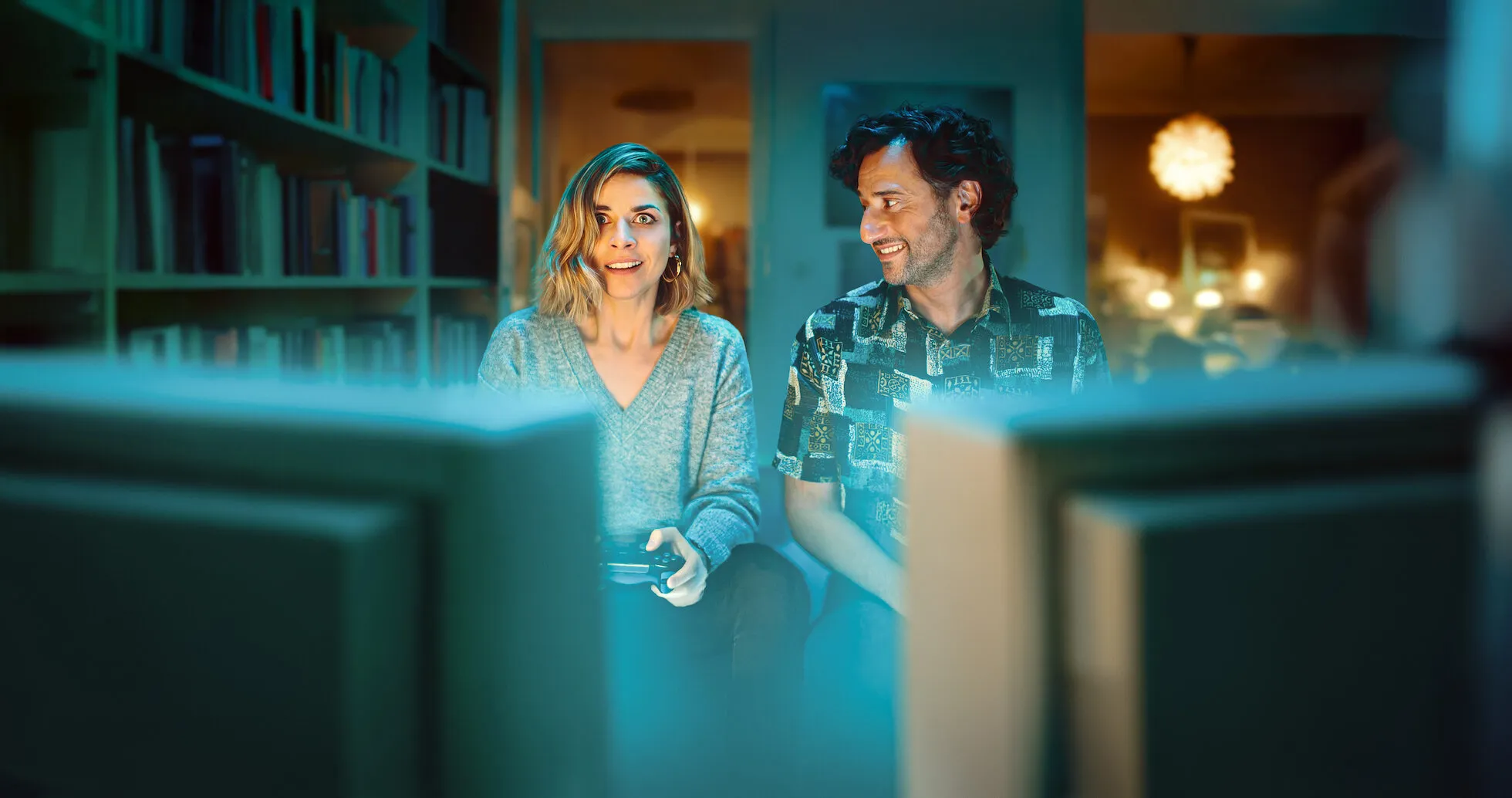
The jokes themselves are often built on crass, outdated premises that feel airlifted from a different era of comedy. Erik’s journey with the swallowed engagement ring, for example, is a plotline that culminates in him having to retrieve it from the toilet. Andi’s central running gag involves a vibrating butt plug, an object of constant misunderstanding and public embarrassment. These are not character-driven jokes; they are props used for cheap laughs. The humor feels engineered for shock value instead of clever observation.
Cem’s daughter instructing him on the mathematical necessity of sleeping with ten women feels less like a comment on modern dating and a lazy punchline about precocious teens. The situations are designed to humiliate the characters, but the humiliation is rarely funny because it lacks a clever setup or an unexpected payoff. It is just a series of unfortunate, and often cringeworthy, events. This feeling of a tired formula is perhaps explained by the show’s origins as a German remake of the Spanish series Alpha Males.
The global streaming model has encouraged the production of localized adaptations, a trend that often results in a dilution of the original concept. What might have felt culturally specific or fresh in its original context becomes generic and bland in its recreation. The humor and social observations seem to have been lost in translation, leaving a story that follows a narrative template without the creative spirit.
Flat Execution and Sidelined Women
The show’s creative shortcomings are not limited to its script. The technical execution is remarkably uninspired, doing little to elevate the material. The direction employs a flat, point-and-shoot visual style that is devoid of personality. Comedic timing is often lost to static camera work and unimaginative shot selection.
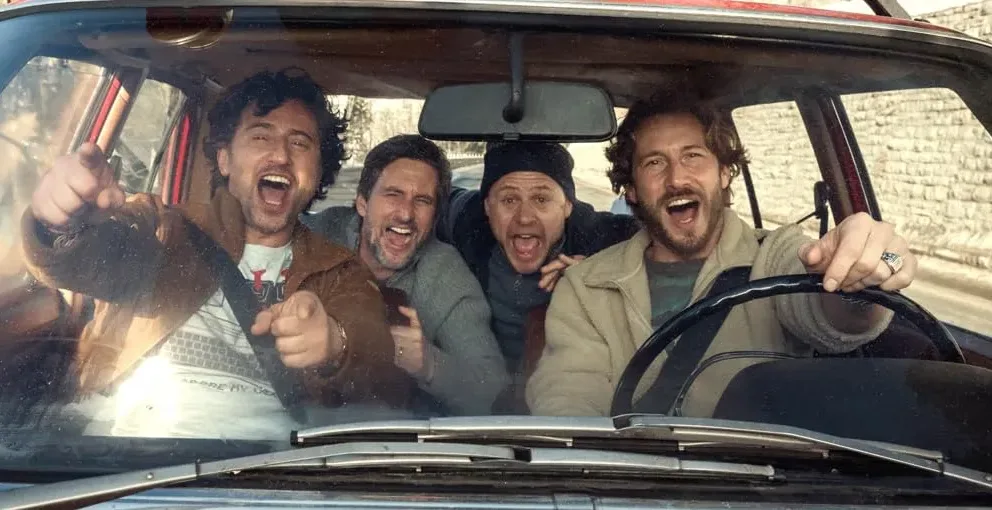
There are few visual gags, and the aesthetic feels closer to a daytime soap opera than a primetime comedy. The narrative structure is further hampered by clunky pacing and jarring edits. Scenes often end abruptly, and the transitions between the four separate storylines are disjointed, preventing the show from building any sense of rhythm or momentum. The series feels sluggish when it should be sharp and energetic.
This structural weakness extends to the show’s treatment of its female characters. The women in Dudes are not participants in a story about gender dynamics; they are narrative accessories to the men’s crises. They exist to trigger the male protagonists’ flaws. Kim’s desire for an open relationship is not an exploration of her own needs but a device to expose Erik’s hypocrisy.
Silke’s sexual frustration is a tool to highlight Andi’s impotence. Ulf’s wife, Elif, functions as the patient, supportive partner whose main role is to eventually discover her husband’s deceit. The women are rarely given scenes that explore their own perspectives or interior lives. They are reactive figures, defined entirely by their relationships with the men. This is the show’s most significant missed opportunity. A story about men struggling with modern masculinity cannot be told effectively when the women in their lives are treated as little objects.
Dudes is a German comedy series set to be released worldwide and exclusively on Netflix on October 2, 2025. The series focuses on four close-knit friends in their mid-40s who are struggling to adapt to a world where traditional ideals of masculinity no longer apply. The friends, once considered “alphas,” enroll in a course to deconstruct male stereotypes, leading to hilarious and often disastrous results as they try to navigate growth, change, and modern relationships. It is an adaptation of the hit Spanish Netflix series, Alpha Males (Machos Alfa), and was produced by Geißendörfer Pictures GmbH.
Full Credits
Director: Jan-Martin Scharf, Tobi Baumann
Writers: Arne Nolting, Jan-Martin Scharf, Tanja Bubbel, Fabienne Hurst
Producers and Executive Producers: Hana Geißendörfer, Jan-Martin Scharf, Arne Nolting, Jana Kreutzer
Cast: Tom Beck, Moritz Führmann, Serkan Kaya, David Rott, Mona Pirzad, Franziska Machens, Marleen Lohse, Jaëla Probst, Valentina Leone
The Review
Dudes
Dudes begins with a relevant and promising premise, attempting to satirize the modern crisis of masculinity. However, the series fails in its execution. The characters are one-dimensional archetypes who never evolve, and the narrative substitutes genuine insight with a series of predictable, crass, and unfunny gags. With flat direction and underdeveloped female characters who serve merely as plot devices, the show feels like a stale, uninspired remake that wastes the potential of its subject matter, resulting in a tedious and forgettable viewing experience.
PROS
- A timely premise with the potential for sharp social commentary.
- The four lead actors commit to their roles despite the weak script.
CONS
- The humor is outdated, crass, and consistently unfunny.
- The main characters are one-note and experience no meaningful development.
- Female characters are underdeveloped and used only as functional plot devices.
- Pacing is slow, and the direction is visually flat and uninspired.
- It fails to provide any new or insightful commentary on its central theme.