










Every story built for an audience is a form of deception, a carefully arranged sequence of events designed to elicit a specific response. Reality television simply makes this contract explicit, constructing scenarios where participants must deceive each other for our entertainment. The Celebrity Traitors takes this principle to its logical endpoint. It places individuals whose careers are founded on managing a public image into a high-pressure narrative machine designed to shatter that image.
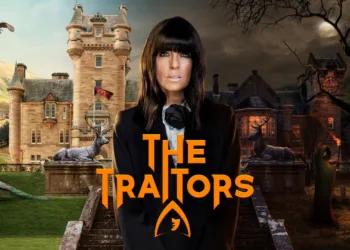
The game’s mechanics are familiar: a group of people in a Scottish castle must identify the saboteurs in their midst to win a prize, in this case for charity. The structure is overseen by Claudia Winkleman, who acts less like a host and more like a wry narrator fully aware of the artifice she commands.
The show’s primary text is not the challenges or the prize money; it is the slow, fascinating erosion of practiced personas. Watching these celebrities enthusiastically embrace the game’s morbid rules from the first moment suggests they understand their function. They are not just playing a game; they are co-authors in a story about whether the self can survive suspicion.
A Cast of Calculated Contradictions
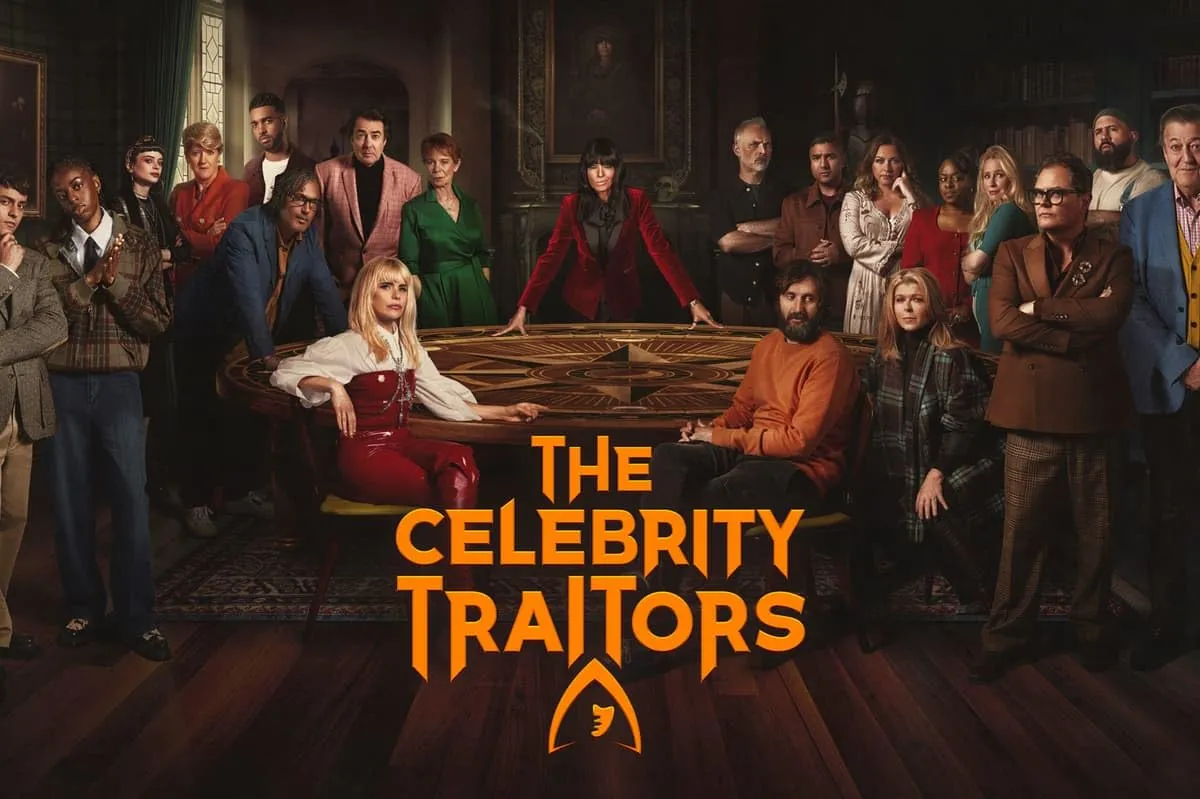
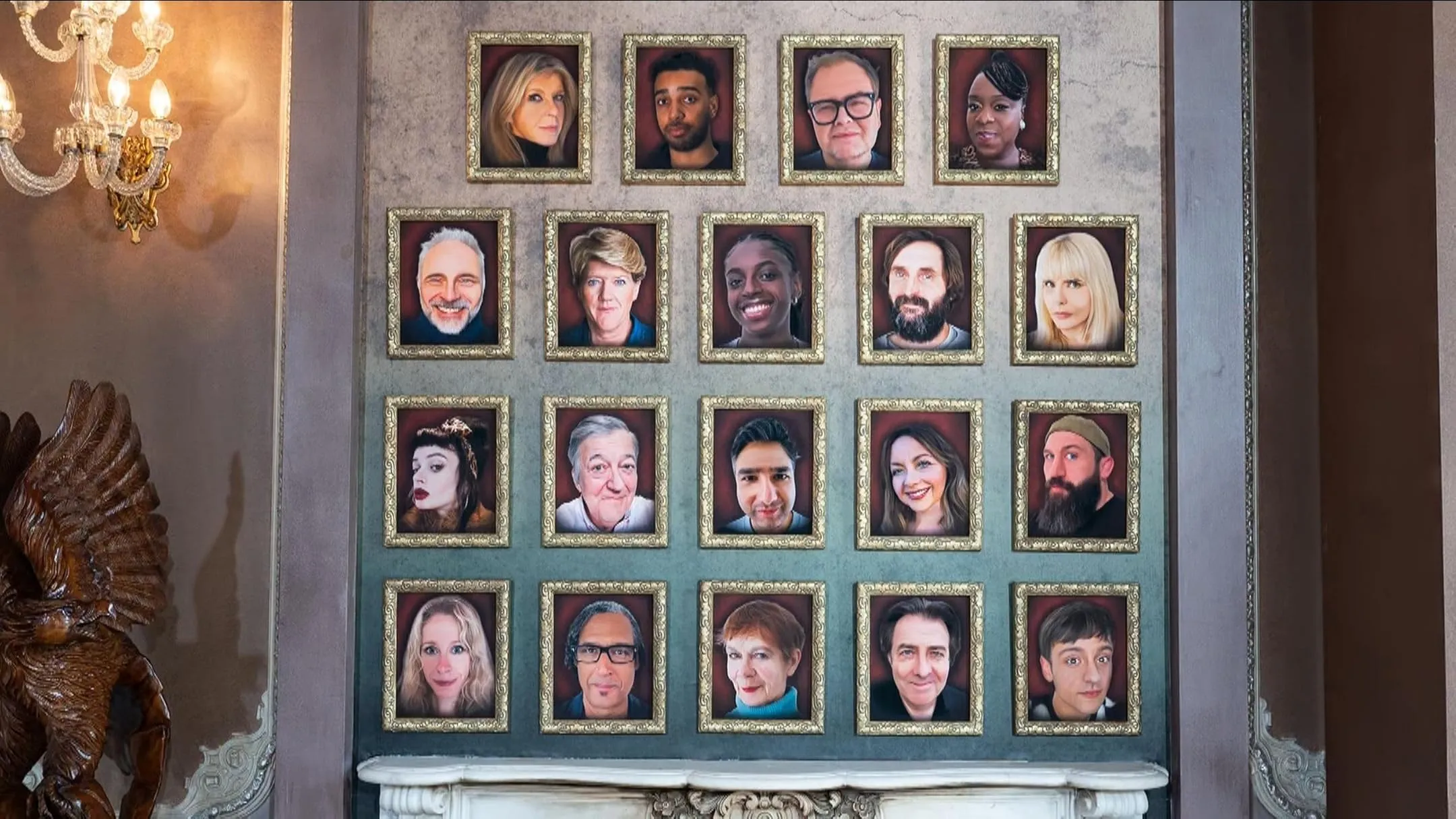
The selection of contestants for a show like this is the equivalent of casting a repertory theatre company. Each member is chosen for the specific narrative function they can serve, and the casting for The Celebrity Traitors is a deliberate study in archetypes and their potential for subversion. We are presented with the “National Treasures,” Stephen Fry and Celia Imrie, figures of cultural stability and warmth.
Their presence offers a baseline of decency that the game immediately seeks to undermine. Fry’s scholarly pronouncements on the “blizzard of horror” they are entering feel both genuine and like a performance of the exact reaction we expect from him. Imrie’s quiet, early confession that she is not as nice as her reputation suggests is a far more promising narrative hook, a signal that she understands the assignment is to play against type.
Then there are the “Comic Relief” characters. Alan Carr, Lucy Beaumont, and Joe Wilkinson are professional jesters, tasked with puncturing the show’s self-serious atmosphere. Their wit acts as a release valve for the audience, yet it also functions as a potential smokescreen within the game itself. A well-timed joke can deflect a serious accusation. Their challenge is to prove they are more than their comedic personas, a task that becomes harder as the stakes rise.
Also Read





Contrasting them are the “Competitors,” figures like Olympic diver Tom Daley, rugby player Joe Marler, and presenter Clare Balding. Their careers are built on discipline and tangible results. They enter the game with a perceived strategic advantage, yet the show’s psychological terrain is a poor match for pure physicality. Marler’s humour is an unexpected asset, while Balding’s instinct to take charge quickly reveals itself as a liability in a game where standing out is dangerous.
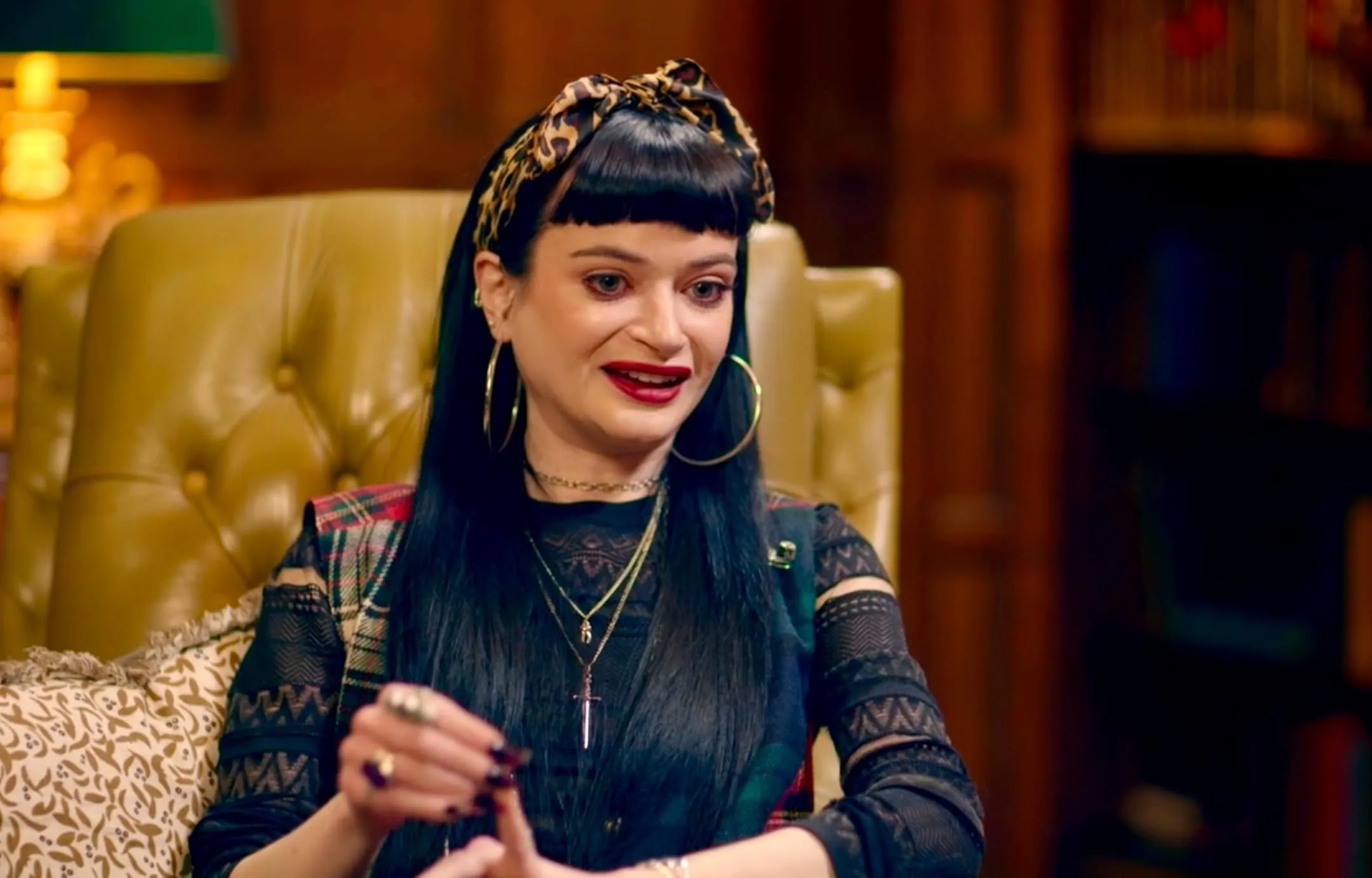
Finally, there are the “Wildcards,” a group of less rigidly defined personalities like singers Charlotte Church and Paloma Faith. They are performers whose public images are tied to artistic expression, making their true motivations harder to read.
This collection of people creates a complex social experiment. The early moments of camaraderie, such as Nick Mohammed abandoning his own task to help Celia Imrie dig for a shield, are laden with narrative ambiguity. Is this a moment of pure kindness, or is it a calculated move to build an alliance and appear harmless? The show’s central drama will be born from these ambiguities, as the cast is forced to reinterpret every action through a lens of deep suspicion.
The Crucible of Scripted Hardship
The missions in The Celebrity Traitors are the story’s primary plot device, narrative crucibles designed to generate conflict and reveal character. They serve a dual function: to build the prize fund and to systematically strip the contestants of their celebrity armour. The opening task is a piece of perfectly calibrated gothic theatre. The participants are taken to a graveyard filled with headstones bearing their own names and are instructed to dig.
This is not merely a physical challenge; it is a symbolic act. It forces a confrontation with professional mortality and reduces a famous person to a figure engaged in a futile, primal act. The sight of meticulously managed public figures getting their hands dirty is a statement of intent from the show’s creators. Inside the game’s borders, your status means nothing. It is a potent, if heavy-handed, way to establish the new rules of this temporary society.
This theme continues with the first major mission: the transportation of a massive Trojan horse. The choice of object is, of course, deliberate. The cast must work together to move a universal symbol of deception and betrayal through the Scottish Highlands. The task is a microcosm of the entire game. It demands cooperation toward a common goal while individual actions are scrutinized for any hint of weakness or ulterior motive.
The mission’s design brilliantly fuses physical labour with intellectual puzzles at a series of gates, ensuring no single skill set can dominate. Here, the narrative begins to sharpen. Clare Balding’s instinct to direct the group leads to a critical error, immediately placing her in the spotlight for the wrong reasons.
A mistake in a task becomes evidence in the trial of trust. In contrast, Nick Mohammed’s quiet efficiency in solving the gate puzzles establishes him as a useful, perhaps dangerously intelligent, player. The physical struggle of moving the horse breaks down composure, revealing flashes of frustration and authentic determination that cannot be easily faked. These missions are the engine of the plot, creating the incidents and shaping the perceptions that the contestants will carry with them to the Round Table.
An Unholy Trinity of Narrative Chaos
Every story of paranoia needs a source for the poison, and the show’s selection of its first three Traitors is its most critical structural decision. The choice of Jonathan Ross, Cat Burns, and Alan Carr establishes a perfectly unbalanced trio, an internal dynamic rife with potential for both masterful deception and catastrophic failure. Their first meeting in the turret is the true beginning of the show’s central plot.
Ross immediately assumes the role of the seasoned professional. As a veteran television host, he is comfortable with artifice and performance. He approaches the game with an air of calm authority, positioning himself as the stable anchor of the group. His gameplay will likely be a technical exercise in manipulation, relying on his ability to read a room and project an aura of harmless familiarity. He is the strategist.
Opposite him is Cat Burns, the quiet observer. She is the enigma. Her calm, almost placid demeanor in the face of the game’s melodrama makes her a potent threat. In a group of loud personalities, her stillness is both a camouflage and a weapon. She represents a modern form of celebrity, one less reliant on overt showmanship. This allows her to fade into the background, watching the others expose their anxieties while revealing little of her own. Her potential narrative arc is that of the silent assassin, the player no one sees coming until it is too late. She provides the trio with a necessary element of subtlety.
Then there is Alan Carr. He is the agent of chaos, the narrative wildcard whose inclusion transforms the Traitor dynamic from a simple conspiracy into a high-wire act. From the moment of his selection, he is a vessel of pure, uncut panic. His anxiety is so palpable, so performative, that it becomes a source of both high comedy and unbearable suspense.
He is the walking embodiment of the Traitor’s dilemma. His every nervous glance and sweaty confession threatens to bring the entire enterprise crashing down. This makes him the most compelling figure in the early narrative. The decision to task him with the first “murder” is a masterful piece of storytelling. It places the fate of the conspiracy in the hands of its most unstable member, creating a cliffhanger that is not about who the victim will be, but about whether the Traitors’ shaky alliance can even survive its first test.
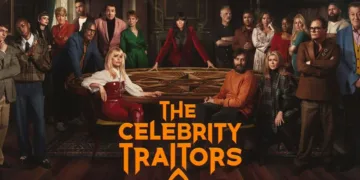
The Celebrity Traitors is a spin-off of the successful British reality game show The Traitors. The series premiered on October 8, 2025, and is available to watch in the UK on BBC One and the BBC iPlayer. Set in the dramatic Scottish Highlands at Ardross Castle, the show features a cast of 19 celebrities who compete in challenges to win a prize fund for charity while attempting to root out the secret ‘Traitors’ hidden among them. The first celebrity season consists of nine episodes, airing over three weeks.
Full Credits
The Review
The Celebrity Traitors
The Celebrity Traitors succeeds by treating its cast not as a gimmick but as the central variable in a sharp psychological experiment. The show intelligently deconstructs the artifice of fame through well-designed challenges and a masterstroke of casting within the Traitor trio. It is a compelling, often darkly funny, examination of performance under pressure, proving the format's narrative strength is formidable.
PROS
- An eclectic and well-chosen group of personalities creates a complex and entertaining social dynamic from the outset.
- The combination of a calm strategist, a quiet observer, and a chaotic wildcard makes the Traitors' internal drama as engaging as the main game.
- The show uses its missions and format effectively to break down celebrity personas and generate genuine psychological tension.
- The mix of suspense, strategy, and comedic moments provides a consistently engaging viewing experience.
CONS
- With the prize money going to charity and the contestants already famous, the raw desperation of the civilian version is lessened.
- The cast consists of professional performers, making it difficult to distinguish between genuine reactions and calculated acting.
- Some celebrities may lean too heavily on their established public images, which could hinder genuine gameplay.