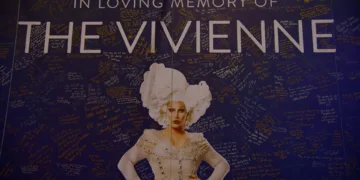
























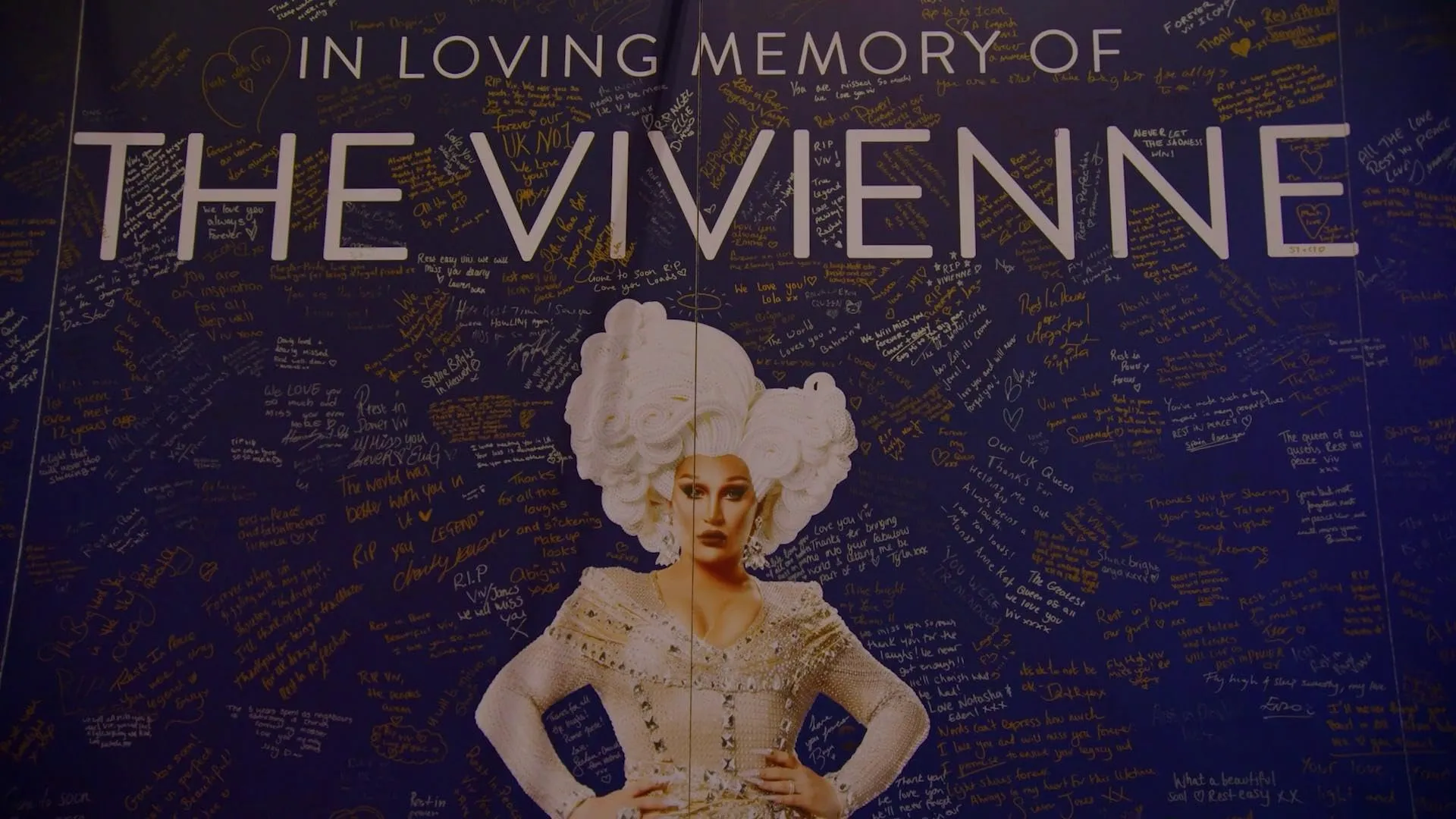

Dear Viv opens as a tender, immediate tribute to James Lee Williams, the electrifying performer known as The Vivienne. As the inaugural winner of RuPaul’s Drag Race UK, Williams became a cultural phenomenon, celebrated for razor-sharp wit and a polished, transformative aesthetic. The film follows his sudden passing in January of this year at 32.
It states the tragic cause with clarity and care: cardio-respiratory arrest stemming from ketamine consumption, and frames that fact with respect for his life’s work. The documentary draws from abundant archival footage, early vlogs, and moving new testimony from family and fellow queens.
The result is a layered portrait that shows the imperious entertainer who dazzled in productions like The Wizard of Oz alongside the vulnerable man behind the makeup. Dear Viv presents him as a major queer artist who carried drag into the UK mainstream.
An Artist’s Ascent
The film maps The Vivienne’s rise through the extensive record that reality television and digital culture already supplied. It traces his beginnings in North Wales, where he found the confidence to come out at 14. Early internet exploration led him toward drag, sparked by the legend of Cher. The film tracks how a signature persona took shape with a strong sense of place.
A move to Liverpool at 16 put him inside the city’s club scene and seeded the Vivienne Westwood fixation that gave his alter ego its name. A later residency in Gran Canaria refined a style described as old school rough and ready drag with a polished look. I have always admired this meeting of high and low culture in performance, a mix that gives comedy snap and visual bite. The documentary presents his comedic instincts as clear from the start.
His Drag Race UK audition tape features sharp impressions of figures like Donald Trump and Cilla Black, and the narrative marks that tape as the first step toward a win. The film also frames his participation in Dancing on Ice as a deliberate career move that introduced new audiences to drag and affirmed that drag queens were nothing to be feared. That decision reads as a moment of cultural integration and media fluency.
Also Read




The Weight of the Persona
Emotional force arrives through a candid look at James Lee Williams’ private struggles. Testimony from his parents, sister, and close friends appears throughout. His mother’s anxious reflection on whether she expressed enough pride lands with particular power, and the film allows space for the complicated shape of grief. The documentary recounts his history with addiction.
Williams began with an anti-drug stance, then nightlife drew him into a four-year stretch as a functioning addict, a period he hid from his family. His initial sobriety later became a visible part of the Drag Race narrative. The film also offers rare, direct commentary on the cost that drag placed on his sense of self. Williams spoke of intense loneliness before meeting his husband, David, and described drag as a profession that applied its own pressure.
There is a moving suggestion that he neglected James, directing resources into a stage creation and seeking refuge in The Vivienne, the imperious, invulnerable persona. Fellow queen Cheryl Hole provides cultural framing by describing how queer performers can use camp and performance to hold emotion at bay. The documentary acknowledges a later relapse, known only to his manager Simon Jones, who attempted to arrange counseling. The film refuses a tidy moral arc and keeps the focus on the complexity of a life lived in public.
A Legacy of Joy and Advocacy
Dear Viv plays as a sincere work shaped by love and respect for its subject. As filmmaking, it uses its sources with care to honor a figure central to contemporary queer culture. The experience can be difficult, which heightens its impact. Archival interviews in which Williams speaks about addiction and the pursuit of a high gather added weight in hindsight.
His professional achievements appear across the film, and the portrait makes clear how much he accomplished in a short span. The documentary also marks the advocacy that followed his passing. His sister, Chanel, has pursued tangible change regarding the classification of ketamine, a reminder that his influence reaches beyond stages and screens.
The film closes with a simple, devastating device. Those closest to him write an imaginary letter. This direct address serves as a final goodbye and fixes his memory in the words of the people who loved him.
Technical and cultural notes
The film’s structure relies on rhythm and contrast inside the edit: crisp passages of televised performance cut against quieter home-shot material and recent interviews. The pattern creates a timeline that feels lived rather than arranged.
Archival clips carry the sound of rooms he filled, then the mix pulls back for intimate voices that remember James. The approach fits the current moment for UK documentary storytelling, which often blends reality-TV archives, social media traces, and family testimony. Dear Viv belongs to that lineage and uses it to examine how a media-savvy artist shaped a public self.
I kept thinking about how club lighting and studio glare build different kinds of armor. The documentary catches that shift, and the music cues and crowd noise give the stage scenes an energy that explains why audiences kept watching him. The quieter sections hold stillness and let grief speak. The film honors independent documentary craft while engaging a mainstream audience that met The Vivienne on primetime television, and it treats both spaces as part of one cultural record.
The documentary Dear Viv premiered on August 28, 2025. It aired on BBC Three and is available for streaming on BBC iPlayer in the UK. Internationally, the film is available on the streaming service WOW Presents Plus. The movie is an hour-long tribute that uses archival footage and personal interviews to celebrate the life and legacy of James Lee Williams, the drag superstar known as The Vivienne.
Credits
Director: Pete Williams
Producers and Executive Producers: Steven Renney, Fenton Bailey, Randy Barbato
Cast: The Vivienne, Baga Chipz, Cheryl Hole, Danny Beard, Michael Marouli, Tia Kofi, Raja, Trinity the Tuck
Director of Photography (Cinematographer): Steven Renney
Editors: Ron Hill, Jeffrey McHale
The Review
Dear Viv
Dear Viv is a powerful, sincere tribute that succeeds in honoring James Lee Williams while refusing to simplify the complexities of his life. It is a vital cultural document that showcases The Vivienne’s comedic brilliance and groundbreaking career while bravely confronting the private struggles of addiction and selfhood. The film is deeply moving, a fitting memorial for a queer icon whose talent and legacy continue to resonate far beyond the stage.
PROS
- Honors The Vivienne's career without sensationalizing his death.
- Offers a rare, honest look at the pressures of drag and the complexity of the artist's selfhood.
- Uses family and friends’ raw testimony to create a powerful, moving experience.
- Effectively frames The Vivienne's role in bringing drag into the mainstream.
- Blends professional footage, vlogs, and interviews effectively.
CONS
- The focus on addiction and raw grief makes for a heavy viewing experience.
- The film provides less insight into the final relapse compared to the earlier struggles.
- The closing device of 'imaginary letters' touches close to exploiting very raw grief.