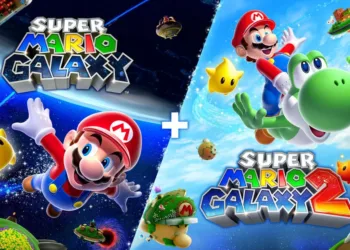
























Hollywood’s spring box office keeps orbiting around “The Super Mario Galaxy Movie,” which held the No. 1 spot for a second straight weekend and pushed its worldwide total to about $629 million, while an entirely different kind of film figure — John Waters — entered his 80th-birthday week with a fresh round of interviews, stage dates and reminders of how far his once-marginal sensibility has seeped into mainstream culture. Put together, the two story lines capture a business still driven by giant branded franchises yet eager to honor artists who built careers by mocking good taste and defying commercial rules.
On the commercial side, Mario remains the year’s dominant Hollywood release. The animated sequel opened with a record $372.5 million worldwide and added another $69 million domestically in its second weekend, a hold that left it ahead of every 2026 studio title so far.
The film has helped push the domestic market into its strongest early-year run since before the pandemic, with Comscore analyst Paul Dergarabedian telling Axios that the current stretch shows theaters still have power when a movie arrives as a clear event. That matters for Nintendo, Illumination and Universal, which have turned one of gaming’s safest brands into a reliable theatrical machine after years of shaky video-game adaptations across the industry.
Yet the sequel’s box-office strength has come with a small asterisk. Its second-weekend pace trails the 2023 film, and some coverage has questioned whether it can reach the billion-dollar mark that once looked automatic after opening week. That split — massive ticket sales paired with a cooler critical response and tougher long-range math — gives the film a slightly different profile from its predecessor, even as it keeps delivering exactly what exhibitors wanted: family turnout, repeat business and a marketable sense of momentum.
Waters, by contrast, remains the anti-franchise. In interviews tied to his 80th birthday on April 22 and his “Going to Extremes” live dates, he has leaned into the same persona that made him a cult force decades ago: amused, sharp and openly resistant to respectability.
His current visibility serves as a useful counterpoint to Mario’s industrial success. One story is about scale. The other is about endurance. Together they show an industry roomy enough to sell sanitized family spectacle on thousands of screens while still celebrating a filmmaker who built his name on filth, provocation and the pleasure of bad behavior.