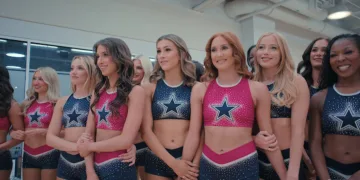




















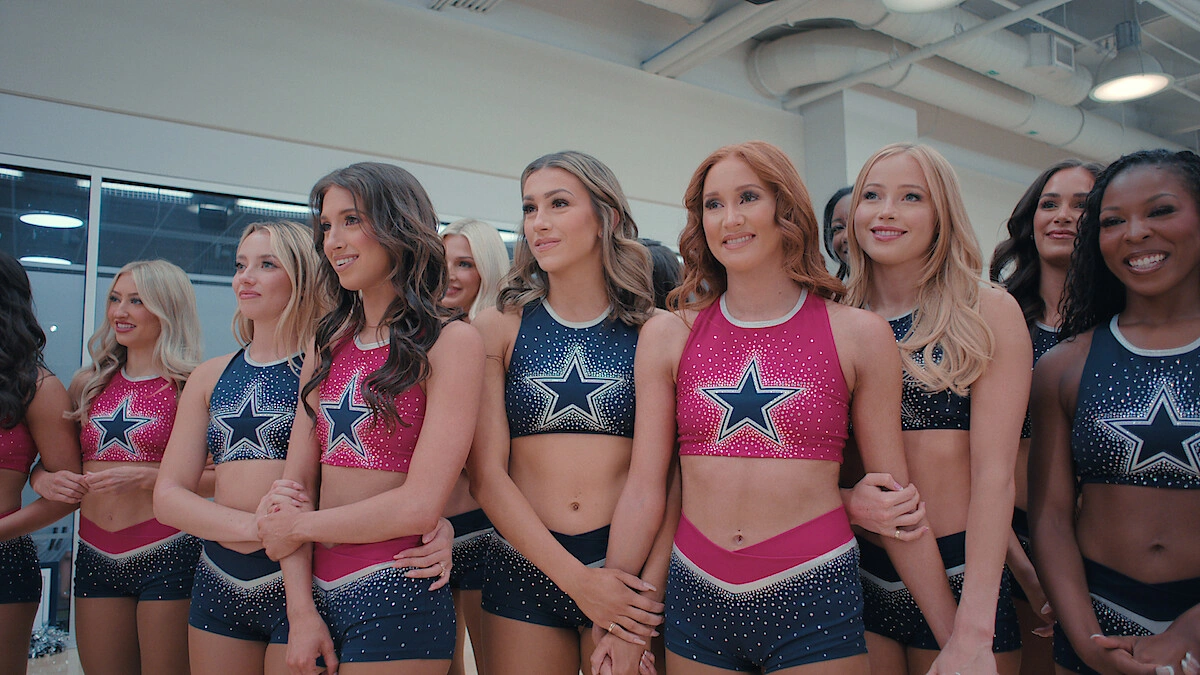

The strangest thing about a cheerleading institution becoming a Netflix hit is that the uniform stays the same while the job changes overnight. Season 3 of America’s Sweethearts: Dallas Cowboys Cheerleaders understands that shift right away.
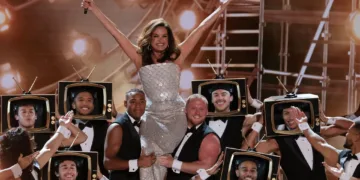
Reece stands on a dark theater stage, breathes through the pressure, and performs for an audience that knows her before she moves. That image says plenty. The Dallas Cowboys Cheerleaders are still dancing, auditioning, smiling, and surviving cuts, but the camera is now watching women who have become recognizable characters in a global streaming story.
Greg Whiteley’s docuseries returns to the familiar DCC cycle: auditions, training camp, emotional eliminations, and the final squad. Senior director Kelli Finglass and choreographer Judy Trammell still control the room with practiced precision. Yet the season’s new tension comes from what Netflix fame has done to that room. A 400 percent pay raise has quieted last season’s loudest labor question, but fame has created a new one. What happens when a team built on uniformity starts producing individual stars?
The Tour Gives the Season Its Freshest Energy
The early Texas theater tour is the best idea Season 3 has. It pulls the cheerleaders away from the football field and places them in front of crowds who react to them like celebrities. That change matters. On the field, the DCC brand absorbs the dancers into a single image. On stage, the women become distinct performers with names, fan bases, and nervous systems.
Reece becomes the clearest case study. The show frames her as the emotional center, and her popularity gives the season a softer, sadder edge. She speaks about faith, marriage, small-town values, and the stress of being watched by people who feel they know her.
The editing gives her opening routine the shape of a pressure valve: the breath, the costume glittering under stage light, the body snapping into choreography. It is polished reality television, but the scene still carries a real question. How much of yourself can you offer to a public image before that image starts making decisions for you?
The tour also lets hopefuls audition on stage, with audience votes feeding the process. That detail is fascinating because it turns DCC selection into a live popularity test. The show could spend a whole episode on how Kelli and Judy handle this new performance economy. Instead, it gives us the flavor and then heads back to Frisco. I wanted more of the tour prep, more backstage pressure, more of the dancers learning what it means to be cheered for as themselves rather than as part of a line.
The Audition Machine Still Has Teeth
Once the season returns to Cowboys headquarters, the structure becomes instantly recognizable. Veterans and rookies train, audition, wait, cry, recover, and try again. The formula works because the stakes are simple and brutal. Thirty veterans are returning, with only six open spots for rookies. Kelli’s warning lands because it strips away the comforting myth of seniority: nobody is safe because the numbers do not allow safety.
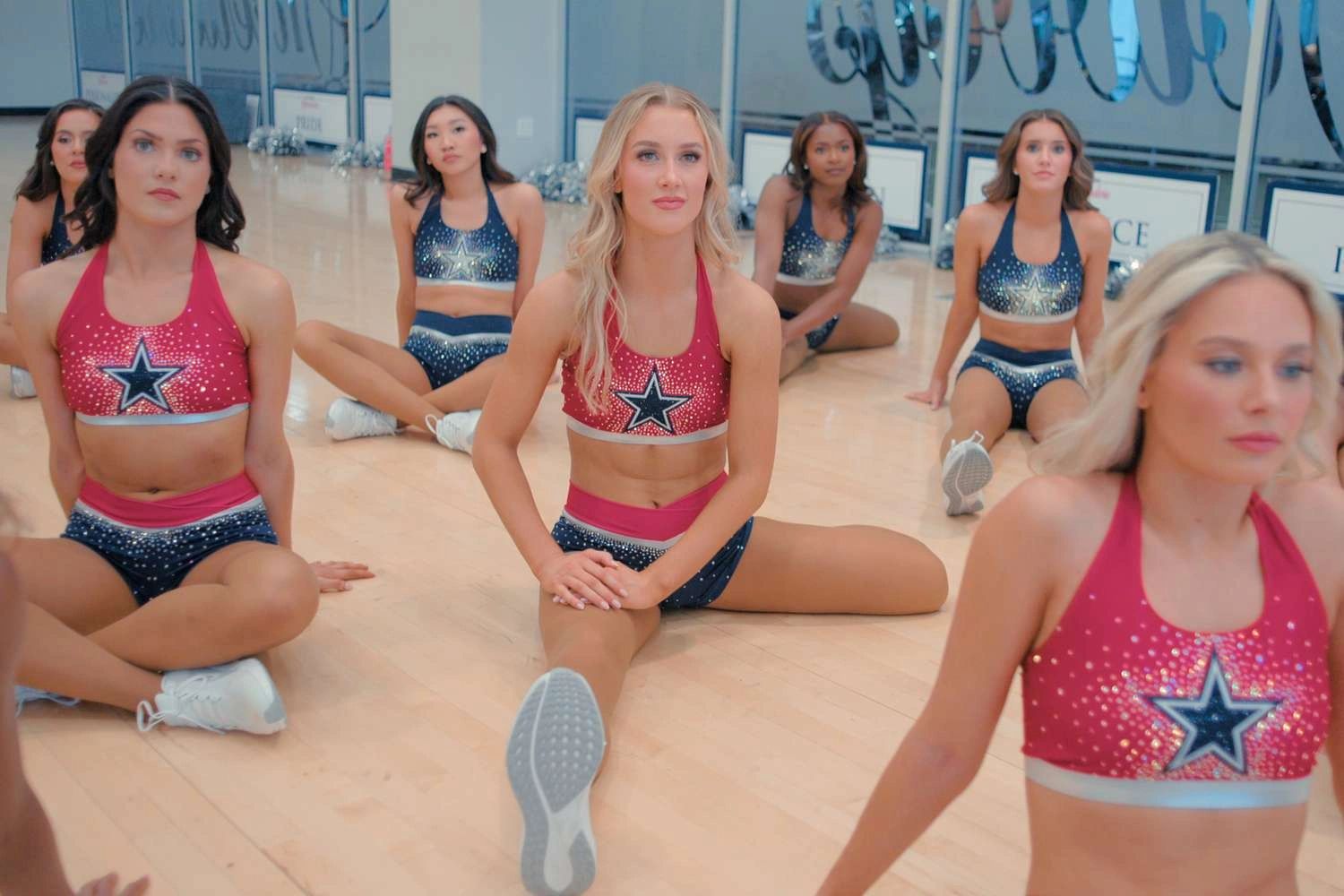
The hopefuls give the season much of its energy. Dayton, the daughter of associate choreographer Shelly Bramhall, is auditioning for a third time, which gives her scenes a built-in ache. She knows the building, the standard, and the disappointment. Jenna arrives with a different wound, having been cut at the very end of last year’s training camp, right before the celebration began. That is the kind of reality TV detail that does not need extra music to hurt.
Faith, the Australian dancer known online as “Flexy Faith,” brings in the season’s global angle. Her flexibility may be the hook, but her presence says more about the Netflix effect than any staff meeting could. DCC is no longer pulling mainly from dancers who grew up staring at Texas from across the state line. It is now drawing applicants from across oceans. Savannah, who has taken DCC prep classes since she was 16, sits on the other side of that story: the traditional dreamer, trained for years to chase a place in the line.
The audition scenes still deliver because bodies tell the truth. A missed count, a tight smile after criticism, a veteran trying to look calm while rookies surge around her. Whiteley remains good at catching those small breaks in composure. The issue is that the pattern is now very familiar. Season 3 keeps finding new pressure inside the same machine, but it rarely questions the machine’s design.
A Polished Show With Carefully Chosen Blind Spots
As reality craft, the series is smooth and easy to watch. The cuts are clean, the emotional beats are placed where viewers expect them, and the dancing is photographed in quick, glossy bursts. I do wish the dance sequences were allowed to breathe longer. For a show about elite performers, it sometimes treats performance like decoration between confessionals. Let us see the full routine. Let us understand the difference between good and great through movement, spacing, stamina, and timing.
The larger blind spot is institutional. Season 3 knows DCC sits at a strange intersection of athletic discipline, beauty standards, faith, corporate branding, and NFL mythology. It gestures toward body pressure, public behavior rules, online scrutiny, and the difficulty of maintaining a perfect image. Then it often backs away before the conversation gets too sharp.
That is most frustrating with Karley, whose sudden cut leaves a shadow the show barely explains. When a series is this interested in the emotional cost of selection, silence around a departure like that feels protective of the brand rather than curious about the person. The “JusticeForKarley” chatter outside the show becomes a reminder that the edit is never neutral. What is left out can be as revealing as what gets framed in soft light.
Guest appearances from Charlotte Tilbury and Kacey Musgraves underline the expanded pop-culture reach, but celebrity judges cannot do the deeper work the season keeps circling. Season 3 is still polished, emotional, and bingeable, especially for viewers already invested in the DCC world. Its best material recognizes that Netflix has changed the meaning of being a Dallas Cowboys Cheerleader. Its safest material keeps pretending the old choreography can contain the new spotlight.
The third season of this sports docuseries premiered on June 16, 2026, and is available to stream globally on Netflix. The show pulls back the curtain on the grueling audition processes, physical toll, and sudden intense fame experienced by the 2025–2026 squad members trying to secure a spot on the legendary NFL cheerleading team.
Where to Watch America’s Sweethearts: Dallas Cowboys Cheerleaders Online


Full Credits
Title: America’s Sweethearts: Dallas Cowboys Cheerleaders Season 3
Distributor: Netflix
Release date: June 16, 2026
Rating: TV-MA
Running time: 45–60 minutes per episode
Director: Greg Whiteley, Chelsea Yarnell
Writers: Documentary series (unscripted/no credited writers)
Producers and Executive Producers: Greg Whiteley, Andrew Fried, Ross M. Dinerstein, Rebecca Evans, Dane Lillegard, Adam Leibowitz, Claire Onderdonk, Chelsea Yarnell, Chris Hall
Cast: Kelli Finglass, Judy Trammell, Charlotte Jones, Reece Weaver, Kleine Powell, Charly Barrientos, Anna Kate, Savanna, Parker, Faith
Director of Photography (Cinematographer): Jonathan Nicholas
Editors: M. Brennan, Noah DeBonis, Zachary Fuhrer, Stefanie Maridueña, Kate Hackett, Sharon Weaver, Susie Maridueña-Barrett, Deijah Lee-Carroll, Helen Yum, James Atkinson
Composer: Zach Robinson
The Review
America’s Sweethearts: Dallas Cowboys Cheerleaders Season 3
America’s Sweethearts: Dallas Cowboys Cheerleaders Season 3 is still polished, emotional reality TV, with Reece’s stage opening, Jenna’s return, Faith’s global audition story, and the veteran cuts giving the season real charge. The problem is the show keeps finding sharper questions about fame, branding, and institutional control, then ducks back into familiar audition-room rhythm. It is easy to binge, harder to fully trust.
PROS
- Strong Reece spotlight
- Fresh Texas tour material
- Emotional rookie stories
- Clearer global reach
- Polished reality craft
CONS
- Repetitive audition format
- Karley issue underexplained
- Too little full dancing
- Brand-protective editing
- Fame angle underused