























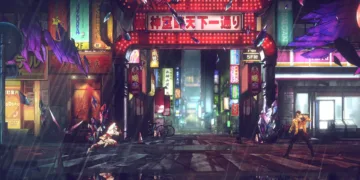
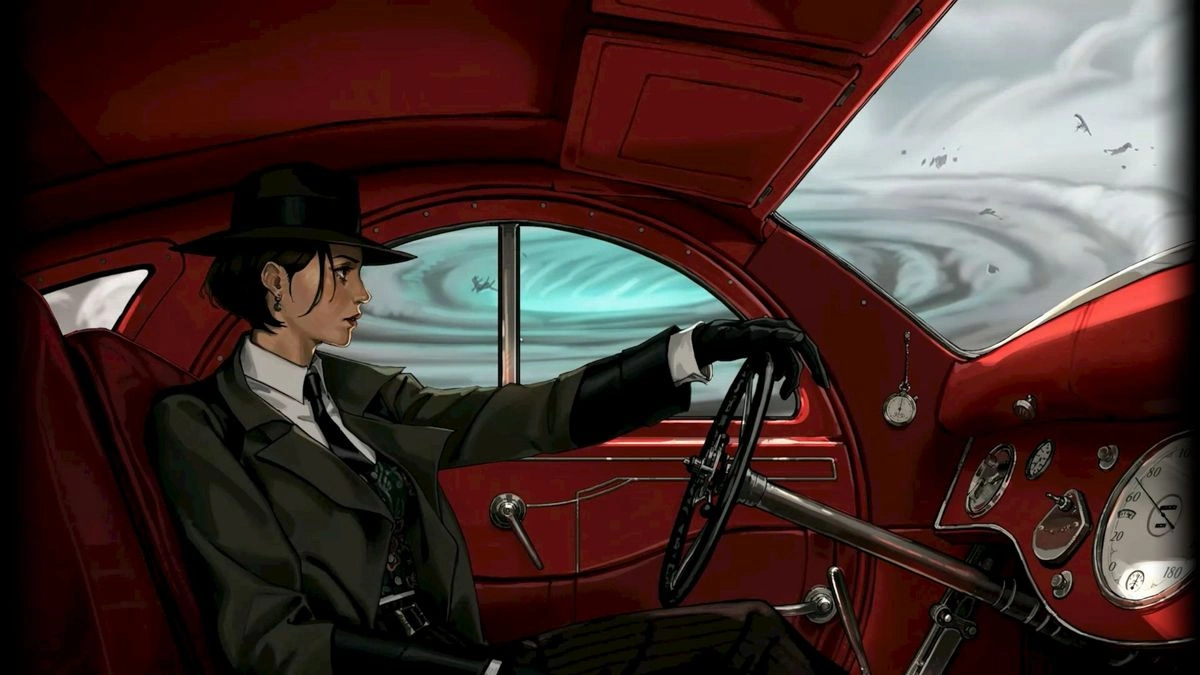

Ozone and wet pavement hang over the skyline of this version of New York. Huge island districts drift above the Atlantic, held aloft by aether. The setting imagines a 1930s in which gravity has become a problem the rich solved for themselves. Giovanna “Gia” Randazzo lives far below those floating blocks.
She works as a smuggler, and her old name has lost its pull after a job went wrong and wrecked her reputation. The Lowers are where she now survives. A shadowy fixer changes her prospects with an offer: transport a young scientist named Nellie Reinhardt for a payout. What starts as a straightforward job, moving Nellie from the polished heights of the Uppers to the filthy streets below, grows into a larger conflict with the barons who control the sky.
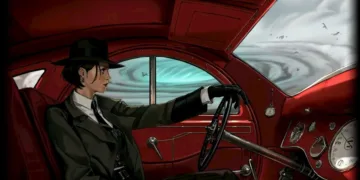
The decopunk art direction gives that setup real force. Jagged Art Deco lines meet the bitterness of detective fiction. Rain streaks across the wings of flying cars, political tension hangs over the city, and every view carries the sense that this version of progress was paid for with workers’ blood. The aesthetic does a large share of the storytelling from the opening stretch.
Words as Sharp as a Switchblade
The script carries the cadence of hardboiled fiction. Gia’s internal narration runs through the game with a tired, cynical edge, and her descriptions land through sharp metaphors that cut cleanly through each scene. Her voice shapes the city as much as the art does. It gives texture to the streets, the machinery, and the people living under the floating wealth above them.
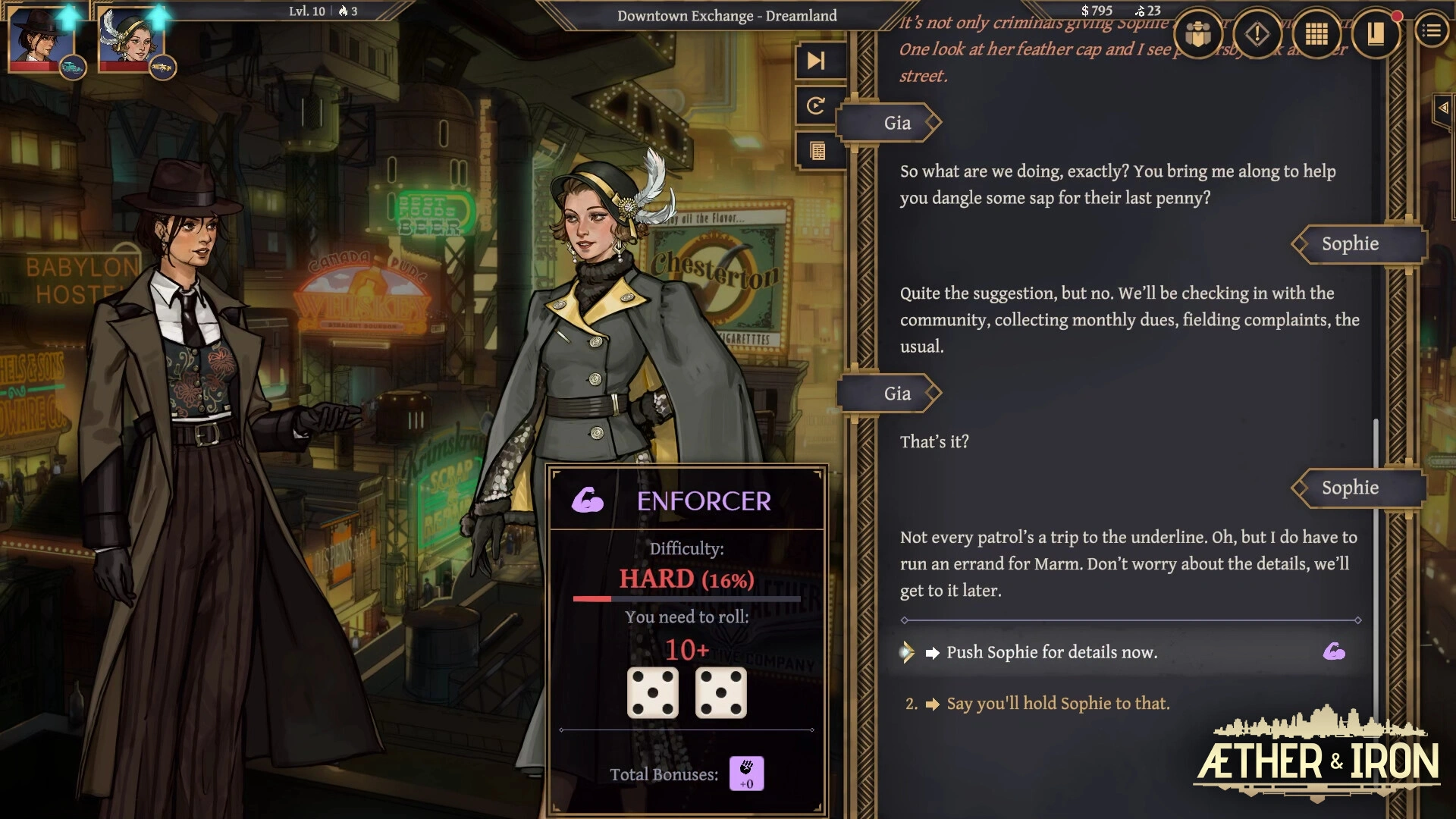
The bond between Gia and Nellie gives the plot its emotional drive. Nellie arrives as a brilliant scientist with restless energy. Gia meets her with suspicion, caution, and the defensive instincts of someone who has already been burned. That pairing works because each woman reflects a different face of the city. Nellie looks ahead. Gia focuses on making it through one more night. Their conversations carry the story forward with a steady pull, and the game gets strong mileage out of the friction between guarded survival and stubborn hope.
The supporting cast fills the world with familiar figures from noir and labor fiction, including worn mechanics and crooked officials. The writing keeps returning to the working class, especially the aethoneers whose labor keeps the city in the air even as the elite ignore their suffering. That focus gives the setting political weight without losing sight of the characters moving through it. Solidarity matters here. Greed has shape and status. The people below have each other.
The use of sisterhood gives the story a fresh angle inside a genre that often leans on solitary men and their private codes. The script gives careful attention to class and gender. The racial politics of the era receive little space. That absence stands out because the rest of the writing shows such clear intent in other areas.
Voice acting lifts the material even higher. Rhiannon Moushall gives Gia a gravelly exhaustion that makes every line feel lived in. The lead cast handles the script with care, and long dialogue scenes become something you want to hear through to the end. The dialogue choices deepen that strength. You can shape Gia into a cold professional or let her retain a visible shred of empathy for the people around her. Because conversations often play like negotiations with real stakes, those choices feel tied to character, pressure, and survival all at once.
High-Stakes Tactical Highways
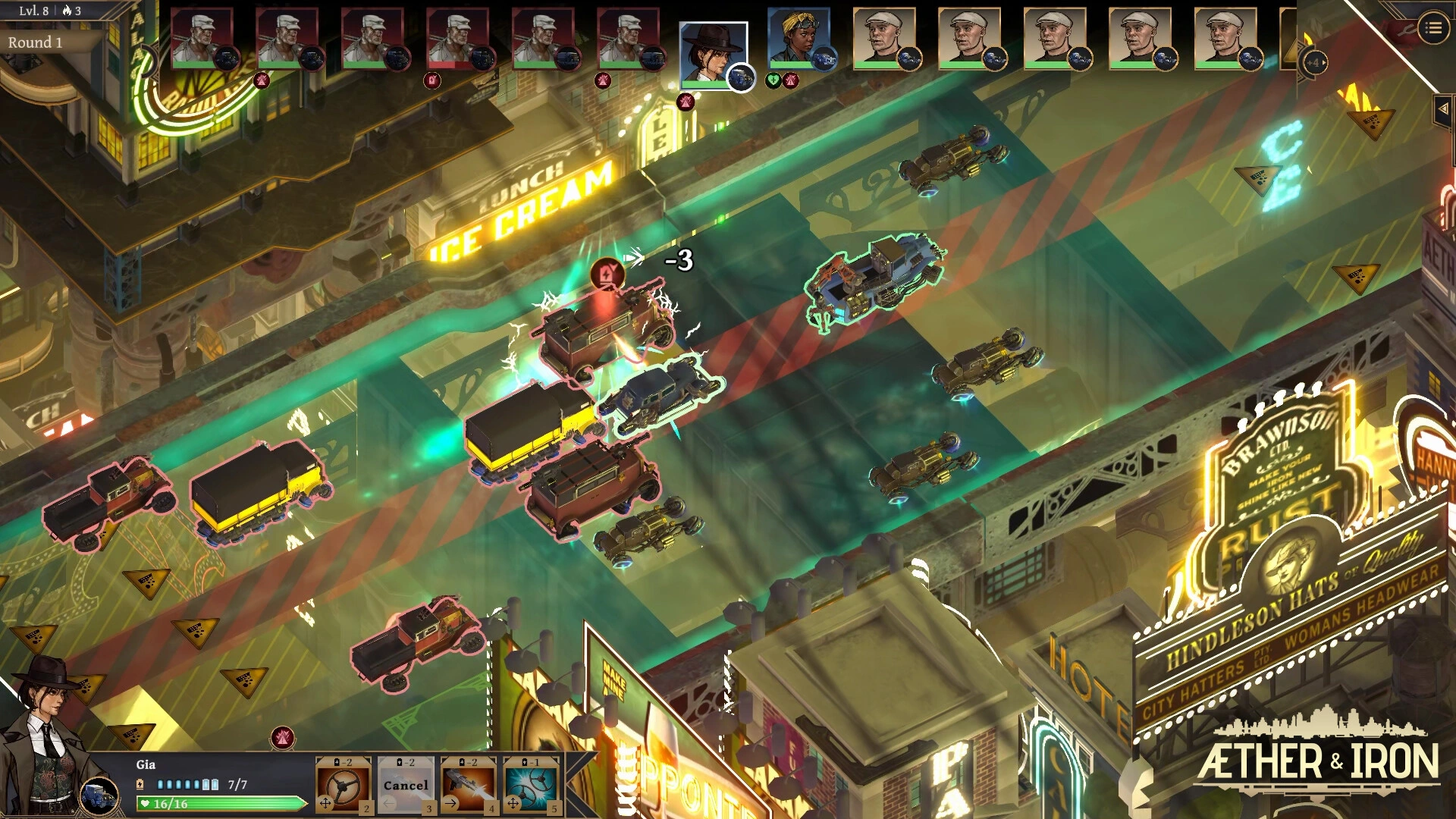
Combat unfolds on long, straight runs of aether road, and that structure changes the feel of every battle. These encounters play like high-speed puzzles where position decides everything. You command a squad of vehicles, and movement runs on an action point economy that gives acceleration a real cost. Pushing forward eats more energy than dropping back or shifting lanes. That rule gives the combat a rare sense of momentum for a turn-based game. Every turn asks you to think about speed, firing lines, and lane control at the same time.
That system works because the fiction and the mechanics push in the same direction. Gia lives on the road, and the road is dangerous. Combat reflects that. Nimble sedans can dart in for quick strikes and pull away. Heavy trucks can clog space and cut off enemy movement. The fights feel mechanical in a satisfying way, with clear rules, readable consequences, and room for planning.
The garage pushes that depth further. Each car has slots for engines and specialized tools such as beam cannons and mine launchers. Money stays tight for much of the game, so each purchase matters. A new engine can change your chances on the next run. Repairing a wrecked chassis can matter just as much. The economy turns upgrades into hard choices, and those choices fit the story of a smuggler living one bad job away from collapse.
The smuggling systems extend that pressure beyond combat. Hidden compartments for illegal cargo add tension to travel, and moving moonshine or stolen tech between islands can draw police attention. A rising Heat level brings checkpoints into play. Those moments ask for quick judgment.
You can try to talk your way through with a skill check, or you can floor the accelerator and start a fight. The system captures the feeling of living as a criminal in a city built to hunt you. It makes every garage decision matter once the road starts moving. Firepower and cargo space pull against each other, and survival sits in the middle.
Rolling the Dice in a Decopunk World
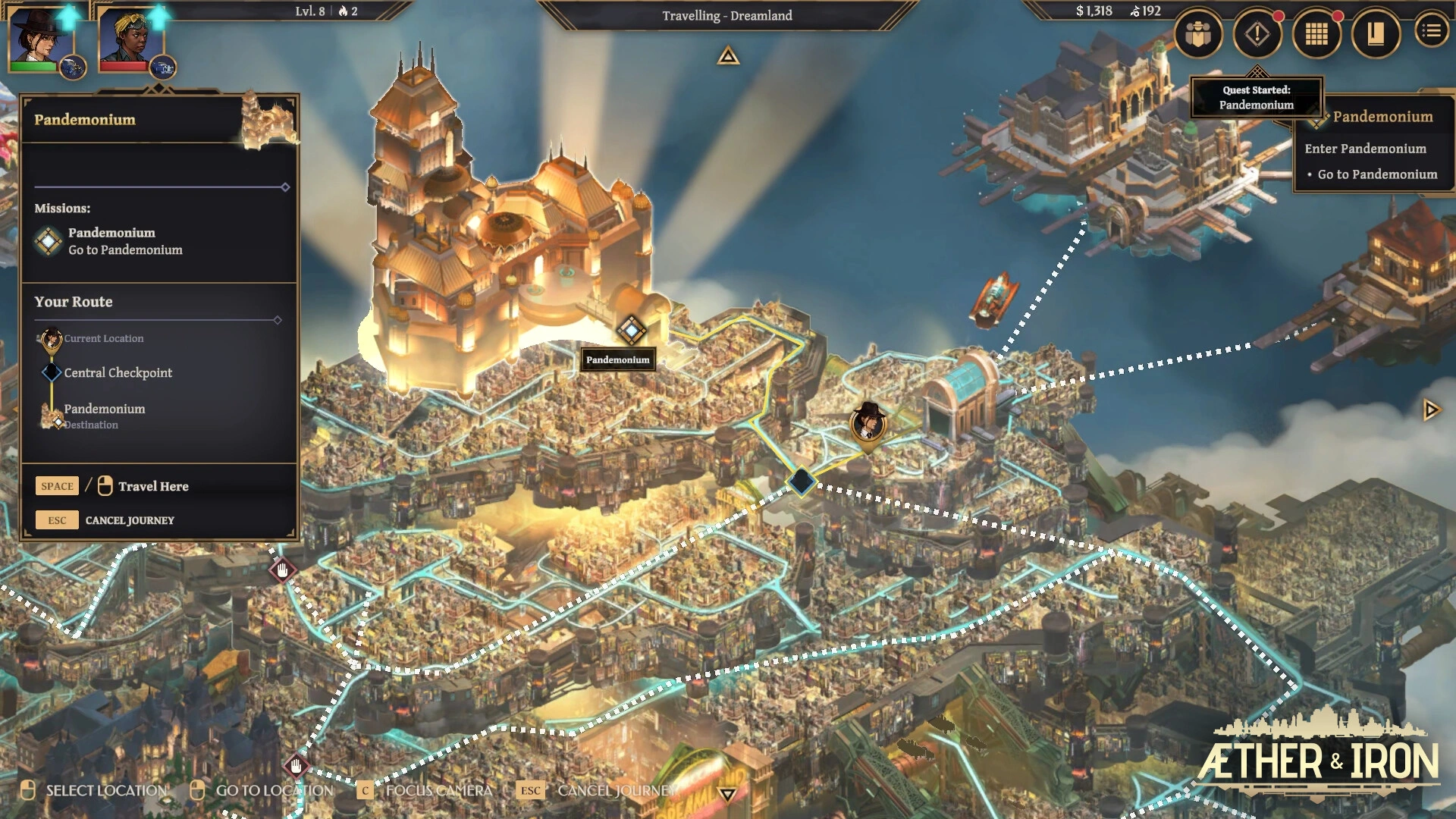
The structure mixes visual novel storytelling with tactical RPG systems. Exploration takes place in static 2D scenes where you click icons to speak with people or search for clues. That format keeps the pace moving and strips out dead time spent crossing empty maps. The game stays focused on conversation, discovery, and decision-making.
Its social mechanics rely on a 2d6 dice system. Rolls decide tense conversations and hands-on tasks such as mechanical repairs. Skills like Gumshoe and Grease Monkey add bonuses, which gives character building a clear effect outside combat. A bad roll can push a scene in a new direction, and that possibility gives the quieter sections real suspense. The skill trees are put together with care. They strengthen combat and social play within the same character arc, so progression feels unified. Your build expresses a method, a temperament, and a way of dealing with pressure.
Technical performance is where the game takes its hardest hits. Load times can drag. Frame rates can dip during busy encounters. Some dialogue loops create awkward moments where an actor repeats a line or speaks the wrong one. Those issues are hard to miss.
Even so, the presentation keeps asserting itself. The black-and-gold interface suits the 1920s styling perfectly. Brass-heavy music and live orchestral arrangements feed the noir mood throughout. The bugs stay present, yet the creative vision remains easy to see. Players who care deeply about sharp writing, strong atmosphere, and tactical decision-making will find a game with a clear identity, even when the tech stumbles.
The Review
Aether & Iron
Aether & Iron stands as a narrative powerhouse. The writing and voice performances transform a familiar noir premise into a memorable experience. Technical stumbles and inconsistent combat depth create occasional friction. The atmosphere remains undeniable. It captures the struggle of the working class against a backdrop of golden gears and floating islands. Players who value character-driven stories find a world worth the mechanical hiccups. This title represents a bold step for tactical RPGs by prioritizing style and thematic weight.
PROS
- Superior voice acting and sharp writing.
- Evocative decopunk setting.
- Tactical car combat offers a fresh challenge.
- Focus on labor and class politics.
CONS
- Technical bugs and lengthy loading screens.
- Uneven difficulty spikes in the final acts.
- Some mechanics feel shallow.