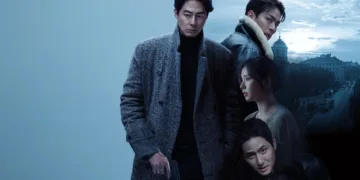





















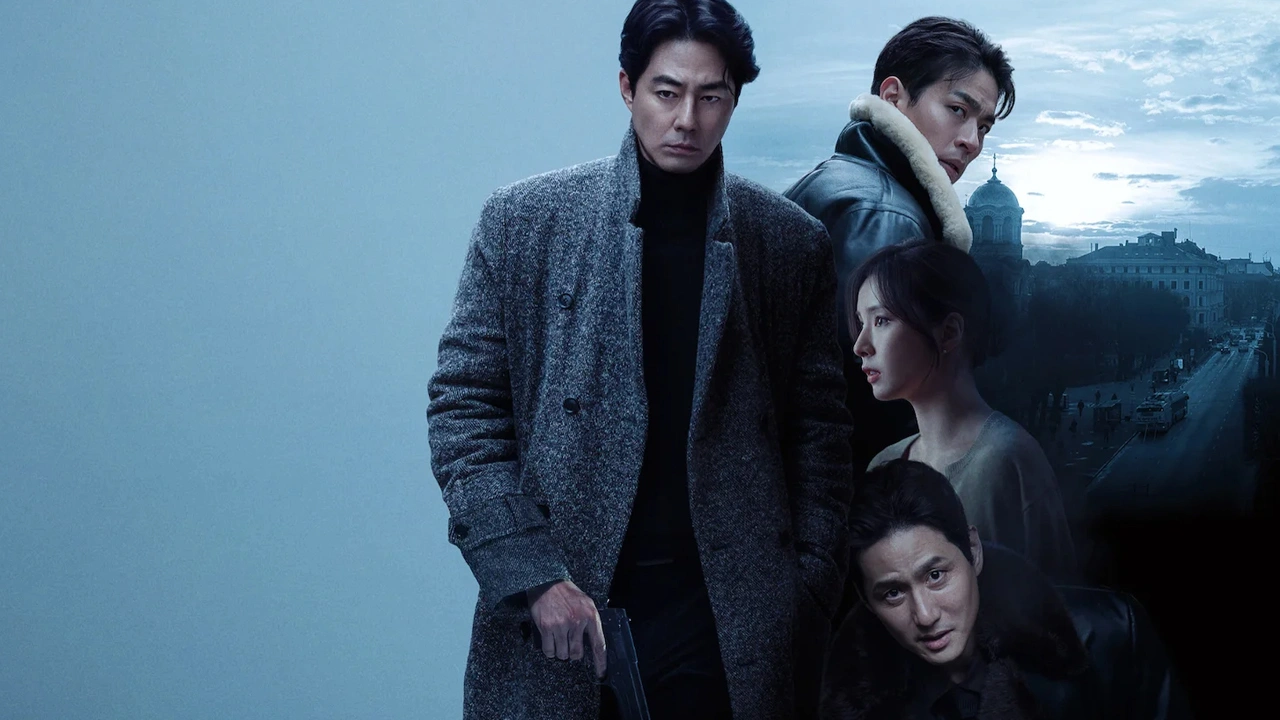

Ryoo Seung-wan brings cold, exacting control to Humint, a 2026 espionage thriller that trades the kinetic heat of his earlier work for the frozen industrial sprawl of Vladivostok. Zo In-sung leads the film as Manager Zo, a South Korean National Intelligence Service agent carrying the damage of a catastrophic professional failure.
His bid for redemption sends him after a criminal syndicate tied to human trafficking and drugs, a mission that intersects with Chae Seon-hwa. She is a North Korean waitress trying to defect, trapped inside a system that treats her as currency.
The story tightens with the entrance of Park Geon, a North Korean state security official assigned to stop an intelligence leak. His arrival brings personal volatility into the plot, since he shares a concealed past with Seon-hwa that threatens his official obligations.
The film treats human intelligence as human lives caught inside state machinery. As the characters move through the bleak Russian setting, their clashing aims push them toward violent collision. The production examines the survival of people reduced to collateral in a geopolitical contest.
The Friction of Duty and Human Survival
The film’s emotional force begins in a South Korean prologue that works as a grim statement of purpose. Manager Zo watches an informant named Soo-rin die, a scene that exposes the icy indifference of the intelligence bureaucracy.
His handlers exist as voices in an earpiece, concerned with data while a person is destroyed in front of him. That failure drives Zo’s later actions in Russia. He is following orders with visible strain, trying to settle a debt that the state has already written off.
Also Read






In Vladivostok, the story widens into a triangle of competing agendas. The South Korean NIS wants to take down a narcotics ring, while North Korean State Security searches for traitors inside its own ranks. Between them stands the Russian Mafia, led by the imposing Aleksei.
He serves as the physical threat and a business partner to corrupt officials such as consul general Hwang Chi-seong. This structure reveals the moral decay inside these operations. The film defines human intelligence through the exploitation of people like Chae Seon-hwa, who must survive in a world where handlers see her as expendable.
The first hour moves with the patient rhythm of a spy procedural. It tracks surveillance, information gathering, and the gradual assembly of secrets before shifting into a harsher register. The second half speeds into sustained physical conflict as the trafficking ring’s secrets come into view. That shift works because the script has already established the political stakes and personal histories behind the players. The eventual explosion of violence feels like the release of pressure that has been building scene by scene.
Performative Guilt and Unpredictable Loyalties
Zo In-sung gives Manager Zo a performance built on restraint and physical weight. This is a quiet protagonist whose past failures sit in his posture. He represents a specific kind of individualism, moving inside a compromised system while often resisting the cold logic of his superiors. His drive to save his informants becomes an act of penance, which gives him shape in a genre that often favors emotionally sealed operatives.
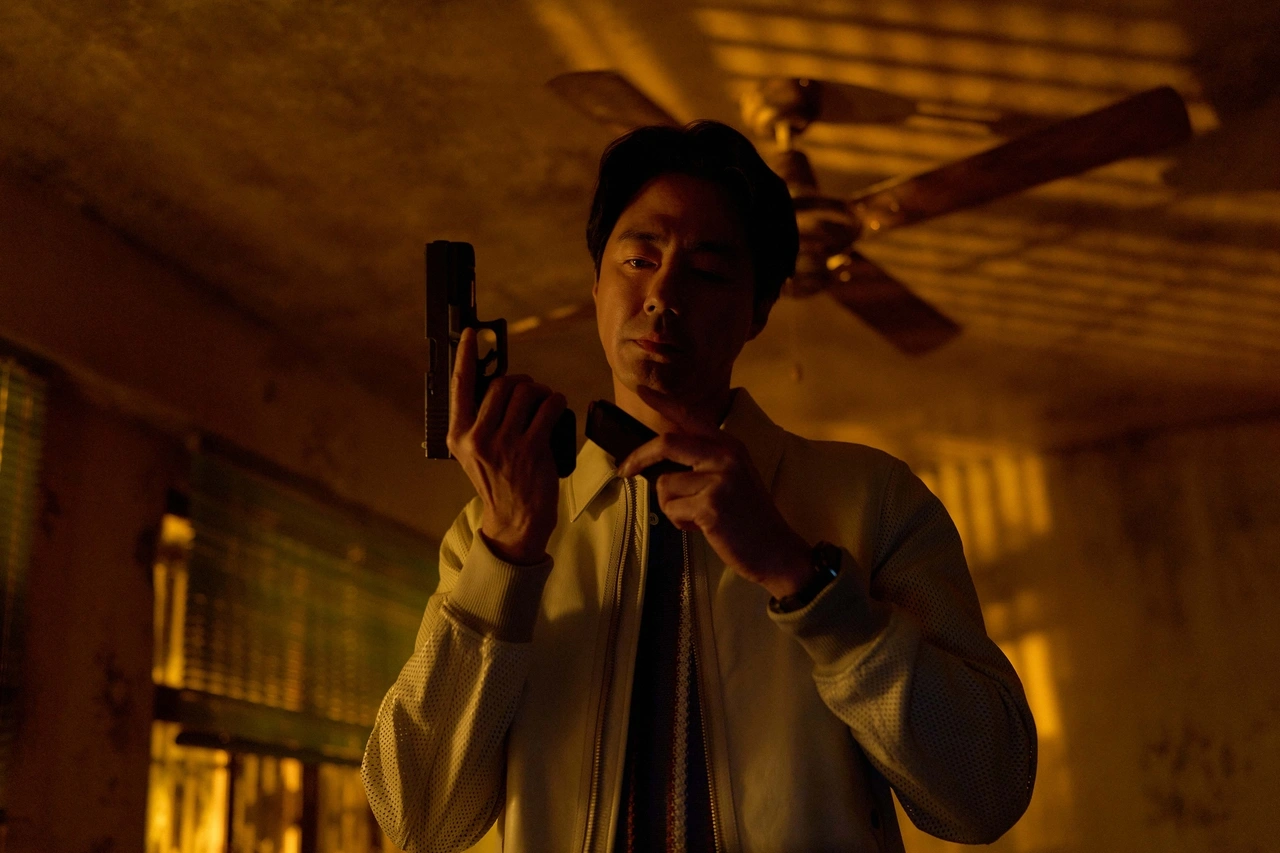
Park Jeong-min supplies a sharp counterweight as the unstable Park Geon. His introduction, built around a ballpoint pen, establishes his capacity for precise cruelty with nasty efficiency. He occupies a gray moral position, since his loyalty to the North Korean state keeps running into his personal feelings for Chae Seon-hwa. That tension makes him the film’s most volatile figure. He can redirect the story through a flash of emotional clarity or a sudden surrender to duty.
Chae Seon-hwa, played by Shin Sae-kyeong, gives the production its emotional anchor. The men circle her, yet she remains active in shaping her fate. Her desperation has force, and her place in the final conflict presents a woman reclaiming agency under extreme pressure. Park Hae-joon gives Hwang Chi-seong a distinct air of menace as a corrupt official with a memorable visual profile.
His leather jacket and fleece collar give him a modern, predatory look that suits his role as a broker between governments and the mafia. The supporting cast, including Jung Yoo-jin as Manager Im, brings physical grit to the action, while Robert Maaser’s Aleksei becomes a formidable presence in the second half.
Kinetic Storytelling through Combat Mechanics
The action works as storytelling. Ryoo builds specific fighting styles for each character, reflecting background and motivation through movement. The sequences often use locations where firearms are limited, which gives the violence a grounded tactical logic. Every punch, fall, and improvisation reveals something about desperation, training, or survival instinct.
The opening brothel fight offers a clean example of combat as character work. Manager Zo avoids firing his weapon to prevent detection, turning his handgun around and using it as a blunt instrument. The choice underlines his internal strain and his effort to finish the mission without creating further collateral damage. It sets the film’s physical rules: consequences land hard, and pain has weight.
The film uses vertical space well, especially during a staircase sequence involving Manager Im. The stunt work has bruising credibility, with characters falling and clawing for balance in ways that look painfully real. A car chase in a snowy parking lot also stands out, using vehicles that spin in donuts to create a visual set piece apart from standard high-speed pursuit imagery.
The final warehouse shootout turns bulletproof shipping cases into both plot device and physical cover. Since the cases contain the trafficking victims, North and South Korean agents are pushed into sudden cooperation against the Russian mob. The climax becomes a study in temporary alliance, tactical necessity, and gunfire under pressure.
The Bleak Architecture of Espionage
The film’s visual atmosphere carries major storytelling weight. Using Latvia to stand in for Vladivostok, the production creates a crisp, frozen environment that feels convincing. Greys and sepias dominate the palette, building a sense of isolation that matches the characters’ emotional states. The weather behaves almost like an antagonist, driving people into cramped interiors and industrial spaces that sharpen the grimness of the work.
The world-building has a slightly timeless texture. Smartphones appear, yet the film leans on physical sets and classic espionage tools. That choice keeps attention on bodies, choices, and immediate danger. The North Korean restaurant and Russian nightclubs are designed with a lived-in threat that supports the trafficking-ring storyline. These spaces feel used, compromised, and dangerous, giving the political drama a firm base.
The cinematography moves effectively between close-ups that study character pressure and wide shots that clarify action. The camera registers the weight of weapons and the force of the environment during the final massacre. Sound design strengthens that physicality, making collisions and gunshots land with force.
This careful craft keeps the film rooted in its reality during the most intense sequences. The difference between the grounded Korean agents and the more flamboyant visual style of the Russian mafia boss sharpens the cultural and moral clashes driving the story.
Humint is a South Korean espionage action film that debuted in cinemas on February 11, 2026. This production represents the final entry in Ryoo Seung-wan’s thematic trilogy of films set in locations outside Korea. The movie reached a global audience via Netflix on March 31, 2026. As of April 30, 2026, the film is available to stream on Netflix. It follows intelligence agents from both Koreas navigating a dangerous criminal operation in Vladivostok.
Where to Watch Humint (2026) Online


Full Credits
Title: Humint
Distributor: Next Entertainment World, Netflix
Release date: February 11, 2026
Rating: 15, TV-MA
Running time: 119 minutes
Director: Ryoo Seung-wan
Writers: Ryoo Seung-wan
Producers and Executive Producers: Kang Hye-jung, Jo Sung-min, Ryoo Seung-wan, Park Jung, Kim Hyun-sik, Janis Kalejs
Cast: Zo In-sung, Park Jeong-min, Park Hae-joon, Shin Se-kyung, Jung Yoo-jin, Lee Shin-ki, Robert Maaser, Kim Eui-sung, Jang Hyun-sung, Kang Ha-kyung, Lee Jun-young
Director of Photography (Cinematographer): Yang Hyun-suk
Editors: Bae Yeon-tae
Composer: Jo Yeong-wook
The Review
Humint
Humint succeeds as a visceral action spectacle while faltering as a complex spy drama. The narrative requires significant patience during its exposition-heavy opening hour. The reward is a final act that presents some of the most inventive and grounded choreography in recent years. While the emotional effect is dampened by archetypal characters, the physical storytelling remains high. It is a worthy entry for genre enthusiasts who value kinetic energy over narrative depth.
PROS
- Inventive and grounded action choreography.
- Strong physical performances from the lead cast.
- Evocative and atmospheric Vladivostok setting.
- Creative use of environment in combat.
CONS
- Convoluted and slow-paced first half.
- Superficial treatment of political themes.
- Limited character development beyond genre archetypes.
- Predictable espionage tropes.