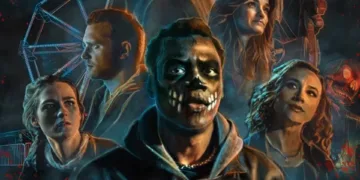






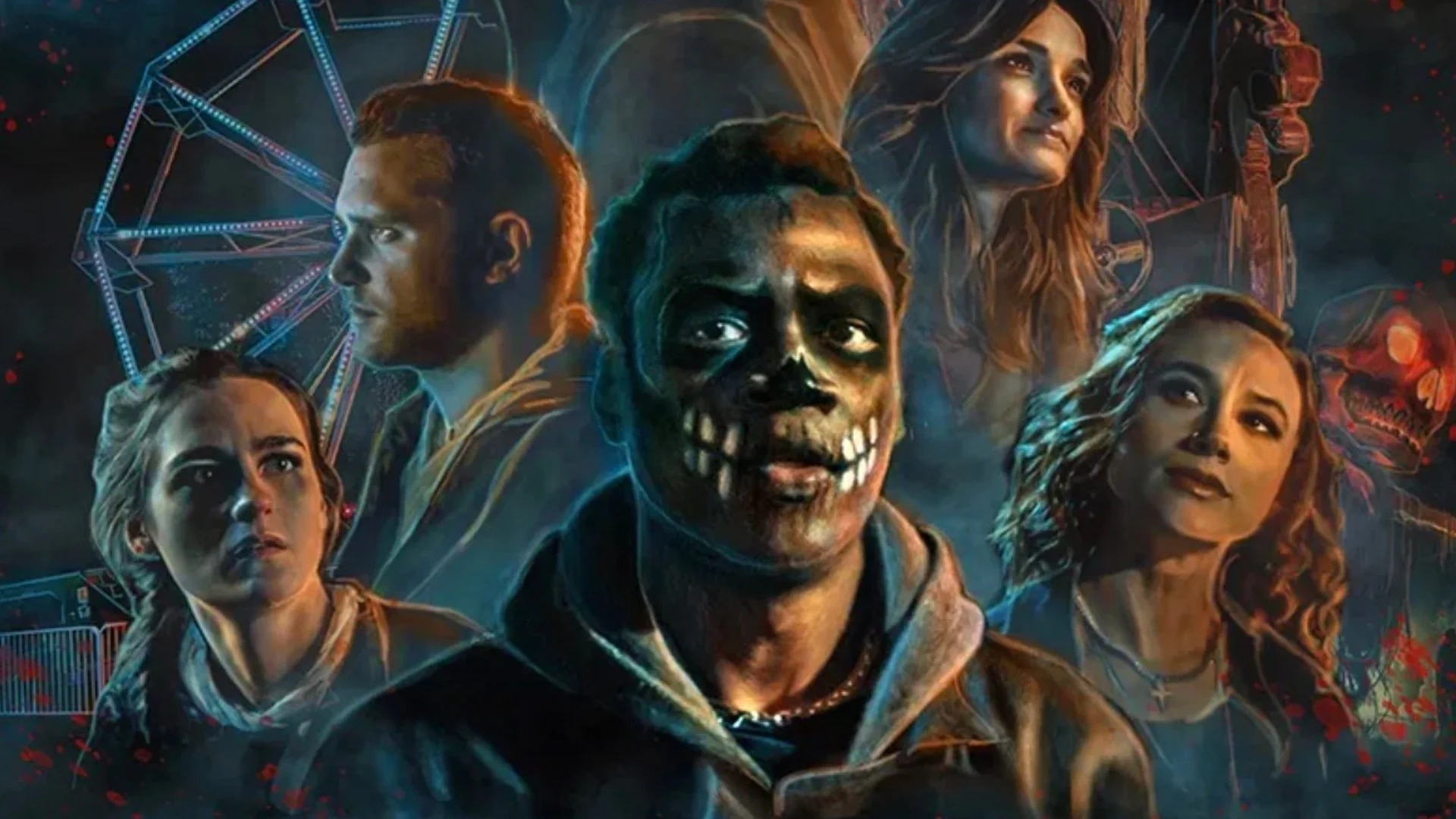

Zach is a high school senior at an elite boarding school, where weekdays are shaped by fixed schedules and academic pressure. His weekends send him into a different rhythm. He travels to a Maryland haunt owned by his cousin, Mark, a professional attraction that gives him room to explore his interest in the macabre.
Zach is an aspiring horror comic artist, and he approaches the job with real reverence. After the school day ends, he performs a small bathroom ritual: black clothing, dark eyeliner, a carefully chosen look that marks his shift from student to scarer.
Director Keith Boynton gives the story a naturalistic texture, placing attention on the labor, timing, and routine behind the haunt industry. Zach’s mother is in the hospital, and that family crisis explains why he is staying with relatives. It also places a quiet strain under his daily movements. The film opens by grounding this unusual workplace in physical reality, treating the haunt as a serious space for artistic expression and community.
Practical Artistry in the Maryland Woods
Markoff’s Haunted Forest gives the film an authentic backdrop. The production was shot at a real Maryland location, which gives the attraction a lived-in quality that a soundstage would struggle to match. We see how the business functions from within. Zach trains under Jacko, a veteran of the attraction, while his exchanges with Mark reveal the pressure of running a seasonal operation.
The staff share a strong sense of camaraderie, and Zach develops a connection with Sarah, the makeup artist, through shared work and brief, quiet conversations. The film brings Zach’s comic book art into the visual design. His hand-drawn panels reflect the scenes unfolding in the forest, linking his creative imagination with the world he physically inhabits.
An early sequence imitates an urban legend, using specific lighting and camera angles to suggest a polished cinematic control. That opening sets a visual standard for the film that follows. The production keeps returning to the craft behind the scares, showing the effort needed to build a convincing nightmare for paying customers.
Historical Echoes and Moral Weight
A colleague’s death on the property changes the atmosphere. The story turns toward mystery. Sarah tells Zach about the history of a Piscataway tribe massacre that occurred on the land, and her group seeks spiritual forgiveness for those past events. This plot thread introduces moral pressure, asking what it means to use a site of historical violence for entertainment.
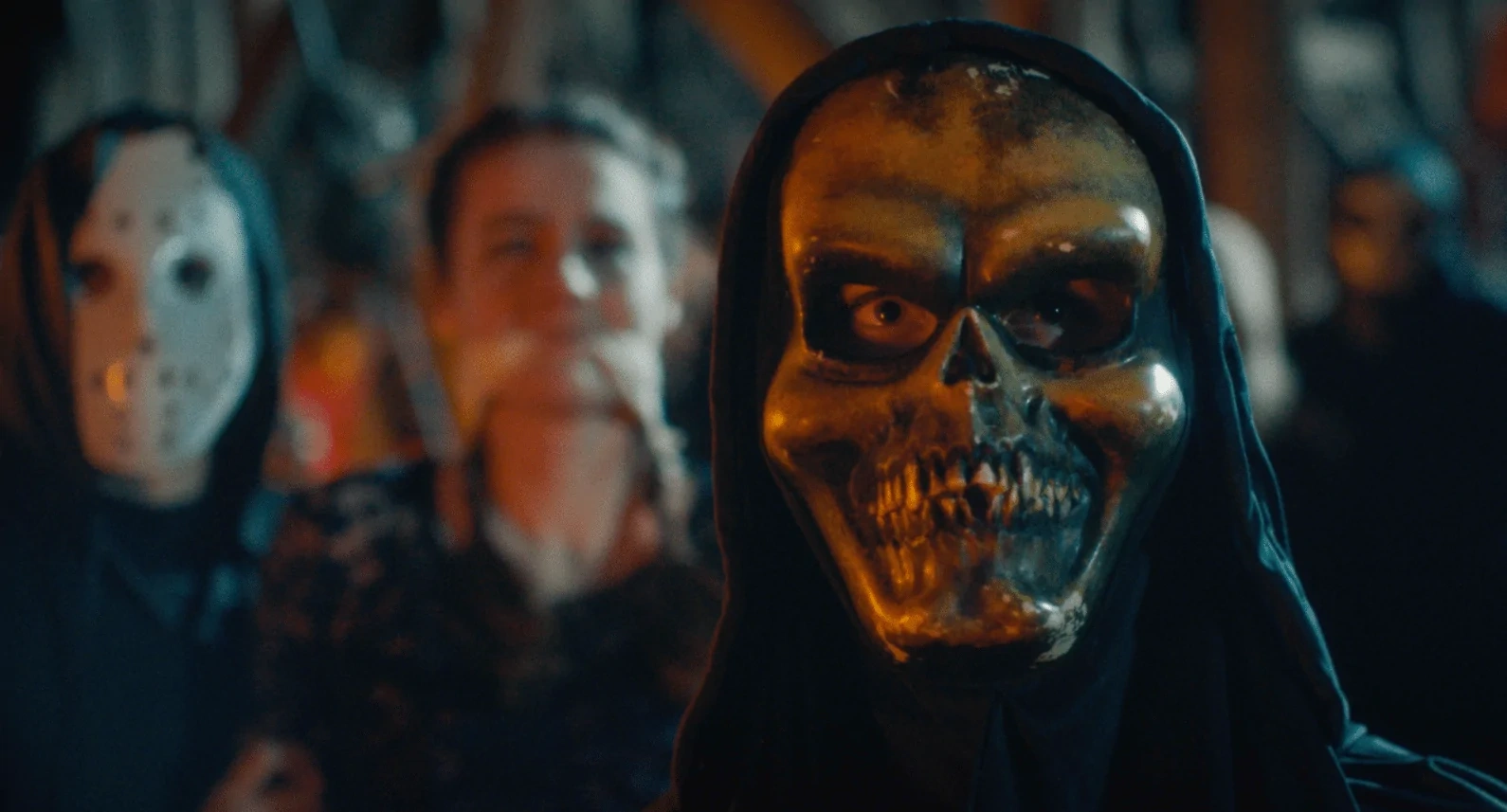
Zach struggles to balance his schoolwork with long nights in the forest. Carly gives him a stabilizing presence within his school life, a steady counterweight to the haunt’s charged environment. Sarah gives Zach a badge carrying the symbol known as the man in the maze. The object gives the confusion around him a physical shape. The haunt keeps operating after the tragedy, creating tension between profit and ethics.
Mark wants to use the death’s notoriety to draw attention to the attraction. Zach begins to feel uneasy and questions the morality of the business. The mystery grows as more accidents occur. The narrative studies how a place built for fun can become a site of genuine dread. This section tracks the damage caused by treating history as material for commerce.
Restraint in the Face of Real Horror
The horror depends on psychological tension. Keith Boynton keeps most violence outside the frame, which places the characters’ emotional states in sharper focus. The aftermath of each act becomes the main evidence. Grayson Gwaze gives Zach a vulnerable, grounded presence, charting his movement from horror fan to someone trapped inside the kind of fear he once admired.
The supporting cast helps make the environment feel believable. The third act quickens the pace, and the final confrontation takes place on Halloween night. The film moves from character study into tense survival drama with a clear build. Zach’s fascination with the dark side of life collides with a harsher reality.
He learns that actual death carries a weight his comic panels cannot contain. The resolution respects the character motivations established early in the film, keeping the shock rooted in consistent behavior. Its traditional climax earns its force through prior development. The film studies how fiction can help people process trauma. It draws a firm line between staged fear and actual loss. The story closes by looking at the cost of witnessing violence.
The Haunted Forest reached a broad audience on February 13, 2026, when it launched on digital and VOD platforms. You can watch the film on major digital retailers like Amazon Prime Video and Apple TV. The story follows a high school senior who finds his interest in scary stories challenged when he takes a job at a haunt where the violence becomes real. This indie production provides an observation of the horror industry and the way we process fear.
Where to Watch The Haunted Forest (2026) Online








Full Credits
Title: The Haunted Forest
Distributor: Quiver Distribution
Release date: February 13, 2026
Rating: R
Running time: 93 minutes
Director: Keith Boynton
Writers: Keith Boynton, Devin McEwan, William Clarke
Producers and Executive Producers: Keith Boynton, Cassie D’Agostino, Mashka Wolfe, Alison Rosa, Catherine Corcoran
Cast: Grayson Gwaze, Cedric Gegel, Kaitlyn Lunardi, Meghan Reed, Keith Boynton, Jamie Bernadette, Myles Hamilton, Dave Harding
Director of Photography (Cinematographer): Mashka Wolfe, Aitor Mendilibar
Editors: Keith Boynton
Composer: Alison Rosa
The Review
The Haunted Forest
The Haunted Forest works as an atmospheric study of a niche industry. It uses its real location to build a sense of place that feels lived in. While the third act shifts into more familiar territory, the film maintains its focus on Zach’s internal growth. The choice to prioritize character over gore provides a grounded experience. It explores how we interact with the macabre.
PROS
- Authentic use of a real haunt location.
- Strong lead performance by Grayson Gwaze.
- Integration of comic book aesthetics into the narrative.
- Respectful handling of character drama and ethics.
CONS
- Pacing issues in the middle section.
- Some supporting performances lack the same depth as the lead.
- The transition into a traditional horror climax feels slightly jarring.