






















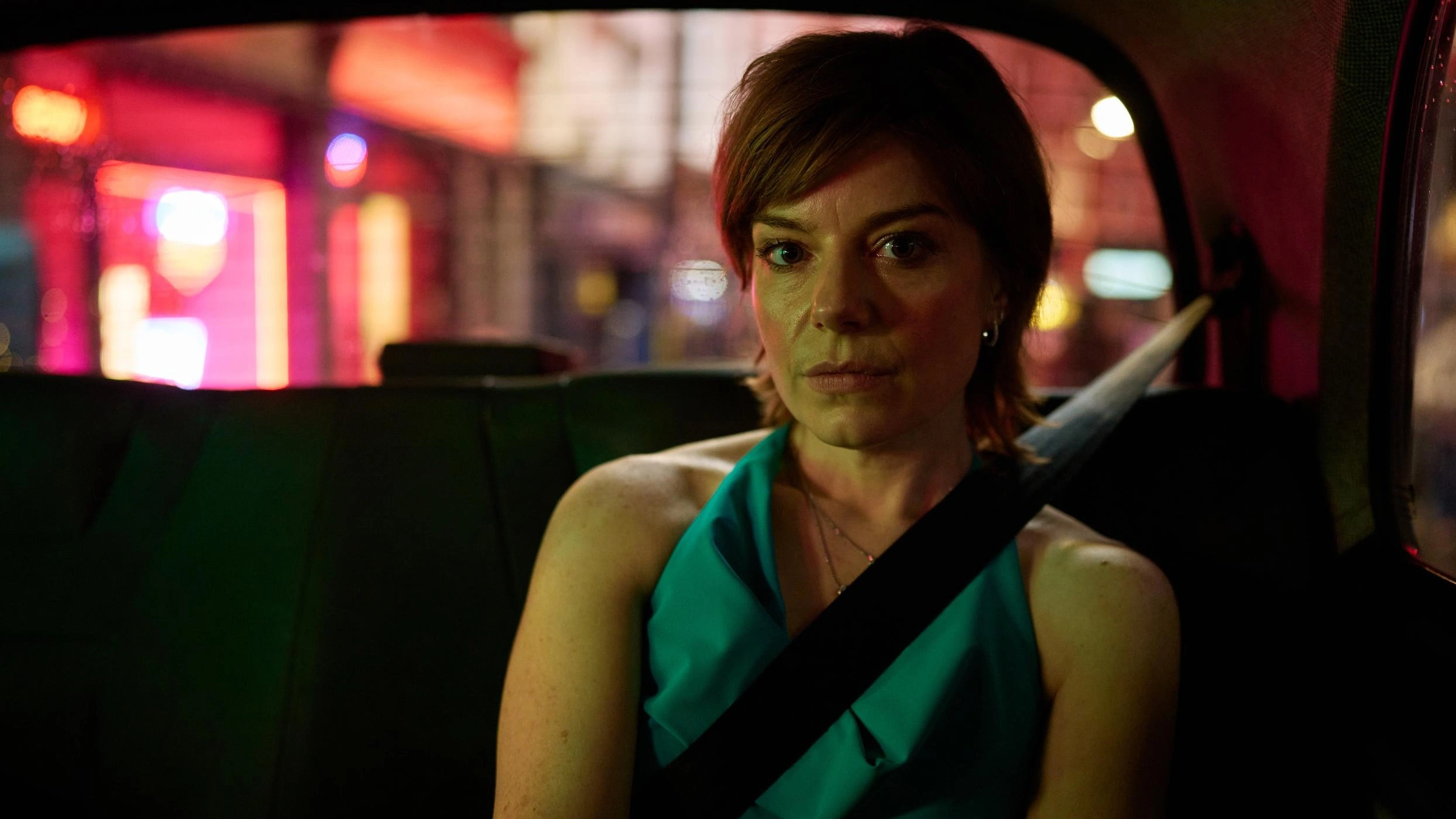

London’s black cabs carry a near-mythic promise of urban safety, the kind of civic trust that feels practically upholstered into the seats. Believe Me takes that familiar symbol and lets the horror seep through it by focusing on John Worboys. He does not rely on brute force. He turns politeness into a trap.
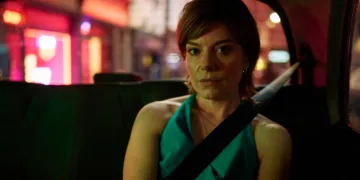
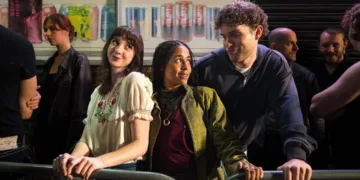
His champagne routine, built around a fake casino win and a smile that pressures women into compliance, catches Sarah, a young mother on her first free night out, and Laila, a student separated from her friends. The script makes its sharpest move by looking past the predator.
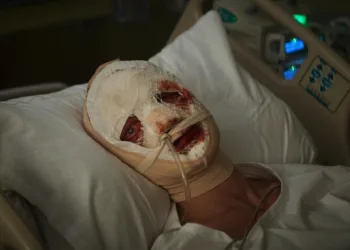
Serial killer mystique gets no spotlight here. The camera stays with the survivors. We see the aftermath of the spiked drink, the gaps in memory, the disorientation, the damage. That focus drains Worboys of theatrical power and gives the story its moral weight.
The Architecture of Resilience
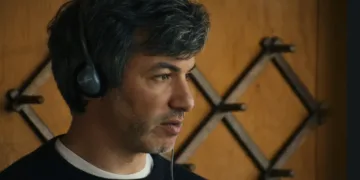
Daniel Mays plays Worboys as a chilling background presence, a shape behind the wheel with a voice polished enough to pass as harmless. He wisely avoids charisma. His Worboys feels weak, greasy, and often glimpsed through rear-view mirrors, which is exactly where the monster belongs in this telling.
Aimee-Ffion Edwards gives Sarah a grounded ache. She plays a woman trying to rebuild a life around an event she cannot fully recover in her mind. There is anger in her, steady and banked, the kind that survives paperwork, disbelief, and official indifference.
Aasiya Shah brings equal force to Laila. Her scenes catch the raw humiliation of a student made to explain her own body to men in uniform who have already reduced her to a type. Miriam Petche arrives later as Carrie Symonds and changes the room’s temperature.
Her role brings personal trauma into contact with professional influence, giving the drama a new current. Once the legal professionals enter, the series finds a brisker rhythm. Philippa Dunne and Rachael Stirling supply the sharp, articulate energy needed to confront a system that has already decided these women are background noise.
That structural shift matters. The early chapters move through isolation, bedrooms, hospitals, and interviews where silence presses down. The later sections gather speed through legal strategy and shared purpose. The movement from the victim’s bedroom to the barrister’s office gives the series a clean dramatic pivot: endurance becomes resistance. Television crime dramas have trained viewers to expect the chase, the confession, the killer’s psychology. Believe Me finds its tension in a survivor learning how to stand upright inside a system built to make her shrink.
The Mechanics of the Gaze
Director Julia Ford uses a precise visual style to keep the viewer close to the survivors’ internal states. The show avoids the glossy neon grammar of many London thrillers. Its images are colder, more clinical, more interested in medical rooms than city lights.
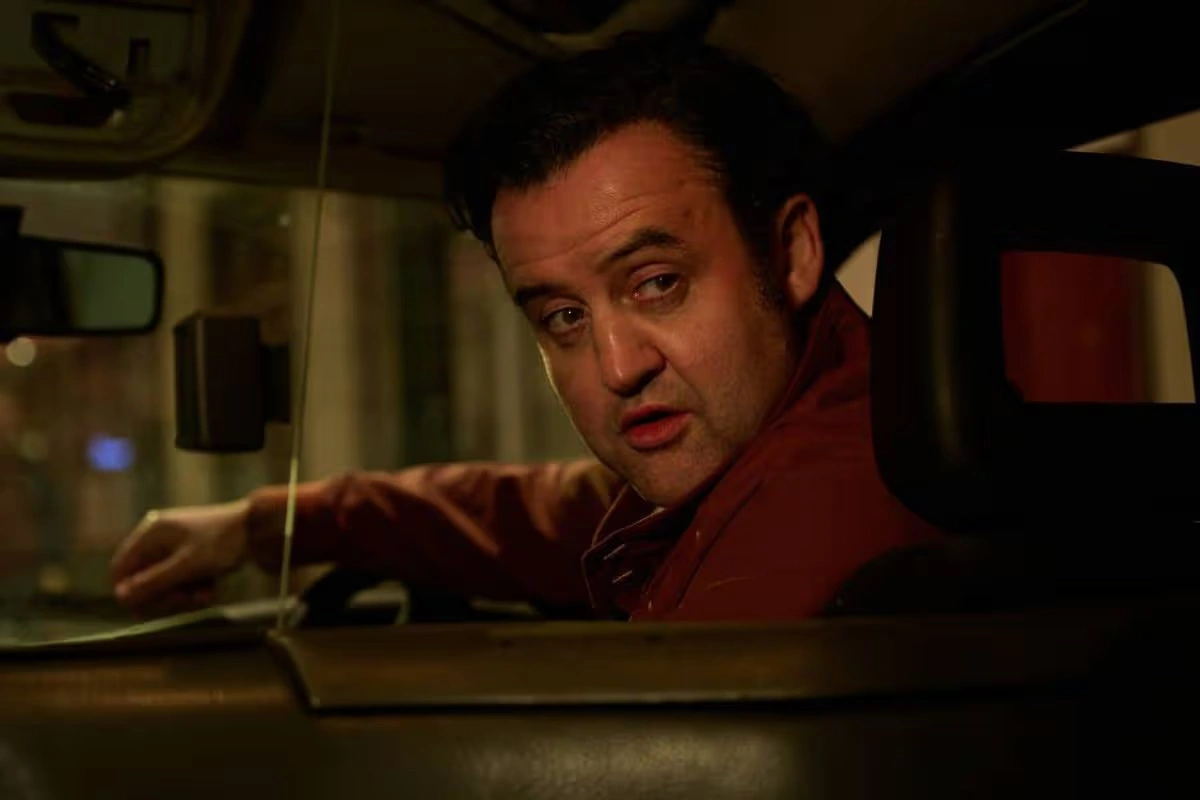
Tight close-ups during examinations catch the physical toll of survival without turning pain into spectacle. The contrast between nightclub chaos and taxi silence gives the episode its sickening rhythm. A night out has noise, movement, foolish optimism. The cab has a low engine hum and the intimacy of a locked door. Fun night, meet civic nightmare.
Sound design does heavy lifting. The rumble of the cab engine changes meaning as the episode progresses. It starts as the ordinary sound of a ride home and mutates into the signal of a trap closing. That is clean, nasty storytelling. Jeff Pope’s writing stays restrained, a rare virtue in true crime drama.
The script gives us what the survivors remember, leaving gaps where memory has been chemically attacked. Those gaps do real dramatic work. They respect the victims and sharpen the fear, since the audience is forced to sit inside uncertainty.
The confined spaces are handled with care. Every shot inside the taxi feels heavy because the frame itself seems to remove options. The editing keeps close to immediate sensation: confusion, nausea, fear, shame, anger. Worboys does not get the timeline as a trophy. The women get the perspective. That choice places the series against a long history of crime television that has often polished predators into dark celebrities. Here, the camera has better manners and better politics.
The Bureaucracy of Negligence
The interrogation rooms hold the series’ deepest horror. The Metropolitan Police appear as a wall of institutional arrogance, and the officers’ questions land with the dull force of practiced suspicion. Sarah and Laila face biased, accusatory questioning after already surviving the crime.
One detective asks Laila if she is the sort of girl who wears red nail varnish. It is a grotesque detail, absurd enough to sound like bad satire and ugly enough to feel entirely believable within the scene. A whole system of victim-blaming fits inside that one question.
The authorities fail at the basics. CCTV is ignored. Vehicle details are left untraced. Evidence that should have mattered is mishandled or missed. That incompetence lets a predator remain active for years. The final episode shifts from the crimes to the legal fight for accountability, and the pacing becomes slower, more procedural, more agonizing. The drama asks what belief costs when the state has positioned itself against the people asking to be heard.
The survivors reclaim agency through meticulous legal action. Their trauma becomes a challenge to the system that failed them. The police embody failed protection; the legal team offers the possibility of truth dragged into daylight by patience, skill, and fury.
The release the series offers comes from no chase, no cathartic takedown in a rain-slick alley. It comes through the slow process of forcing a powerful institution to recognize its blindness. How many “red nail varnish” questions are being asked in interrogation rooms right now?
Believe Me premiered on ITV1 and ITVX on May 10, 2026. This harrowing four part true crime drama explores the institutional failures surrounding the investigation into John Worboys, known as the Black Cab Rapist. The series focuses on the survivors, specifically Sarah and Laila, as they navigate the trauma of their assaults and the subsequent dismissive treatment by the Metropolitan Police. Viewers in the UK can stream the entire boxset on ITVX or catch the remaining episodes as they air weekly on ITV1.
Full Credits
Title: Believe Me
Distributor: ITV1, ITVX
Release date: May 10, 2026
Rating: 15
Running time: 60 minutes per episode
Director: Julia Ford
Writers: Jeff Pope
Producers and Executive Producers: Catrin Lewis Defis (Producer), Saurabh Kakkar (Executive Producer), Jeff Pope (Executive Producer), Polly Hill (Executive Producer)
Cast: Daniel Mays, Aimée-Ffion Edwards, Aasiya Shah, Miriam Petche, Jordan Bolger, Alexa Davies, Laurie Kynaston, Lou Jackson, Isabella Brownson, Stephen Casey, Alex Price, Philippa Dunne, Rachael Stirling
Director of Photography (Cinematographer): Bryan Gavigan
Editors: Alex Fountain
Composer: Carly Paradis
The Review
Believe Me
This series avoids the typical traps of true crime by refusing to humanize the perpetrator. It functions as a sharp indictment of institutional apathy. The performances from Edwards and Shah provide a necessary human center to a story that would otherwise feel like a cold list of police failures. While the legal resolution in the final act feels slightly detached from the visceral intensity of the earlier episodes, the series maintains its integrity. It remains a sobering study of the cost of institutional silence.
PROS
- Powerful and restrained lead performances by Aimee-Ffion Edwards and Aasiya Shah.
- The script rejects sensationalism by focusing on survivor memory rather than crime reenactment.
- Effective sound design transforms mundane city noises into psychological threats.
- A direct and unflinching critique of systemic police negligence.
CONS
- The legal scenes in the final episode occasionally lean toward grandstanding.
- The narrative momentum shifts abruptly during the transition to the courtroom battle.