






















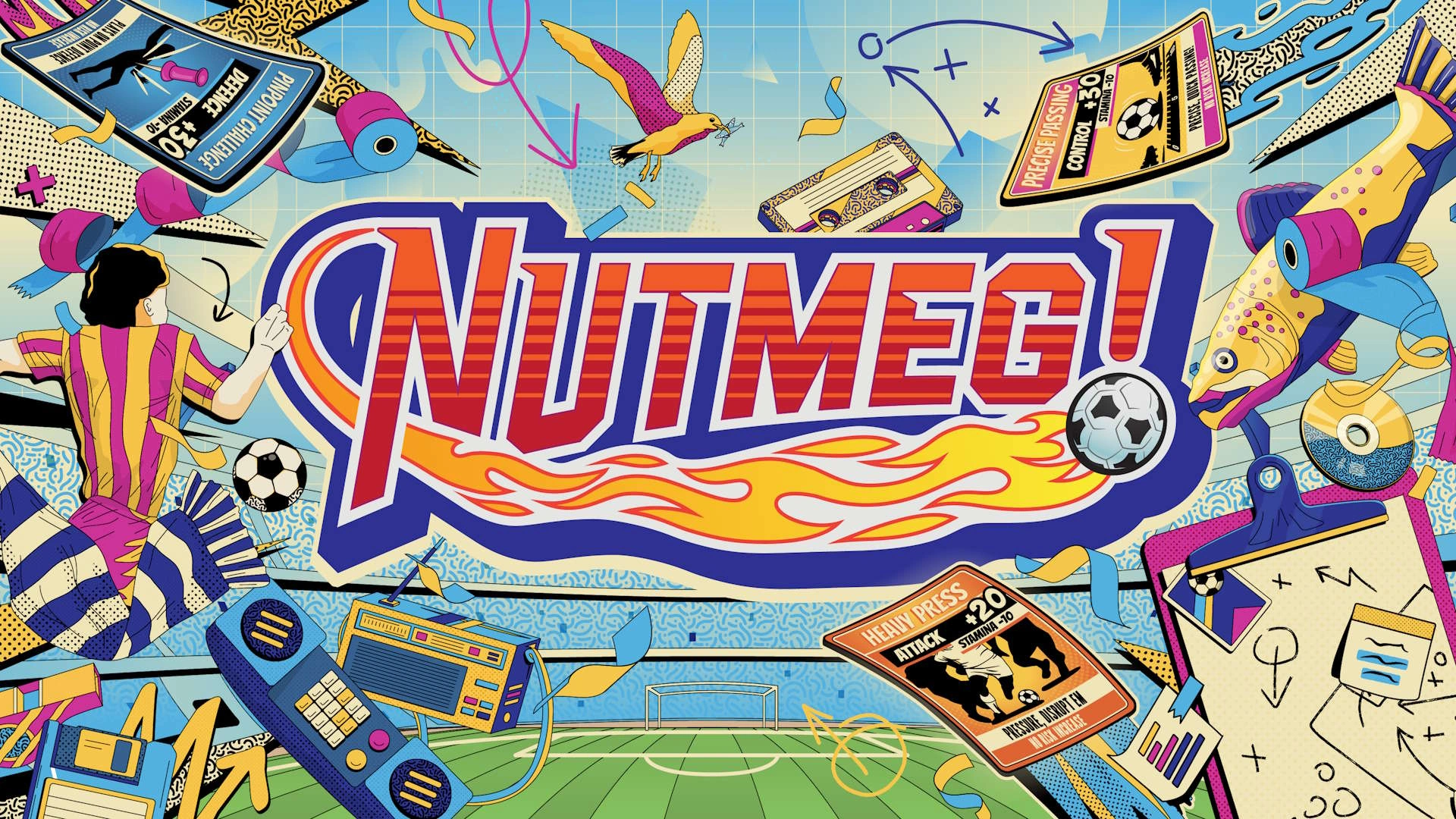

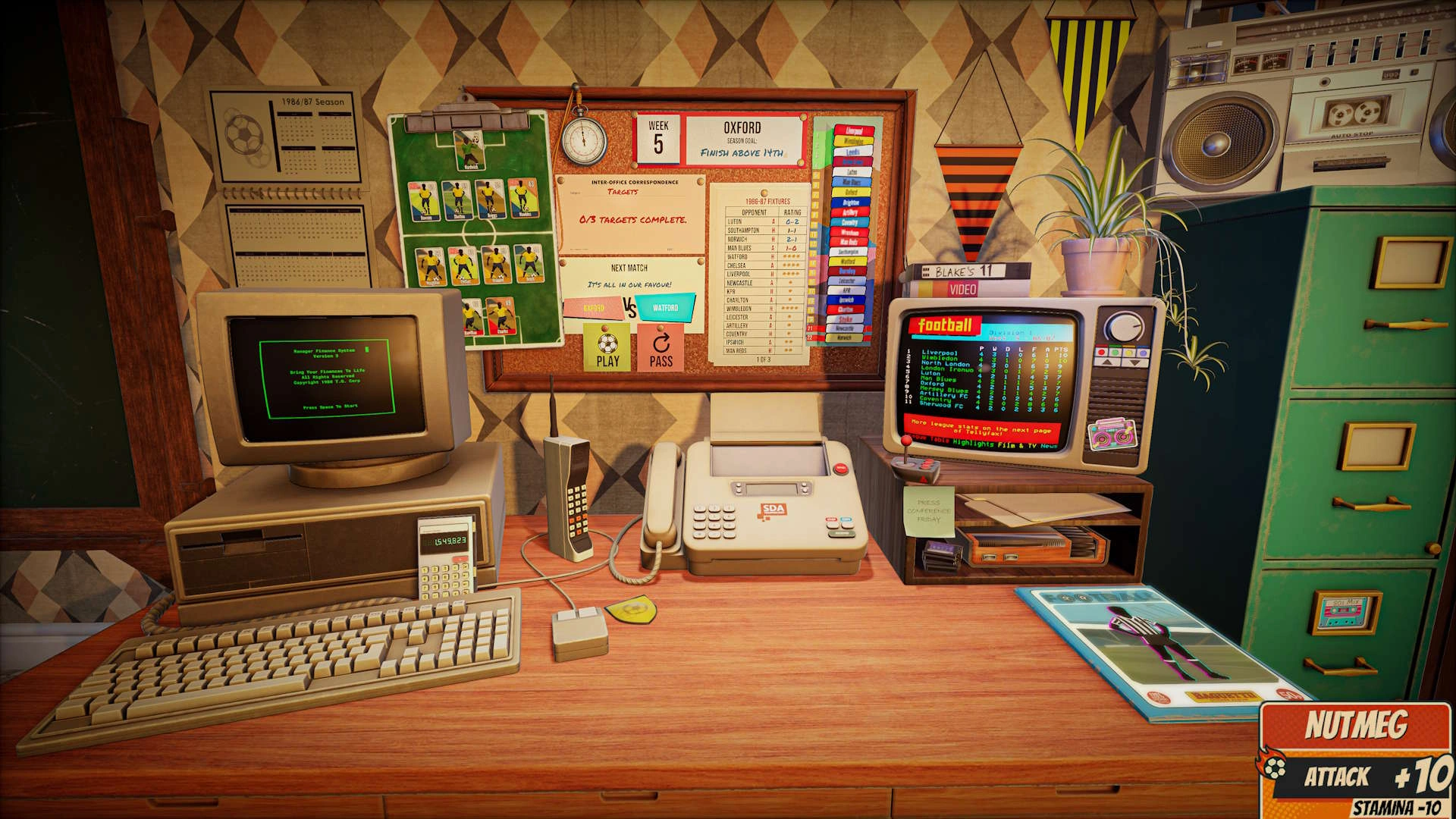
Setting Nutmeg! in 1980s England gives the whole design a clear identity. The player begins as a gaffer in the old Division 4, chasing promotion through the English football pyramid before the year 2000 arrives. The game moves away from the familiar match-engine presentation of modern sports titles and builds its interface around a cramped, period-specific office. The camera stays fixed at a desk, turning everyday objects into management tools. A chunky CRT television, a rotary telephone, a fax machine, and a physical sticker album carry most of the interaction.
That setup gives Nutmeg! a tactile quality. The fax machine handles transfer dealings. The sticker album contains the squad. The television delivers the wider football world through the lens of the era. Current management games often chase realism through data, menus, and detailed simulation; Nutmeg!
chases the texture of football before the internet changed how fans followed the sport. Its strongest early impression comes from that commitment to mood, where the feel of the period matters as much as the mechanics driving the climb.
Balancing the Books and the Board
Club management works because the office objects make administration feel hands-on. The squad appears in a sticker album that clearly echoes Merlin and Panini collections from the period. Staff members arrive as caricatures on cards, giving the business side a playful tone without draining it of strategy. Hiring employees still requires planning. Scouts and recruiters ask for specific wages, and their skill levels decide which features the player can access.
That creates a steady budget puzzle. A strong recruiter can open better opportunities, yet the weekly wage bill can punish careless spending. Merchandising adds a sensible revenue layer. Scarves sell well during cold winter months. The same stock struggles during summer, which gives the system a simple seasonal rhythm.
Stadium expansion follows the same practical thinking. The Board refuses to pay for growth if the current ground still has too many empty seats. The team needs success on the pitch first, since popularity drives the case for a bigger stadium.
The transfer system uses the fax machine to send offers to other clubs, a small choice that fits the game’s personality. Negotiations cover salary demands and strange perks. Offering a player an arcade cabinet as a signing gift captures the odd charm of this version of 1980s football. These pieces form a management loop grounded in the game’s historical setting. The simulation stays lighter than a spreadsheet-heavy football sim, yet it gives every decision a clear connection to place, budget, and club identity.
Tactical Triumphs on the Cardboard Pitch
Matches give Nutmeg! its sharpest shift in rhythm after the daily office routine. Each season contains fifty games. Most fixtures are simulated through squad depth and selected tactics, which shape win percentages. Broadcast matches become the main interactive set pieces. They move briskly, often finishing in under five minutes, and they translate football into phases of possession moving across a board.
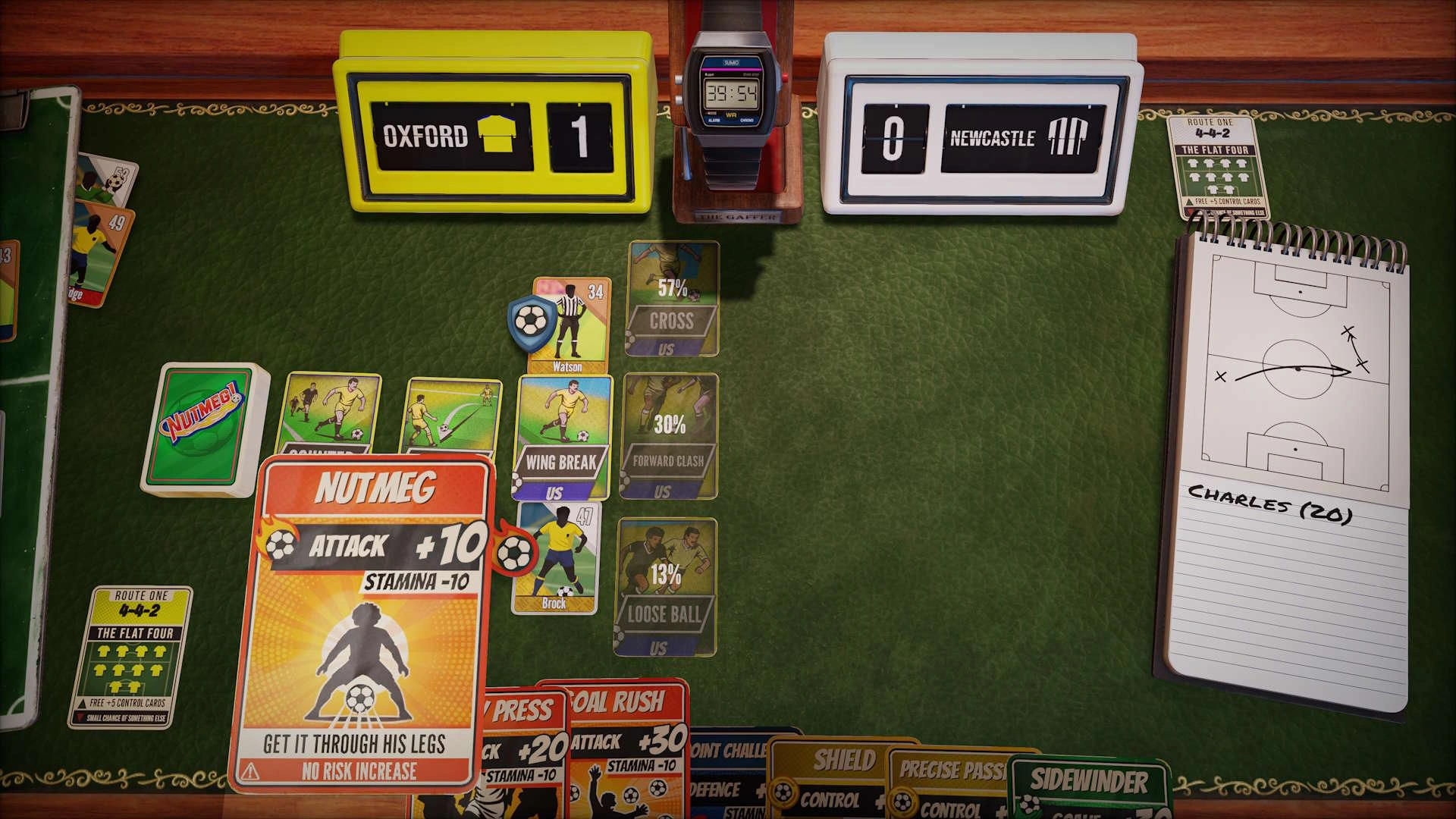
Each action has a base success percentage. A tackle, pass, or shot begins with a number, then the player can influence that moment through cards. The deck is divided into Attack, Control, Defense, and Stamina. An attack card can raise a scoring chance from 28% to 58%, turning a low-probability opening into a serious threat. The system keeps asking the manager to judge timing and risk. Successful actions return cards to the hand. Failed actions remove those cards for the rest of the match.
That rule gives each choice weight. A high-value card can protect a lead or chase a late goal, yet using it at the wrong moment can leave the hand weaker for the next phase. Card combining adds extra tactical planning. Three identical +10 cards can merge into a single +30 card. Certain player traits unlock stronger combinations, which makes recruitment matter during matches as much as it matters in the office.
The design has clear deck-building energy, with Slay the Spire 2 standing as an obvious reference point for card-driven pressure and resource timing. Football Manager uses deep tactical menus to create its match-day drama. Nutmeg! works through immediate choices, visible percentages, and hand management. That gives broadcast fixtures the pace of a card battler while still preserving the tension of a live football match.
A Roguelite Climb through Football History
The career mode uses a historical timeline to keep the fixed office from feeling static. As the years pass, the television reports events such as the wedding of Prince Charles and the fall of the Berlin Wall. Those details make time feel tangible inside the room. The technology changes as well. The rotary telephone eventually gives way to a brick-style mobile phone, giving the office its own sense of progression alongside the team’s climb.
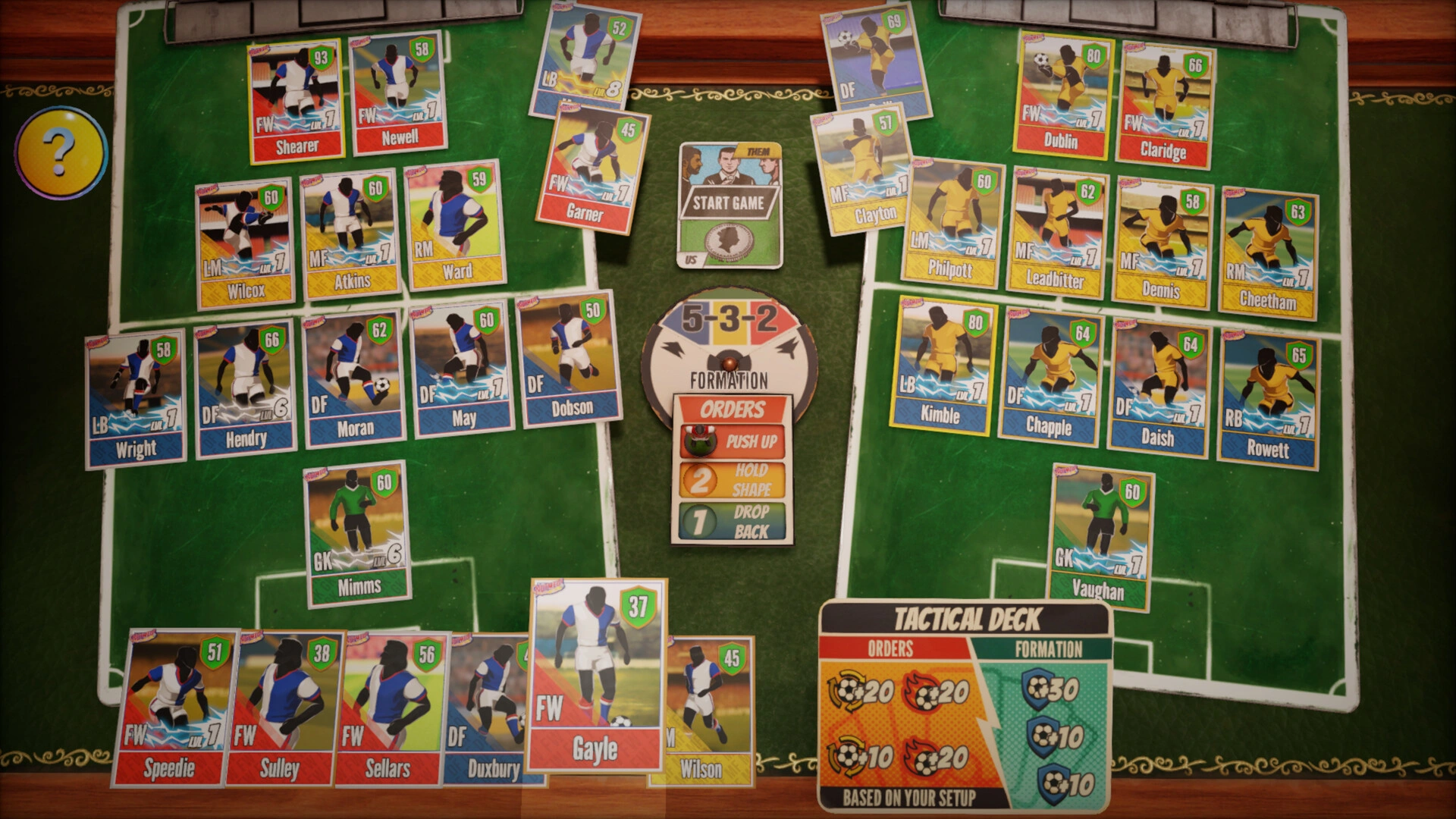
The roguelite structure raises the pressure behind every decision. Getting fired ends the career. Relegation from the bottom division ends the career too. A failed run sends the manager back to the beginning, pushing the player to understand the systems with sharper attention on the next attempt. The permanent progression currency, Kit, softens that reset. Completing objectives earns Kit, which can unlock stronger starting clubs and legendary teams.
The game fills the climb with cultural cues tied to 1980s and 1990s football, including classic kits and references to famous players from those decades. The quick pacing helps the structure work. A full season can be completed in roughly 90 minutes, making repeat careers easy to start within a single session.
The management systems stay light, yet the historical flavor, fast seasonal rhythm, and constant risk of failure keep the run engaging. Nutmeg! succeeds as a nostalgic football management game built around character, atmosphere, and quick tactical pressure.
The Review
Nutmeg!
Nutmeg! succeeds as a focused, nostalgic experience for fans of the sport's earlier eras. The card mechanics provide a fast alternative to dense spreadsheets. While the management systems remain relatively shallow, the historical atmosphere and office aesthetic provide significant charm. The roguelite structure ensures every choice has weight. It is a specific title for a specific audience, delivering a polished and addictive loop without unnecessary fluff.
PROS
- Evocative 1980s and 1990s office aesthetic.
- Fast, tactical card-based matches.
- Addictive roguelite career structure.
- Detailed historical world-building via the television.
CONS
- Relatively shallow management depth compared to full simulators.
- Initial learning curve for navigating the office interface.
- Random elements in match outcomes can cause frustration.