
























In 1992, Chile shipped a 60-ton chunk of Antarctic ice to the Universal Exposition in Seville. The gesture was meant to announce a nation’s rebirth, proof of ingenuity and ambition after 17 years of Pinochet’s military rule. The iceberg, of course, began melting the moment it left the water. Manuela Martelli’s second feature takes that image as its moral and visual foundation: the impossibility of carrying frozen things into warm air and expecting them to stay intact.
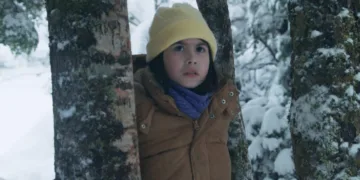
Set in the Andean mountains in that same year, The Meltdown follows nine-year-old Inés (Maya O’Rourke), left at her grandparents’ ski resort while her parents join Chile’s delegation in Seville. Two years have passed since Pinochet stepped down from the presidency, but any genuine reckoning remains years away. Martelli frames her film as a coming-of-age story and a slow-burn thriller, though it functions most powerfully as a portrait of a society that has decided, collectively, to look the other way. Inés watches everything. She understands less than she suspects and more than anyone around her realizes.
The Resort at the Edge of History
The ski resort exists in enforced isolation. Snow erases the boundary between earth and sky; fog swallows distances; new arrivals materialize from the mist like apparitions. Inés’s grandmother, Techa, runs the operation with relentless commercial energy, courting Spanish investors eyeing a nearby plot for development. The mountain is contested territory, Indigenous communities living nearby while affluent European guests descend to ski, but Techa treats inconvenient histories the way she treats inconvenient weather: as something to be managed.
Into this world arrives Hanna (Maia Rae Domagala), a 15-year-old German ski prodigy, the only girl on her training team, visibly worn down by the attentions of her coach Alexander and the indifference of her male teammates. Inés approaches her with a homemade gift and an open face, and a friendship forms, conducted in halting English, that is touching precisely because it is built on mutual need. Hanna wants something uncomplicated; Inés wants someone to follow. They wander snow-covered grounds, skip stones on a frozen lake, and pass through a derelict military outpost the family is quietly trying to sell.
When Hanna vanishes one morning after a series of overlapping late-night encounters involving Alexander and Inés’s teenage cousin Sebastián, the resort’s careful surface splits. Martelli refuses to name the historical parallel directly, but the resonance is unmistakable: this family has experienced disappearances before.
A bartender’s brother, swallowed by the dictatorship years ago, is someone nobody discusses. Techa’s instinct is to protect the family and the business by controlling what Inés tells the authorities. The iceberg in Seville, already sweating apart en route to Spain, is the film’s presiding image: a country displaying frozen grandeur to the world while its secrets inch toward the surface.
Also Read






The Eyes That Watch
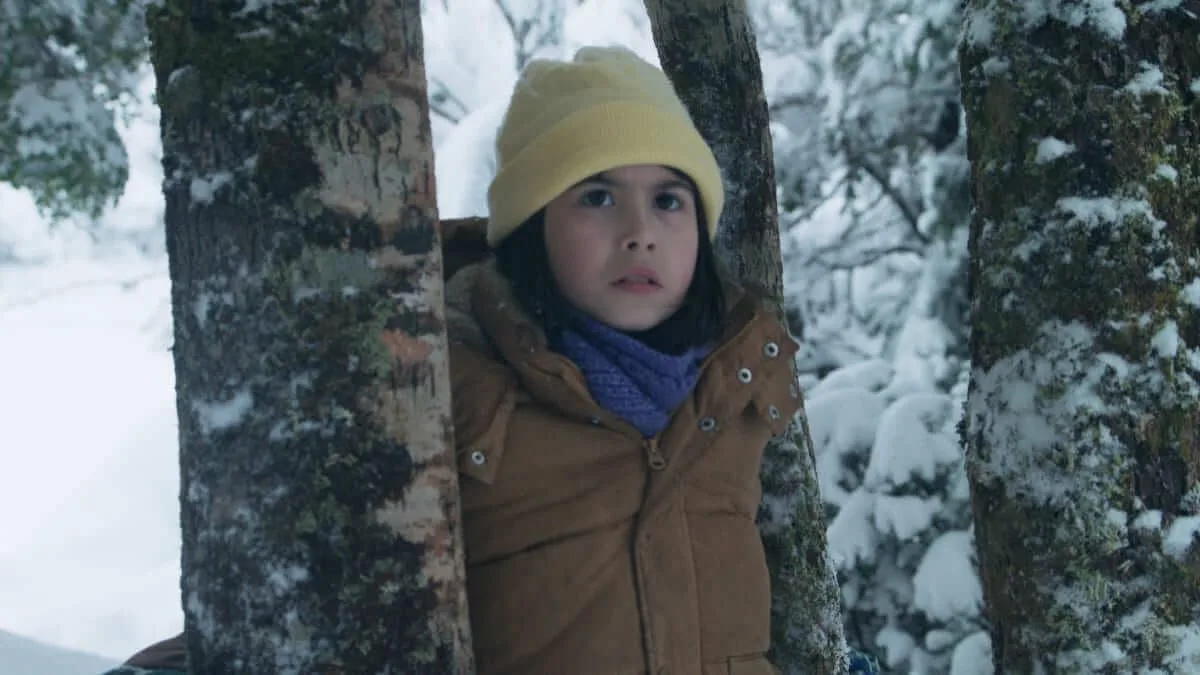
O’Rourke’s performance is the engine of the film. Inés moves through the resort with the freedom of a child who has learned to be invisible: sleeping in staff rooms, listening at doors, translating for foreign guests, absorbing adult realities the adults themselves would rather keep separate from children. O’Rourke plays her without a trace of performance, no wide-eyed mugging, no telegraphed emotion. The tragedy Martelli is building toward is that Inés does not rebel against the silence she is taught. She receives it. She files it away.
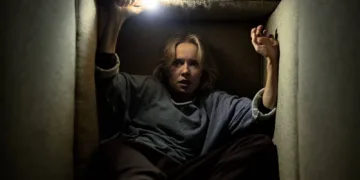
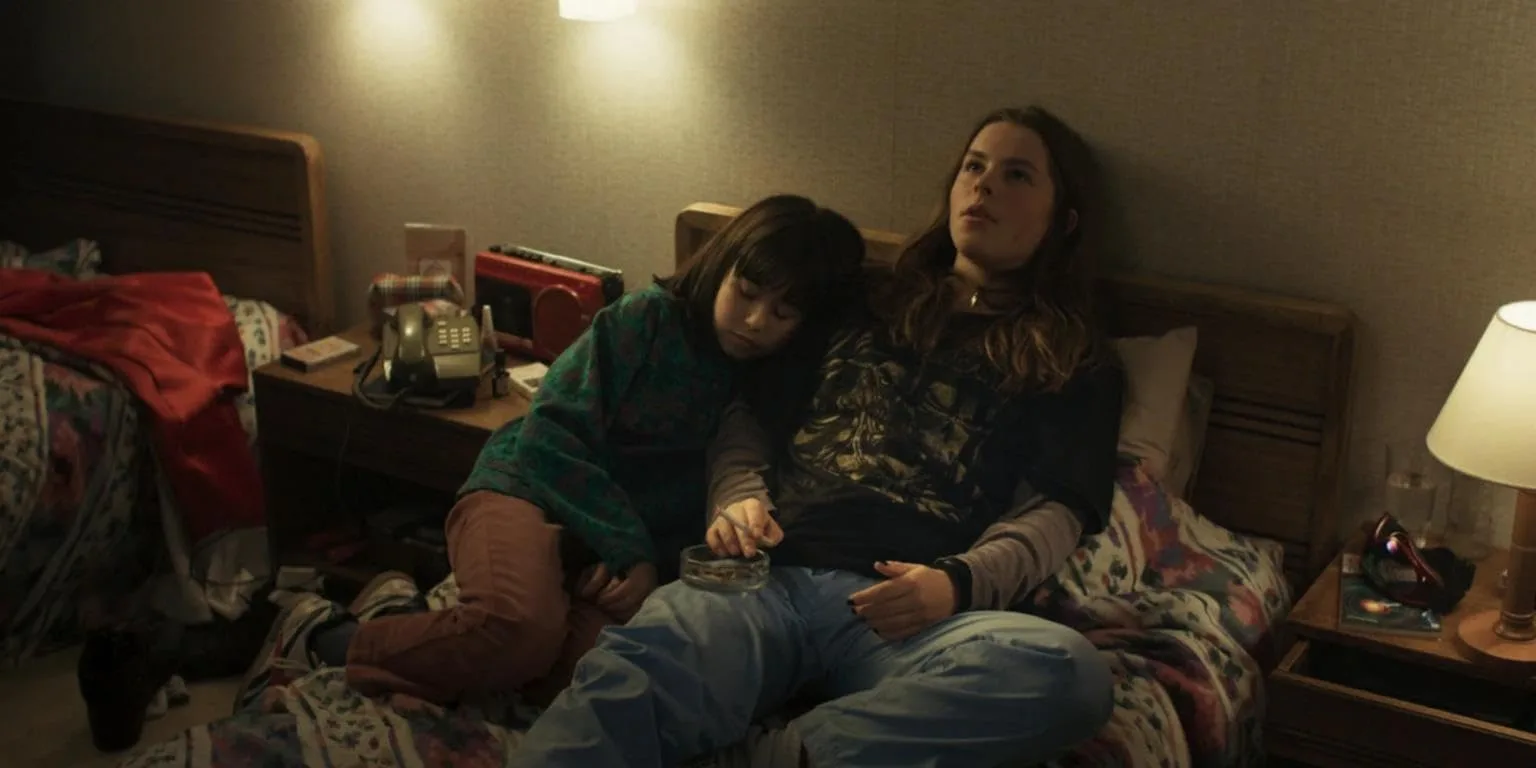
The film’s emotional temperature rises considerably when Lina (Saskia Rosendahl) arrives, Hanna’s mother, a former East German figure skater and a product of a country that ceased to exist. Rosendahl brings raw, jagged urgency to a woman operating entirely at the edge of herself, oscillating between frantic and tender, becoming a surrogate mother to Inés even as Inés becomes her unlikely investigative partner and translator. It is the film’s most alive relationship.
Martelli directs with admirable restraint, trusting implication over statement. Benjamín Echazarreta’s cinematography catches Inés repeatedly in mirrors and reflections, a child watching herself watch. María Portugal’s score begins with scraped strings and builds toward something verging on panic, effective if occasionally more insistent than the material requires. Two moments overreach: a slow blood-swirl in a bathroom sink at the start and a shattered glass of milk that lands with the weight of a symbol but the clarity of none. Minor miscalculations in otherwise disciplined work.
What the Ice Leaves Behind
The film’s actual investigation is into silence itself: how it is maintained, transmitted, and eventually inherited. Inés is never explicitly told to lie. She is shown, through patient repetition, that certain questions carry costs, and that the people she loves have already calculated those costs and found truth wanting. This transmission, quiet and almost tender in its wrongness, is where Martelli locates her political argument.
The restraint that gives the film its texture is also where it strains. Inés’s passivity, true to childhood psychology, can leach momentum from the later sections. Some adult characters remain so committed to evasion that they become inert, and the mystery dissipates rather than resolves.
The Meltdown works best as atmosphere and argument. Martelli is rendering a specific historical mood, Chile in 1992, suspended between a brutal past and an uncertain future, too invested in forward motion to look back honestly. The melt is slow, partial, and never quite complete.
The Meltdown (originally titled El deshielo) is a 2026 drama and mystery film directed by Chilean filmmaker Manuela Martelli. It follows the story of a nine-year-old girl named Inés who stays at her grandparents’ remote hotel near an Andean ski resort in 1992, where she befriends a 15-year-old German skier who subsequently vanishes without a trace. The movie had its world premiere in the Un Certain Regard section at the Cannes Film Festival on May 14, 2026, and is handled internationally by Les Films du Losange, with theatrical release and streaming platform availability across various territories to follow its festival run.
Where to Watch The Meltdown (2026) Online
Full Credits
Title: The Meltdown
Distributor: Les Films du Losange (International Sales), Elastica Films (Spain)
Release date: May 14, 2026
Rating: Not Rated
Running time: 108 minutes
Director: Manuela Martelli
Writers: Manuela Martelli
Producers and Executive Producers: Alejandra García, Alex C. Lo, Andrés Wood, Julio Chavezmontes
Cast: Maya O’Rourke, Maia Rae Domagala, Saskia Rosendahl, Jakub Gierszal, Paulina Urrutia, Mauricio Pesutic, Roberto Farías, Paula Zúñiga, Luis Uribe, Daniela Pino, Marcela Salinas
Director of Photography (Cinematographer): Benjamín Echazarreta
Editors: Yibrán Asuad
Composer: Maria Portugal
The Review
The Meltdown
The Meltdown is a carefully constructed, politically resonant film that works best when it trusts its atmosphere over its plotting. Martelli confirms herself as a director of real discipline, and O'Rourke's performance is quietly extraordinary. The film's restraint is both its strength and its limitation: the allegorical architecture holds, but the narrative occasionally goes cold where it should smolder. Rewarding for patient audiences with an appetite for oblique, historically grounded cinema.
PROS
- Maya O'Rourke's remarkable central performance
- Richly atmospheric cinematography and setting
- Politically layered allegory handled with intelligence
- The Inés/Lina dynamic is emotionally powerful
CONS
- Inés's passivity drains narrative momentum in the second half
- Adult characters occasionally too inert to generate dramatic tension
- A few heavy-handed symbolic moments
- Resolution dissipates rather than lands