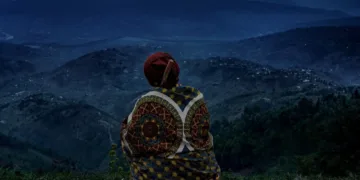







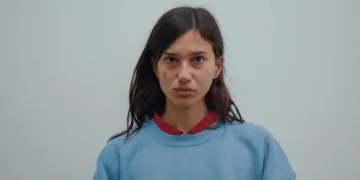
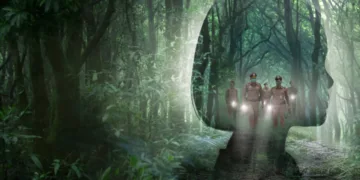
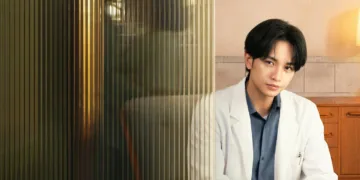
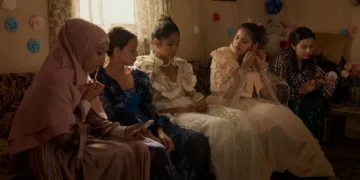








The hills of Kibeho appear as mute witnesses, holding a historical wound that refuses burial. In 2012, during the final months of the Gacaca community tribunals, Marie-Clémentine Dusabejambo sets her feature debut at a fragile historical crossing. The film unfolds as an intimate domestic chronicle and a philosophical inquiry into a society trying to gather its shattered self eighteen years after the 1994 genocide against the Tutsi.
Vénéranda, a survivor and district social affairs officer, pours her remaining force into the state-sponsored “Rwanditude” initiative, arranging local dialogue sessions meant to build national unity. Her household carries its own unstable weather: her furious sister Suzanne, her silent elderly mother, and her spirited teenage daughter Tina.
Dusabejambo draws a quiet, devastating friction between public advocacy for peace and the private wounds survivors still carry. An unexpected family crisis fractures the language of institutional healing and forces each character toward the harsher terrain of endurance.
Rifts in the Bloodline
A sharp philosophical divide splits the two surviving sisters, turning historical atrocity into a permanent domestic stalemate beyond easy political repair. In the striking opening sequence, Vénéranda stands before the village court and publicly forgives Karangwa, the man accused of slaughtering her siblings during the massacres.
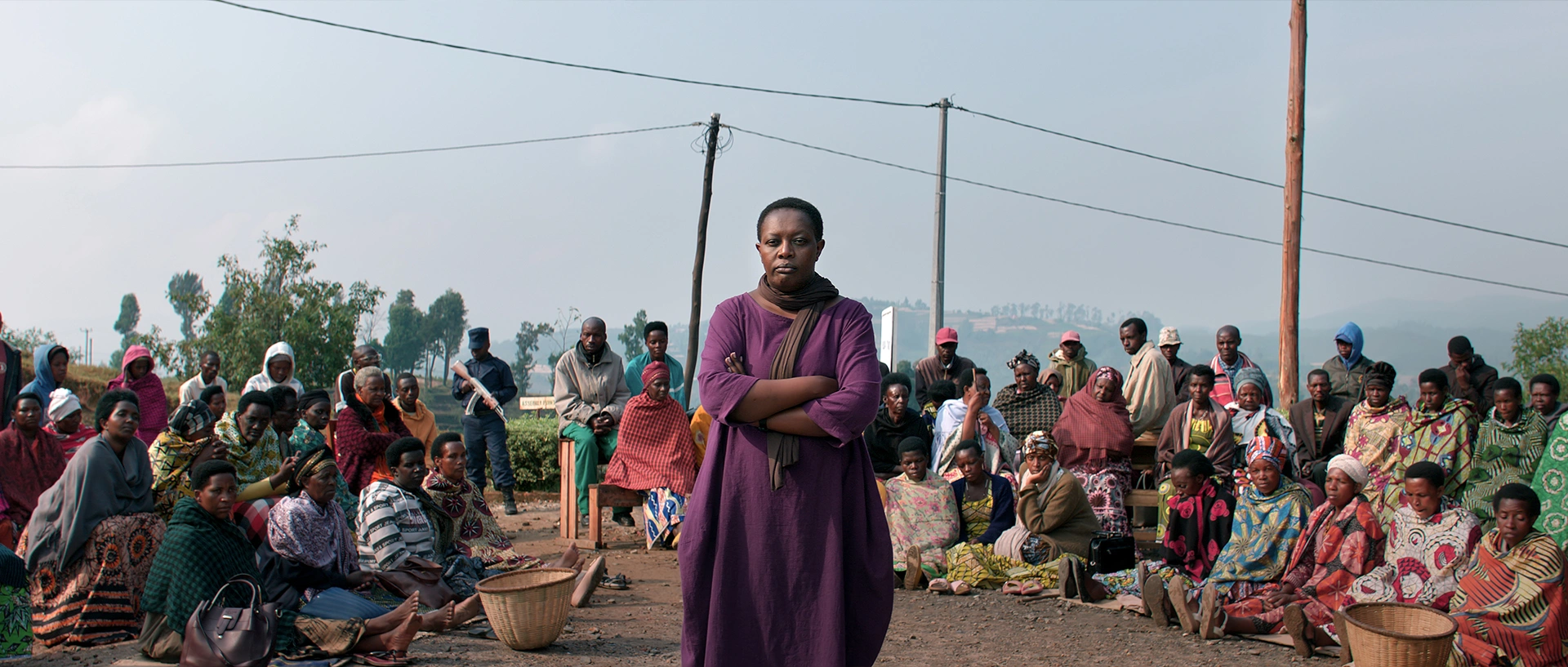
This public grace ignites Suzanne, who erupts before the crowd and rejects her sister’s authority to absolve a killer for the dead. Vénéranda presents discipline, civic purpose, and bureaucratic steadiness, using that public composure to contain a psyche already cracked in private.
Also Read






Suzanne carries a righteous, almost feral anger that burns through her physical frailty as illness drains her remaining strength. She demands explicit, named justice; the polished rhetoric of state-mandated reconciliation feels to her like a betrayal of family memory.
This old grief enters the next generation when Tina becomes pregnant by her low-key boyfriend, Richard. The coming child exposes Vénéranda’s buried prejudices, since Richard comes from a Hutu background, a lineage unmarked by personal violence and still historically tethered to the massacres.
Vénéranda urges public confession upon the village, then seals away her own secrets, including the hidden and painful circumstances of Tina’s parentage. Watching this generational struggle is the grandmother, a silent presence fixed in permanent mental arrest, waiting for a husband who vanished into the violence decades earlier. Her retreat from language becomes one of the film’s bleakest images: the future remains haunted by truths survivors have barricaded behind decades of defensive silence.
The Weight of Enforced Absolution
The communal spaces built for state healing become rooms of existential fatigue, testing the limits of grace administered through procedure. Vénéranda leads testimonial support groups for local women, intended as private shelters where traumatic memories can be spoken outside the rigid legal frame of formal courts.
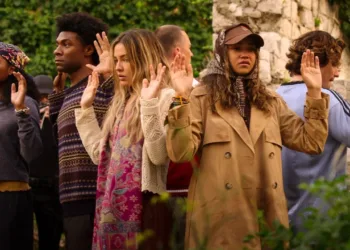
That manufactured harmony breaks down when a survivor’s raw account of sexual assault receives bureaucratic dismissal under the strict rules governing public testimony, prompting sudden mass walkouts. Dusabejambo builds a severe critique of enforced absolution through supporting figures who disturb the official story of national renewal.
Victoire moves through the village like a living wound, her face permanently covered because her own father and brothers executed her children. Beside her stands Madeleine, cornered by the community and burdened with knowledge of secret graves beneath her property, where the dead remain buried. These women challenge the social demand to hand out pardon like common currency, revealing the cruelty inside any system that treats forgiveness as an administrative goal.
Their testimonies show forgiveness turning hollow when perpetrators fail to comprehend their crimes, leaving survivors to carry an unjust burden of peace. The film presents enforced unity as a spiritual weight pressing down on people who still live beside unrepentant executioners.
Formal Frames and Haunting Textures
Dusabejambo refuses conventional cinematic shorthand, shaping a visual language governed by gravity, care, and restraint. Cinematographer Mostafa El Kashef uses widescreen imagery marked by a stable, still camera, avoiding handheld movement so the frame can hold grief without agitation.
The lens treats illumination as an ethical choice: those who inhabit grief openly appear in bright, direct light, and guarded figures are approached through high-contrast angles where shadow consumes their silhouettes. This formal execution gains documentary-like force by pairing experienced actors like Isabelle Kabano with non-professionals from local communities, giving the collective testimony an organic texture.
Igor Mabano’s sonic design sets aside traditional melodramatic scoring. The auditory world draws from traditional Rwandan sounds, letting the resonance of the Inanga string instrument and the breath of the umwirongi flute pierce the quiet scenes. These spare arrangements meet sudden bursts of raw daily noise and heavy silences that stress the words left buried.
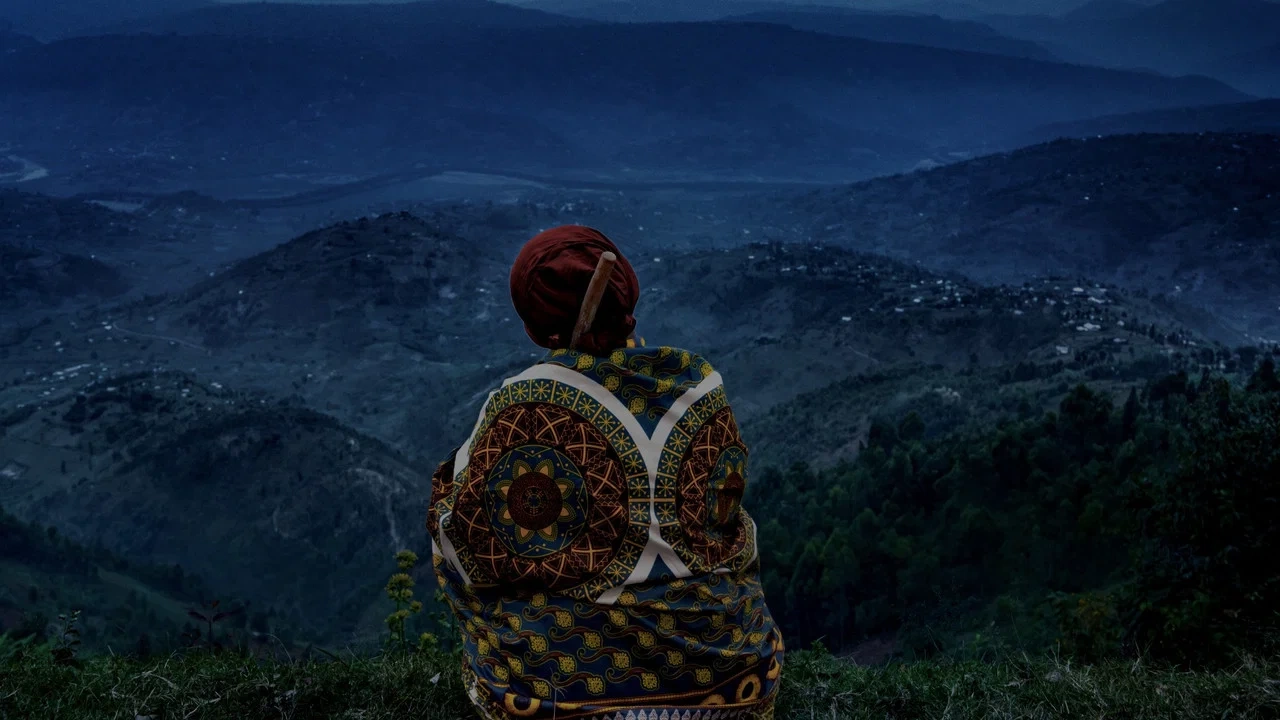
Across the film, tactile details accumulate: colorful textiles, faded photographs, mist-covered rolling hills, each one carrying the persistent presence of what has been lost. The landscape becomes an active participant in the drama. Through these production elements, physical splendor and historical devastation occupy the same breath, placing the viewer in a space where the past remains terribly present.
Ben’Imana is a groundbreaking Rwandan drama that made cinematic history with its world premiere in the Un Certain Regard section at the Cannes Film Festival. The narrative is set in 2012 during the closing stages of the Gacaca community courts, following a genocide survivor named Vénéranda who leads grassroots reconciliation sessions between local victims and the families of perpetrators. The production has secured international backing and distribution via specialized global cinema networks following its high-profile festival debut. Film professionals and distribution agencies can currently access the film through selected arthouse festival markets, with commercial theatrical and streaming distribution rollouts being finalized.
Where to Watch Ben’Imana (2026) Online
Full Credits
Title: Ben’Imana
Distributor: MK2, visions sud est
Release date: May 2026
Running time: 1 hour 41 minutes
Director: Marie-Clémentine Dusabejambo
Writers: Marie-Clémentine Dusabejambo, Delphine Agut
Producers and Executive Producers: Ejo-Cine, Princesse M Prod, Les Films du Bilboquet, Duo Film
Cast: Clémentine U. Nyirinkindi, Isabelle Kabano, Kesia Kelly Nishimwe, Léocadie Uwabeza, Antoinette Uwamahoro, Aime Valens Tuyisenge, Elvis Ngabo, Arivere Kagoyire
Director of Photography (Cinematographer): Mostafa El Kashef
Editors: Nadia Ben Rachid
Composer: Igor Mabano
The Review
Ben’Imana
Ben’Imana stands as a masterful, unyielding exploration of the limits of forced reconciliation, gracefully balancing immense national grief with quiet domestic friction. Marie-Clémentine Dusabejambo avoids simple resolutions, allowing the film's structural elegance and poetic restraint to capture the genuine psychological cost of survival. It remains a vital work of collective testimony.
PROS
- The deliberate use of fixed, widescreen cinematography provides a stable, ethical framework for witnessing profound trauma without sensationalism.
- Rejecting conventional melodies for traditional instruments like the Inanga string creates a deeply organic, haunting soundscape.
- Blending professional performances with local non-professional actors lends the public testimonies an indispensable documentary-like weight.
CONS
- The slow, observational accumulation of details might test the patience of viewers accustomed to traditional narrative pacing.
- The thematic alignment between national politics and personal domestic crisis occasionally feels overly symmetrical.