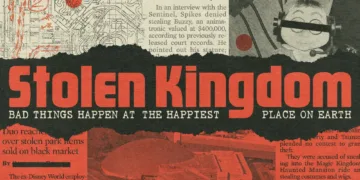

























A curious phenomenon occurs when amusement park rot sets in. Joshua Bailey’s feature-length directorial debut, Stolen Kingdom, positions itself at the intersection of corporate mythmaking and subcultural trespass, tracking the subterranean impulses of citizens who refuse to stay behind the velvet ropes.
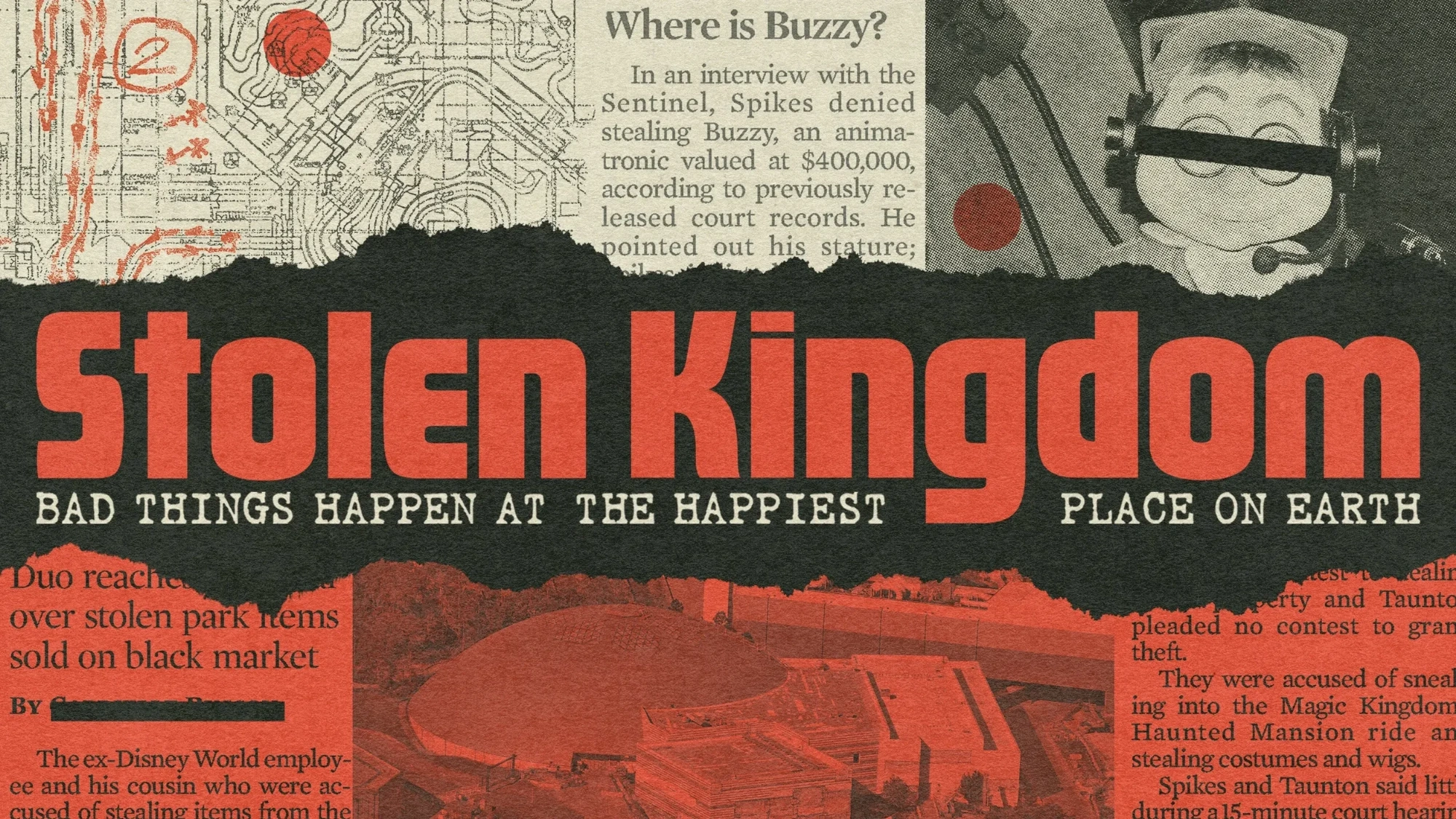
Premiering at independent venues like the Slamdance Film Festival, the documentary uses a hyper-localized incident to address a global psychological condition. The film anchors itself to the unresolved 2018 disappearance of Buzzy, a high-value animatronic figure from Epcot’s defunct Cranium Command attraction. Bailey uses this mechanical heist as a wedge to pry open an expansive, multi-generational history of nostalgia, obsession, and systemic transgression, bypassing the conventions of standard true-crime investigation.
The film maps out a space where harmless adolescent mischief curdles into an organized black-market economy, exploring how individuals interact with totalizing commercial environments once the surrounding public sphere begins to fracture.
From Analog Pranks to Digital Commodities
The historical trajectory of theme park infiltration begins with a purely analog form of existential boredom, long predating any financial calculation. Bailey constructs his initial history using raw, primary-source archival footage recorded during the 1980s and 1990s by former park employees like Dave “Hoot Gibson” Ensign and Ed Barlow. Their early transgressions reveal a distinct subcultural landscape, one defined by localized pranks, minor acts of defiance, and home-video experimentation.
These young men treated the park as a playground, driven purely by exploration and spectacle. They left moving ride vehicles to examine the underlying hydraulics, placed adult magazines within the family-friendly animatronic tableaus of Epcot, and treated the subterranean utility tunnels as a private maze.
There is a specific, localized sincerity to this era, epitomized by Ensign’s late-career reflection on smuggling his deceased friend’s ashes past security to scatter them inside the Magic Kingdom. This act demonstrates an intense, personalized attachment to the physical space that operates entirely outside the parameters of consumerism, transforming a corporate asset into a private mausoleum.
Also Read





This localized, analog tradition underwent a massive systemic mutation with the arrival of the digital attention economy, transforming the act of trespassing into a globally distributed commodity. The film traces this shift through figures like Matt Sonswa, an explorer whose digital trajectory reflects a wider cultural movement.
Sonswa began his career by filming the decaying carcasses of regional consumerism, documenting dead shopping malls in his hometown before recognizing that the fortified perimeter of Walt Disney World offered far greater digital currency. On platforms like YouTube, the motivation for infiltration shifted from private thrill to public metric. Modern explorers treat the industrial detritus of entertainment as content raw material used to generate ad revenue, subscriber loyalty, and viral notoriety. The physical risk persists, now monetized, turning a subculture of escape into a subculture of production.
Bailey captures the visual and sensory allure of these forbidden corporate zones, documenting what can be described as the negative spaces of the resort. The camera lingers on phantom audio speakers that continue to blast synchronized theme music on the completely abandoned, overgrown shores of Discovery Island. We see dusty, unconditioned warehouses where old ride components sit in silence, and the hollow metal rafters of active roller coasters hanging above the dark.
These images reveal a striking, cross-cultural irony: the pristine, endlessly curated public facade of the global resort requires an equal and opposite underside of rotting, forgotten historical assets. The behavior of these vloggers mirrors international urban exploration movements from post-industrial Europe to East Asia, where youth subcultures reclaim abandoned commercial infrastructure to build independent identities within environments that leave no space unmonitored.
The Textures of Clandestine Cinema
The formal structure of Stolen Kingdom mirrors the scattered, multi-formatted nature of the internet culture it documents. Bailey employs a hopscotch narrative design that jumps across a thirty-year timeline, stitching together a patchwork of low-resolution VHS home videos, compressed early-2000s web uploads, crisp high-definition YouTube vlogs, and traditional, static talking-head interviews.
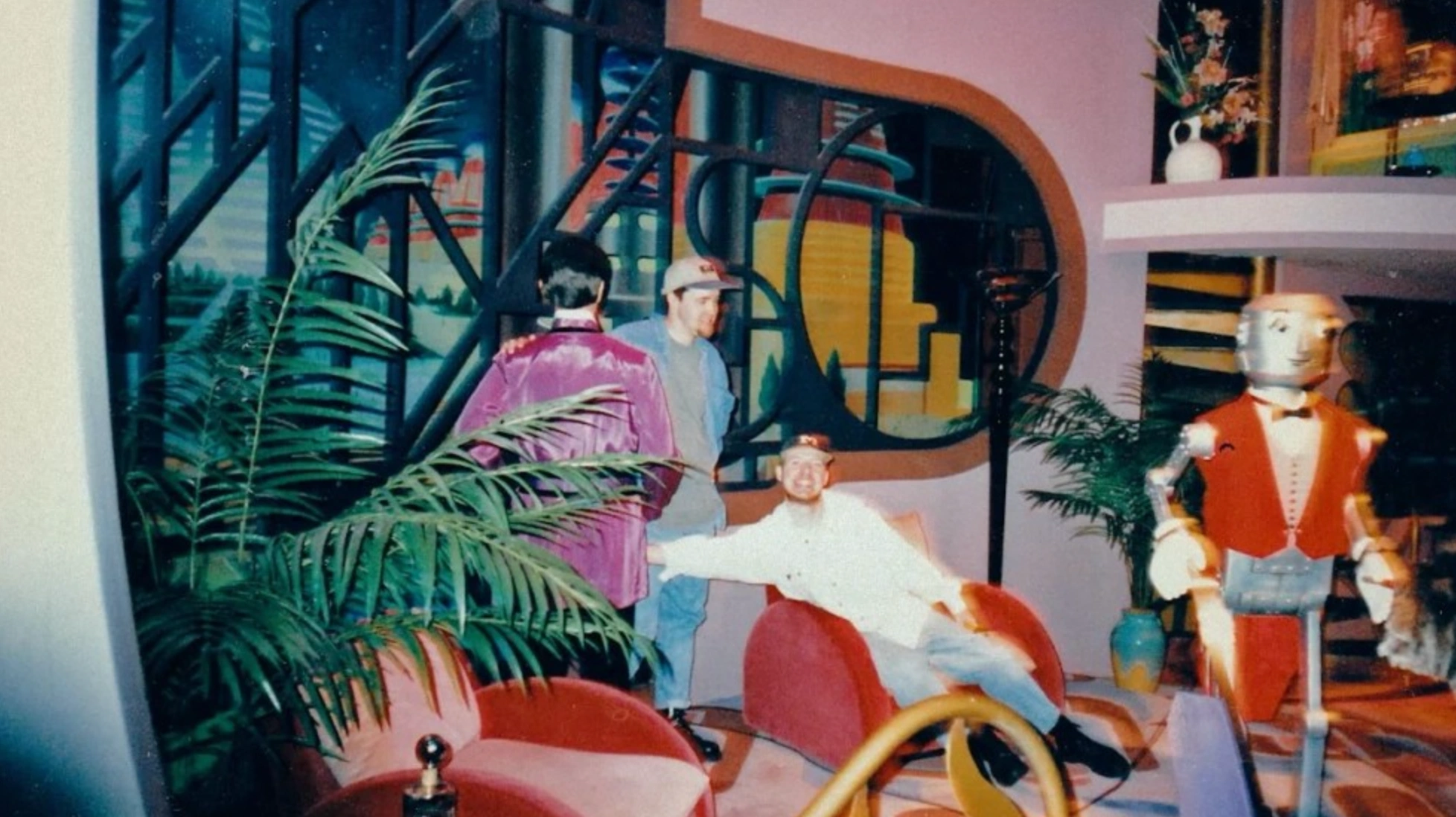
This technical collision creates a distinct visual texture, forcing the viewer to constantly adjust their perspective between the raw immediacy of a handheld night-vision camera and the calculated staging of modern digital content.
During the first half of the film, the editing dynamic adopts the kinetic, adrenaline-fueled rhythm of the trespassers themselves. The quick cuts and rapid transitions replicate the psychological experience of a midnight breach, where every shadow represents a security sensor and every sound suggests an approaching patrol vehicle.
This visual restlessness is enhanced by the contribution of composer Brendan Canty, whose musical history with the post-punk band Fugazi brings an unexpected, non-commercial weight to the soundtrack. Canty sidesteps the sweeping, manipulative orchestral swells typical of standard true-crime documentaries, delivering a low-key, toothy, and rhythmically driven sonic palette.
The bass lines are heavy and repetitive, functioning almost as a mechanical heartbeat that underscores the tension of the late-night break-ins. The music accentuates the claustrophobic atmosphere of the park’s underbelly, turning the spaces beneath the theme rides into an industrial soundscape that strips away any remaining commercial whimsey.
The transition from a playful, anthropological examination of an underground community into a strict investigative true-crime framework reveals the structural limitations of Bailey’s directorial scope. As the narrative shifts gears to focus entirely on the logistics of a police investigation, the wider cultural and philosophical inquiries begin to dissipate. Bailey builds a vivid portrait of a subculture, yet fails to synthesize the wider implications of his footage.
The film overlooks the profound systemic irony that defines the entire conflict: a multi-billion-dollar corporate entity that built its empire by mining collective cultural nostalgia is seen aggressively prosecuting its own super-fans for attempting to preserve an uncurated connection to that very same history. By prioritizing the mechanics of the theft over the cultural landscape that produced it, the direction remains on the surface of a deep socio-cultural phenomenon.
The Coen-Esque Delusions of Patrick Spikes
The narrative momentum changes during the final act, tracking the moment where subcultural mischief evolved into a lucrative, highly illegal enterprise. This shift was accelerated by the growth of a specialized collector market, a black-market ecosystem where wealthy individuals pay high premiums to acquire authentic pieces of theme park history.
Into this space stepped Patrick Spikes, the individual behind the notorious “Back Door Disney” digital persona, who swiftly became the primary suspect in the disappearance of the Buzzy animatronic. Spikes represents a complete break from the nostalgic romanticism of the early pioneers; his relationship with the park was transactional, professionalized, and deeply tied to personal brand building.
Bailey’s portrait of Spikes functions as an exceptional character study in absolute hubris, presenting a figure who seems to have emerged directly from a dark, satirical comedy. Spikes displays an unrepentant, brash, and completely self-absorbed demeanor, completely lacking the self-awareness required to understand the precariousness of his legal situation.
During his present-day interviews, he boasts about outsmarting corporate security and local law enforcement, all while sitting in a suburban bedroom visibly crammed with stolen park souvenirs, signage, and costumes. The psychological delusion on display is profound, revealing an individual who viewed his interaction with a massive corporate security apparatus as a consequence-free game of digital clout.
The documentary achieves its highest formal achievement by directly contrasting Spikes’ confident, revisionist recollections with the actual video footage of his police interrogation. This editing strategy exposes the gap between digital mythology and physical reality. We watch Spikes describe his arrest as if he were a tactical mastermind staying multiple steps ahead of the detectives, and then the film immediately cuts to the interrogation room where a sweating, desperate young man struggles to maintain a coherent lie.
The sequence tracks his accidental admissions, his sudden, agonizing silences when confronted with phone data, and the physical tells that reveal his panic. This juxtaposition reveals the utter incompetence driving the crime. The operation collapsed because the desire to boast online overrode basic survival instincts, demonstrating how the logic of the digital economy can blind an individual to real-world legal consequences.
The documentary Stolen Kingdom explored a multi-generational history of urban exploration, mischief, and theft hidden within the parameters of Walt Disney World, anchored specifically by the real-world investigation into the disappearance of the Buzzy animatronic figure from Epcot. Following a successful festival run throughout 2025 at venues like Slamdance and Big Sky, the film officially released in limited theaters nationwide on May 21, 2026 via Antenna Releasing, and it is scheduled to become available for digital purchase and rental on streaming platforms like Amazon and Apple TV starting June 16, 2026.
Where to Watch Stolen Kingdom (2025) Online
Title: Stolen Kingdom
Distributor: Antenna Releasing
Release date: May 21, 2026
Running time: 74 minutes
Director: Joshua Bailey, Slater Wayne
Writers: Joshua Bailey
Producers and Executive Producers: Joshua Bailey, Brandon Pickering, Sam Fraser, Jake Williams
Cast: Dave “Hoot Gibson” Ensign, Patrick Spikes, Matt Sonswa, “Disney Dan” Becker, Leonard Kinsey, Seth Kubersky, Adam the Woo, Dan Bell, Kenny Johnson
Director of Photography (Cinematographer): Brandon Pickering
Editors: Danny Jarabek, Landon Defever
Composer: Brendan Canty
The Review
Stolen Kingdom
Stolen Kingdom functions as a fascinating, often hilarious exploration of a bizarre subculture, successfully transforming corporate espionage into a compelling character study of modern hubris. While Joshua Bailey expertly balances punk-rock energy with dark comedic tension, the film ultimately skims the surface, leaving deeper systemic critiques regarding corporate nostalgia and property left unexplored. It remains an entertaining, briskly paced cautionary tale for the digital age.
PROS
- Kinetic editing that mirrors the thrill of urban exploration
- Exceptional, driving post-punk score by Brendan Canty
- Hilarious and tense real-world police interrogation footage
CONS
- Structural pivot in the second half deflates the anthropological focus
- Fails to deeply analyze the sociopolitical irony of corporate nostalgia
- Remains a relatively surface-level look at a thirty-year history