


















The human spine is a frail stem by which the body negotiates gravity, a biological fact that animator Louis Clichy drains of consolation in his solo feature directorial debut, Iron Boy (Le Corset). The film premiered in the Un Certain Regard section at the Cannes Film Festival, and its somber animation carries us into the late twentieth century, into the winter of the 1986-1987 school year.
The setting is Beauce, France’s agricultural breadbasket, flat, exposed, almost metaphysical in its emptiness. Eleven-year-old Christophe lives there, voiced with startling closeness by Clichy’s son, Gary Clichy. He is a middle child on a family farm sinking into financial ruin, a boy of erratic force whose body begins to desert him. A strange decay arrives without ceremony.
Gravity turns hostile. Christophe tilts sideways, collapses during school photographs, and crashes a tractor. Medicine answers with architecture: a full-torso Milwaukee steel back brace that climbs to his chin. The brace makes his body into a locked structure, reducing movement, sharpening isolation, and turning childhood into a mechanical spectacle. Clichy draws the coming-of-age material from his childhood memories, shaping personal history into a study of bodily betrayal.
Ink, Void, and the Tilting Horizon
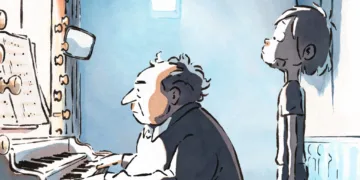
Clichy abandons the slick corporate perfection of the 3D computer animation he once practiced at Pixar on films like WALL-E and Up. His chosen medium feels haunted, tactile, and vulnerable to disappearance. The film uses a hand-drawn aesthetic, with textures resembling Chinese inkbrush and watercolor paintings dissolving the edges of the frame. Fluid lines and organic blemishes give the images the quality of a fading recollection.
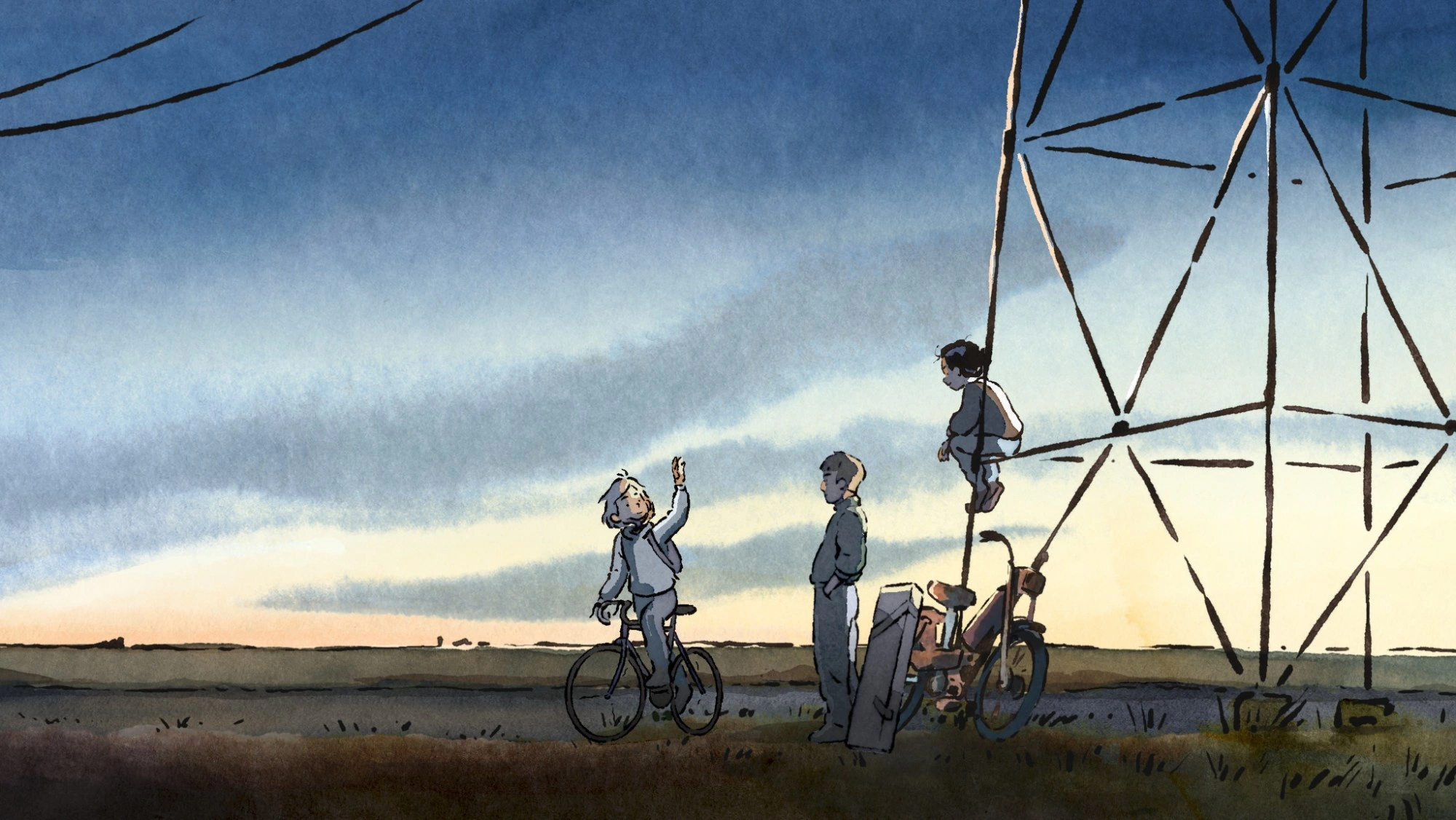
Light arrives through absence. Bare paper becomes illumination, suggesting a blinding existential sky. A severe visual friction forms between the rigid geometry of the steel corset and the soft, bleeding contours of the provincial French countryside.
When Christophe falls into bouts of uncontainable frustration, the animation loses its fragile stability. Objective reality loosens its grip. The horizon bends, and the physical laws of the frame tilt violently with the boy. His internal chaos becomes cosmology; the world slants because the child’s mind has already cracked.
Liturgies of the Soil and Steel
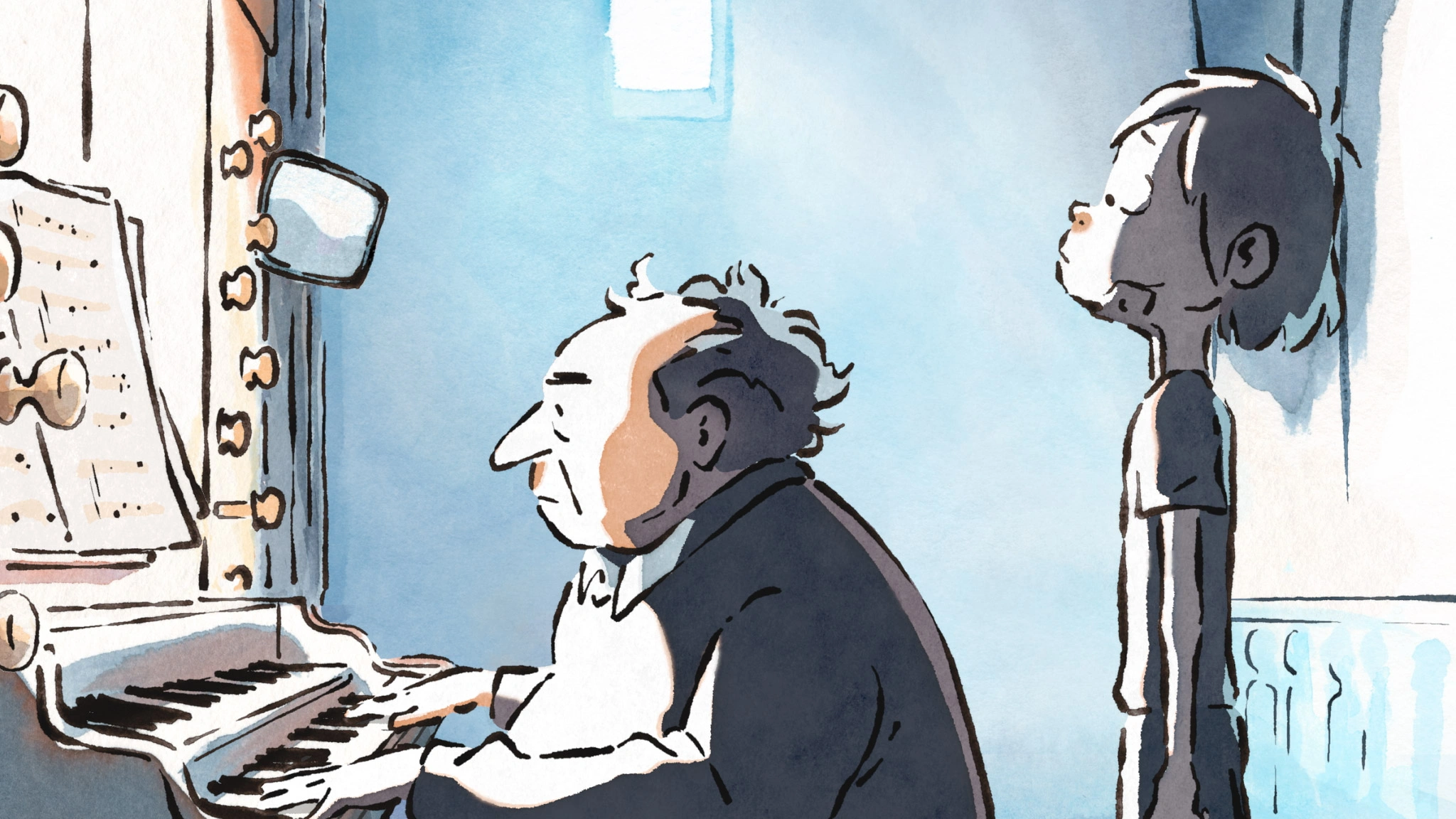
The film’s soundscape becomes a sanctuary, balancing the cold fact of metal against a spiritual emptiness that seems to breathe through the fields. Classical and sacred compositions dominate, with the mournful movements of Gabriel Fauré’s Requiem carrying special weight. Christophe listens to these sacred melodies on a Walkman while cycling past desolate country roads, the music granting brief shelter from his heavy anatomy.
This acoustic refuge deepens in the local parish church, where the boy works as a page-turner for the elderly organist, Michel, voiced with weary warmth by Alexandre Astier. The massive church organ gives the score a booming mechanical gravity, while layered choral echoes fill the film’s quiet spaces, set against a silent, uncaring rural topography.
Clichy keeps these poetic flights tied to matter through an unorthodox audio recording method. He placed his voice actors, a mix of professionals and local non-professionals, directly on real, working farms. Insulated recording studios remain outside this process. The resulting tracks preserve the authentic timbre of gravel, wind, and distant livestock, pinning the film’s spiritual hunger to a coarse working-class reality.
The Economics of Confinement
The script, co-written by Franck Salomé, draws a harrowing parallel between the orthopedic prison around Christophe’s ribs and the socio-economic claustrophobia strangling the family farm. This is a world defined by late-stage agricultural consolidation, where small family holdings face systemic extinction. Christophe lives beside a stern, uncommunicative father, played by Dimitri Colas, whose volatile temper grows from debt, aggressive maneuvering by agricultural cooperatives, and a disastrous deal with a neighboring producer.
Anxiety and alcoholism warp the domestic space. The film grants the father rare empathy, acknowledging the youthful dreams he discarded to preserve this failing patch of land. Christophe seeks a temporary escape from this cycle through Clara, a cynical girl from his mandatory corrective swimming lessons.
Their brief bond forms through minor acts of delinquency, using the metallic triggers of his medical brace to confuse security alarms during small-town shoplifting sprees. The film’s weakness lies in a pull toward self-absorption, where certain autobiographical details feel sealed off, favoring the director’s private nostalgia over a deeper connection with the audience.
The hand-painted animated feature Iron Boy premiered globally on May 19, 2026, within the Un Certain Regard section at the 79th Cannes Film Festival, where it successfully secured the prestigious Special Jury Prize. Following its highly acclaimed festival debut, the worldwide distribution rights were promptly acquired by Sony Pictures Classics for an upcoming theatrical rollout. Set against the stark landscapes of rural France during the 1986–1987 school year, the intimate coming-of-age story follows an eleven-year-old boy forced to adapt to a restrictive steel back brace while his family’s farm teeters on the brink of financial collapse.
Full Credits
Title: Iron Boy (Le Corset)
Distributor: Sony Pictures Classics
Release date: May 19, 2026
Running time: 89 Minutes
Director: Louis Clichy
Writers: Louis Clichy, Franck Salomé
Producers and Executive Producers: Nicolas de Rosanbo, Céline Vanlint
Cast: Gary Clichy, Alexandre Astier, Brune Moulin, Dimitri Colas, Aurélie Vassort, Rod Paradot, Jean-Pascal Zadi
Composer: Gabriel Fauré
The Review
Iron Boy
Iron Boy is a hauntingly beautiful, texturally rich exploration of youthful isolation and systemic decay. By trading digital perfection for the fragile inkstrokes of memory, Louis Clichy captures the weight of biological and economic confinement with profound philosophical depth. Despite occasional lapses into insular nostalgia, the film stands as a deeply affecting, poetically rendered coming-of-age journey that finds grace within the stark parameters of a fading rural existence.
PROS
- Visually stunning hand-drawn, watercolor, and inkbrush animation.
- Evocative sound design that masterfully pairs sacred music with authentic, location-recorded farm atmospheres.
- A mature, deeply empathetic examination of complex family dynamics and economic hardships.
CONS
- The narrative suffers from occasional pacing issues where the plot shifts slowly.
- Certain highly specific autobiographical elements can feel overly insular to outside audiences.