
























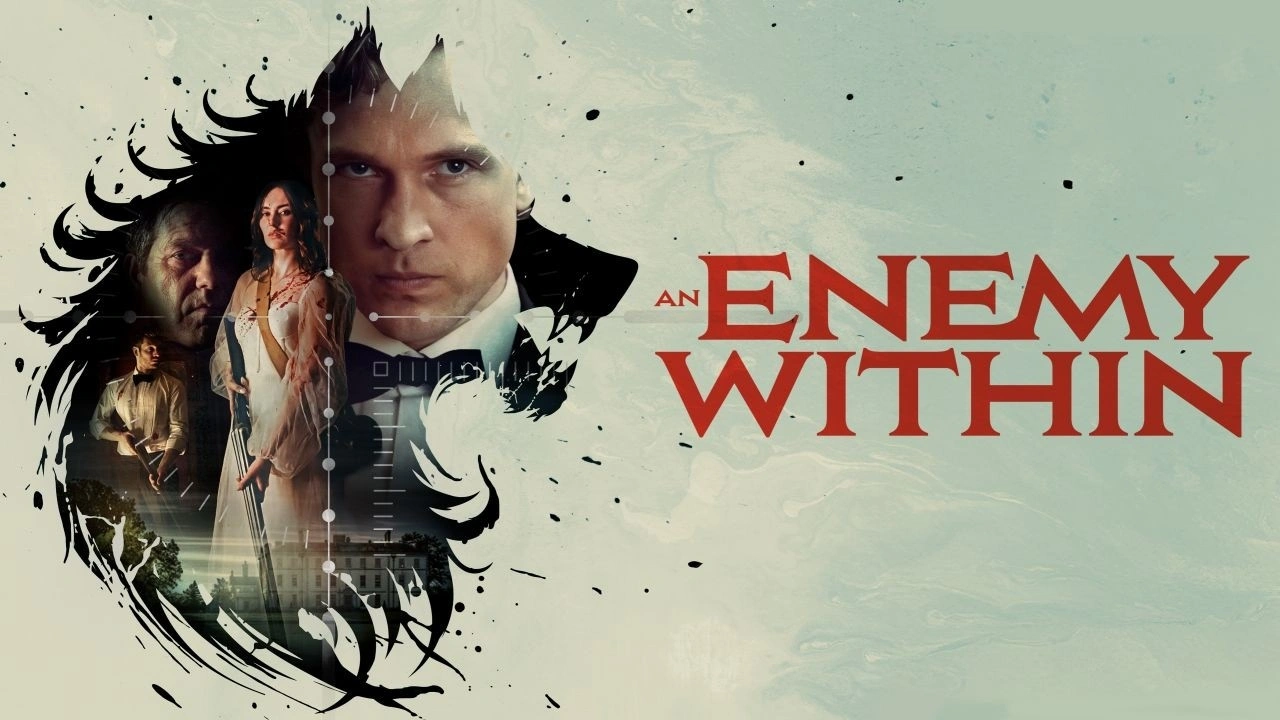

The feature film debut of British writer and director John Michael Kennedy opens on a weekend designed for champagne, vows, and corporate consolidation, then tightens the screws almost at once. Young businessman Caleb Wingate is preparing to marry Julia, a marriage meant to legally and financially bind two fiercely competitive family business empires.
The ceremony’s polished surface cracks after Caleb answers a call from an anonymous mercenary outside the property. The hidden sniper, known as The Wolf, gives him a nightmare deadline: kill his new father-in-law, corporate titan Robert Foresight, before midnight strikes, or Julia dies.
Kennedy builds the film as a compressed chamber thriller, drawing from the pleasures of the classic whodunit and the unease of a psychological siege. I have a real affection for thrillers that make a room feel dangerous, and this one understands how décor can carry threat.
The Gothic look places the characters inside a sprawling English country house, where cell phones and laser scopes rub against old architecture. Faded interiors and dark wood paneling create a sealed world where wealth feels antique, guarded, and soaked in private rot.
Dissecting the Anatomy of a Family Standoff
Before the violence takes hold, the film lays its groundwork during an afternoon skeet-shooting scene on the estate grounds. It is a sharp opening move because it lets the family tensions speak through posture, ritual, and loaded glances before the sniper enters the story. Caleb’s father, William, shows passive disapproval of his son’s alliance with a rival firm.
Caleb’s brother, Jackson, carries a much rawer bitterness, marked by the feeling that he has been discarded. The pressure point arrives when Robert Foresight publicly announces a corporate succession plan that hands control of his resource empire to Caleb, cutting past his own blood relatives.
After the sniper announces his presence, Kennedy narrows the film’s movement and locks the drama into the estate’s interior rooms. The first hour moves as a patient slow burn. The script favors dense dialogue, frantic phone bargaining, and a spreading paranoia that seeps across the house.
That choice gives the film its clearest cultural bite. By stripping away manners, wedding etiquette, and inherited polish, Kennedy studies class power as a survival reflex. These family members are morally compromised people, ready to rationalize greed, lies, and betrayal once pressure threatens their security.
At the eighty-minute mark, the psychological standoff erupts into chaotic armed conflict. The story turns into a hunt for the mind behind the sniper, and the remaining scraps of family loyalty fall apart. Kennedy marks that collapse through strong visual movement.
The characters move from the suffocating, shadow-heavy study into the bright white spaces of the active wedding reception. The shift feels satisfyingly theatrical. The blustering patriarchs begin to lose control, and the women in the family reveal the cool ruthlessness needed to manage the crisis.
Performance Profiles in Moral Decay
The pressure-cooker setup works because the cast plays against easy genre habits. William Moseley is smartly cast against type as Caleb Wingate. Kennedy uses Moseley’s history of playing earnest, wholesome figures in major fantasy cinema to create instant trust with the audience.
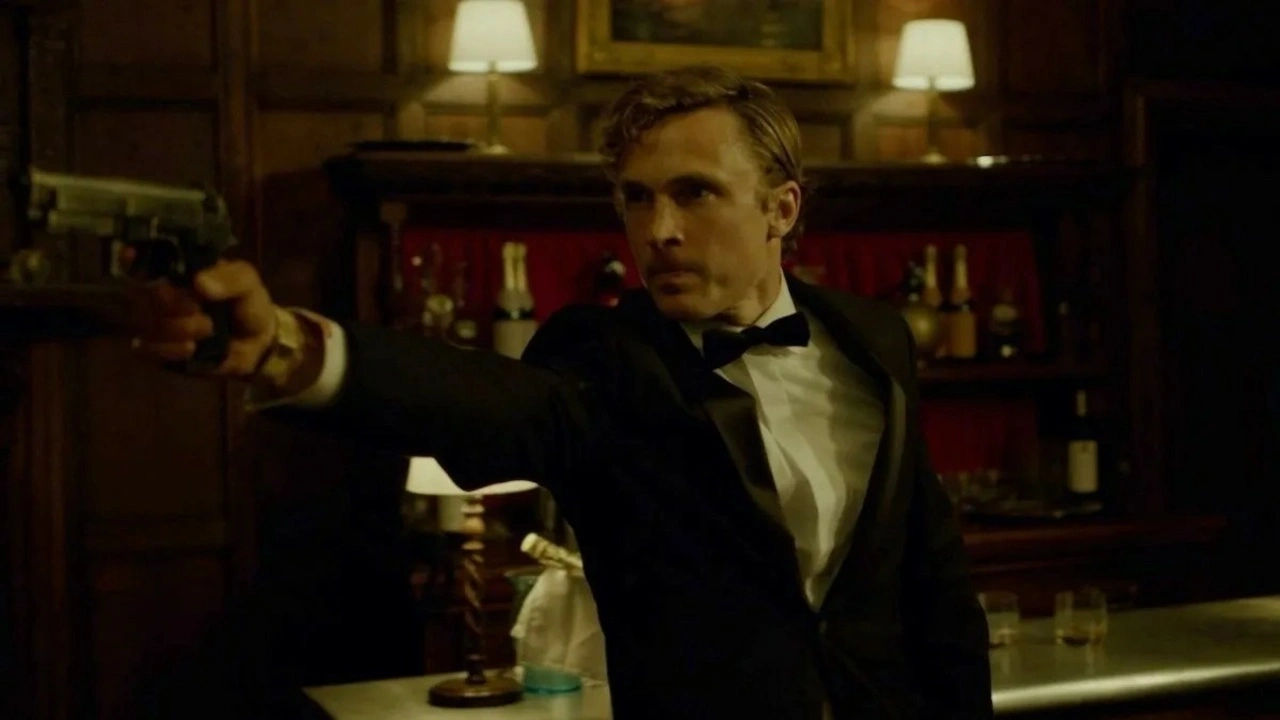
Viewers are inclined to read Caleb as the film’s moral anchor. Moseley complicates that assumption with quiet, nervous restraint, presenting a man watching his world come apart in real time. His performance traces a subtle slide into panic, keeping us close to Caleb’s viewpoint as his choices become harder to defend.
The supporting cast gives the room a volatile charge. Alexander Lincoln brings a terrific spark to Jackson, turning the resentful brother into an unstable powder keg. Lincoln plays him with sharp sarcasm that barely hides a desperate hunger for family validation.
Across the room, Patrick Baladi gives Robert Foresight a striking physical presence. After an early, non-fatal gunshot wound, Baladi spends much of the film pale and increasingly ghostlike. His failing body becomes a clean metaphor for the weakening power structures of his empire, and his dry, cynical wit still cuts through the panic.
Kim Spearman supplies the needed counterweight as Julia, giving the bride a grounded stillness beside the theatrical alarm of her relatives. The wider ensemble fills the guest list with the cold habits of elite archetypes. The actors understand the class satire at play, and their petty arguments over money and corporate survival sharpen the film’s ideas about generational entitlement.
The Visual and Auditory Architecture of Confinement
From a technical angle, Kennedy’s work with cinematographer Lorenzo Levrini makes the house feel alive. The film resists the jittery cutting common to many modern thrillers and commits to spatial psychology. Inside the primary room, the camera tracks a gradual atmospheric shift. What begins as a grand historic space under afternoon light becomes an oppressive cage as night deepens. Levrini supports that change through color, allowing rich crimsons, heavy blacks, and tarnished golds to dominate the frame.
The compositions use layered mid-shots and ensemble blocking, giving the viewer room to read the shifting power map. We track who controls the weapon, who steps forward, and who retreats into the shadows. The sound design, supervised by Caleb Blood, locks neatly into that visual plan. The score uses faint metallic ticking textures that echo a clock, keeping the midnight deadline active in the viewer’s nerves. The amplified groans of the house, heavy silences, and distant movements turn the estate into an instrument of dread.
Editor Gustav Lindquist keeps the single setting from going slack, holding the cuts tight and purposeful. The technical team expands the perspective with infrared surveillance shots from the sniper’s viewpoint outside. Those cold heat-signature images interrupt the wood-paneled interior at key moments, making the audience feel like voyeurs watching an elite family system break down under a microscope.
The independent chamber thriller An Enemy Within originally premiered on the festival circuit at the British Urban Film Festival on October 10, 2025, where it earned a nomination for Best UK Feature. Following its festival run, the film secured a wide digital and video-on-demand release in the United States on May 15, 2026. Audiences looking to watch the film can currently find it available to rent or purchase on major digital platforms, including Amazon Prime Video and Apple TV.
Where to Watch An Enemy Within (2025) Online









Full Credits
Title: An Enemy Within
Distributor: Saban Films, Well Go USA
Release date: October 10, 2025 (British Urban Film Festival), May 15, 2026 (United States digital and on-demand release)
Rating: 16+ / R
Running time: 98 minutes (1 hour 38 minutes)
Director: John Michael Kennedy
Writers: John Michael Kennedy
Producers and Executive Producers: Matthew Bailey, Adam Beasley, Milan Chakraborty, Guy Davies, Vanessa Yao Guo, Michael Jefferson, John Michael Kennedy, Atit Shah
Cast: William Moseley, Patrick Baladi, Tristan Gemmill, Kim Spearman, Alexander Lincoln, Toyin Omari-Kinch, Frances Wilding, Harrison Daniels
Director of Photography (Cinematographer): Lorenzo Levrini
Editors: Gustav Lindquist
Composer: Caleb Blood
The Review
An Enemy Within
John Michael Kennedy’s debut establishes an atmospheric, pressure-cooker environment that values structural tension over mindless action. While the script occasionally feels stuck in its single-room setting, the visual storytelling and strong central performances elevate the rich family drama. The explosive final act successfully shifts power dynamics, turning a standard thriller concept into a dark study of entitlement and survival. It operates as an engaging, stylized chamber piece that overcomes its pacing flaws through pure atmospheric commitment.
PROS
- The collaboration between director and cinematographer builds a claustrophobic, evolving Gothic environment inside the estate.
- Utilizing William Moseley's earnest screen persona effectively camouflages the shifting moral weight of the narrative.
- The transition from psychological standoff to open confrontation provides a satisfying, rhythmic payoff.
- The ticking clock motifs and heavy environmental sounds continuously heighten the baseline anxiety.
CONS
- Confining the action to a single room occasionally causes the narrative pacing to feel static during the first hour.
- Several supporting family members rely on overly familiar traits of elite privilege without deeper development.
- The screenplay relies heavily on long exposition scenes to reveal the underlying corporate secrets.