







The second season of the BBC Three comedy series moves its battleground into a more polished arena. Co-creator and lead actor Adjani Salmon returns as Kwabena Robinson, a Black British filmmaker who spent the previous episodes shut out of the creative economy. This run redirects the story from the exhausting fight for visibility toward the pressures that arrive after institutional access.
Kwabena secures a breakthrough directing role on Sin and Subterfuge, a high-profile television production backed by a major studio. The fictional series uses colorblind casting, echoing contemporary streaming phenomena such as Bridgerton. The job moves Kwabena from unemployment into corporate visibility, a milestone that carries its own machinery of compromise.
Entry into mainstream space replaces simple stagnation with a more elaborate system of managed creativity. The season follows his effort to protect a distinct artistic voice inside an environment shaped by superficial diversity mandates and damaged creative structures.
The Architecture of Surface Equity
This season offers a sharp anatomy of modern diversity initiatives in entertainment, exposing how major networks turn representation into a marketable surface. Production executives present Kwabena with stereotypical projects built around Black trauma, including the hollow pitches Grime and Punishment, Baby Muddas, and Man Dem in Outer Space.
The industry’s structural absurdity sharpens during a production dispute over From the Boats. The drama about Jamaican immigrants receives funding under the authorship of Winston, an out-of-touch white writer who defends his authority because his gardener shares that heritage. The joke lands with a familiar corporate chill: cultural proximity becomes a receipt, especially when that receipt belongs to someone’s gardener.
This choice exposes the systemic bias behind who receives financing to tell specific cultural stories. The series carries this critique onto the set of Sin and Subterfuge, where modern streaming habits collide with historical contradictions. The production casts prominent Black actor Rudolph Williams as a historical figure who acquired immense wealth through sugar plantation slavery.
Also Read





To maximize mainstream appeal, the studio pairs him with Roxie, an entitled white social media influencer who lacks basic acting qualifications. This corporate ecosystem traps creators between artistic survival and ethical clarity. The family register gives that tension its bluntest economic form, with Uncle Claude asking, “How much can integrity buy?”
Parallel Friction and Fragmented Communities
Kwabena faces significant structural friction after gaining control of a substantial budget and a large crew, with competing executives pulling him in conflicting directions. His daily professional life requires handling Simon, an eccentric white executive producer, alongside Bridgette Julius, a demanding Black producer whose standards prove exceptionally difficult to satisfy.
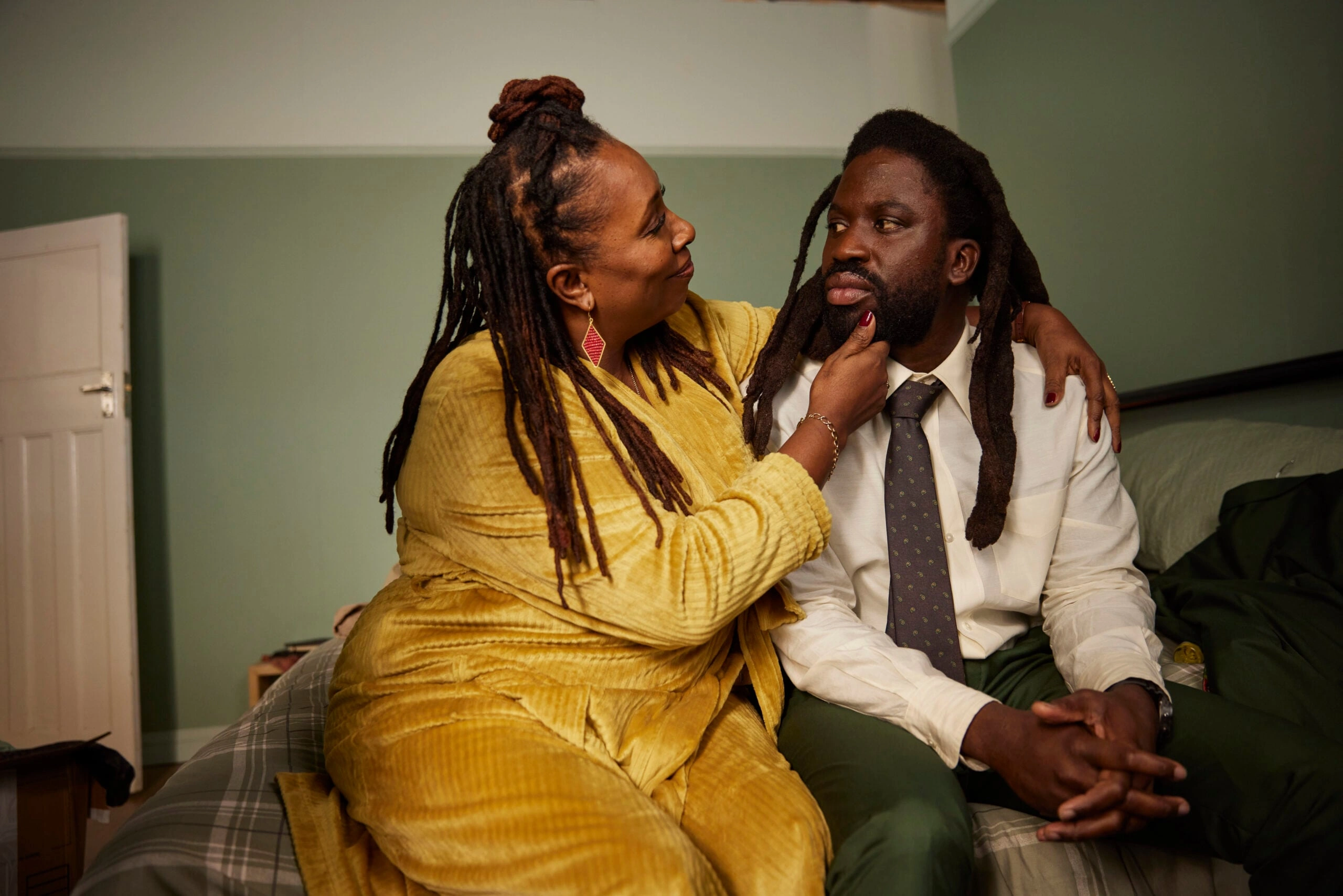
His professional rise coincides with personal disruption through the sudden return of his ex-partner Vanessa to London after their failed long-distance relationship. That anxiety echoes the experience of his filmmaker peer Amy, played by Dani Moseley. Her trajectory maps another form of institutional stagnation, tracking her isolation at a production company that ignores her thoughtful pitch about African diaspora cuisine. The company shelves her project and prioritizes the low-brow reality dating program Hot Baps.
Amy also has to tolerate Fiona, a white colleague who claims a biracial identity because of a Jamaican grandfather, using specific cultural hairstyles and aesthetic markers to claim space in corporate meetings. The series balances these professional frustrations by expanding the domestic world around the supporting ensemble.
Tola leaves Cambridge University to pursue a career as a digital hair influencer, while Maurice and Funmi face chaotic complications as they try to secure a competitive school placement. A mature romance subplot featuring Jo Martin brings grounded warmth to these multi-generational family dynamics.
Satirical Mechanics and Tonal Balance
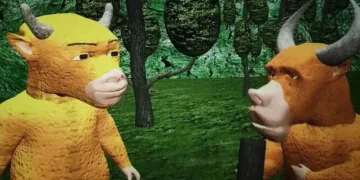
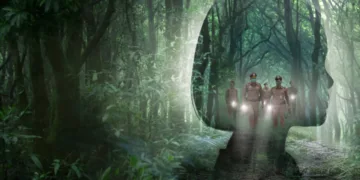
The creative identity of the series rests on surrealist fantasy sequences that turn Kwabena’s inner stress into visible spectacle. These Walter Mitty-style vignettes externalize his psychological strain through high-concept parody. One sequence imagines an elderly Kwabena receiving an Outstanding Newcomer BAFTA. Another recasts his creative compromises as an Oliver Twist homage, with Kwabena begging executive producers for script control.
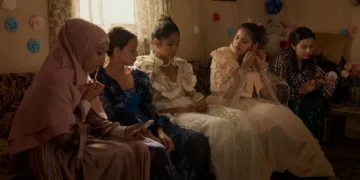
These scenes show firm authorial command, using visual absurdity to sharpen the script. The production keeps a precise tonal rhythm, moving between cringeworthy situational comedy and sharp institutional critique. The standout episode Black Love demonstrates this range by stepping away from the television industry and placing its narrative around the parallel dates of three Black couples across different generations. This structural shift gives the season an essential emotional anchor, tempering the broad characterizations applied to the white supporting cast.
Characters such as the demanding influencer and a caricature-driven assistant director border on cartoonish. Their roles gain descriptive layers as the production continues. The finale uses structural irony to resolve major plot threads, delivering realistic consequences for Kwabena’s professional choices. By leaving several narrative lines open, the show offers a biting commentary on industry survival and builds a foundation for future developments.
Dreaming Whilst Black Season 2 officially premiered its full six-episode run in the United Kingdom on BBC Three and BBC iPlayer on October 9, 2025. Following its British broadcast, the critically acclaimed comedy-drama made its domestic debut for American audiences on February 20, 2026. Viewers in the United States can stream the entire second season on the Paramount+ Premium plan or watch it via the Paramount+ with Showtime channel.
Where to Watch Dreaming Whilst Black Season 2 Online









Full Credits
Title: Dreaming Whilst Black Season 2
Distributor: BBC Three (UK), Paramount+ with Showtime (US)
Release date: October 9, 2025 (UK), February 20, 2026 (US)
Rating: TV-MA
Running time: 25–30 minutes per episode
Director: Sebastian Thiel, Abdou Cissé
Writers: Adjani Salmon, Ali Hughes, Thara Popoola, Yemi Oyefuwa
Producers and Executive Producers: Natasha Jatania, Laura Seixas, Max Evans, Chadley Richards, Adjani Salmon, Dhanny Joshi, Thomas Stogdon, Tanya Qureshi, Gina Lyons, Nicola A. Gregory
Cast: Adjani Salmon, Dani Moseley, Demmy Ladipo, Rachel Adedeji, Babirye Bukilwa, Jo Martin, Martina Laird, Roger Griffiths, Lauryn Ajufo, Jessica Hynes, Charles Edwards, Kobna Holdbrook-Smith
Director of Photography (Cinematographer): Shaun Harley Lee, Nathalie Pitters, Jon Muschamp, Caleb Wissun-Bhide
Editors: Ash White
Composer: Adem Ilhan
The Review
Dreaming Whilst Black Season 2
The second season of Dreaming Whilst Black delivers a sharp, sophisticated look at what happens after a creator gets their foot in the door. By trading the struggle for access for the trickier battlefield of institutional compromise, the series avoids sophomore slumps. It balances cringeworthy workplace ironies with deep cultural resonance, proving that success inside a broken system brings a completely new set of headaches. It remains essential viewing for anyone tracking the realities of modern media.
PROS
- Brilliant parody of streaming trends like colorblind casting and superficial corporate diversity drives.
- Creative, witty fantasy sequences that accurately externalize the protagonist's professional anxieties.
- Strong subplots that flesh out the broader Black British experience across different generations.
CONS
- Some supporting white characters lean a bit too far into flat cartoonishness compared to the nuanced main cast.
- Sudden structural departures, while excellent on their own, occasionally disrupt the momentum of the main industry storyline.