
























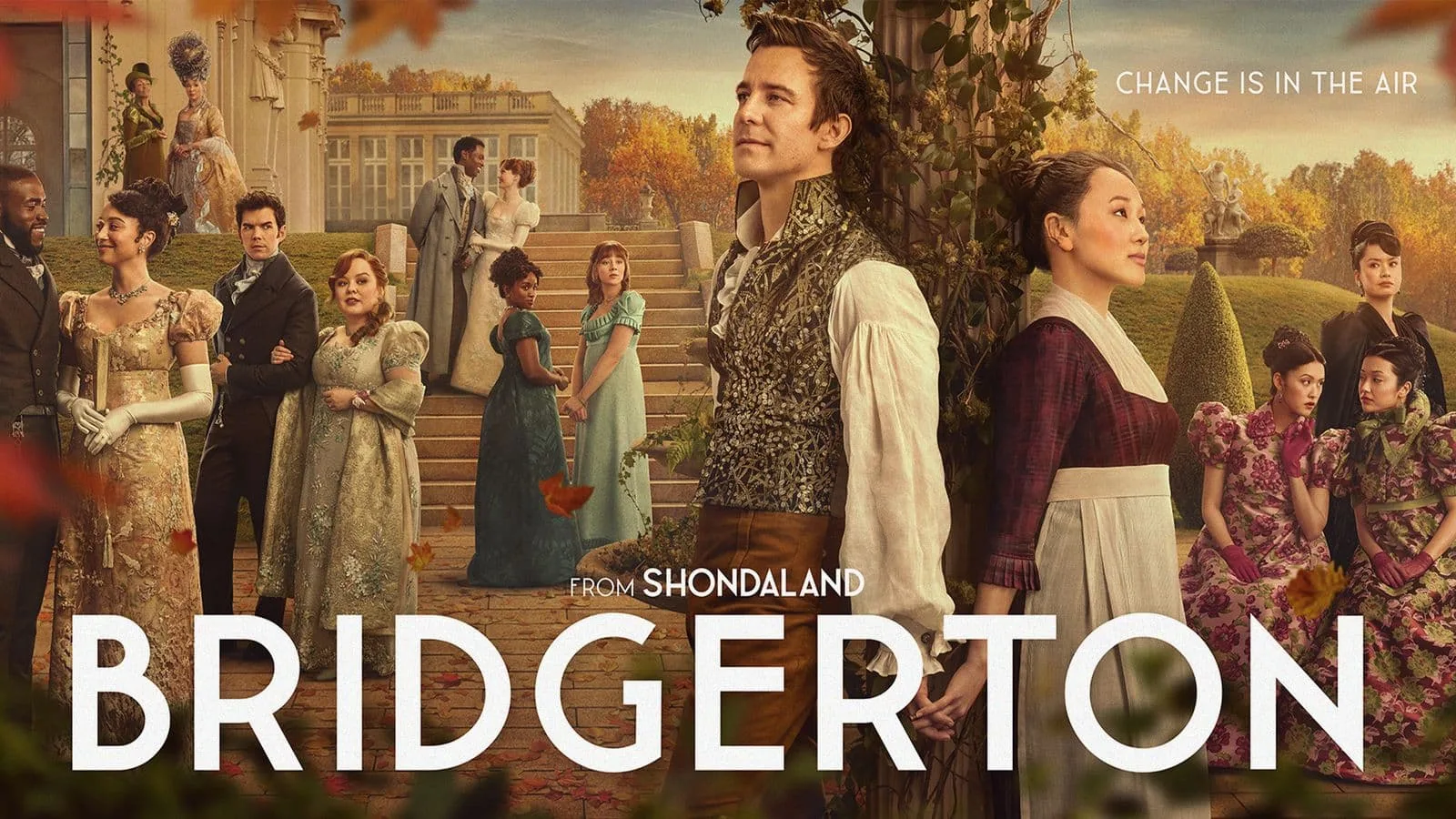

The second half of the fourth season turns away from masquerade spectacle and addresses the entrenched structures of social hierarchy. Benedict Bridgerton becomes trapped by class-based assumptions after a string of public and private missteps. The search for the lady in silver narrows into a household-focused drama when Sophie Baek takes employment with the family.
That movement exposes the gap between the leisure enjoyed by the ton and the steady labor that sustains it. As their connection edges toward exposure, the Bridgerton family reputation undergoes intensified scrutiny. The narrative shifts attention from ballroom spectacle to the servant quarters, anchoring the season in a more tangible depiction of Regency social arrangements.
It treats the fallout of Benedict’s offensive proposal as a structural problem, and it raises the stakes for every member of the family involved. By attending to tensions between aristocratic expectation and the realities of servitude, the season gives its conflicts an immediate urgency. The mystery of identity recedes behind the question of Sophie’s dignity and daily survival.
Power Dynamics and the Mistress Conflict
Benedict’s suggestion that Sophie should live as his mistress foregrounds the power imbalance at the center of the relationship. The offer signals a lack of understanding about Sophie’s past as a daughter of a gentleman compelled into labor. Luke Thompson portrays a man who slowly recognizes the weight of inherited privilege. His movement from a carefree artist to someone more anxious reflects a widening sense of responsibility beyond elite circles.
Yerin Ha gives Sophie a steel that makes her refusal of the mistress role feel decisive and protective of agency. She turns down a comfortable arrangement that would demand the surrender of autonomy. Their intimate scenes, including a long-awaited bathtub moment, favor feeling and mutual regard over genre shorthand. These sequences propose a partnership oriented around respect.
The season moves the class barrier toward resolution through legal and social changes that shape a realistic path to union. The writing trades masquerade magic for the labor required to forge a life across social lines. The episodes make clear the costs of that choice for each character. Benedict faces a decision about the relative value of status and partnership. Sophie confronts whether she can trust a man who once regarded her as convenience.
Their chemistry continues to hold the season together. When Sophie’s true identity is revealed, Benedict begins to regard her as an equal. That recognition changes his proposals, shifting from a temporary arrangement toward something intended to endure. The script frames his growth as earned by the end of the run.
Grief and the Introduction of New Paths
The sudden death of John Stirling introduces a somber tone that interrupts the season’s romantic notes. The event forces the family to reckon with past losses. Hannah Dodd delivers a restrained turn as Francesca, capturing the quiet of a widow whose plans collapse. Her interactions with Michaela Stirling, portrayed by Masali Baduza, gesture toward a new direction for the series.
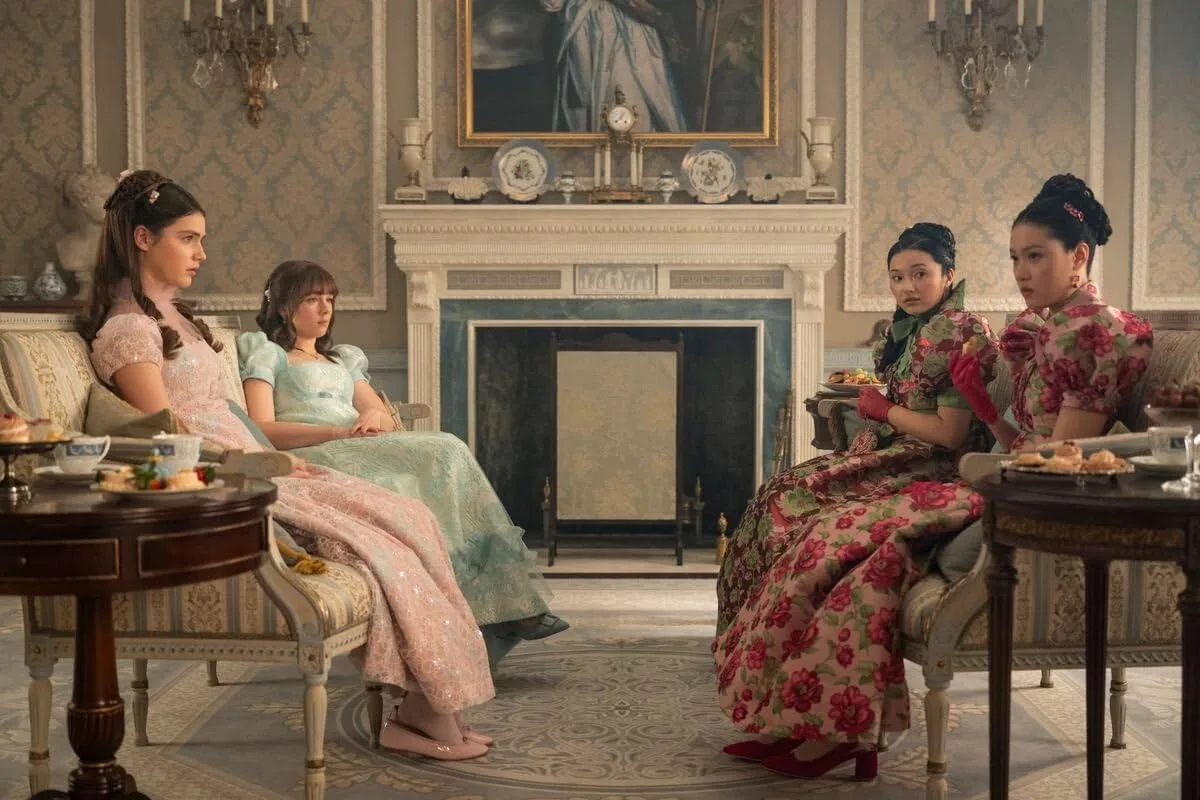
The gender-swapped pairing creates a spark that promises complications and possibilities distinct from the season’s more established romances. Anthony Bridgerton returns with a steadier perspective and offers a counterpoint to Benedict’s instability; Jonathan Bailey uses a brief appearance to underline family legacy and to prod his brother toward thinking about long-term consequences for their sisters.
The friction between Eloise and Hyacinth points to shifting views among the younger generation. Eloise is pushed back toward the marriage market and responds with characteristic irony. These subplots broaden the season’s view of Bridgerton life. Grief introduces a seriousness that balances the central romance’s sweeter moments.
Michaela Stirling’s presence adds subtext the show treats with care, showing that spaces exist within tradition for new forms of connection. Francesca’s internal negotiation between respect for her late husband and an unexpected attraction becomes central to her arc. That choice prepares viewers for a reorientation in the series’ romantic priorities. Collective mourning creates unity and prepares the family for the next social season.
The Matriarchs and the Shifting Social Order
Violet Bridgerton’s storyline examines the prospects for love after major loss. Her relationship with Lord Marcus Anderson advances with careful hesitation. Violet opts to protect her independence rather than accept a conventional remarriage. That preference registers as a shift in expectations for a matriarch. The tension between the Queen and Lady Danbury remains a strong thread, focused on personal liberty in relation to royal obligation. Lady Danbury’s desire for absence from court challenges the Queen’s need for her presence.
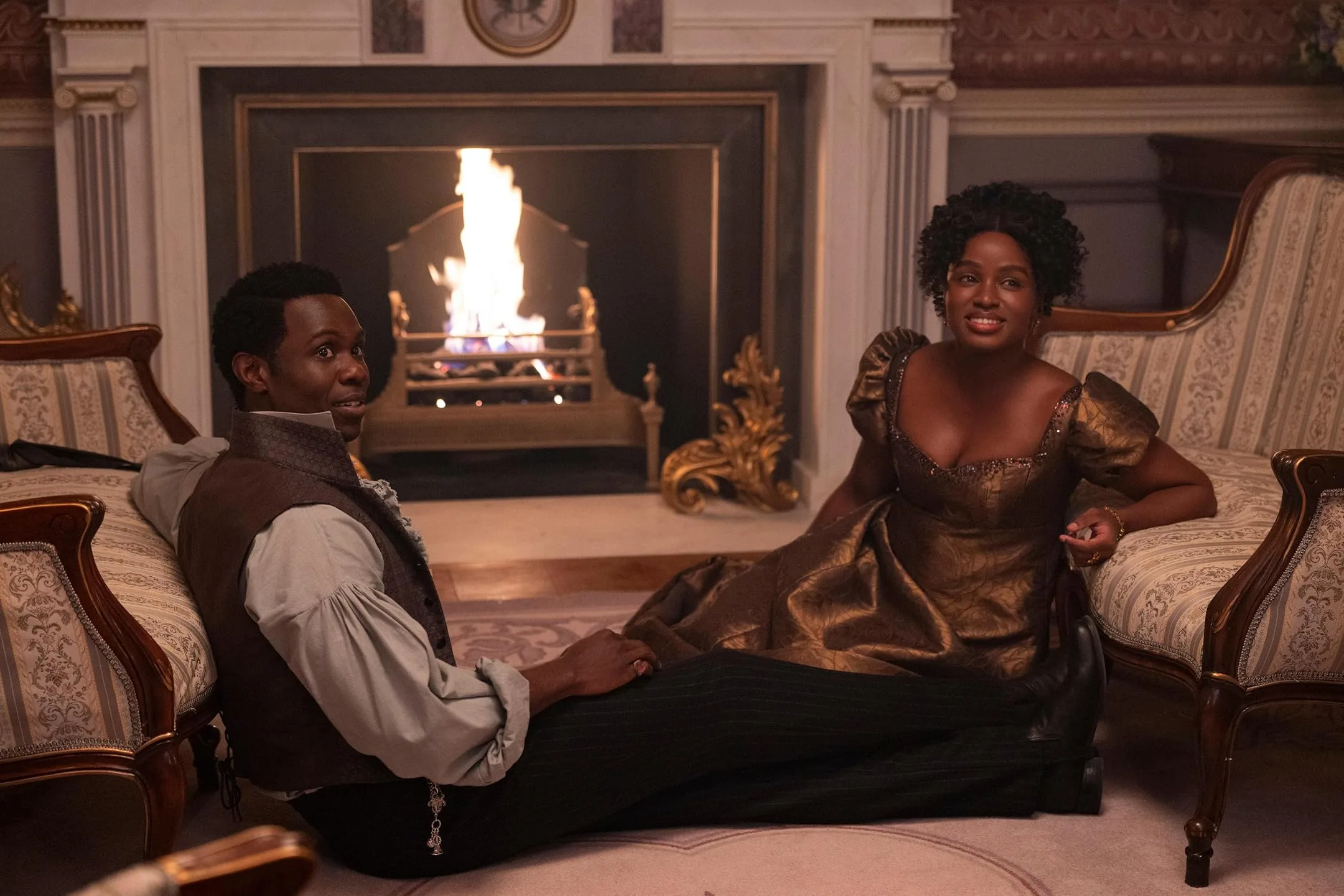
Penelope’s decision to stop publishing as Lady Whistledown marks a structural change for the series. A new voice fills the gossip column and keeps social commentary active. Katie Leung gives Lady Araminta Gun a performance that adds dimension to a role that might otherwise read as simple antagonism.
The courtroom sequences around Sophie’s past offer a resolution that feels achieved. The writing examines the lengths to which women like Araminta work to protect social position. That viewpoint injects social reality into the season’s antagonisms. With the Whistledown mystery resolved, Penelope’s new place in the family alters the social landscape and creates openings that the Queen notices.
The older women’s struggles for autonomy contrast with the younger romances and demonstrate that social rules are under pressure. Lady Danbury’s pursuit of life beyond palace obligations suggests increasing flexibility in social expectations. Violet’s choice to remain unmarried registers as a statement about self-discovery later in life. These threads make visible a broader interrogation of Regency aims.
Aesthetic Experimentation and Thematic Pacing
Part 2’s visual direction takes deliberate aesthetic risks, most clearly in the pink-themed ball. The event’s look feels intense and offbeat compared with expected pastel palette choices. Costuming functions as character shorthand. The soft gowns worn by debutantes set against the darker, practical clothing of the Bridgerton cottage underline class and labor differences. That visual separation reinforces the season’s central concerns. The final four episodes move with greater urgency than the first half, and a mid-credits wedding sequence offers closure while leaving narrative room for what follows.
The season balances romantic fantasy with a critique of the social rules that structure the ton. It registers the high cost of reputation in a culture driven by gossip. Production values remain strong, with sets and costumes tuned to the emotional demands of the story. The series keeps its attention on the central couple while preparing narrative space for upcoming arcs.
The result reads as a season more tightly tied to the material conditions its characters face. The tonal shift toward grounded concerns suggests an altered approach to future romances and a willingness to treat systemic barriers as part of the drama. The production team’s visual experiments convey confidence in the show’s ongoing appeal.
The second half of Bridgerton Season 4 premiered globally on Netflix on February 26, 2026. Following the mid-season cliffhanger, these final four episodes conclude the central romance between Benedict Bridgerton and Sophie Baek while setting the stage for future installments. The series is available exclusively for streaming on Netflix, where viewers can watch the entire fourth season in its entirety.
Where to Watch Bridgerton Season 4 Part 2 Online


Full Credits
Title: Bridgerton (Season 4, Part 2)
Distributor: Netflix
Release date: February 26, 2026
Rating: TV-MA
Running time: 64–68 minutes per episode
Director: Tricia Brock, Alex Pillai
Writers: Jess Brownell, Julia Quinn, Abby McDonald, Sarah L. Thompson, Daniel Robinson
Producers and Executive Producers: Shonda Rhimes, Betsy Beers, Tom Verica, Chris Van Dusen, Jess Brownell, Sarada McDermott, Holden Chang
Cast: Luke Thompson, Yerin Ha, Jonathan Bailey, Simone Ashley, Nicola Coughlan, Luke Newton, Hannah Dodd, Adjoa Andoh, Ruth Gemmell, Golda Rosheuvel, Katie Leung, Michelle Mao, Isabella Wei
Director of Photography (Cinematographer): Alicia Robbins, Jeffrey Jur
Editors: Jim Flynn, Gregory T. Evans
Composer: Kris Bowers
The Review
Bridgerton Season 4 Part 2
The second half recovers the season by grounding the central romance in the realities of class struggle. Benedict and Sophie find a resolution that feels earned through personal growth. The introduction of the Stirling tragedy and the arrival of Michaela Stirling signal a shift toward more mature storytelling for the future. Visual risks taken in the production design reflect a willingness to experiment. The narrative manages to balance historical fantasy with a direct look at the price of social convention.
PROS
- Strong character development for Benedict and Sophie.
- Grounded exploration of Regency era labor and class.
- Nuanced portrayal of female independence through Violet and Lady Danbury.
- Bold visual choices in production design.
- Meaningful setup for future romantic storylines.
CONS
- The initial proposition remains a difficult hurdle for the hero’s likability.
- The large ensemble cast limits screentime for certain supporting characters.
- The shift from romance to tragedy feels abrupt in the final episodes.