
















Searching for Satyrus opens a window onto the delicate intersections of memory, legacy, and geopolitics. Rena Effendi, stepping behind the camera for her debut, traces the brief flight of Satyrus effendi, a butterfly named after her father, Rustam Effendi, whose scientific brilliance contrasted sharply with his absence as a parent.
She was fourteen when he died in 1991, at a time when the Soviet Union unraveled and the first tremors of Armenian–Azerbaijani conflict shook the Caucasus. The butterfly becomes a prism through which personal and historical histories converge, fragile and fleeting, visible only during a narrow mid-summer window and inhabiting terrain scarred by decades of militarization.
Rustam’s presence is evoked indirectly: in colleagues’ recollections, in archival fragments, in the very wings of the creature that bears his name. Effendi’s quest is simultaneously scientific and elegiac, blending a pursuit of natural wonder with the excavation of familial absence. Cinematic patience allows these threads to intertwine, the film’s quiet rhythm reflecting the precarious balance between remembrance and discovery.
Personal History and the Uneasy Shape of Inheritance
Effendi’s engagement with her father’s life resists simple categorization. Rustam emerges as a mosaic of charisma, absence, and eccentricity, glimpsed through stories, dryly humorous recollections of multiple marriages, and the revelation that his scientific mark—the eponymous butterfly—outlived his intimate presence.
The documentary treats him as a specimen of human complexity, examined with empathy yet without hagiography. Her mother’s evasive forgiveness and her own adolescent distance amplify the emotional terrain, hinting at inherited patterns of longing and incompletion.
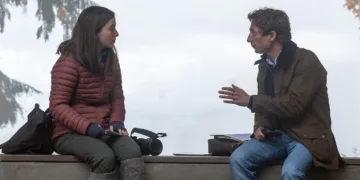
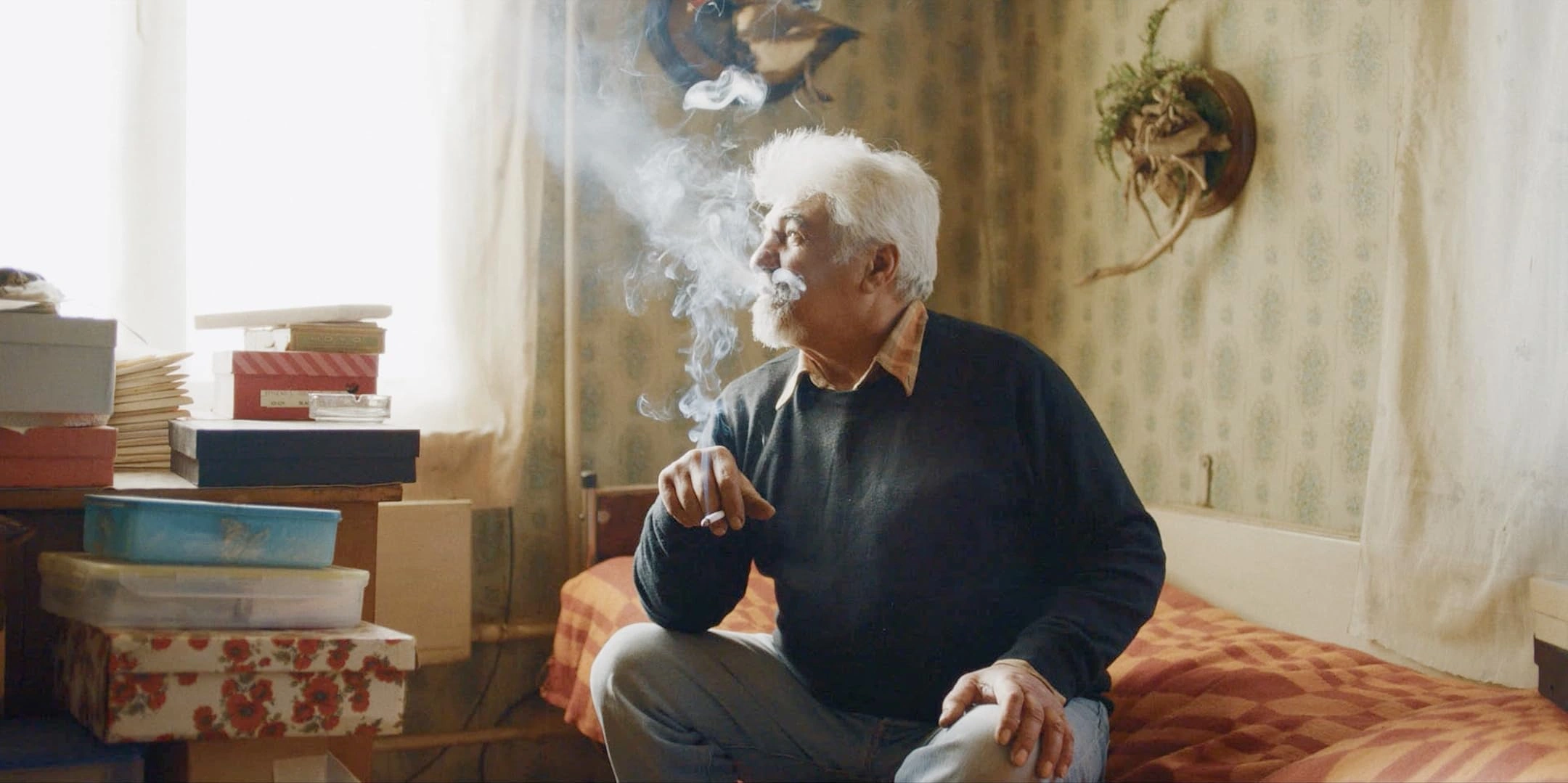
Encounters with Pavlik Kazaryan, an Armenian colleague with overlapping ties to Rustam’s fragmented family, enrich the narrative, revealing layers of kinship that operate beyond bloodlines. The film’s subtle excavation of biography transforms each answer into a further question; discovering that parts of Rustam’s life unfolded unseen by Effendi lends the documentary its ache.
It is an exercise in measured observation, where emotional resonance is built from patience and small revelations rather than overt sentiment. Through these intergenerational dialogues, the film explores the ways memory and absence shape identity, and how a quest for a butterfly becomes a conduit for understanding a complex human life.
Borders, War, and the Politics of a Fragile Creature
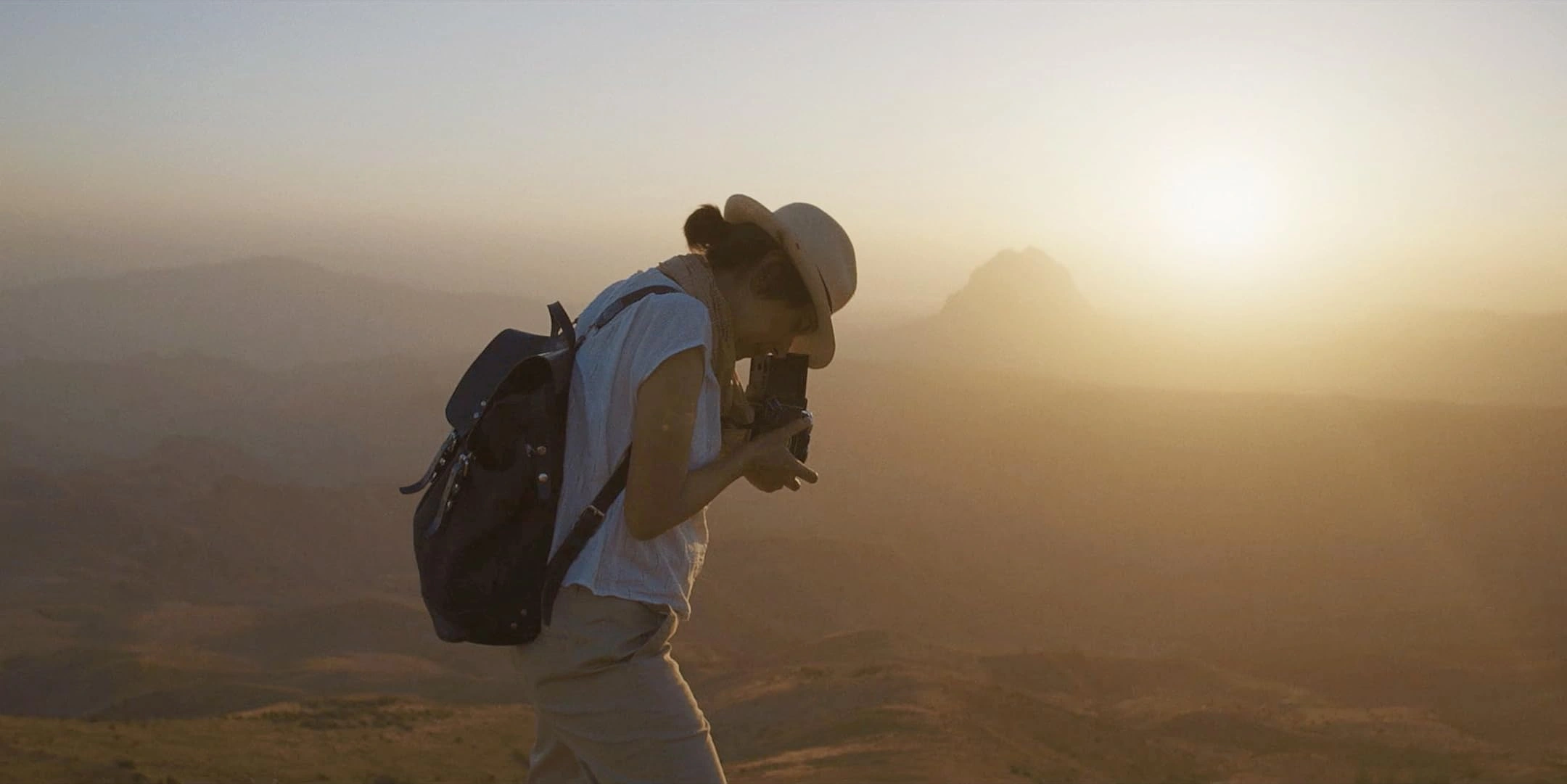
The search for Satyrus effendi situates the documentary within contested landscapes. Its sub-alpine habitat spans the southern Zangezur Mountains, where geopolitical lines and centuries of ethnic tension govern access. Effendi’s Azerbaijani identity renders simple travel a bureaucratic and political challenge, contrasting starkly with the free-ranging journeys her father once undertook across the Soviet Union.
The film expands to encompass human histories alongside natural ones: internally displaced Azerbaijanis, war memorials in Yerevan, and the lingering traces of violence demonstrate how personal and political geographies overlap. Pain is rendered in full complexity, refusing reductive binaries, while the butterfly’s rarity mirrors the fragility of reconciliation and continuity in this borderland.
Effendi observes its fleeting flight as a metaphor for resilience, for what persists despite human-imposed obstacles. Time becomes layered: the seasonal rhythms of the butterfly intersect with the slow accumulation of history, displacement, and memory. In treating the butterfly as both witness and participant, the film crafts a quiet political meditation, examining how ecological persistence can illuminate human divisions and the possibility of transcendence.
Visual Style, Structure, and Documentary Craft
Effendi’s photographic sensibility shapes every frame, creating a visual language of attentiveness. Warm tones linger on faces, rugged mountains, and decaying institutions, while Baku’s gleaming architecture and oil wealth underscore social inequities.
Juxtaposition becomes commentary: a dilapidated zoological institute, the fragile habitat of an endangered butterfly, and the tentative homes of displaced populations form a visual lexicon of neglect and resilience. Structurally, the documentary meanders across interviews, archival glimpses, bureaucratic negotiations, and fieldwork.
This narrative elasticity reflects the emotional and logistical realities of Effendi’s quest: grief, history, and memory follow non-linear paths. Lepidopterists such as Dmitrii Morgun provide tonal counterpoints, describing butterfly “characters” and imbuing the search with quiet whimsy and philosophical resonance. Their observations, particularly on the melancholic nature of Satyrus effendi, reinforce the film’s thematic precision.
The interplay between careful composition, patient observation, and structural freedom produces a documentary that is restrained yet piercing, lyrical without sentimentality. Beauty is measured, tenderness is earned, and every frame invites reflection on what survives—be it memory, species, or the fragile connections between them.
Searching for Satyrus is a deeply personal independent feature documentary directed by acclaimed photojournalist Rena Effendi, which premiered in theaters on April 19, 2026. Set against the starkly beautiful yet heavily militarized borderlands between Azerbaijan and Armenia, the narrative follows Effendi on a challenging quest to locate Satyrus effendi, a rare, endangered butterfly named after her late father, an enigmatic Soviet entomologist who was largely absent from her life. By retracing his historical collection routes through a landscape scarred by decades of geopolitics and climate change, Effendi unravels layered family secrets, addresses her childhood sense of loss, and seeks a quiet path toward regional reconciliation. Cinema audiences can experience this poignant, visual exploration at select independent theaters and international documentary festival screenings.
Full Credits
Title: Searching for Satyrus
Distributor: Underground Slate
Release date: April 19, 2026
Running time: 101 minutes
Director: Rena Effendi
Writers: Rena Effendi
Producers and Executive Producers: Rena Effendi, Lana Slezic, Matt Fletcher, Frank Giustra
Cast: Rena Effendi, Elmira Abbasova, Pavlik Kazaryan, Dmitrii Morgun
Director of Photography (Cinematographer): Mikhail Galustov, Evgeny Rodin, Garath Whyte
Editors: Mahi Rahgozar
Composer: Ljova
The Review
Searching for Satyrus
Searching for Satyrus is a quietly moving exploration of memory, loss, and resilience, using the elusive butterfly as both metaphor and compass. Rena Effendi balances intimacy with geopolitical awareness, crafting a film that is visually precise, emotionally layered, and philosophically resonant. The documentary lingers in its spaces without hurry, allowing grief, history, and natural wonder to unfold together. It is both elegy and inquiry, revealing how personal and collective histories can intersect with surprising tenderness.
PROS
- Thoughtful intertwining of personal biography and geopolitical context
- Visually striking, patient cinematography with rich compositional detail
- Emotional depth without sentimentality
- Philosophically reflective, with subtle dry humor
- Strong narrative through archival fragments and human encounters
CONS
- Narrative meanders at times, which may challenge viewers seeking conventional pacing
- Some secondary characters and subplots could feel underdeveloped