



























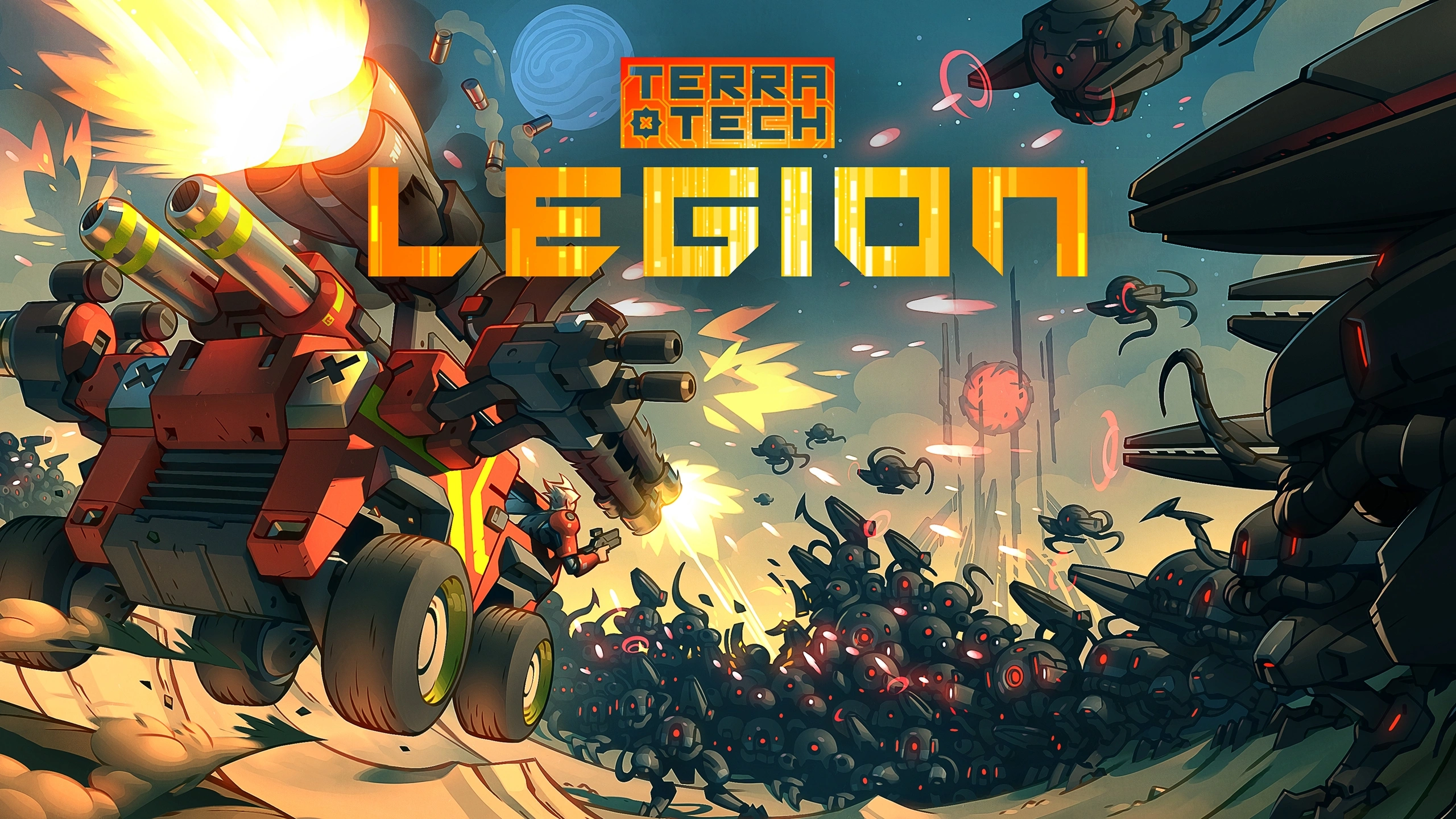

TerraTech Legion takes the familiar bullet heaven formula and bolts it onto the frame of a modular vehicle builder. That single design choice gives the game its personality. You are still dropped into hostile arenas, swarmed by enemies, showered with XP, and pushed toward escalating chaos, yet the usual upgrade menu has been replaced by something far stranger and far livelier: a growing combat vehicle assembled by hand.
The result feels like Vampire Survivors after a collision with a toy box full of LEGO Technic pieces. Weapons, wheels, stat modules, armor plates, saw blades, drones, and structural blocks are physically attached to your machine. Every upgrade alters its shape, its handling, its attack coverage, or its survivability. The game’s core joke is also its central strategy: your deadliest build may look like a mechanical accident.
That makes TerraTech Legion stand out in a crowded genre. Many survivors-likes ask you to stack damage numbers and trust the fireworks. This one asks you to build the fireworks launcher, realize half of its guns are blocked by your own armor, then rebuild the whole contraption into something uglier and far better.
Driving Through the Bullet Heaven Formula
The basic structure will be instantly readable to anyone who has touched Vampire Survivors, Brotato, Deep Rock Galactic: Survivor, or Halls of Torment. You enter a top-down arena, destroy waves of enemies, collect XP gems, level up, pick new tools, survive the timer, and prepare for a boss. Runs feed into permanent progression through currencies and character upgrades, giving each failed attempt some value.
The difference is movement. You are not a tiny hero sliding around a screen. You are a vehicle, and that changes nearly every decision. Turning radius matters. Acceleration matters. Boost timing matters. Wheel placement matters. If your build becomes too wide, too heavy, or too lopsided, the handling tells on you.
A poorly assembled machine may technically have great weapons, yet still struggle to turn cleanly through a swarm. That kind of awkwardness feels intentional. The game lets you create your own problems, then hands you the tools to fix them.
Two control styles help ease players into that vehicular identity, with options based on vehicle direction or screen direction. Both approaches work, though the driving model takes a few runs to settle in. At first, it can feel strange to play a survivors-like where your character has weight and mechanical drag. After a while, that weight becomes part of the appeal. You start reading gaps in enemy lines like racing lines, boosting through danger, circling mobs, and lining up your build so its strongest weapons cover the right angles.
Combat itself remains mostly automated. Guns aim and fire on their own, which keeps the genre’s accessible rhythm intact. Your job is to steer, position, ram, recover, and build intelligently. Machine guns rattle into bot swarms, lasers carve lanes through crowds, bombs scatter explosions behind you, drones extend pressure beyond your immediate reach, and saws turn the vehicle’s body into a weapon. With the right impact upgrades, even ramming becomes a central tactic rather than a panic move.
That constant link between driving and building gives each run a sharper identity than passive stat stacking. The question is rarely “which number goes up?” It is “where does this part fit, and how will it change the way I survive?”
The Joy and Trouble of Modular Chaos
The building system is where TerraTech Legion finds its spark. Leveling up and collecting crates grant new parts, and each part has to be placed onto the vehicle through connection points. Some choices are weapons. Some are wheels. Others are simple blocks that extend your frame, giving you the real estate needed for larger upgrades. You may also find repair tools, health boosters, drone modules, boost modifiers, impact enhancers, and other pieces that reshape both stats and structure.
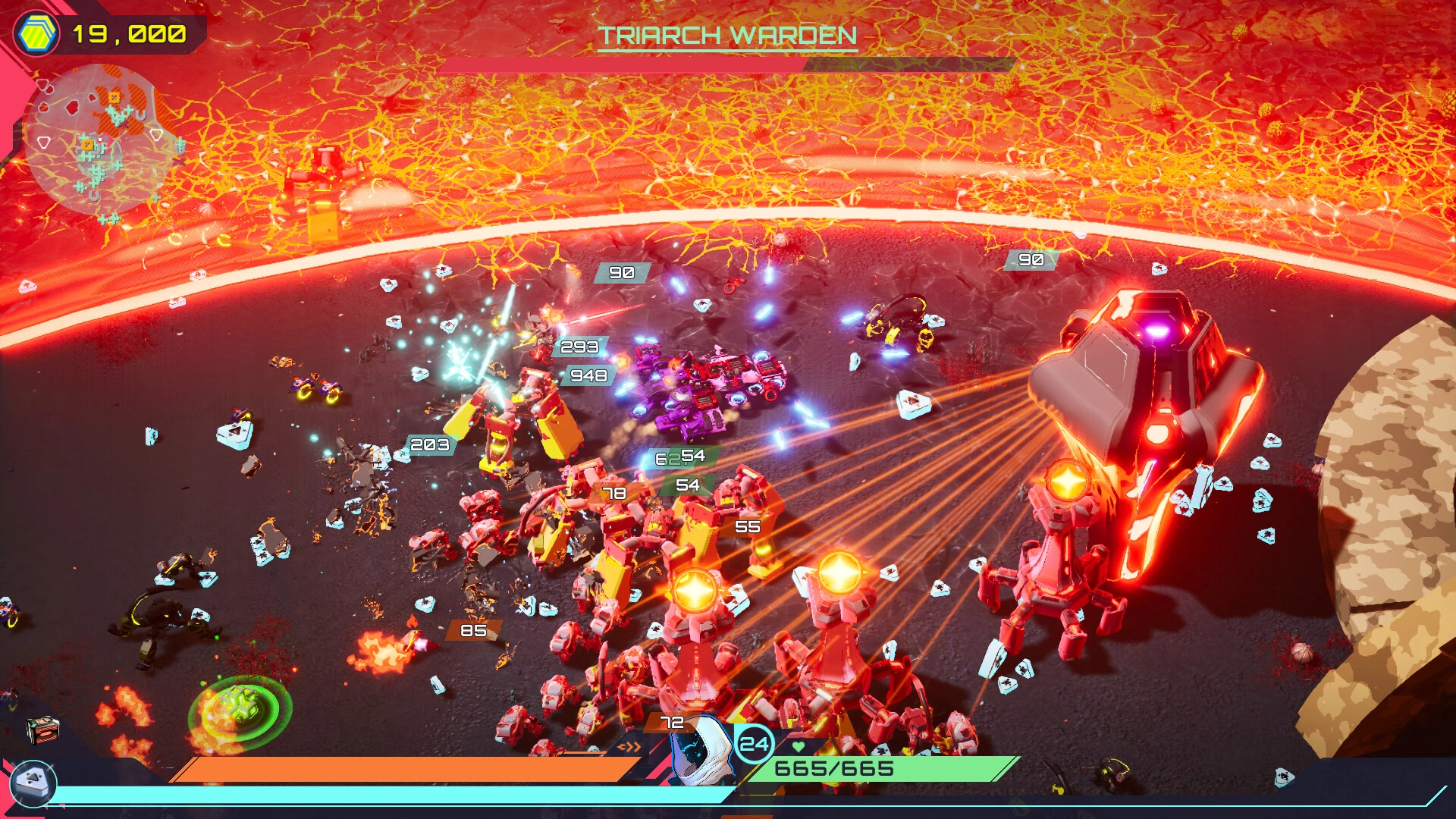
Early builds are wonderfully stupid. You attach whatever fits, stretch your chassis into crooked arms, mount guns in strange places, then discover that half your vehicle has become dead weight. The game thrives on that silliness. It understands the appeal of making a ridiculous machine and seeing if it can survive for another few minutes. It also has enough mechanical logic to make better building feel earned.
Shape has consequences. Add too much mass to one side and the vehicle may lose stability. Build too tall on a narrow base and high-speed turns can become risky. Place wheels carelessly and the steering may suffer. Extra wheels can improve traction or acceleration, yet some parts may reduce top speed or create new compromises. Large weapons demand space, and space has to come from somewhere. The body of the vehicle becomes a puzzle with guns attached.
Weapon placement adds another layer of tactical friction. Each weapon has a direction, range, and firing arc. A forward gun can dominate open space ahead, but it may be useless when enemies flood in from behind. Rear-facing weapons are excellent for punishing pursuit.
A 360-degree turret offers flexibility, though it may lack the focused efficiency of a weapon aimed toward a clear lane. Parts can block line of sight, and weapons placed too tightly can interfere with one another. The game smartly provides range indicators and obstruction warnings, which turns the build screen into a readable engineering space rather than a guessing game.
The pleasure of reorganizing between level-ups cannot be overstated. Many survivors-likes treat upgrades as quick stops between waves. Here, the build menu can become the main event. You rotate pieces, move wheels, stretch the frame, clear firing lanes, and try to maintain stability while chasing a stronger damage pattern. A good run often has a visible history. You can look at your vehicle and see every compromise that got you there.
Randomness gives this system energy and occasional irritation. Upgrade rolls and crate types push you to improvise, which suits the roguelite rhythm. You might plan for a clean turret-heavy build, then receive structural blocks, saws, repair parts, and odd side-facing guns that suggest a different approach. That flexibility is fun, especially once you stop forcing a single plan. Still, the same randomness can sting when a promising run needs wheels, range, or a specific weapon type and the game refuses to offer it.
That tension is familiar for the genre, yet TerraTech Legion handles it with a strong sense of physical play. It rarely feels like you are selecting upgrades from an abstract spreadsheet. You are constructing a machine under pressure, and the machine remembers every messy choice.
Characters, Planets, and the Pull of Another Run
The game launches with four playable techs, each defined by a different chassis, starting weapon, perk, and skill tree. This helps runs feel distinct before the first crate drops. One character might encourage aggressive boosting and ramming, while another may suit a steadier ranged setup or a safer survival-focused build. Because each tech has its own passive upgrade tree purchased with credits, progression develops character by character rather than through one shared account-wide ladder.
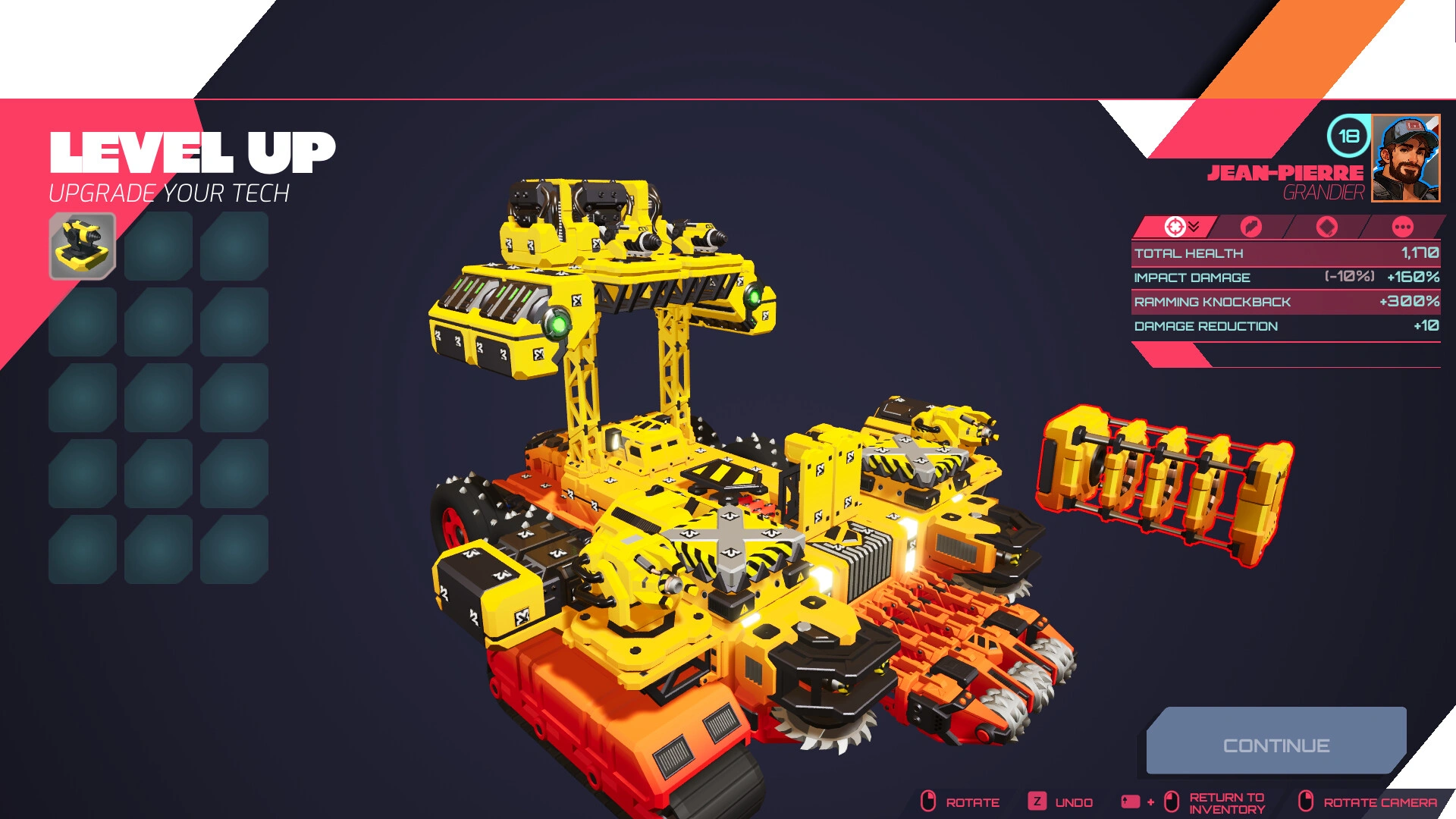
That structure gives players a reason to rotate between machines, though balance can feel uneven. Some starting setups and perks appear easier to exploit, especially once you understand which parts scale best with certain chassis shapes. In a game built around experimentation, perfect balance is less vital than variety, but some players will find a favored tech and stick with it.
Planet progression adds a clean mission structure around the runs. The game sends you across multiple planets with distinct environmental themes, from greener zones to harsher lava-like areas and other hostile biomes. Each planet includes a boss encounter and side objectives, with stars acting as the key to further areas and harder versions of existing missions. These goals are useful because they break up the repetition that can haunt bullet heaven games. Instead of always chasing survival alone, you may be pushed toward specific targets, character use, or alternate priorities.
The difficulty curve has teeth. Early attempts can feel rough while you learn how much the vehicle’s construction affects handling and attack coverage. Later planets and higher difficulty tiers ask for cleaner builds and better decision-making. Bosses can be a sticking point. Some are durable enough to feel like they drag past their welcome, and a bad angle can turn a strong run into scrap within seconds. If a boss shoves the player into an awkward position or traps the vehicle against a swarm, the health bar can vanish fast.
Still, failure often has a clear lesson attached. A run may collapse because the vehicle had poor rear coverage, too little repair potential, bad turning response, blocked weapons, or a frame that grew without a plan. That makes defeat easier to accept. The game trains you to see your own build mistakes, which is a stronger form of progression than raw stat growth alone.
Long-term appeal comes from that self-correction. Endless survival mode fits the game’s strengths especially well, since it gives players room to test absurd builds against escalating pressure. The real reward is often a cleaner layout, a smarter weapon grid, a better wheel arrangement, or a vehicle so grotesque that it somehow becomes elegant through function.
Clean Chaos, Loud Guns, and Strong Platform Fit
Visually, TerraTech Legion is bright, polished, and readable for most of its runtime. The top-down 3D perspective gives enough space to see the vehicle, incoming enemies, XP trails, projectiles, and environmental hazards. Menus are clean, and the build interface does a good job translating each attached part into the action space. What you build in the menu is exactly what lurches into battle, which makes every visual change feel meaningful.
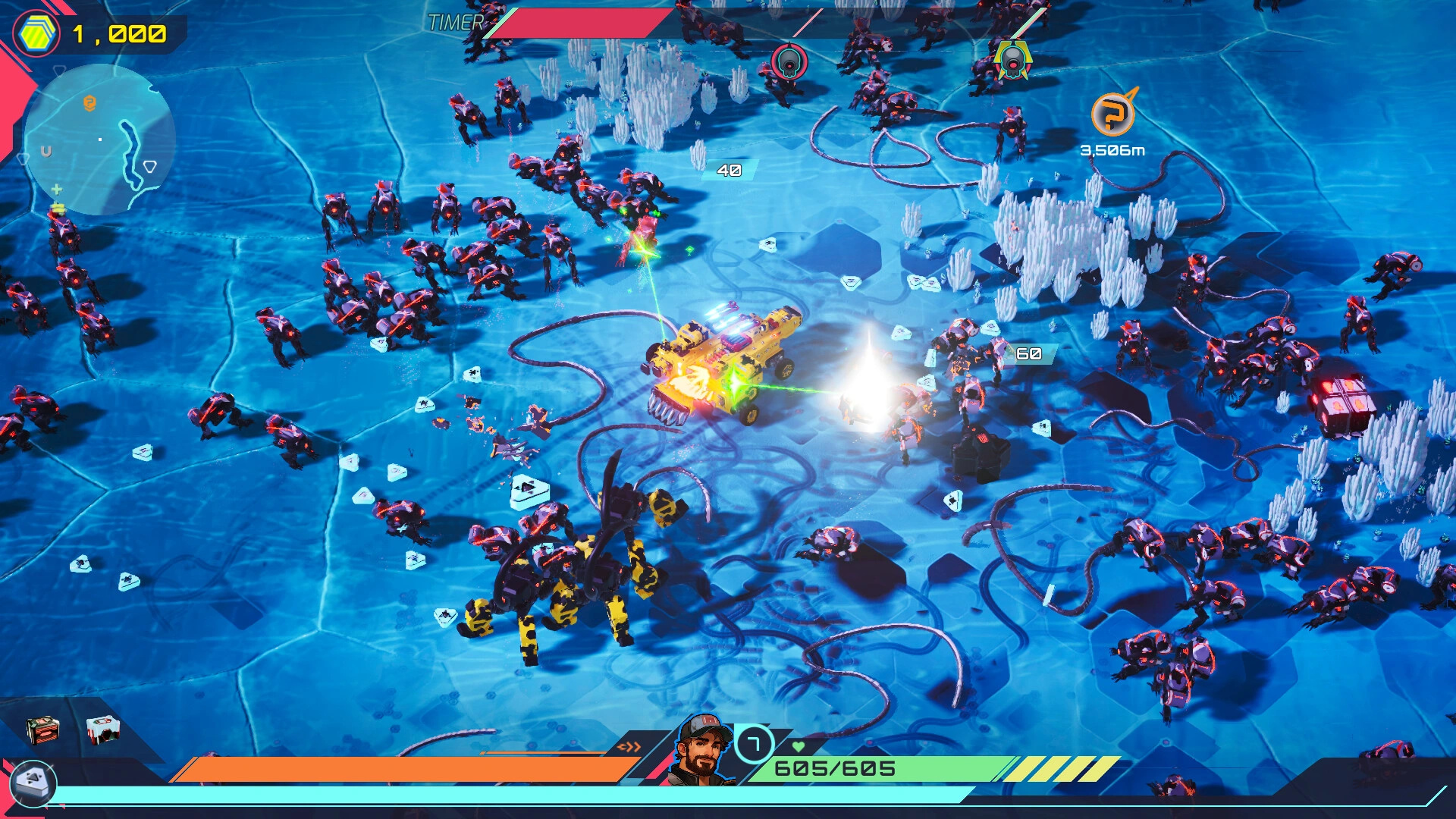
The best visual touch is variety. Because every part appears on the machine, no two successful builds need to look alike. One run may produce a compact ramming brick with saws and boosters. Another may create a sprawling gun platform with turrets hanging off every side. A later attempt might resemble a mobile junk sculpture that has no right to function, then proceeds to erase half the arena.
Combat effects are lively, with explosions, enemy bursts, lasers, bullet streams, and bot swarms filling the screen. At peak intensity, that energy can compromise clarity. There are moments where the player vehicle becomes harder to track inside a storm of red enemies, weapon effects, and damage numbers. That problem is hardly rare for the genre, yet the vehicle’s size and odd shapes can make positional awareness trickier than it is in games with a simple character silhouette.
The audio carries a satisfying mechanical punch. Machine guns clatter with enough bite to make upgrades feel immediate. Explosions pop cleanly. Energy weapons and impact sounds sell the fantasy of a growing war machine. The soundtrack keeps runs moving with high-energy backing, while staying clear enough for weapon feedback to remain the star.
Performance appears strong across PC, Xbox Series X/S, Steam Deck, handheld PCs, and gaming laptops. The game usually runs smoothly, with occasional dips during especially crowded moments. It also feels naturally suited to handheld play. Runs are easy to start, the build menu remains functional on smaller screens, and the loop has that dangerous “one quick attempt” quality that can quietly consume an evening.
Built for Tinkerers Who Like Their Roguelites Loud
TerraTech Legion is at its best when it lets players think with their hands. Its strongest idea is simple and powerful: upgrades are objects, and objects need space, balance, direction, and purpose. That gives the game a fresh identity among survivors-likes, especially for players who have already burned through the clean efficiency of Vampire Survivors, the mining rhythm of Deep Rock Galactic: Survivor, or the compact chaos of Brotato.
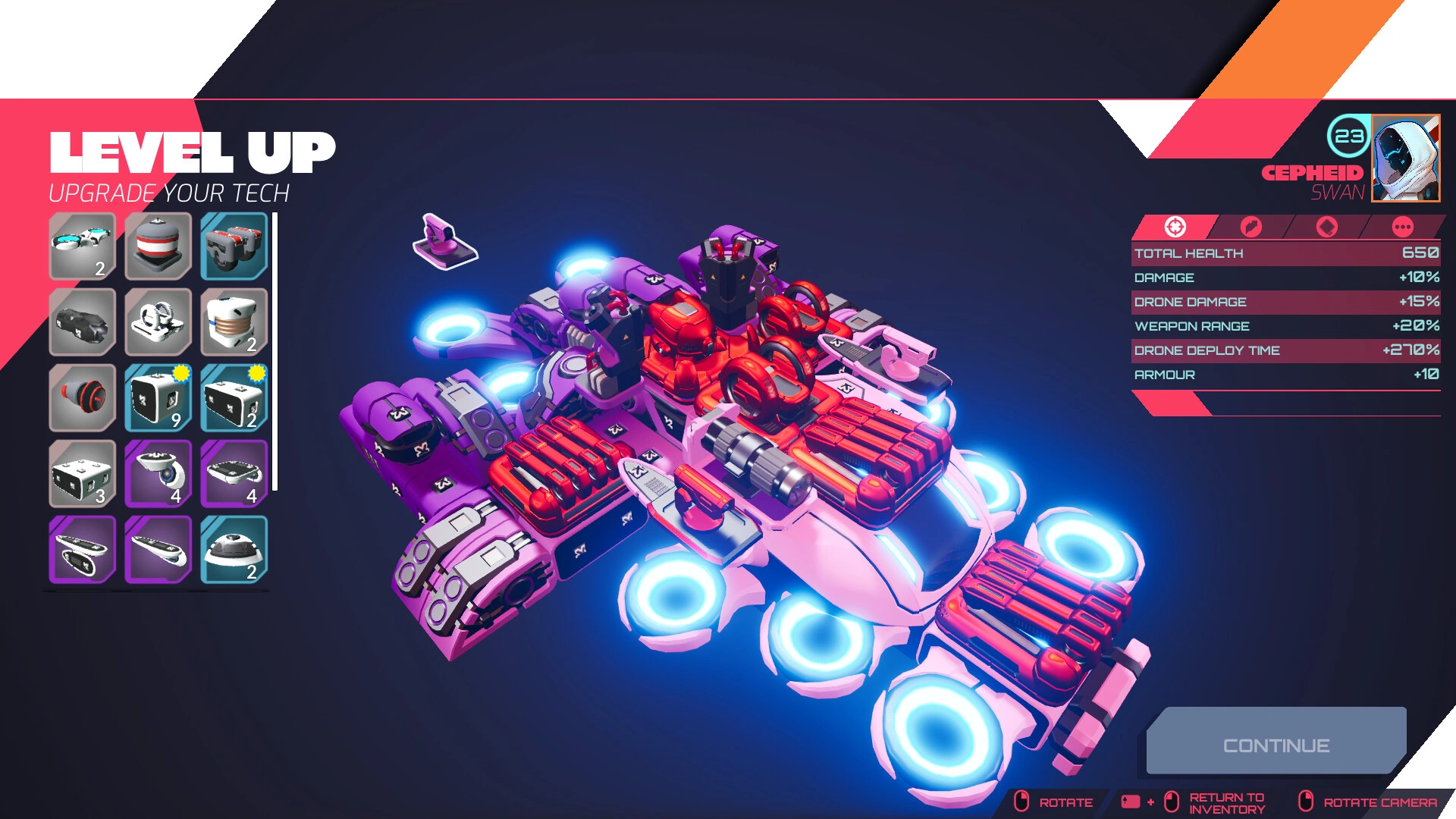
Its strengths are clear: deep build variety, satisfying automated combat, enjoyable driving, strong replay value, polished presentation, and a construction system that makes every run feel personally authored. Its flaws are just as easy to identify. Early runs can be confusing.
Random crates can refuse to cooperate. Some bosses feel too tanky. Character balance may favor certain techs. Heavy screen chaos can hurt readability. Players who want constant action may grow impatient with extended build-menu tinkering.
For fans of modular design, roguelite experimentation, physics-driven vehicle handling, and bullet heaven escalation, this is an easy recommendation. Players seeking precise twitch shooting or a story-heavy campaign may find a thinner experience. For everyone who enjoys turning bad ideas into functional weapons, TerraTech Legion has a garage full of trouble waiting.
The Review
TerraTech Legion
TerraTech Legion gives the survivors-like formula a sharp mechanical twist through its modular vehicle building. Its combat is loud, fast, and satisfying, while its block-based construction system makes every run feel personal. Some boss encounters drag, random part drops can frustrate, and the story is mostly background dressing, but the gameplay loop has real staying power. With strong build variety, polished presentation, and smart handheld appeal, this is one of the livelier recent entries in the genre.
PROS
- Excellent modular vehicle-building system
- Strong replay value across planets, missions, characters, and endless mode
- Satisfying automated combat and ramming mechanics
- Bright visuals and punchy audio design
- Great fit for handheld play
- Physics-based building gives upgrades real consequence
CONS
- Random crate drops can disrupt planned builds
- Some bosses feel too durable
- Early runs can be confusing while learning vehicle balance
- Screen clutter can hurt readability
- Character balance may feel uneven
- Story takes a back seat to mechanics