


























Crushed In Time takes Sherlock Holmes and Dr. John Watson, drops them into a point-and-click adventure, then gleefully breaks the machinery around them. Draw Me A Pixel frames the game as a launch-day disaster at a glossy developer office, where a fictional Holmes game is being review bombed after an NPC mysteriously disappears. The player is pulled through a monitor and into the malfunctioning project, becoming the unseen force trying to push this collapsing digital mystery back into shape.
The hook starts small. Watson receives a letter from Emma, except the letter refuses to behave like paper should. It sticks to the ceiling, turns basic interaction into a physics gag, and sends Holmes and Watson toward a mystery that keeps folding back into the act of game development itself.
What follows is a comic chase through polished scenes, rough prototypes, broken builds, placeholder assets, visible hitboxes, old devices, and strange side formats. Classic adventure games have often enjoyed bending logic until it squeaks. Crushed In Time takes that tradition and makes the bending literal.
Elastic Puzzles Give the Genre a New Physical Language
The smartest design decision in Crushed In Time is its refusal to rely on the usual point-and-click grammar. There is no inventory stuffed with rubber chickens, no verb menu, no direct command system telling Holmes to examine, take, or use. Instead, the player grabs the world itself. Objects, characters, interface buttons, menus, and puzzle elements can be stretched, pulled, twisted, launched, or snapped back into place.
That single mechanic carries a surprising amount of variety. Pulling a door left sends it popping open to the right. A loose item can be pinged across the floor. Valves and taps can be rotated by dragging their shape around. Characters can be yanked into position, usually with the same strange dignity as a cat being moved off a keyboard. Even the hint system participates in the joke, asking the player to stretch and release buttons rather than press them normally.
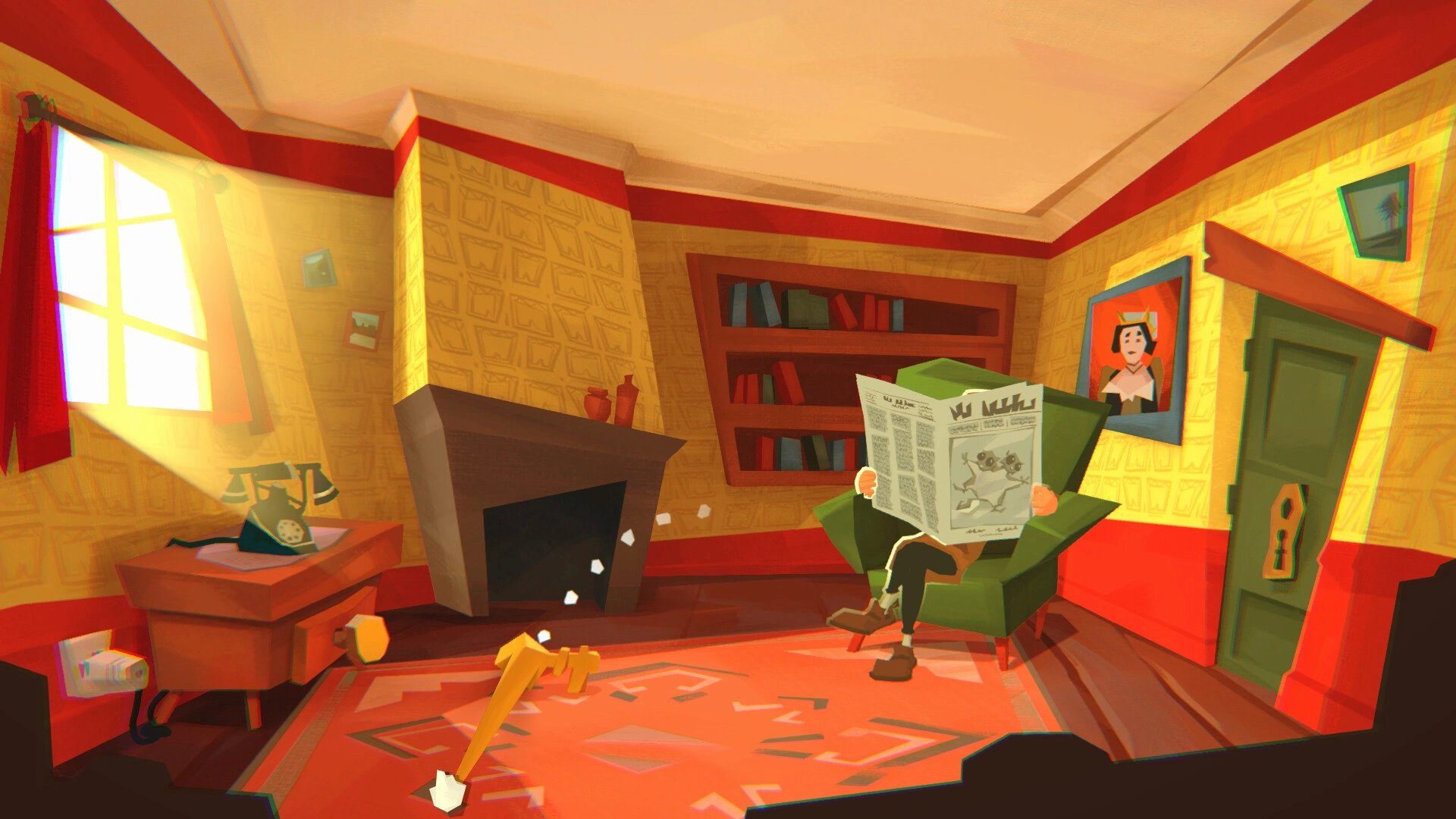
The opening letter puzzle is a strong statement of intent. Watson and Holmes need to retrieve a gravity-defying letter from the ceiling, and the solution involves experimenting with a dumb waiter hatch, a clock, a telephone, Sherlock’s newspaper, and the behavior of the room itself. It feels absurd in the way the best adventure puzzles often do, yet the game usually avoids the worst genre habit of hiding the solution behind one tiny, barely readable interaction.
Also Read





There is friction. Some puzzles lean on timing, asking the player to place a character in one spot, then trigger another action before the moment slips away. That can turn a clever solution into a short loop of repetition, made harsher by dialogue lines that repeat without enough mercy. The issue rarely sinks the design, but it does interrupt the rhythm whenever execution becomes fussier than deduction.
Holmes, Watson, and the Comedy of Development Hell
The writing treats Holmes and Watson as affectionate comic exaggerations rather than sacred literary relics. Holmes is smug, self-absorbed, and absurdly confident in explanations that clearly fail to account for what is happening on screen. Watson is anxious, exasperated, and faintly aware that something invisible keeps dragging people and furniture around. Their relationship has the crackle of an old double act: Holmes performs intellectual superiority, Watson absorbs the chaos, and both somehow make the disaster worse.
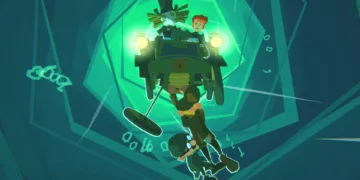
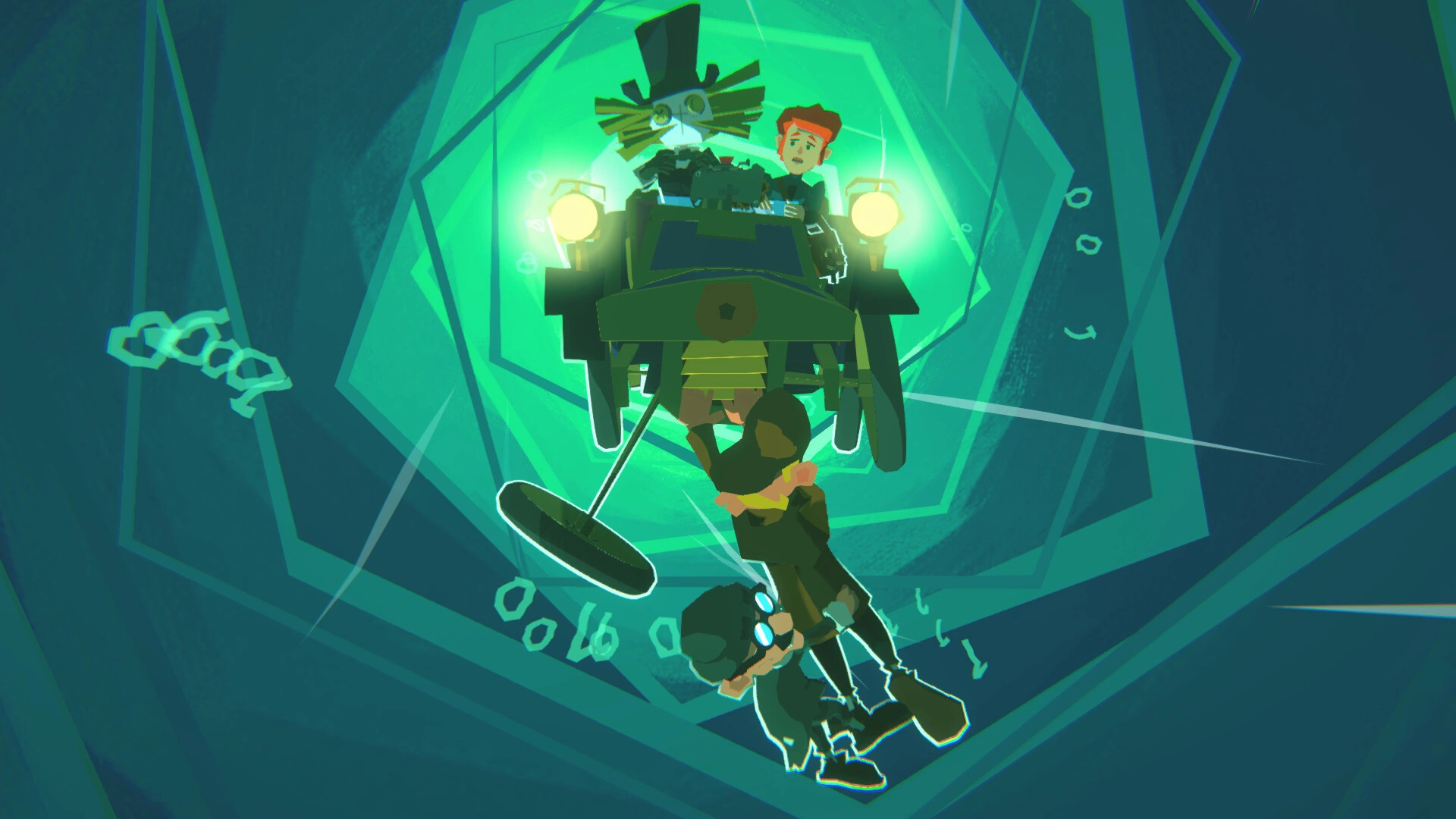
Emma Files gives the mystery its emotional and structural pull. Her strange connection to the first letter, paired with her own gravity-related predicament, turns a silly setup into a proper chase for answers. Emmet Placeholder, a name that tells you exactly what kind of joke the game is willing to make, steals Sherlock’s automobile and warps it into a time machine.
From there, the story uses “time travel” as a comic metaphor for game production. The trio move through different versions of the same project, from presentable scenes to unfinished alphas filled with rough assets, test dialogue, broken systems, and half-built spaces.
The humor is dry, silly, and proudly theatrical. Watson mentions that the postman hugged him while delivering the letter, and Holmes reacts with the grave seriousness of a man who has identified the true horror: he will be collecting the mail from now on. The repeated squabble over who starts the Sherlock-o-mobile is another excellent character gag, especially since the answer is always the player, a cosmic stagehand with a mouse button.
The game also understands that constant joke delivery can flatten a story if there is no change in pressure. Late in the adventure, it lands a sincere emotional beat that works because the performances have already built trust. The shift does not feel like a random grab for pathos. It suggests that beneath the rubber physics and bug jokes, these caricatures have enough warmth to matter.
A Warped Stage Full of Miniature Surprises
Visually, Crushed In Time has a clean theatrical quality. Its 3D character models and environments are viewed from a 2D adventure perspective, giving each room depth without losing the clarity expected from the genre. Lopsided doors, bent architecture, broad colors, and cartoonish animation make the world feel handmade and slightly drunk, which suits a story where unfinished code and reality keep arguing over custody of the plot.
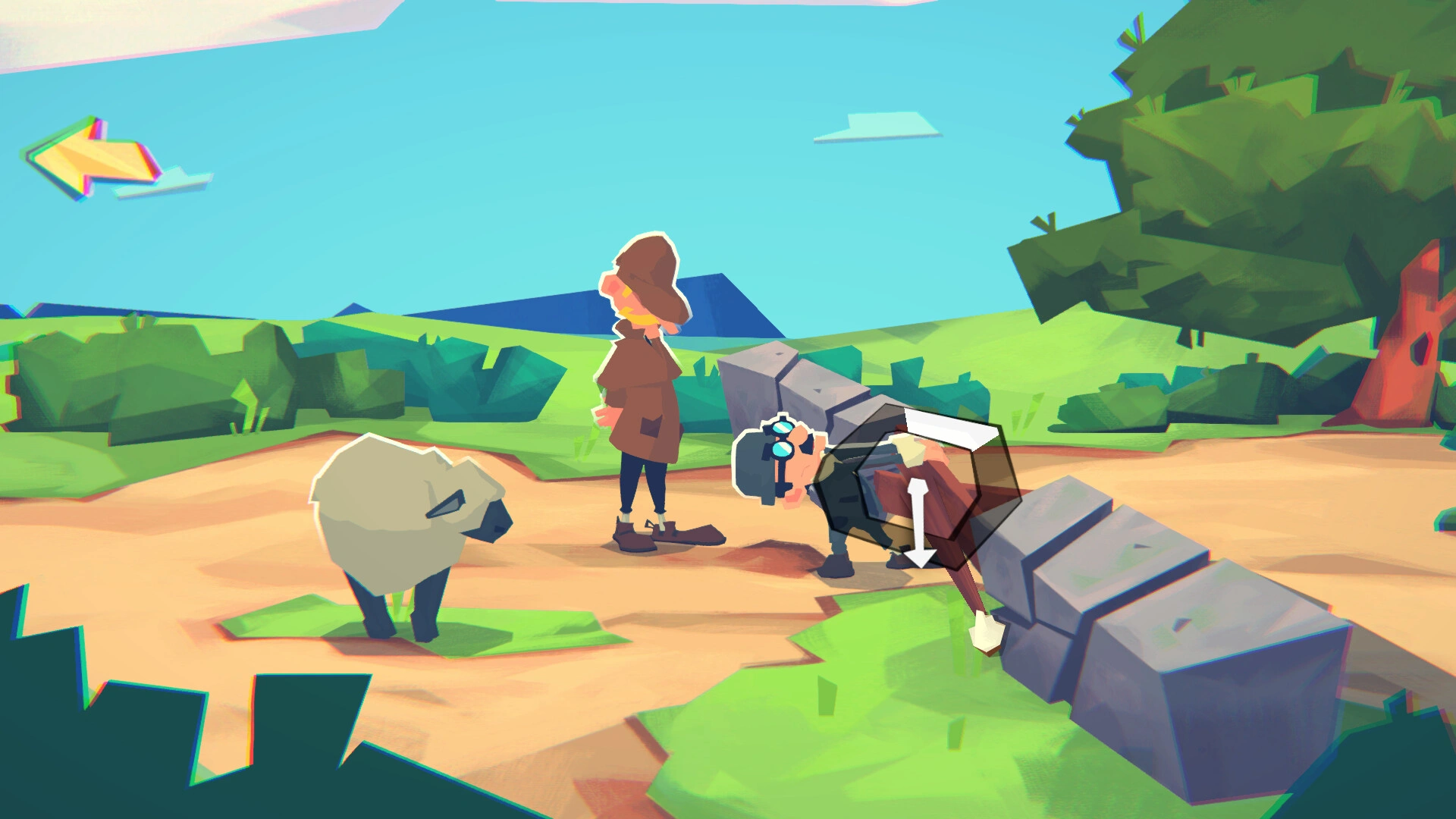
The elastic effect is the visual signature. Objects stretch like rubber, snap back with a wobble, and make interaction feel tactile in a way many adventure games never attempt. That physical comedy matters. It turns simple clicking into slapstick timing, and it gives every successful solution a small burst of comic release.
The soundtrack leans into playful mystery, with orchestral cues that recall old detective serials and cozy sleuthing television. The small voice cast does a great deal of heavy lifting. Holmes and Watson are especially sharp, using clipped irritation, pompous confidence, nervous confusion, and wounded dignity to keep the dialogue lively.
Chapter variety is another major strength. The game moves through early prototypes, half-broken spaces, fake handheld devices, and interludes that shift format. Text-adventure sections, turn-based RPG touches, an 8-bit flavored detour, and even a 2D platforming sequence prevent the central mechanic from wearing out its welcome too quickly.
One late chapter stretches its idea a little thin, and the occasional timing loop exposes the limits of the elastic system. Still, Crushed In Time feels like a confident reinvention of the point-and-click adventure, one that respects the genre’s history while treating its old rules as toys to be pulled, twisted, and flung across the room.
The Review
Crushed In Time
Crushed In Time is a witty, inventive point-and-click adventure that turns game development chaos into smart puzzle design. Its elastic interaction system gives the genre a fresh physical rhythm, while Holmes and Watson’s comic bickering keeps the mystery lively. A few timing-heavy puzzles and repeated dialogue lines slow the pace, but the writing, visual charm, and playful meta structure make it easy to recommend.
PROS
- Clever elastic interaction system
- Sharp Holmes and Watson chemistry
- Strong comic writing and voice acting
- Creative meta game-development premise
- Varied mini-games and chapter formats
- Charming visual style and animation
CONS
- Some timing puzzles feel repetitive
- Unskippable dialogue can hurt pacing
- One late chapter runs a little long