





























A rental agreement that includes ghosts in the fine print is already a warning; waking up with whiskers the next morning turns it into a workplace injury. Mousebusters knows the value of that absurdity. Its setup is immediate, clean, and very much in the Odencat lane: a young man moves into a new apartment, sleeps through his first night, and discovers that he has been turned into a tiny mouse. Soon after, he meets Chief, another former tenant in rodent form, who recruits him into a two-mouse ghost-hunting squad.
That premise gives the game a sturdy frame for a short, cozy adventure. The apartment building becomes a compact anthology space, with each room tied to a resident whose private unhappiness has attracted a ghost. The spirits feed on human weakness, regret, and stress, which lets Mousebusters move between cute pixel comedy and surprisingly sad character notes without losing its casual shape.
Chief, Tenants, and the Human Mess Upstairs
Chief is the game’s strongest anchor. He could have been a simple guide character, the sort who explains the next objective and waits by the vent. Instead, his commentary gives each mission a personal rhythm. His little complaint about struggling with the F chord on guitar works because it has nothing to do with ghost hunting and everything to do with making him feel like a person trapped in a ridiculous body.
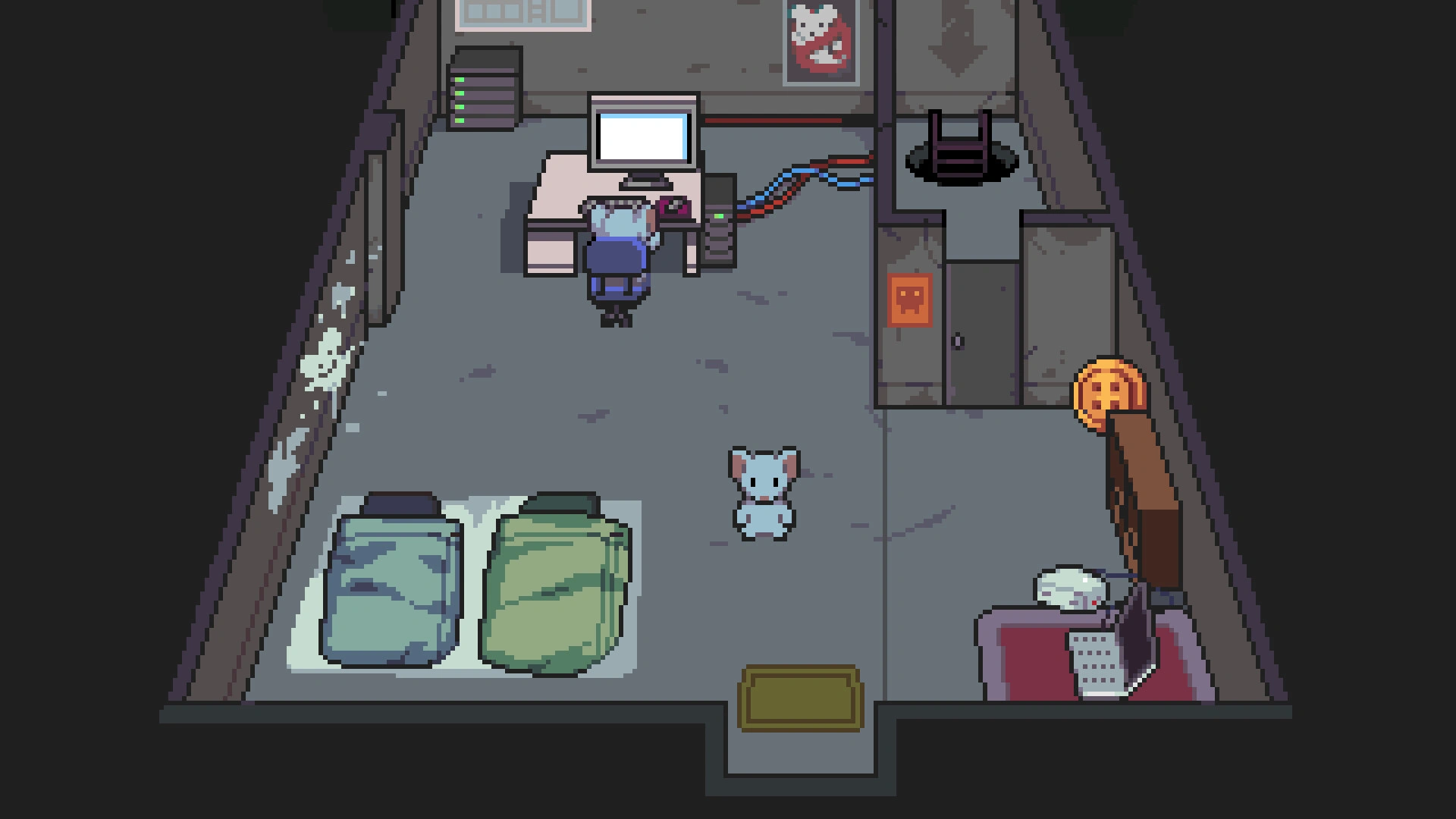
The apartment structure helps Mousebusters stay focused. Chief points the player toward a tenant, the player enters through the vents, and the room slowly reveals what has gone wrong. A homesick resident is reached through an improvised bowl of ramen.
Another scenario turns the building’s domestic space into a stealth route around a cranky pet cat. These are small cases, closer to emotional sketches than full character arcs, yet the best ones leave a mark because the game notices ordinary pain: loneliness in a new place, frustration with oneself, the kind of sadness that turns clutter into evidence.
The first half does feel thin in places. Some residents are introduced, diagnosed, and helped so quickly that their problems can feel like a checklist. Mousebusters improves once those separate cases begin to speak to one another, especially near the final hour, where the game’s comic surface gives way to a warmer and sadder sense of why Chief’s mission matters. For a game this short, that late emotional pull is important. It gives the earlier apartment visits weight they did not always have in the moment.
Point-and-Click Lite, With Strong Scale Play
Mechanically, Mousebusters sits in a familiar pocket for cozy adventure games: exploration, object interaction, light puzzles, then a shift into a mini-game or combat encounter. Its closest relatives are not classic point-and-click adventures with dense inventory logic, but shorter narrative indies that use puzzle structure to guide the player through character stories. In that comparison, Mousebusters is charming and readable. It is also very soft.
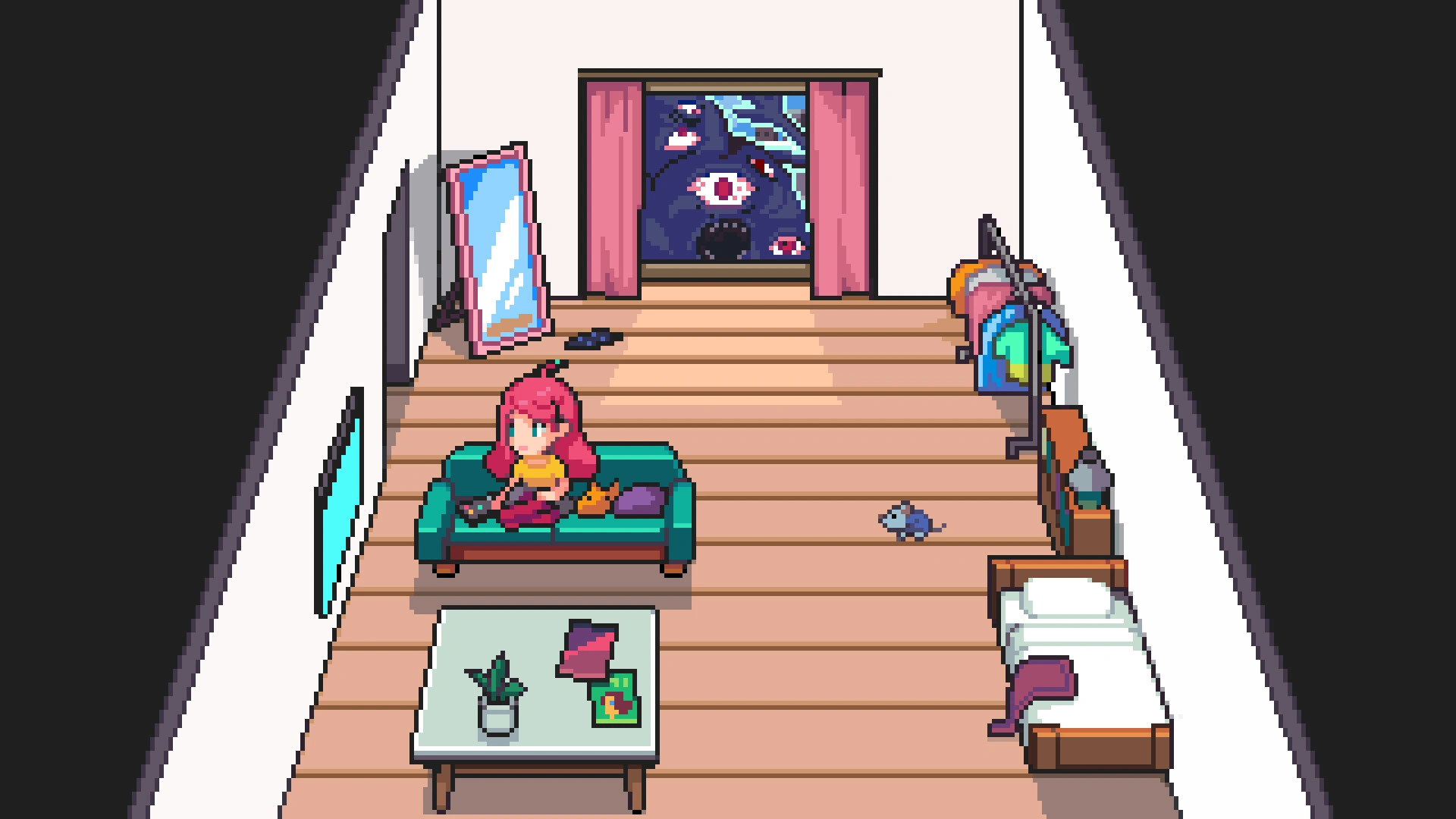
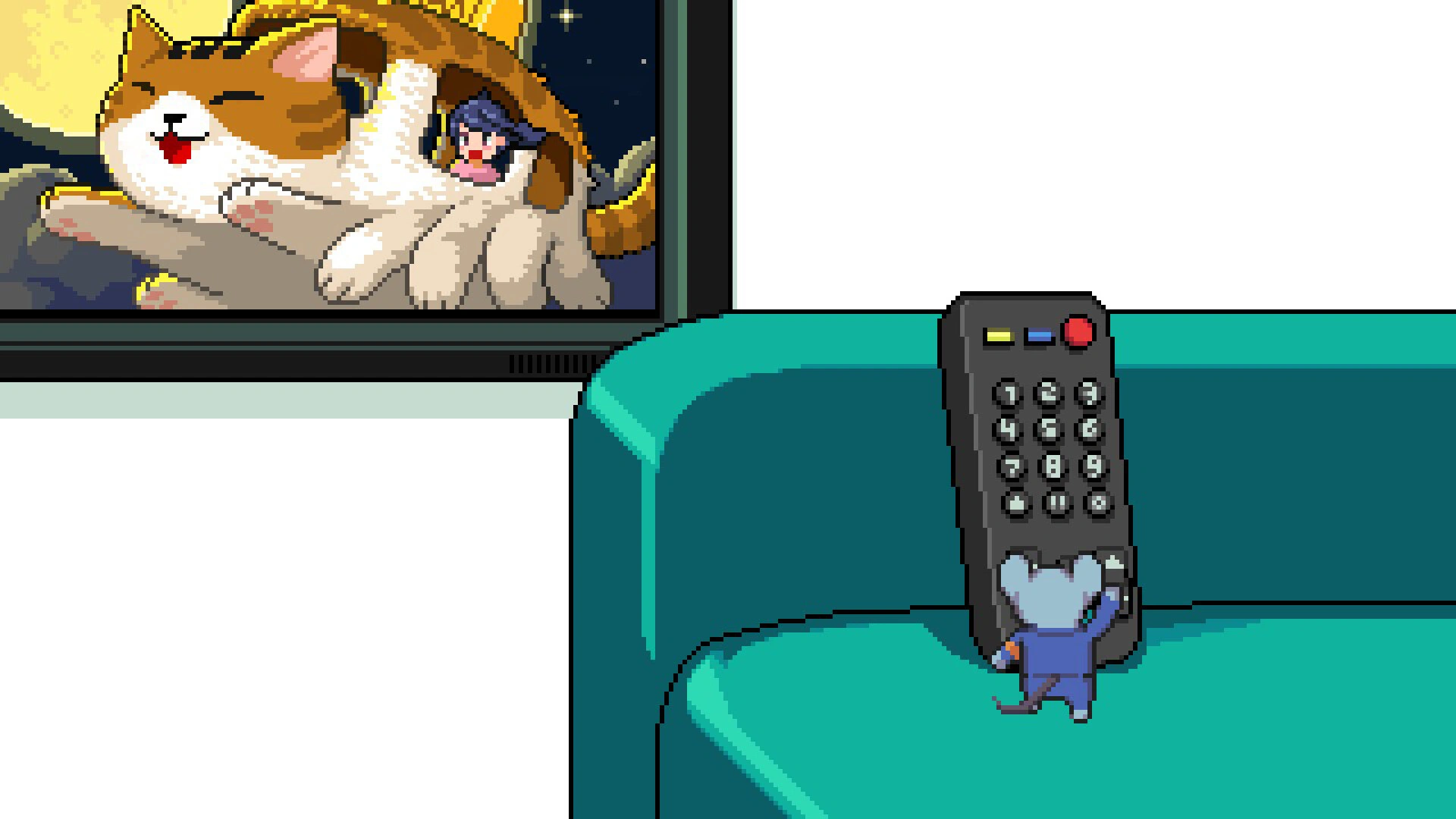
The best design idea is the mouse-scale perspective. Moving through air vents turns the building into a hidden map beneath human routines. Rooms can be shown from a normal human angle, with the mouse sprite scurrying across a huge space, then reframed closer to the floor so furniture and appliances feel enormous. The pixel art does a lot with that shift. A room is not just a room once a table leg looks like architecture.
The actual puzzle work is much simpler. Most progress comes from examining highlighted objects, following clear clues, and triggering the next event. There is little of the old adventure-game pleasure of combining strange items or solving a problem from an unexpected angle.
The ramen sequence is cute because it ties an action to a tenant’s homesickness, not because the steps are demanding. The cat sequence works through tone and timing rather than deep stealth rules. That design keeps the game breezy, which fits its length, yet it also caps how satisfying the room investigations can become.
The extra mini-games help. The rhythm-game parody and arcade target practice give the building a little recreational life outside the main exorcisms. They are slight, but they match the game’s personality: playful, compact, and aware that a three-to-five-hour adventure needs texture.
Ghost Fights With Little Bite
Once a ghost appears, Mousebusters changes into a light shooting encounter. The player aims a reticule at weak points, fires the Mousebuster weapon, waits through a three-shot recharge, and dodges incoming attacks. Each spirit has its own gimmick or pattern, and later fights ask for cleaner timing than the earliest ones. Story Mode softens the whole system by giving the player extra health and weaker enemies, while Normal Mode offers enough movement and reloading pressure to keep the screen active.
The issue is that the combat rarely becomes tense. The three-shot limit is a smart idea on paper because it asks the player to pick shots rather than mash through every weak point. In practice, the fights often feel too forgiving, especially for anyone used to arcade shooters or action-heavy indies. The ghosts look lively, their patterns change, and the interface is clear, but the encounters usually pass before the mechanics can bite.
That weakness matters less because Mousebusters is not selling itself as a demanding action game. Its success comes from the match between its small scale and its emotional intent. The building is easy to read, the characters arrive quickly, Chief keeps the player company, and the short runtime prevents the simple puzzles and soft combat from overstaying their welcome.
Among cozy narrative adventures, it is modest rather than deep, but its best cases show why Odencat’s formula still works: a strange little premise, a few good jokes, and then, when the player has relaxed, a quiet emotional jab from a mouse with a ghost-zapper.
The Review
Mousebusters
Mousebusters works best when it treats ghost hunting as a way to read people’s rooms, regrets, and tiny daily frustrations. Chief’s commentary, the mouse-scale apartment design, and the late emotional payoff give this cozy adventure real personality. The puzzles rarely ask much, and the ghost fights are too gentle to leave a strong mechanical mark, yet the short runtime keeps those limits manageable. It is slight, sweet, and sharper in feeling than in challenge.
PROS
- Charming Chief dialogue
- Strong mouse-scale perspective
- Warm tenant stories
- Fun mini-game variety
- Compact runtime
CONS
- Very light puzzles
- Soft ghost battles
- Thin early character sketches
- Limited mechanical depth







