
























![Kingdom Hearts Collection [I-III] Review](https://gazettely.com/wp-content/uploads/2026/10/Kingdom-Hearts-Collection-I-III-1-360x180.webp "Kingdom Hearts Collection [I-III] Review: KHII Holds Steady as Newer Entries Fluctuate 37")



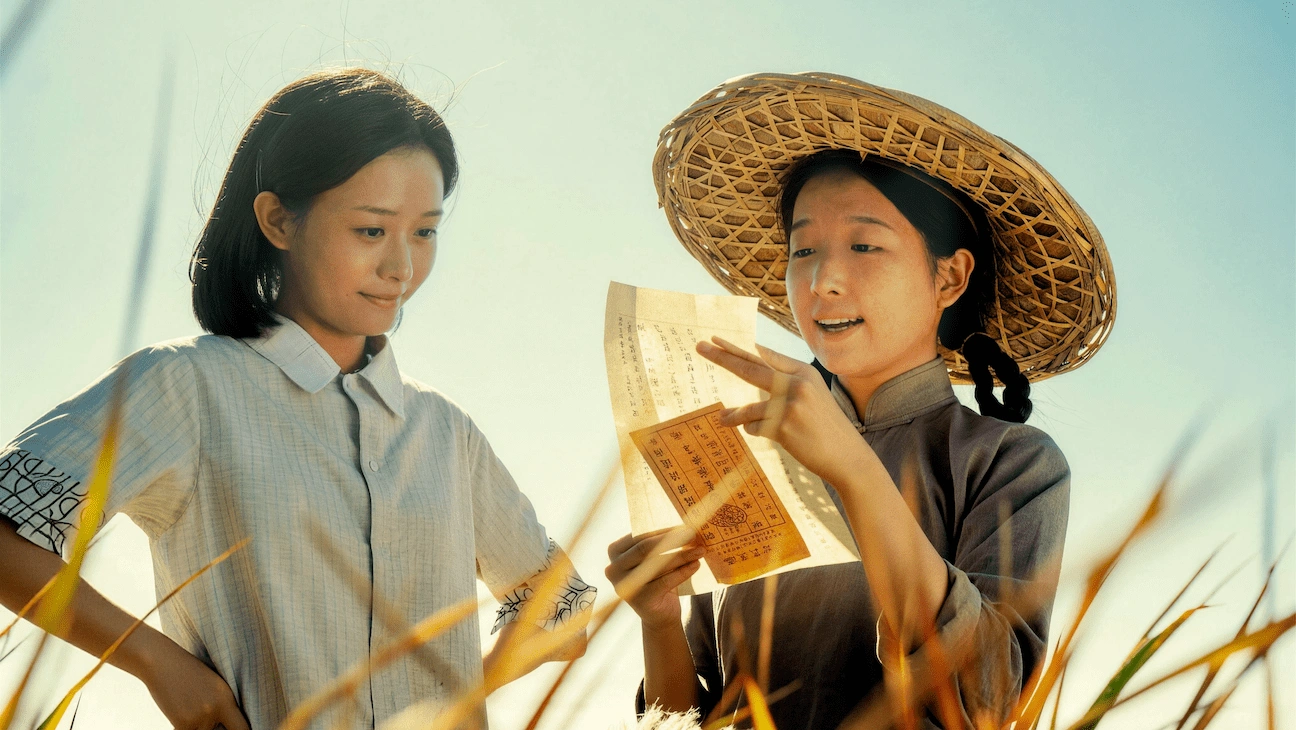

A letter meant to cross an ocean becomes a kind of ghost in Lan Hongchun’s Teochew-language family drama, carrying love, money, and a lie long after the man who signed it is gone. That is the strongest thing Dear You understands: memory is rarely stored cleanly. It is folded, translated, delayed, misread, and sometimes protected by people who had no right to protect it.
The present-day hook has a sharp, almost comic greed to it. Hiou-ui, broke and cornered by debt, rummages through his grandmother Sogriu’s attic during her 88th birthday celebration and finds a letter from his long-absent grandfather, Den Bhagseng. He thinks he has discovered a path to money.
Den, according to family legend, fled Shantou, settled in Thailand, built a second life with Zia Lamgi, and left his first wife and children behind. Hiou-ui goes to Bangkok expecting inheritance drama. What he finds is stranger and sadder: Den died in 1960, long before the letters and support stopped reaching Sogriu.
That discovery gives Dear You its emotional engine. The film keeps pulling the viewer backward through letters, remittances, family photographs, and half-understood stories. The mystery is never about a hidden fortune. It is about who kept love moving after death interrupted it.
Lamgi Holds the Frame
The film may begin with Hiou-ui’s search, but its emotional map belongs to Lamgi. Li Sitong plays her with a stillness that feels lived-in rather than performed. In her early scenes at the cramped Bangkok hostel she runs with her father, Lamgi has the guarded look of someone who has already decided softness is too expensive. Her refusal of suitors, especially her line about feeling secure relying on herself, is not played as modern speech dropped into a period setting. It feels like a private rule she built for survival.
That makes her bond with Den more affecting. He arrives as a rough, tired migrant worker, pulling a rickshaw, saving tiny amounts, and trying to send money back to Sogriu in China. He cannot write the feelings he carries, so Lamgi becomes the hand that gives them shape. The scenes where she helps him put longing into words are gentle without being weightless. You can feel the distance between Den and Sogriu shrinking for a moment, then widening again the second the paper leaves the room.
The remittance office scene is the film’s best single expression of what qiaopi letters meant. Lamgi watches men turn wages into envelopes and homesickness into dictated sentences. The film does not need anyone to explain the system there. The bodies in the room do it: workers leaning forward, clerks listening, names and places treated with care because a mistake could wound someone across the sea.
After Den’s death, Lamgi’s choice to keep sending letters and money in his name becomes the film’s hardest emotional knot. The movie wants us to see grace. It is there, certainly, in the way she protects Sogriu’s family from collapse. Yet there is something troubling in the act too. Sogriu is allowed to hate a man who is already gone, then denied the truth that might have changed the shape of that hatred. The film is moving because of Lamgi’s sacrifice, and uneasy because that sacrifice becomes a life built around someone else’s voice.
The Women Across the Sea
Sogriu’s side of the story gives the film its ache. Wang Xiaohui’s younger Sogriu is introduced through the fragile warmth of correspondence, where each letter from Den becomes proof that the marriage still exists. Later, Wu Shaoqing’s elderly Sogriu carries the bitterness of someone who spent decades with a wound she believed she understood. The photograph of Den with Lamgi and children freezes the past into betrayal. From that point, her anger becomes a form of order.
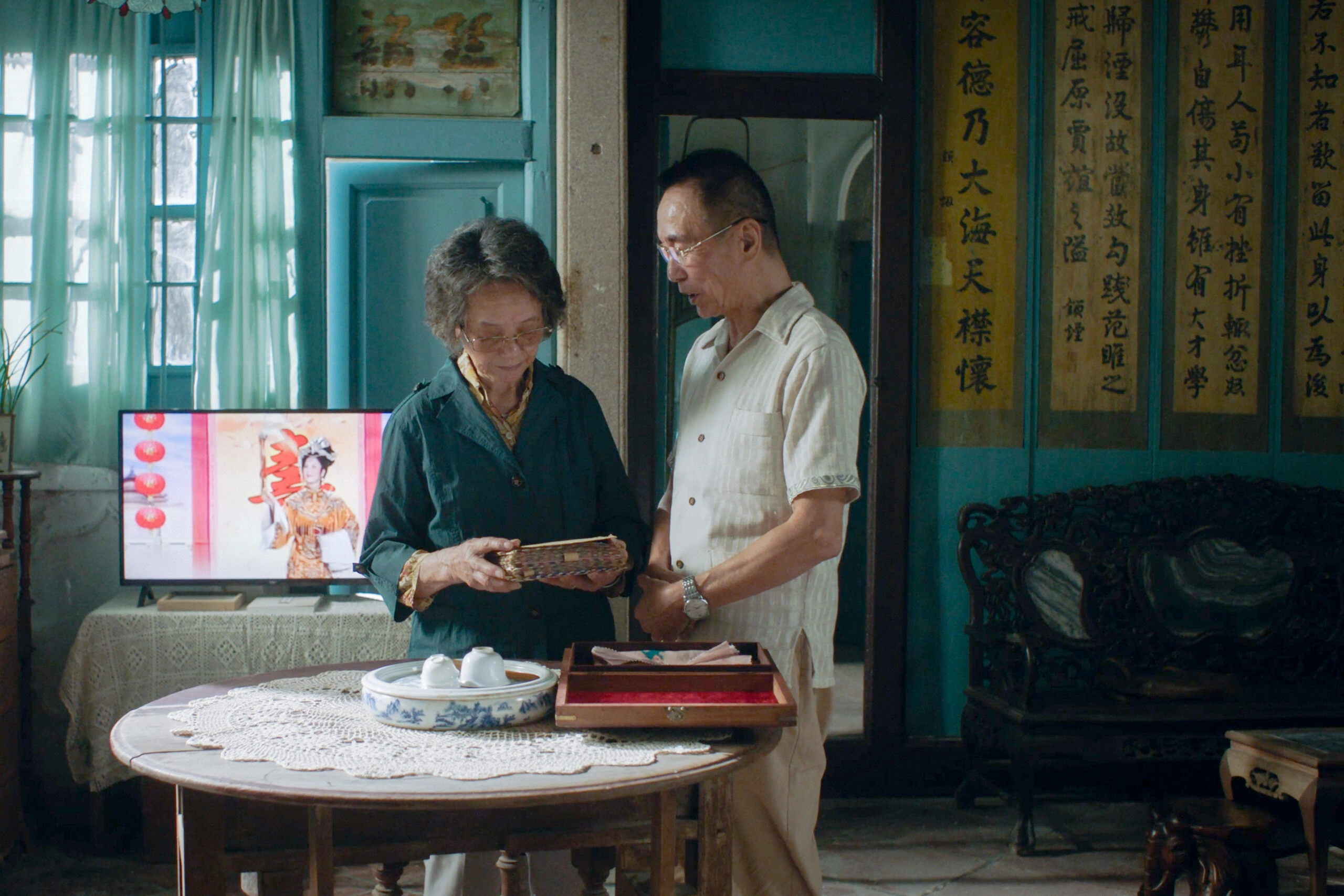
The strongest material in Dear You comes from placing Sogriu and Lamgi in relation to each other without letting them share space for most of the film. One woman raises a family with resentment as fuel. The other sends support from Bangkok, preserves Den’s words, and slowly gives up parts of her own future. Their connection is intimate and false at once, which is why the final meeting between elderly Sogriu and elderly Lamgi should be devastating.
It lands softer than it should. Usha Seamkhum’s presence gives older Lamgi a quiet dignity, but the scene does not fully release the decades sitting between the two women. The film has spent so much time building letters into emotional architecture that their face-to-face encounter feels underwritten. A silence can say plenty. This silence needed sharper edges.
Warmth, Memory, and Melodrama
Lan’s most convincing craft choice is the film’s local texture. The regional Teochew dialogue matters because it changes the emotional temperature of every exchange. Family grievances, jokes, scoldings, and love letters all carry the sound of a specific place. The mostly non-professional cast helps too. Some line readings are rough, but many faces feel right for the spaces they occupy: the hostel, the Shantou home, the remittance office, the noisy family gathering around Sogriu.
Hai Tao’s warm cinematography and the mid-century production design give Bangkok’s Chinatown a tactile quality. Den’s rickshaw work, the clandestine Chinese language lessons for children, Lamgi’s crowded hostel, and the careful handling of envelopes all make history feel physical. The comedy also helps the film breathe. Lamgi’s father and his romantic subplot bring a looseness the story needs, and Zeghua’s sharp responses to Hiou-ui’s money-minded arrogance cut through the sentiment with welcome bite.
The problems arrive when the film stops trusting those textures. Li Yihan, Wu Zihua, and Yang Leng’s score presses hard on scenes already full of loss, turning some emotional beats syrupy. The moral world also narrows too often. Teochew solidarity is treated with deep tenderness, yet Indian residents and Thai police are flattened into threat figures. For a film so alert to one community’s pain, that lack of curiosity around outsiders feels like a real blind spot.
Still, when Dear You lets a letter sit on a table, or watches Lamgi listen before writing someone else’s heart onto paper, it finds something tender and complicated. The film understands how love can survive through routine: money sent, names remembered, envelopes sealed, truths postponed until they have grown too heavy to carry cleanly.
The Chinese family drama Dear You (originally titled Gei A Ma De Qing Shu) premiered in China on April 30, 2026, before embarking on its international theatrical rollout across select global markets on June 18, 2026. Filmed primarily in the regional Teochew dialect, the story follows a young man who travels to Thailand in search of his long-lost, wealthy grandfather, only to accidentally uncover a bittersweet, half-century-old secret romance involving his grandmother’s past. Following an exceptionally strong audience response during its early summer run, cinema operators like Golden Village have added extra screenings throughout late June 2026 for fans wanting to catch the box office sleeper hit on the big screen.
Full Credits
Title: Dear You
Distributor: Damai Entertainment, Clover Films, CMC Pictures
Release date: April 30, 2026
Rating: PG
Running time: 118 minutes
Director: Lan Hongchun
Writers: Lan Hongchun, Leng Yang, Xuanxuan Zheng, Liyun Zhu
Producers and Executive Producers: Shenzhen Lichun Pictures
Cast: Li Sitong, Wang Yantong, Wu Shaoqing, Zheng Runqi, Wang Xiaohui, Zhao Shuguang, Li Deru, Li Shuhao, Usha Seamkhum
Director of Photography (Cinematographer): Tao Hai
Editors: Lan Hongchun, Dong Peng
Composer: Yihan Li, Zehua Wu, Leng Yang
The Review
Dear You
Dear You is most powerful when it treats letters as living objects, carrying love, money, guilt, and silence across decades. Its Teochew specificity, Li Sitong’s quiet force, and the remittance scenes carry real feeling. The film loses some clarity when its score pushes tears and when its moral frame shrinks outsiders into threats. Lamgi’s sacrifice still lingers, partly because the movie sees its grace and only half-sees its harm.
PROS
- Li Sitong’s restrained performance
- Rich Teochew cultural texture
- Moving qiaopi letter scenes
- Warm mid-century production design
- Gentle comic relief
CONS
- Heavy-handed score
- Underwritten final meeting
- Narrow view of outsiders
- Uneasy moral framing