












A crab in a London high-rise should not feel like a labor dispute, yet that is the first sharp joke in The Peril At Pincer Point. Jim Baitte wakes to screaming, finds the creature loose in his flat, receives a strange pinch, and carries the mark like an invoice from a world he has not yet agreed to enter. The image is absurd, tactile, and cleanly symbolic: something ancient has invaded the sterile apartment of a modern creative worker, and it has come with claws.
Jake Kuhn and Noah Stratton-Twine’s feature debut turns that pinch into a whole cinematic weather system. Jim, played by Jack Redmayne, is a young sound designer working under P.W. Griffin, a tyrannical B-movie director performed by Os Leanse with the frothing certainty of a man who mistakes volume for genius.
Jim has committed the professional sin of recycling sound files from an earlier production called Frogopolis, so Griffin dispatches him to the remote island of Pincer Point to find a sound “unprecedented in the history of cinema.” It is a ridiculous demand. That is also why it sounds familiar.
The Folklore of Professional Panic
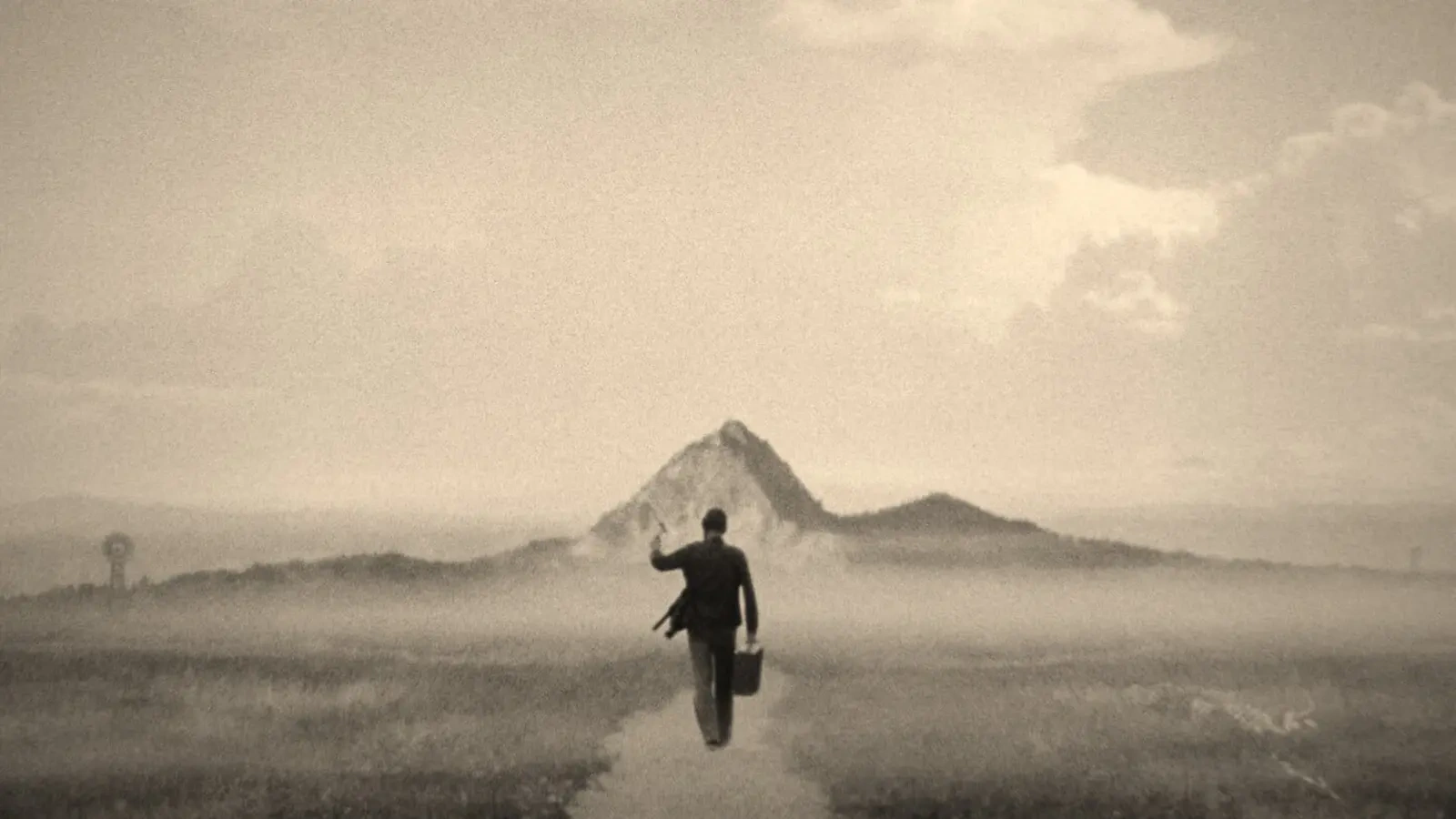
Jim’s passage from London to Pincer Point has the logic of a dream built out of old studio scraps. He moves through Cosgrove station, past painted mountains, across water with a ferryman who seems born to deliver warnings nobody will heed. By the time he reaches The Fat Plankton, the island pub, the film has already established its method: make the artificial look weathered, make the silly feel ritualistic, and let every joke lean slightly toward dread.
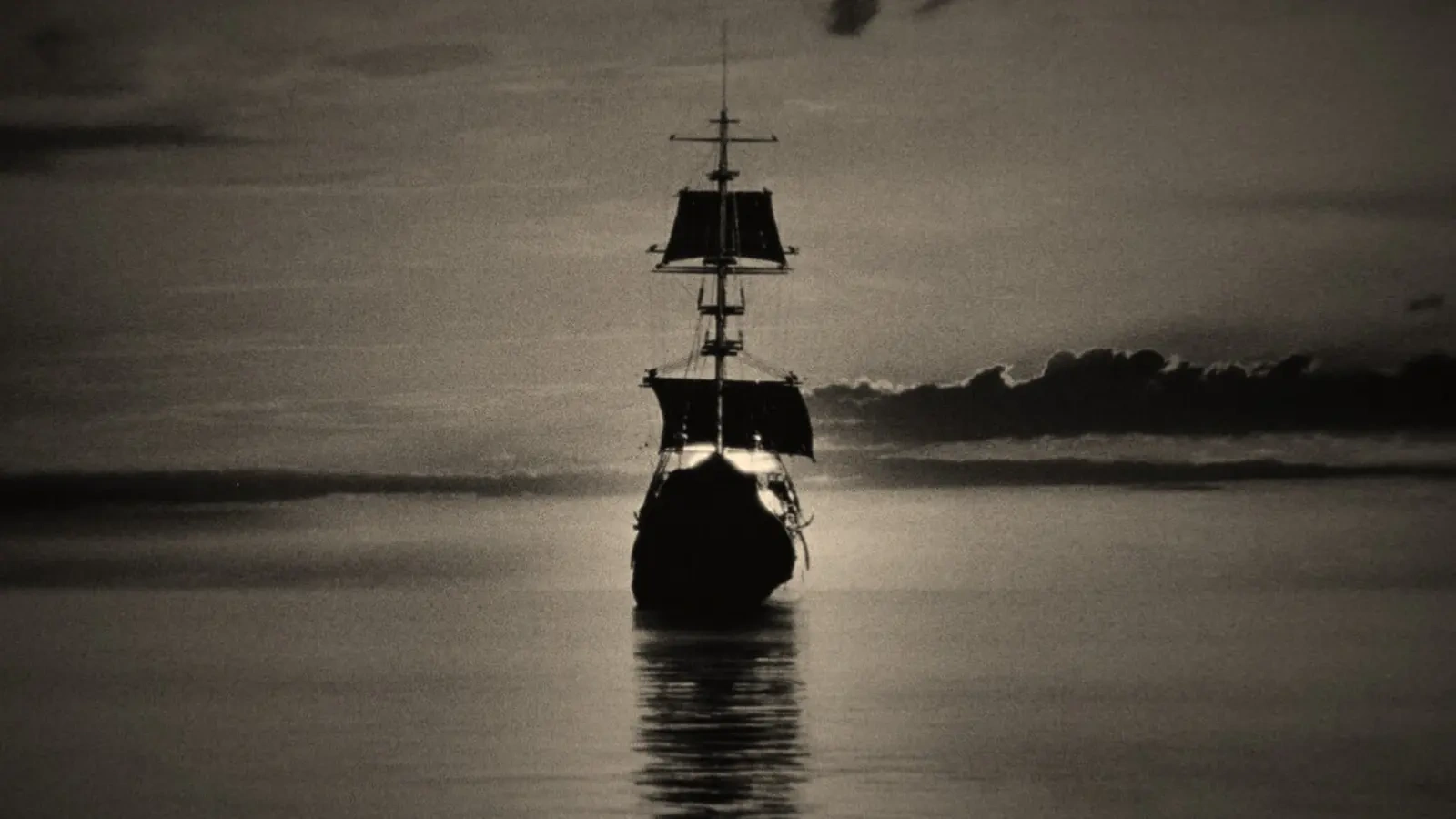
The islanders tell Jim about a ghostly sea captain who steals the souls of young people for his spectral crew. Marina, the woman Griffin wants recorded, has disappeared. Her brother Hollis, played by Stratton-Twine, treats the situation with an almost casual resignation, and the pub regulars speak of the legend with the weary rhythm of local history. Jim, naturally, keeps working.
Also Read




That “naturally” is the film’s cruelest comic device. Jim is not brave; he is employable. He ignores missing women, ghost ships, crab visions, and his own slow transformation into someone who can almost understand shellfish chatter because the alternative is professional failure.
The joke repeats, and repetition does wear some of the edge down across the film’s 83 minutes. Once Jim has ignored the third obvious warning, the fourth lands with less surprise. Yet the rhythm still has bite, since the film understands the cultural machinery behind his stupidity. Ambition is too generous a word for it. This is anxiety wearing a work lanyard.
A Fool, an Auteur, and a Missing Woman
Redmayne makes Jim endearingly vacant without turning him into a cartoon. His best moments come in the small pauses after someone tells him something plainly horrifying. The eyes process the information, the face almost reacts, then the job returns to the front of his mind. He is ridiculous because he has been trained to be useful.
Leanse’s Griffin is broader, by design. He appears as the abusive auteur distilled into a theatrical toxin, a man whose praise is just another instrument of control. His phone-call encouragement, “You’re on the edge of commitment. Dive in,” is funny because it has the shape of inspiration and the function of a shove. The film’s satire is sharpest here. Griffin does not need to travel to the cursed island. He can harvest sacrifice remotely.
Hollis gives the island scenes a looser texture. His exchanges with Jim have the shaggy drift of improvised comedy, sometimes to the film’s benefit, sometimes to its drag. The looseness helps the place feel socially unstable, a community where folklore has replaced civic order. It also exposes the slightness of the plot during dialogue-heavy stretches.
Marina’s absence matters. She is less a developed figure than a gravitational force, which could have made her feel like a mere plot object. The film partly avoids that by tying her disappearance to the island’s pattern of consumed youth. Jim has arrived to record a voice, yet what he finds is the silence left by a person already taken by the story everyone else has accepted.
Old Images, New Exploitation
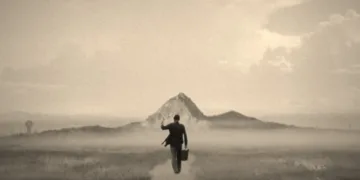
Murray Zev Cohen’s boxy monochrome cinematography gives The Peril At Pincer Point its most durable pleasure. London, the pub, the coastline, and the theatrical travel route look like fragments from an old reel recovered from damp storage. The images carry scratches, shadows, and a faintly handmade instability. Painted backdrops, crab imagery, stiff interiors, and coastal gloom create a world that feels assembled from folk horror, silent comedy, and bargain-bin monster cinema.
The style does real work. Jim belongs to the present, with his industry insecurity and replaceable-worker dread, yet the island traps him inside a much older cinematic skin. The clash turns the film into a sly cultural object: a modern gig-economy story disguised as a creaky ghost tale. One economy has emails and phone calls. The other has curses and ferrymen. Both ask for a soul.
For a film about sound, the sonic craft refuses easy spectacle. Joseph Field Eccles and Nick Smyth build the island through creaks, murmurs, fragments, and textures that seem half-recorded, half-remembered. The soundscape becomes Jim’s temptation. Every odd noise promises artistic salvation, and each promise pulls him farther from basic self-preservation. Stratton-Twine’s editing keeps the film moving with enough briskness that the slight structure rarely sinks, though a few conversational detours loosen the pressure.
The most elegant idea in the film is its double villainy. The ghost captain steals young souls for his ship. Griffin steals them for cinema. One belongs to folklore, the other to the creative industries, and the film sees no great moral distance between them. That is where its absurdism cuts deepest: beneath the crab jokes and spectral nonsense sits a clear view of artistic labor as a ritual of extraction, dressed up as opportunity.
The surrealist British independent film The Peril at Pincer Point celebrated its world premiere on March 14, 2026, at the SXSW Film Festival, where it was honored with the prestigious NEON Auteur Award for Uncompromising Visionary. The story centers on an inept, struggling sound designer who travels to a mysterious and remote island to capture natural audio for a horror movie, only to find himself deeply entangled in an ominous local fisherman’s fable. Audiences can currently view this monochrome microbudget comedy-horror as it makes its rounds across the international film festival circuit, with featured summer screenings at major events like the Sydney Film Festival and the Woods Hole Film Festival.
Where to Watch The Peril At Pincer Point (2026) Online
Full Credits
Title: The Peril at Pincer Point
Distributor: Gittes-Cross Productions, NEON (Festival Distribution)
Release date: March 14, 2026
Rating: Unclassified 18+
Running time: 83 minutes
Director: Noah Stratton-Twine, Jake Kuhn
Writers: Noah Stratton-Twine, Jake Kuhn
Producers and Executive Producers: Noah Stratton-Twine, Jake Kuhn, Igor Engler, Caroline Burton
Cast: Jack Redmayne, Alyth Ross, Os Leanse, Jason Hogan, Heidi Parsons, Dashiell Upton, Isobel Laidler, Mike Mackenzie, Mat Wright
Director of Photography (Cinematographer): Jake Kuhn
Editors: Noah Stratton-Twine
Composer: TBA
The Review
The Peril At Pincer Point
The Peril At Pincer Point turns a ridiculous crab bite into a sharp satire of artistic extraction. Its plot is thin, and its improvised comedy circles the same gag too long, yet the handmade monochrome imagery, haunted soundscape, and cruel portrait of creative labor give the film real sting. The ghost captain steals souls for a ship; P.W. Griffin steals them for cinema. The joke is absurd. The wound is not.
PROS
- Striking monochrome imagery
- Sharp creative-labor satire
- Strong handmade folk-horror texture
- Jack Redmayne’s comic blankness
- Rich sound design
CONS
- Repetitive central joke
- Thin narrative spine
- Some loose improvised exchanges
- Marina feels underwritten