

























![Kingdom Hearts Collection [I-III] Review](https://gazettely.com/wp-content/uploads/2026/10/Kingdom-Hearts-Collection-I-III-1-360x180.webp "Kingdom Hearts Collection [I-III] Review: KHII Holds Steady as Newer Entries Fluctuate 37")



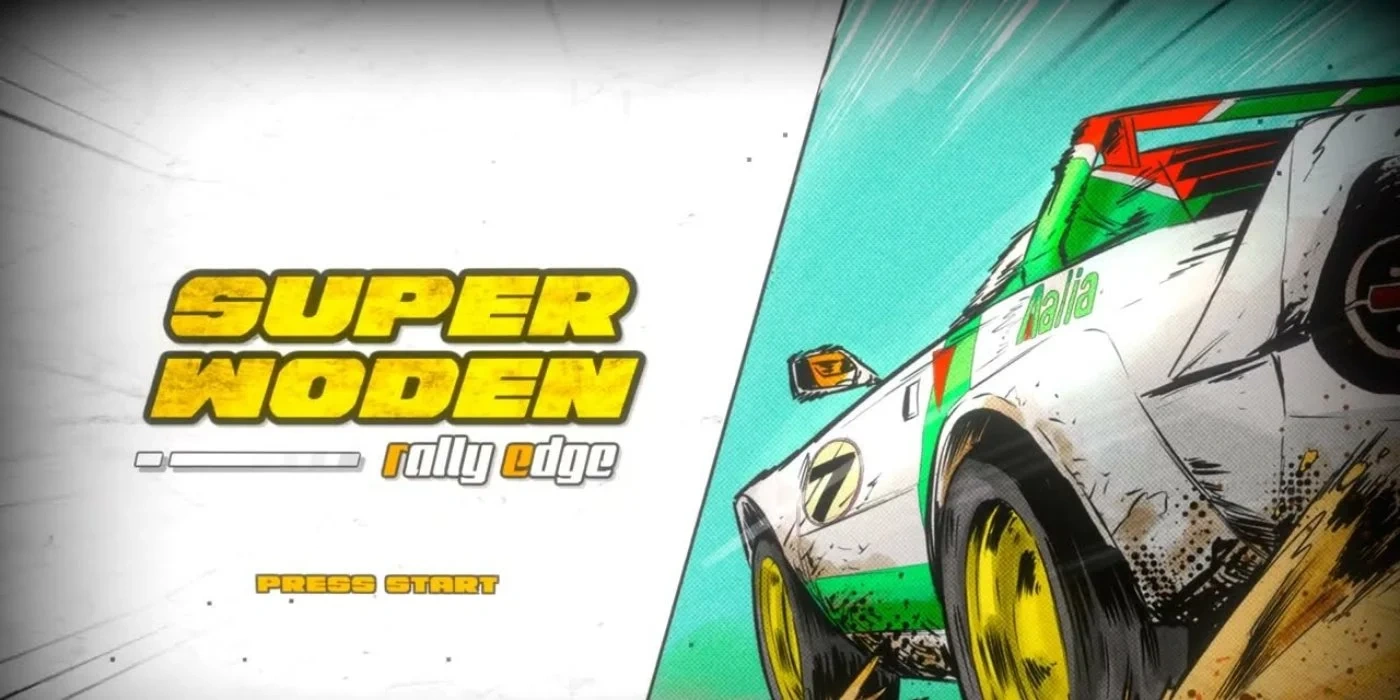

One tyre in the grass is enough to ruin a run, which tells you almost everything about Super Woden: Rally Edge’s design priorities. This is an arcade rally game with bright colours, fictional cars, and a playful retro shell, but it has very little patience for sloppy driving. The road is the system. Leave it, and the game makes sure you understand the cost.
ViJuDa’s rally-focused spin-off follows Woden GP, Super Woden GP, and Super Woden GP 2, shifting the series from its familiar isometric racing identity into point-to-point stages against the clock. That sounds like a risky move for a series with such a clear visual language, yet Rally Edge keeps the same toy-box warmth while changing the way players read space. It trades circuit bustle for timing, traction, and recovery. The result is compact, generous, and mechanically honest in a way many larger racing games forget to be.
Reading the Road
The camera is the first major system change, and it matters far beyond presentation. Previous Woden games leaned on a top-down or isometric angle. Rally Edge uses a high chase view that sits somewhere between classic arcade rally and a pulled-back diorama. You can lower it for a more contemporary angle or raise it closer to the series’ old perspective, but the best setting gives just enough road ahead to make reaction and anticipation fight for control of your hands.
That design choice becomes sharper because the game does not let a minimap solve the stage for you. You read crests, bends, bridges, roadside barriers, and co-driver calls. On a Japanese downhill route, the road narrows while elevation compresses your reaction time.
Spanish stages lean into hairpins that demand early rotation. The French Alps punish hesitation with icy conditions, tighter margins, and drops that turn every correction into a small negotiation. The late American hill climb changes the rhythm again, asking for sustained nerve rather than quick corner-to-corner improvisation.
The stages look playful, but they are built with intent. Jumps, bridges, weather, lighting, and trackside objects help each route stick in memory. The photo mode is not a side novelty here; it fits a game that clearly loves the shapes, liveries, and mythologies of rally cars, even while filing the serial numbers off.
Controlled Slides
The handling model is where Rally Edge earns its depth. It is approachable on a gamepad, with cars that turn clearly, slide generously, and rarely feel fussy. Underneath that friendliness is a proper layer of behavior to learn. Front-wheel-drive cars push wide until a throttle lift or handbrake input helps the rear rotate.
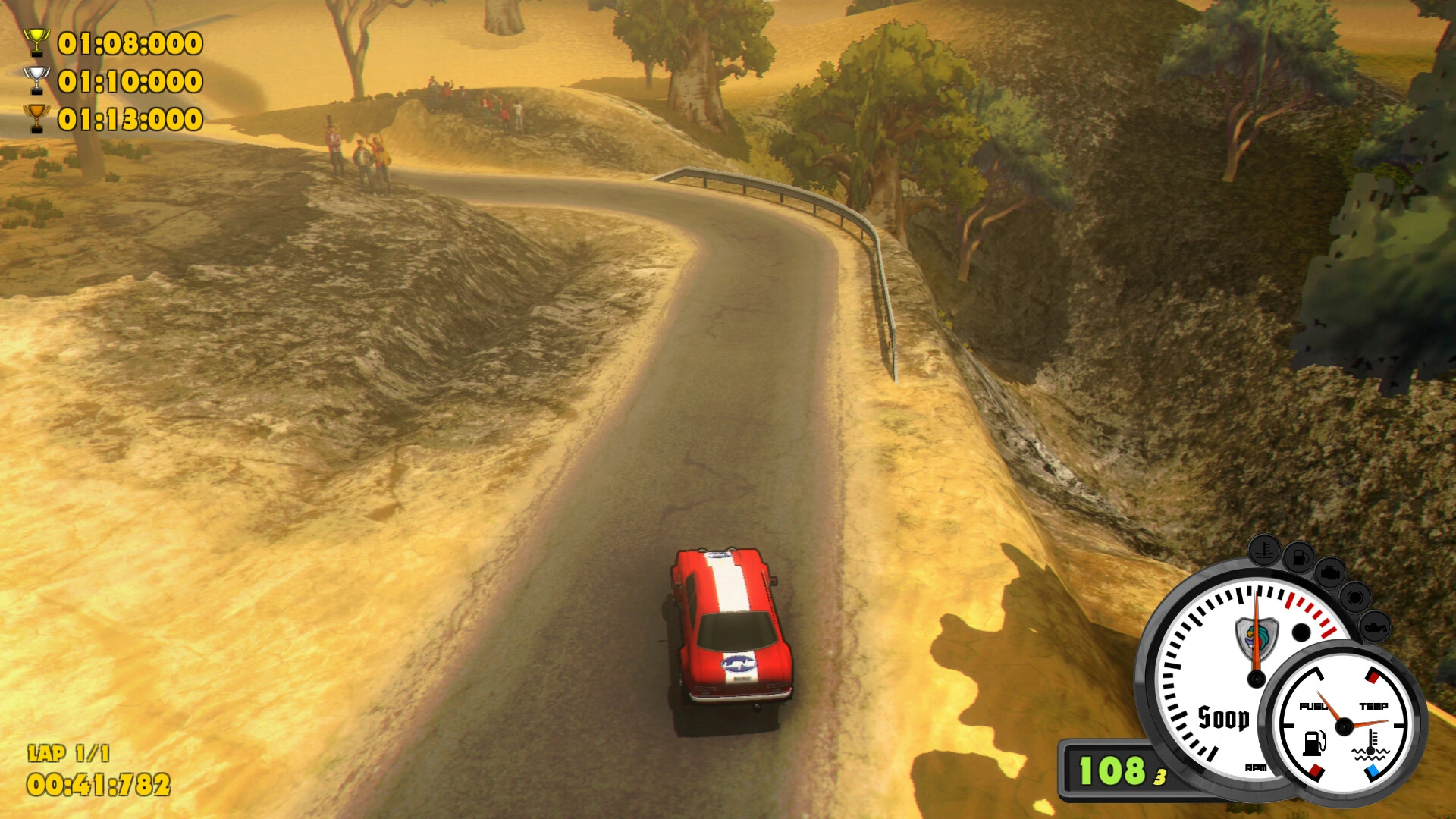
Rear-wheel-drive cars move with a looser tail, though still inside the game’s controlled arcade vocabulary. All-wheel-drive machines become the real test once the higher classes arrive, because the added speed turns every late input into a rescue attempt.
Most corners want some form of four-wheel drift, but the game does not treat every car as the same skin over identical physics. Initiation, hold, and recovery vary enough that buying a new vehicle changes your muscle memory. That matters once upgrades enter the loop.
Brakes, tyres, suspension, transmission tweaks, turbos, and engine improvements all feed back into how confident you feel attacking a stage. A better car is not simply faster; it changes where you can brake, how early you can commit, and how much panic you can survive after a bad entry.
The punishment model can feel severe. Touch the wrong patch outside the road and the car slows like it has driven into wet concrete. Hit a wall on a narrow route and you can bounce into the opposite barrier, then lose a run to an ugly pinball sequence. The collision logic is not elegant, but it teaches the right lesson: clean lines matter. Rally Edge wants rhythm, not heroics.
Progression With Teeth
Career mode gives that driving model a strong reason to keep repeating stages. Events unlock through stars, with better placements earning access to tougher rallies across classes E to A. Cash buys cars and workshop improvements, while prize vehicles from championships and Head 2 Head events keep the garage growing. The structure is simple, almost board-game clean, but the pacing works because new roads and faster machines arrive before routine sets in.
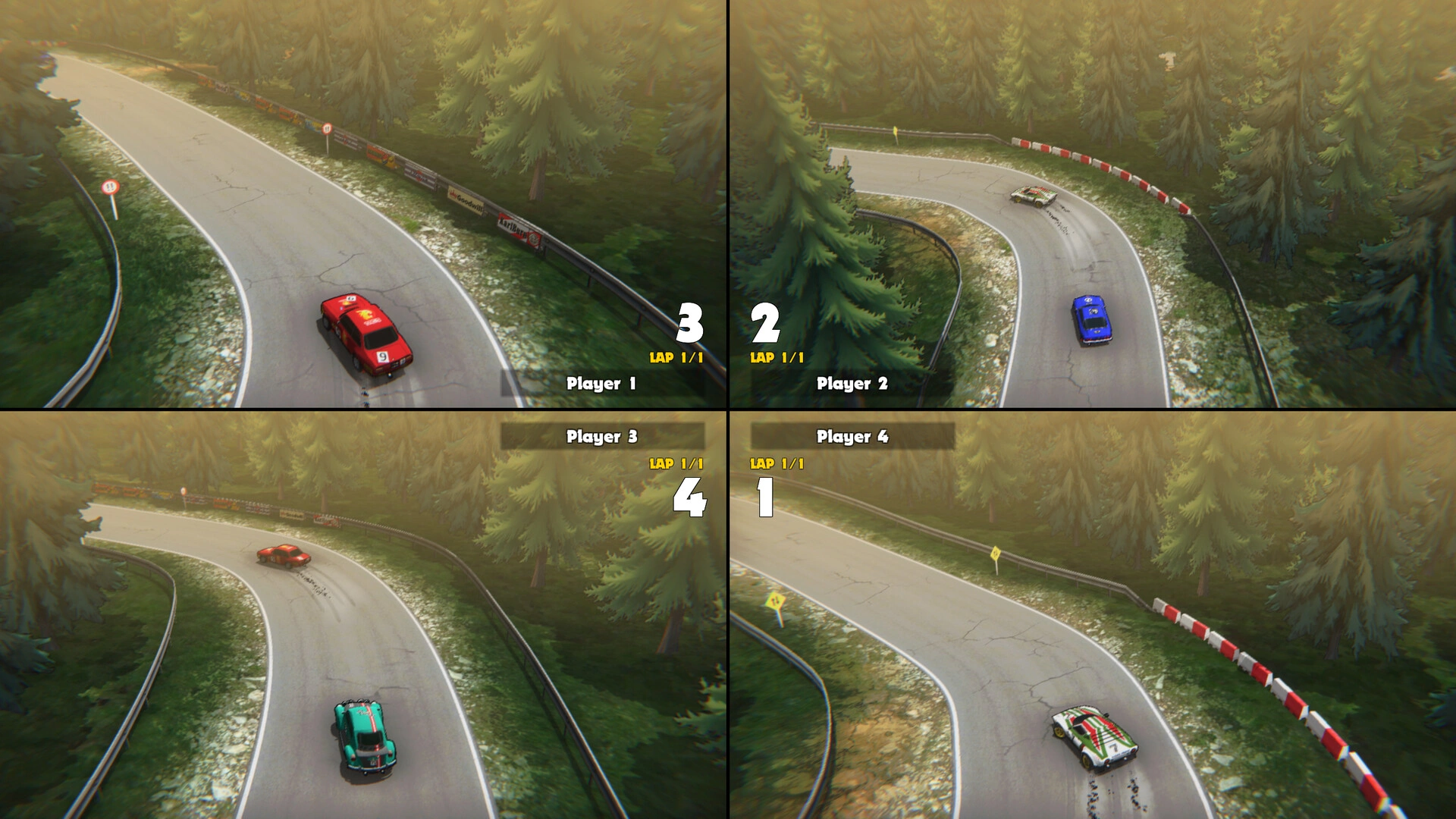
The fictional car list is one of the game’s smartest pleasures. The names are fake, yet the inspirations are obvious enough for rally fans to grin at: Mini-style classics, Abarth-like boxy machines, Impreza and Corolla echoes, Delta Integrale shapes, Escudo-flavored hill climb monsters. You can rename cars and create custom liveries, which turns the garage into a tribute tool without paying for official licenses. That is not a legal workaround masquerading as personality; it is part of the game’s charm.
There is one structural weakness in the class system. Once you own a competitive car in a given class, many events accept it without pushing you to sample the rest of the garage. For a game with over 80 vehicles, that leaves some cars feeling like collectibles rather than meaningful options. Career payouts can also be a little stingy, nudging replays when you need upgrades or a new class entry.
The side modes help. Gymkhana events break the rally cadence with cones, jumps, and tight technical routes, though the cone-heavy tests can become clinical in later tiers. Head 2 Head races add pressure without abandoning the game’s timing-first identity. Arcade checkpoint mode gives the package a Sega Rally pulse. Online leaderboards appearing inside career mode might be the smallest feature with the biggest effect, because a finished stage rarely feels finished once a friend or stranger is a second ahead.
Rally Edge is short enough to clear in a focused weekend, yet its systems keep asking for cleaner hands. A better line through one hairpin can justify another run. So can a new tyre setup, a higher camera angle, or the stubborn belief that the next slide will finally connect.
The Review
Super Woden: Rally Edge
Super Woden: Rally Edge understands that a rally game lives or dies by the loop between mistake, correction, and mastery. Its camera, stage design, upgrade economy, and handling model all feed that loop with impressive clarity. The severe off-road slowdown and occasional pace-note issue can scrape the bumper, and the class system leaves some cars underused, but the core driving is too satisfying to stall. This is solo-built arcade rally with real system depth.
PROS
- Excellent handling feedback
- Smart high-angle camera
- Varied rally stages
- Strong upgrade loop
- Great leaderboard pull
CONS
- Harsh off-road slowdown
- Some pace-note timing issues
- Class rules underuse cars
- Occasional wall-bounce frustration







