
























![Kingdom Hearts Collection [I-III] Review](https://gazettely.com/wp-content/uploads/2026/10/Kingdom-Hearts-Collection-I-III-1-360x180.webp "Kingdom Hearts Collection [I-III] Review: KHII Holds Steady as Newer Entries Fluctuate 37")



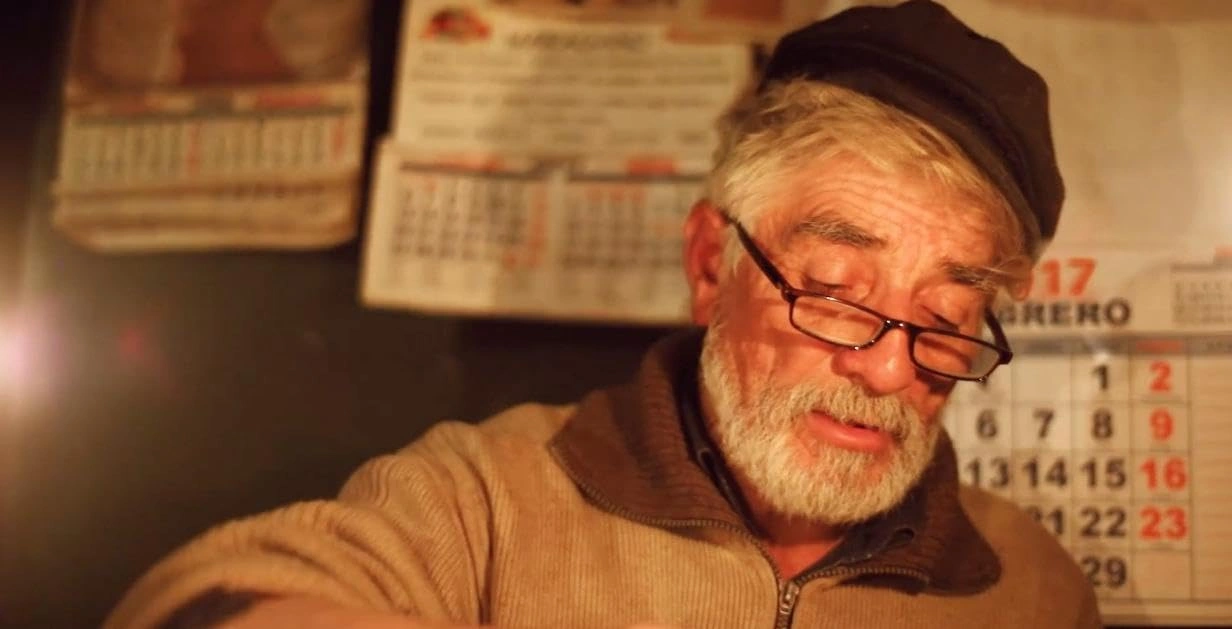

Gold dust looks almost obscene in Toto Gesell’s weathered palm: too small to justify the damage, too bright to dismiss. Alfredo Pourailly De La Plaza’s The Fabulous Gold Harvesting Machine studies that contradiction with unusual patience, following one aging prospector in Chile’s Tierra del Fuego as he keeps working a trade that history has nearly abandoned and his body can barely sustain.
Toto pans by hand, using rubber boots, a shovel, a creek, and a homemade sluice. The method has the purity of ritual and the cruelty of punishment. He bends, digs, wades, sorts, counts. The camera watches his hands with the attention a noir might give to a loaded gun on a table. Every crease has evidence in it. Every movement carries motive.
The film’s central pressure arrives through Jorge, Toto’s son, who decides to build a trommel that could spare his father some of the work. This is where the documentary finds its spine: a son trying to mechanize mercy before time closes the case.
A Body in the Creek
Toto is not framed as a saint of hard labor, which saves the film from becoming rural portraiture with soft lighting and a guilty conscience. He is funny, difficult, proud, evasive, and stubborn in that specialized way older men sometimes call independence. After a cold, Jorge tells him to dress warmer and take medicine. Toto shrugs it off, insisting illness has to bloom and fade. This is folk wisdom until it becomes self-sabotage.
De La Plaza understands that the body tells the truth before language catches up. Toto’s wrinkled hands, scarred skin, and slow return to the creek say more than any speech about hardship could manage. We see him hacking at earth, moving through icy water, and working near collapsing dirt. A pile nearly buries him. Later, a stroke strikes while he is prospecting, and the scene has the blunt terror of a light suddenly cut in a small room.
The film never mocks his resistance to rest. It also refuses to romanticize it. Toto sells small flecks of gold to survive, so stopping work is not a clean moral option. Pride, poverty, habit, and fear are tangled in the same pan. The gold separates. The man does not.
A Son Welds Against Time
Jorge’s trommel gives the documentary a construction plot, and the film uses it well. The machine is simple in purpose: rotate earth, separate material, recover gold with less strain. The making of it is anything but simple. Jorge has limited money, limited time, and no engineer’s ease. He buys parts, hauls materials, cuts metal, welds, tests, adjusts, waits, returns.
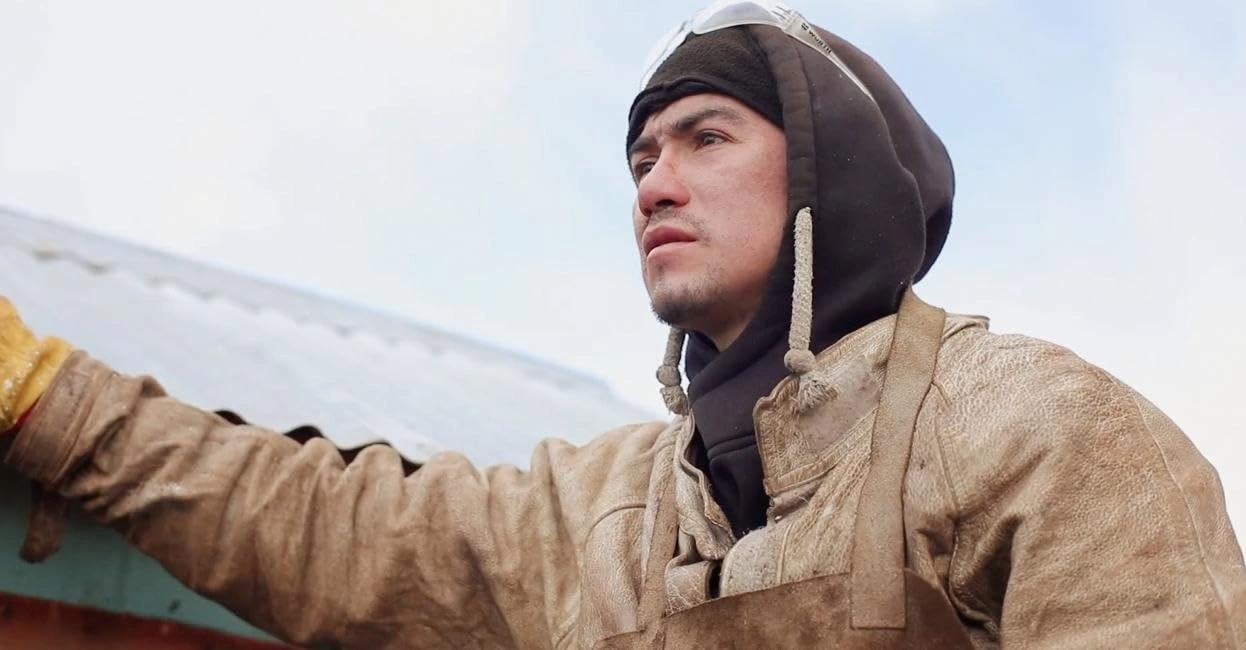
The editing cuts between the slow assembly of the machine and the slow decline of Toto’s health. That parallel structure gives the film its tension. Each unfinished bolt feels like a missed appointment with fate. Each season that passes turns Jorge’s promise into a heavier object.
Their arguments carry the sting of care. Jorge nags about health because panic has to speak somehow. Toto resists because accepting help would mean accepting the obvious: his body is no longer an obedient tool. The film is sharp enough to see both positions. Jorge’s devotion can become pressure. Toto’s independence can become danger. Love, filmed closely enough, often looks like bad negotiation.
When the trommel finally runs, its imperfections matter less than the faces around it. The machine clanks into being as handmade evidence. It is not elegant. It is not finished in any clean dramatic sense. It moves, and for a moment, movement is grace.
The Landscape Watches
Tierra del Fuego is shot as a working force, not scenery. Snowcapped mountains, open grassland, wet earth, sheep herders, flamingos, and wind-carved isolation shape the film’s moral weather. The landscape does not threaten in the usual survival-film manner. It simply remains indifferent. That is harsher.
De La Plaza’s compositions often place human bodies against spaces that dwarf them, then cut back to the intimate scale of diary pages, coffee rituals, gold specks, and tools. The rhythm matters. The wide shots give us fate. The close-ups give us evidence. Somewhere between them, Toto’s life takes shape.
The documentary’s long production span gives it a texture that cannot be faked. Seven years of building, aging, delay, illness, and return settle into the film like silt in water. A shorter shoot might have captured the facts. This one captures erosion.
The most piercing moments are modest: Jorge fighting with an old truck, Toto counting sugar into coffee, a diary entry, a hand hovering over gold dust, a half-built machine waiting for its next day of work. In those images, The Fabulous Gold Harvesting Machine finds its richest vein. Not in the gold. In the cost of reaching for it.
The Fabulous Gold Harvesting Machine premiered at the Hot Docs Canadian International Documentary Festival in May 2024 and recently secured physical and digital distribution through EPF Media. It is currently available for community screenings, library streaming platforms like Docuseek, and select digital premium channels. The documentary tracks an aging gold miner named Toto and his cowboy son Jorge in the brutal environment of Chile’s Tierra del Fuego as Jorge designs and builds a homemade harvesting machine to ease his father’s backbreaking physical labor.
Full Credits
Title: The Fabulous Gold Harvesting Machine
Distributor: EPF Media, Utopia Docs
Release date: May 2, 2024
Running time: 77 minutes
Director: Alfredo Pourailly de la Plaza
Writers: Alfredo Pourailly de la Plaza, Javiera Velozo, Francisco Hervé
Producers and Executive Producers: Francisco Hervé, Annemiek van der Hell, Alfredo Pourailly de la Plaza, Daniela Raviola
Cast: Toto Gesell, Jorge Gesell
Director of Photography (Cinematographer): Alfredo Pourailly de la Plaza
Editors: Javiera Velozo, Alfredo Pourailly de la Plaza, Melisa Miranda
Composer: Karl Heortweard
The Review
The Fabulous Gold Harvesting Machine
The Fabulous Gold Harvesting Machine turns artisanal gold prospecting into a study of labor, aging, and filial duty, shaped by De La Plaza’s patient eye for hands, weather, metal, and time. Its quiet force comes from Jorge’s unfinished machine racing against Toto’s failing body, a structure that gives this observational documentary genuine suspense. Some stretches lean on repetition, but the film’s textures and moral clarity cut deep.
PROS
- Patient observational style
- Strong father-son tension
- Tactile close-ups of labor
- Rich Tierra del Fuego setting
- Editing gives quiet suspense
CONS
- Some repetitive work scenes
- Narrow emotional register
- Trommel delays can drag