









![Kingdom Hearts Collection [I-III] Review](https://gazettely.com/wp-content/uploads/2026/10/Kingdom-Hearts-Collection-I-III-1-360x180.webp "Kingdom Hearts Collection [I-III] Review: KHII Holds Steady as Newer Entries Fluctuate 40")
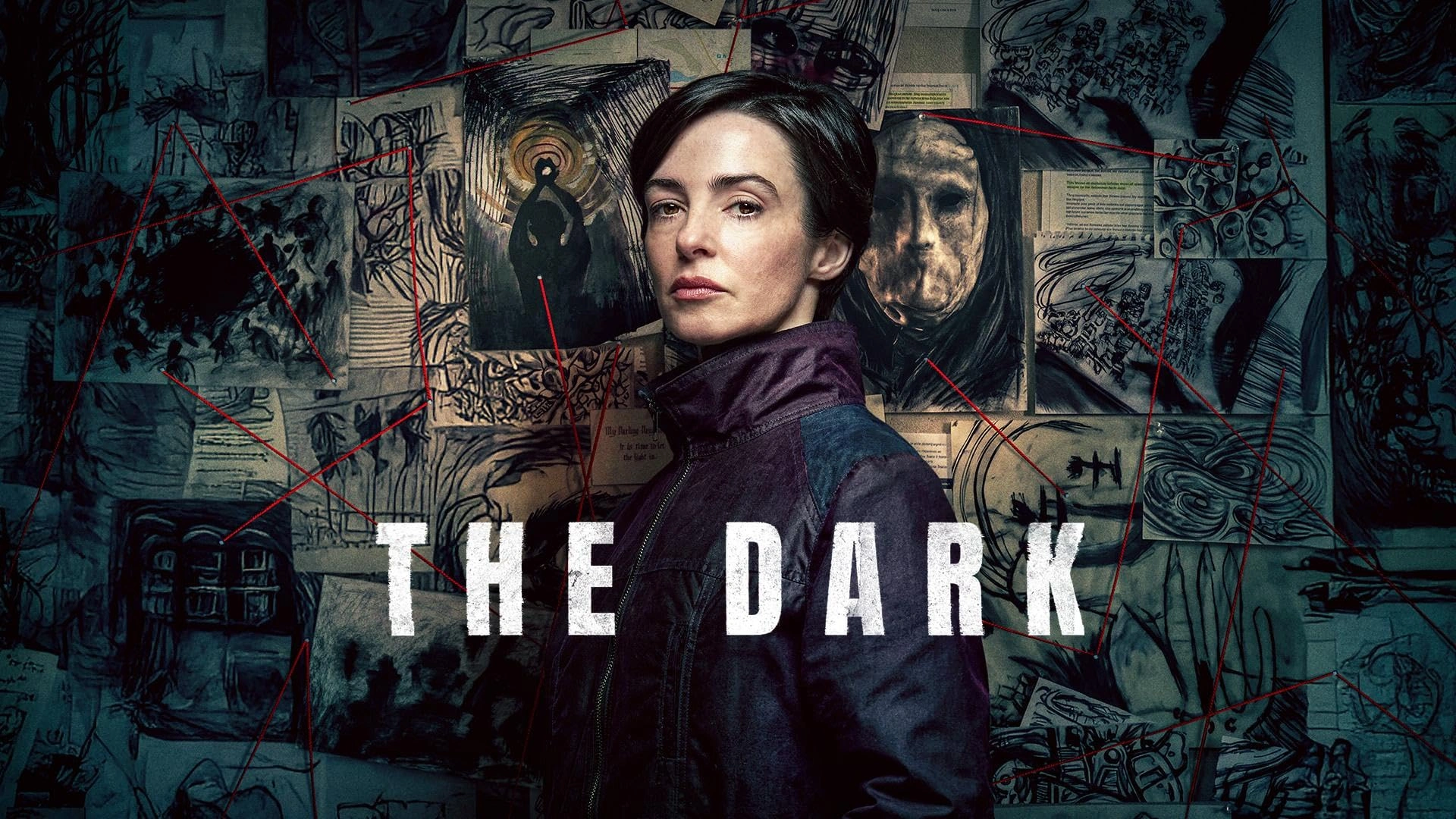

Exposure offers no safety in the Highlands, especially when a corpse has been arranged like a prayer beneath the open sky. The body belongs to seventeen-year-old Jason Morgan, found naked with his arms raised above his head, and the pose carries the awful neatness of a message meant for somebody still alive.
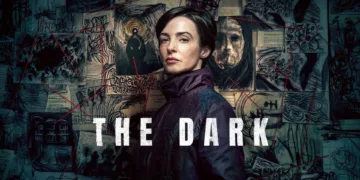
The Dark, ITV’s six-part adaptation of G.R. Halliday’s From the Shadows, places DI Monica Kennedy inside that message. Five years earlier, she investigated the disappearance of Jason’s older brother Nichol and accepted the evidence that he had run away. Jason’s murder turns the old case into a wound with paperwork attached. Soon another body appears, then a pattern: teenage boys contacted through burner phones, drugged, abducted from their beds, and displayed with ritual care.
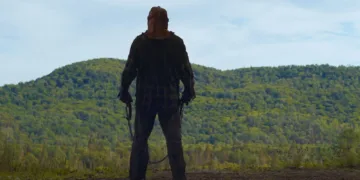
The series occupies a crowded patch of television ground, somewhere between regional police drama, gothic thriller, and slasher film. Its masked killer watches from windows, enters homes without hurry, and leaves black stones inside bodies. Familiar material, certainly. Familiarity is not the same as harmlessness, and The Dark knows how to make recognition feel like dread.
The Killer’s Invitation
The burner phone is the series’ most effective idea because it turns need into an unlocked door. Rob, a hotel waiter close to Jason’s age, finds one taped to the handlebars of his bicycle. Messages appear from the mother who recently abandoned him and his father. She apologises. She wants to meet. Rob smiles with the unprotected relief of somebody receiving the exact lie he needed to hear.
This is where the killer’s method acquires moral shape. He does not simply overpower boys; he studies the absences around them and gives each absence a voice. Loneliness becomes an access code. Call it invitation horror, a form of menace that works because the victim participates in the first step without understanding the transaction. The phone is picked up voluntarily. Everything after that is coercion.
The abductions are staged around paralysis. Victims are drugged, left conscious, and carried away from their own bedrooms while unable to resist. The idea is lurid. The direction often resists gore. A masked face at an upstairs window does greater damage than a bloodier image could. The camera repeatedly adopts the position of an unseen watcher, peering through glass or holding at the edge of a room until ordinary space begins to feel occupied.
At first I read this as efficient slasher grammar borrowed from Halloween: the camera becomes a predator before the killer enters the frame. Then the pattern began to suggest something harsher. Surveillance in The Dark is less about seeing than possessing. The person who watches has already converted another human being into an object of arrangement, one that will later be posed beneath a drone camera like a symbol in a private religion.
The killer remains physically vulnerable, which gives one home invasion unusual volatility. A targeted boy fights back, landing blows and sending the masked figure crashing across furniture. The scene refuses the supernatural patience associated with an unstoppable slasher. This person can stumble. This person can panic. Mortality makes the violence worse, since the monster turns out to be a human being making choices in real time.
Monica Kennedy’s Distance
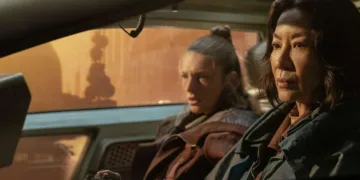
Laura Donnelly plays Monica Kennedy as a woman who has mistaken emotional economy for emotional control. Her first drive with new partner Connor Crawford establishes the arrangement. Crawford supplies charm, local gossip, and the faint air of a man who has never met a silence he could not flirt with. Kennedy answers in clipped phrases, reserving her attention for the case.

The characterization is familiar: brilliant detective, abrasive manner, concealed past. Donnelly finds specificity in the spaces between those labels. She does not perform toughness through volume. Kennedy’s authority comes from stillness, direct eye contact, and the slight delay before she responds to a foolish question. The novels make Kennedy’s height a defining physical trait; Donnelly is petite. On screen, the change creates a useful tension. People underestimate the amount of force contained in her refusal to move.
Her finest scene has little to do with detection. Kennedy and Crawford visit Bethany and Barclay Morgan to tell them Jason is dead. Bethany, played by Helen Baxendale, cuts Crawford an absurdly large piece of cake while Barclay leaves to identify the body. Then she drops the plate. The gesture is painfully precise because her body continues performing hospitality after language has become useless. Grief arrives as a domestic scale error. Too much cake. No son.
Kennedy’s own family life avoids some of television’s usual punishment rituals. Her daughter Lucy is cared for by a capable grandmother, with no manufactured crisis about school pickup or an ex-husband forgetting Tuesday. That restraint is refreshing. It lasts for a while.
Philly, a woman connected to Kennedy’s earlier investigation of a cult, begins intruding on the family and pressing for Lucy to be returned to her father. Later, Kennedy publicly brands the killer a coward, inviting retaliation from a person she has already profiled as obsessive. A body appears on her doorstep. The incident supplies shock. It also reveals narrative gravity, the force that pulls every television detective’s case toward their child. Kennedy should foresee the danger. The script needs her not to.
A Village Full of Explanations
The investigation expands quickly, introducing suspects at a rate that begins to resemble a local census. Barclay’s temper and the old gossip around Nichol’s disappearance place him under immediate suspicion. Michael, Nichol’s former social worker, appears overly invested in the missing boy and now carries a rattling supply of medication. Rob’s severe father guards his own secrets. Don, a rabbit poacher, brings dead animals and rural concealment into the equation. James, another social worker, swims outdoors and wears the expression of a man listening to a private joke.
Some of these figures create genuine unease. James is effective because his behaviour is only slightly misaligned with the room. Others arrive wearing the television equivalent of a sign marked POSSIBLE KILLER. A troubled young man produces disturbing artwork. Taxidermy fills a darkened space. Biblical language appears near posed bodies. The clues begin to feel less discovered than distributed.
The police work suffers from a similar pressure. Kennedy makes intuitive leaps that the series treats as insight before it has dramatized the reasoning behind them. In a hospital scene, she accepts a bouquet that is not hers because the plot requires her to carry it. The moment is small. Such moments matter in a thriller built around attention. A detective who notices microscopic patterns should probably notice when she has been handed somebody else’s flowers.
Exposition also arrives in blunt packages, with characters restating connections that have already been shown. The forensic pathologist contributes the immortal observation that a rock is “dark as the darkest soul,” a line from a neighboring production where everybody owns a raven and speaks in candlelight. Here it lands with a thud.
The six-episode structure gives these detours room to multiply. Cliffhangers generate sharp bursts of urgency, then the following episode must reshuffle suspects before the next attack. I initially admired the speed. Later, I noticed that speed and progress were not always the same thing. Red herrings turn pale almost as soon as they enter the water.
The Ethics of Shadow
The Highlands supply The Dark with its strongest argument. Bodies lie in remote glens beneath an enormous sky, wind turbines stand across the horizon, and roads disappear into night. The landscape is majestic. Majesty here carries no benevolence. Nature does not conceal the violence. It merely refuses to care about it.
Drone shots reduce the dead to arrangements inside a field, prayerful forms seen from a height that resembles divine perspective without divine intervention. This is the series’ bleakest thought: ritual survives after faith has emptied out. The killer borrows the visual vocabulary of devotion. Every pose confirms an absence. No answer comes from above. Only the camera.
The cinematography pushes the idea through dim interiors, black roads, silhouettes, and windows that hold reflections longer than faces. Sometimes the darkness becomes so dense that threat and furniture achieve equal status. Mood has eaten visibility (a common occupational hazard in prestige crime television). Still, the best compositions make every frame feel watched from somewhere beyond its apparent borders.
Mournful strings and distant soprano voices deepen the ritual atmosphere, suggesting a funeral before the detectives understand the pattern. Quieter scenes work better. Bethany dropping the cake plate needs no musical instruction. The masked figure at the window requires only silence and the viewer’s delayed recognition.
The series keeps reaching for gothic grandeur through swallowed stones, dead animals, taxidermy, biblical references, drugged tea, and hidden rooms. Individually, these details sting. Collected together, they form a psychological-thriller starter kit. I found myself resisting the machinery, then surrendering whenever the camera returned to a lonely house or an exposed stretch of land.
Rob’s smile at the false message carries the series’ ugliest truth. The killer does not manufacture loneliness. He finds it already waiting, then gives it the sound of an apology. Bethany’s ruined gesture of hospitality and Kennedy’s failure to keep the case outside her home obey the same logic: danger enters through whatever a person still hopes will answer them. The mask is frightening. The need beneath it is worse.
The eerie Scottish gothic crime thriller The Dark made its television debut yesterday, July 12, 2026, on the ITV1 network and dropped its complete six-episode series concurrently for digital streaming on ITVX. Viewers residing in the United Kingdom can watch all installments directly on the ITVX video-on-demand platform, while international broadcasting schedules are handled by regional syndication partners. Set within the isolated, atmospheric terrain of the Scottish Highlands, the premise follows Detective Inspector Monica Kennedy as she investigates the chilling discovery of a staged body in a remote glen, dragging her into a paranoid cat-and-mouse hunt for a calculating serial killer hiding inside the local rural community.
Full Credits
Title: The Dark
Distributor: ITV1, ITVX
Release date: July 12, 2026
Rating: TV-MA
Running time: 60 minutes per episode
Director: Gilles Bannier
Writers: Guillaume Lemans, G.R. Halliday
Producers and Executive Producers: Lionel Uzan, Thierry Sorel, Delphine Clot
Cast: Laura Donnelly, Mark Rowley, Helen Baxendale, Emun Elliott, Rona Morison, Tunji Kasim, Aaron McVeigh, Cal MacAninch, Phil McKee, Stella Gonet
The Review
The Dark
The Dark understands that fear grows fastest when ordinary spaces stop offering protection. Its masked killer, ritualized bodies, and watchful camera create a persuasive sense of contamination, as though every bedroom window and Highland road has become an entrance. Laura Donnelly gives Monica Kennedy enough severity and buried unease to survive the script’s familiar detective machinery. The trouble lies in a six-episode structure that mistakes extra suspects for added depth, while several forced decisions expose the gears beneath the dread. Chilling, uneven, and frequently hard to look away from.
PROS
- Laura Donnelly’s controlled performance
- Unnerving surveillance imagery
- Haunting Highland locations
- Effective slasher-film tension
- Restrained family grief scenes
CONS
- Overextended six-episode structure
- Forced investigative decisions
- Obvious red herrings
- Occasionally overwrought dialogue