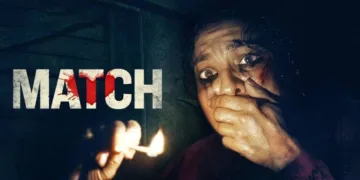





















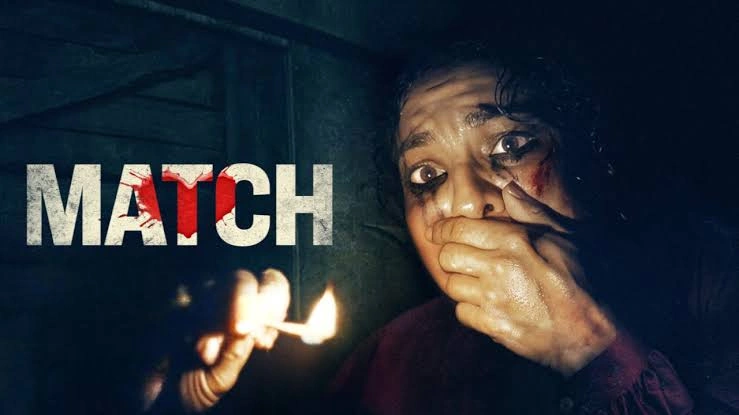

The most unsettling thing about online dating may be the amount of faith compressed into a profile picture. Match takes that tiny social contract and turns it into a trapdoor. Paola (Humberly González), approaching 30 after a string of lousy dates, sees something reassuring in Henry: clean-cut photos, kind eyes, a taste for old movies, polite messages. Their video call even seems to confirm that the man exists. The signal conveniently dies before confirmation becomes knowledge.
Danishka Esterhazy understands that Paola does not need to behave irrationally for the premise to work. She needs to behave optimistically. Henry claims his immune system makes restaurants risky and invites her to his house for dinner. Paola’s sister Maria (Shaeane Jimenez) hears this and reacts like someone with functioning survival instincts. Paola goes anyway.
The easy reading is that Match is another warning about strangers on dating apps. That feels too small. What the film actually attacks is delegated trust, the peculiar modern habit of letting an interface perform character references for people we have never met. Henry’s profile looks complete, so Paola unconsciously treats verification as finished. Call it algorithmic hospitality: the platform gets you through the door, then responsibility quietly changes hands. That door leads somewhere awful.
Mother Knows Worst
Lucille (Dianne Simpson) answering Henry’s door should end the evening. Instead, she explains that her son has stepped out, pours Paola wine, and wraps every suspicious detail in aggressive politeness. Paola keeps messaging Henry. Lucille keeps talking. The scene works because neither woman initially behaves like she is inside a horror film. One wants to avoid appearing rude. The other knows exactly how useful manners can be. Then the wine takes effect.
The real joke, if “joke” is still the correct word, is that Lucille has been writing Henry’s romantic messages herself. Luke Volker’s handsome bachelor is bait. The actual Henry, played by Jacques Adriaanse, is a physically deformed man whose mother has effectively built him a dating pipeline for abduction, sexual assault, and reproduction.
This is where Match leaves contemporary dating horror and wanders into the family pathology of The Texas Chain Saw Massacre. Technology changes. The household doesn’t. Lucille uses an app to facilitate something almost feudal: acquiring a woman for her son because she believes his desire creates an entitlement to another person’s body.
Also Read






Simpson plays this without seeking psychological respectability. Lucille fusses, smiles, encourages Henry, then scolds him when his violence becomes inconvenient. Her cheerfulness is worse than rage would have been. Rage admits disorder. Lucille considers all of this household management.
I initially thought that broadness weakened her menace. Then comes her exchange with Natalie (Nikita Faber), another potential victim whose own online presentation contains some creative editing. Simpson turns the conversation into social comedy without making Lucille any safer. The performance works precisely because she never separates monstrous behavior from mundane etiquette.
Survival Has Bad Architecture
Once Paola wakes after being drugged, the film becomes a sustained escape problem. The old house matters here. Corridors redirect her, rooms conceal evidence of previous violence, and the elevator becomes a mechanical bottleneck between floors. Esterhazy repeatedly frames Paola with walls, doorways, or Henry’s body taking up much of the available space. The architecture keeps converting movement into negotiation.
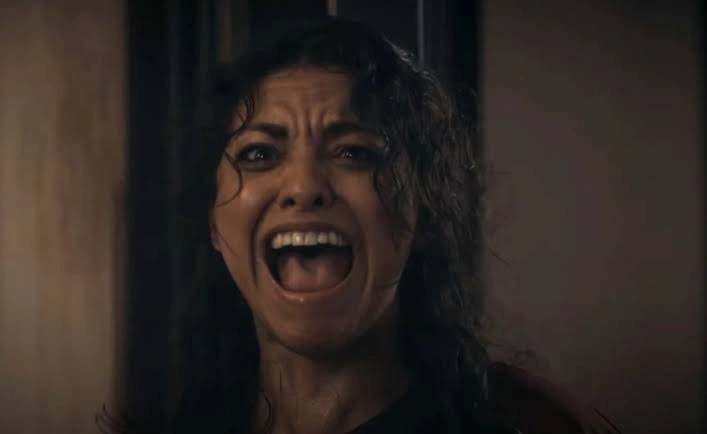
González is strongest after Paola stops expecting anyone in the house to behave rationally. Her repeated escape attempts have a physical desperation that the earlier dating scenes deliberately lack. She scrambles, hides, searches for exits, and absorbs increasingly grotesque information about Henry and Lucille without turning into a generic action heroine.
The screenplay occasionally cheats on her behalf in the opposite direction. Paola overlooks enough warning signs before being drugged that her trusting nature begins to resemble structural necessity. Maria warned her. Henry’s private-home invitation was already questionable. Lucille answering the door should have finished the argument. Horror characters are allowed bad decisions, of course. Three or four consecutive bad decisions start to look like unpaid screenwriters moving furniture.
Maria helps correct that imbalance. The sisters’ concern for their father’s upcoming surgery gives Paola an external life that Lucille cannot easily erase. When Paola disappears, Maria has a concrete reason to recognize that something is wrong rather than accepting a convenient excuse.
The Flesh Behind the Profile
Esterhazy saves much of the film’s nastiest material for its practical effects. Henry’s body is presented with tactile ugliness, while later attacks lean into blood, mutilation, and physical damage rather than clean digital spectacle. The violence looks unpleasant to touch. That matters.
There is also a conceptual rhyme between the effects and the premise. Online profiles smooth people into selectable images. The house does the reverse. Everything becomes bodily: drugged wine, sweat, wounds, sex, reproduction, blood. Paola enters through a polished digital representation and ends up trapped among flesh that refuses abstraction.
The film pushes that idea into attempted rape, incestuous implications, masturbation, reproductive obsession, and a grotesque sexual design for Henry. Some scenes flirt with exploitation for exploitation’s sake. I am still unsure every provocation earns its place. Yet sanding those scenes down would create a stranger problem, because Lucille’s entire worldview depends upon converting another woman’s body into family property.
Jon and Al Kaplan’s script keeps allowing black comedy to leak through the horror, especially whenever Lucille treats kidnapping as matchmaking logistics. Esterhazy lets those jokes breathe briefly before returning to Paola’s terror. The tonal collision can be tasteless. It can also be wickedly precise. Dating apps promise compatibility through data. Lucille simply takes the promise literally, then removes consent from the equation.
Match premiered on October 3, 2025, and is available for streaming as a Tubi Original. The horror-thriller follows a young woman named Paola who meets a charismatic suitor through a dating app and agrees to a first date at his home, only to find herself trapped inside a house harboring terrifying secrets.
Where to Watch Match (2025) Online

Full Credits
Title: Match
Distributor: Tubi, Blue Ice Africa
Release date: October 3, 2025
Rating: TV-MA / Unrated
Running time: 1 hour 39 minutes
Director: Danishka Esterhazy
Writers: Al Kaplan, Jon Kaplan
Producers and Executive Producers: Lance Samuels, Daniel Iron, Steven St. Arnaud
Cast: Humberly González, Jacques Adriaanse, Dianne Simpson, Shaeane Jimenez, Luke Volker, Alex McGregor
Director of Photography (Cinematographer): Trevor Calverley
Editors: Brett Anstey
Composer: Al Kaplan, Jon Kaplan
The Review
Match
Match turns the dating algorithm into a family recruitment service, which is funny until Lucille drugs Paola and the joke acquires teeth. Danishka Esterhazy gets considerable mileage from that collision between technological impersonation and very old forms of entitlement. Call it algorithmic hospitality: the app gets you through the door, then somebody else decides what you are there for. Dianne Simpson makes Lucille horrifyingly cheerful, while the practical gore gives the final escape attempts their nasty physical weight. Paola occasionally survives questionable writing before she can start surviving Henry, but the film’s committed ugliness has purpose.
PROS
- Dianne Simpson’s gleefully vicious Lucille
- Grotesque practical effects
- Strong killer-family dynamic
- Sharp dating-app satire
- Claustrophobic house setting
CONS
- Paola ignores too many warnings
- Sexual material can tip into tastelessness
- Familiar catfishing setup
- Some escape beats stretch credibility