






















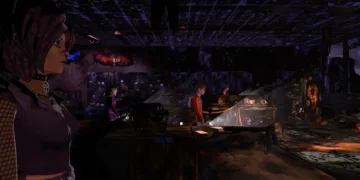





George Willcox’s script gives Jitters a nasty little premise: an AI horror game can study a player closely enough to turn buried fears into customized traps. Marc Zammit’s direction gets that idea across immediately through Tiffany, a Timebomb developer sprinting through red-lit subway tunnels while a rhyming clown voice needles her from somewhere she cannot see. A door appears on the tracks, closes before she reaches it, and the film cuts back to reality, where Taylor finds Tiffany dead in a chair with a VR headset still strapped to her face.
That transition is simple, but it explains the movie’s best trick. Virtual spaces are allowed to behave according to nightmare logic, then the consequences arrive in an ordinary room. The trouble starts once the film has to connect that hook to everything else it wants to be: police procedural, family drama, AI cautionary tale, psychological horror, and killer-clown showcase.
Case Files and Family Damage
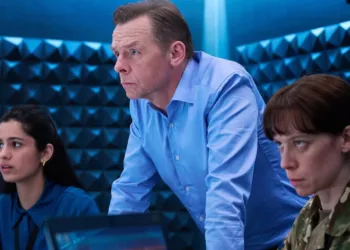
Detective Nick Collymore, played by Fabrizio Santino, takes Tiffany’s case after returning to police work in a limited capacity. His colleague and friend Sam Harding is already examining the livestreamed death of another Timebomb employee, who kills himself with a nail gun. Two strange deaths tied to the same company should give the investigation immediate momentum, yet Sam resists Nick’s suspicion that they are connected. The disagreement feels written to delay the plot rather than arising from what either detective knows.
Small continuity problems hurt that side of the film too. Nick’s later account of Taylor finding Tiffany does not fully match what we have seen, with no clear reason for Taylor or Nick to alter the story. The procedural is asking us to pay attention to clues while occasionally misplacing its own.
Oddly, Nick’s home life fares better. He is separated from Julia and shares custody of their daughter Izzy, whose interest in online gaming turns his professional fear into a parental one. Chloe Hews gives Izzy an easy warmth, and the scenes between her, Santino, and Lauren Budd have a gentleness missing from the interrogation rooms. Santino can push Nick’s distress too hard in some scenes, yet his quieter concern around Izzy lands because the relationship gives him something specific to protect.
The Clown in the Code
The rules behind Jitters are much stronger than the explanation of Jitters himself. Players are confronted with riddles built from their deepest fears. Admit the truth, solve the puzzle, and survival remains possible. Run from it, and the system closes in. That design gives the horror a psychological structure: the victim’s own avoidance becomes part of the trap.
Also Read





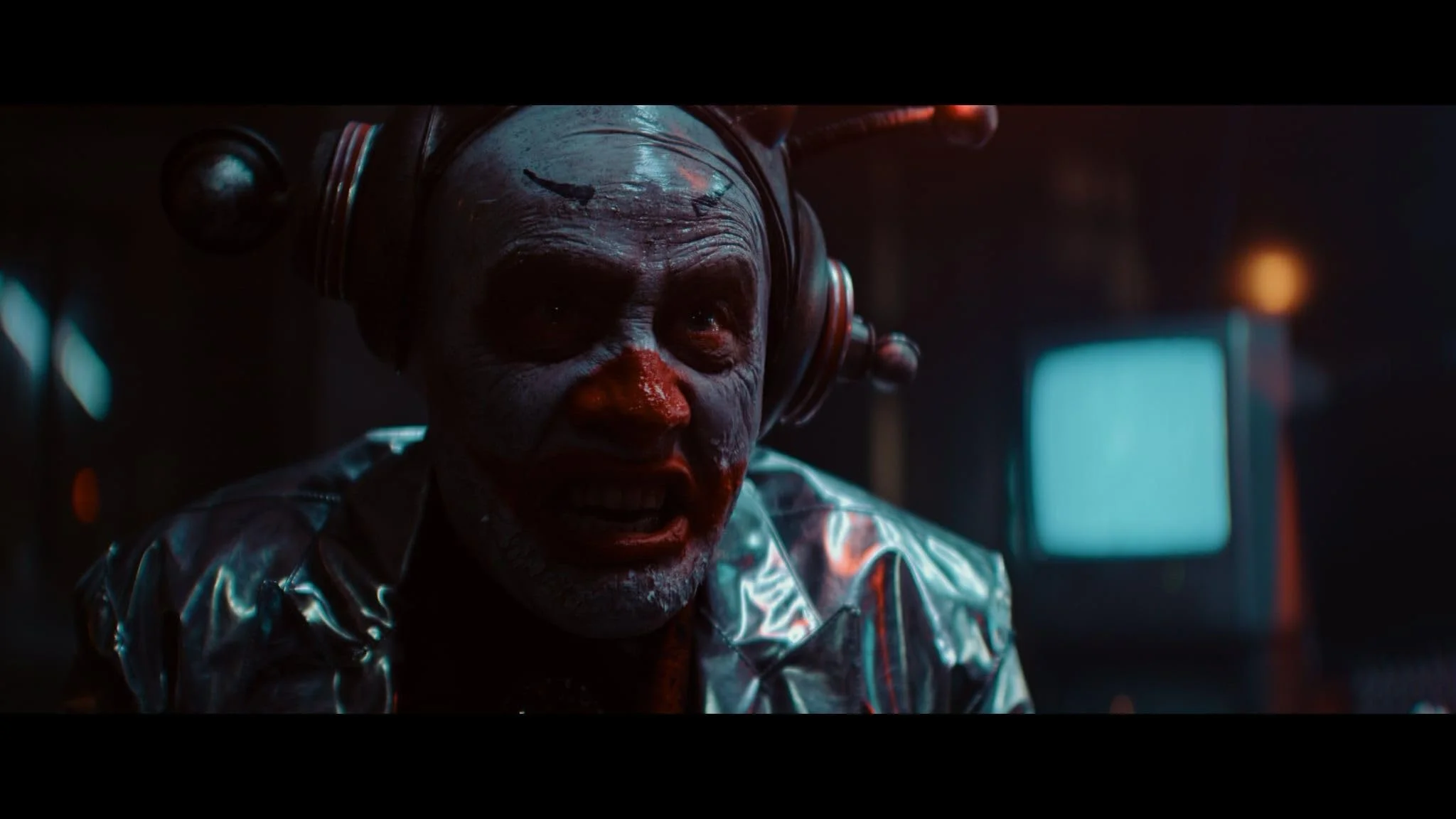
Zammit finds some striking imagery inside those encounters. The void-like digital spaces feel detached from ordinary geography, and one arm-scratching effect gives the virtual threat a physical nastiness the film could have used more often. These sequences are where the lower budget becomes less important because the unreality is part of the point.
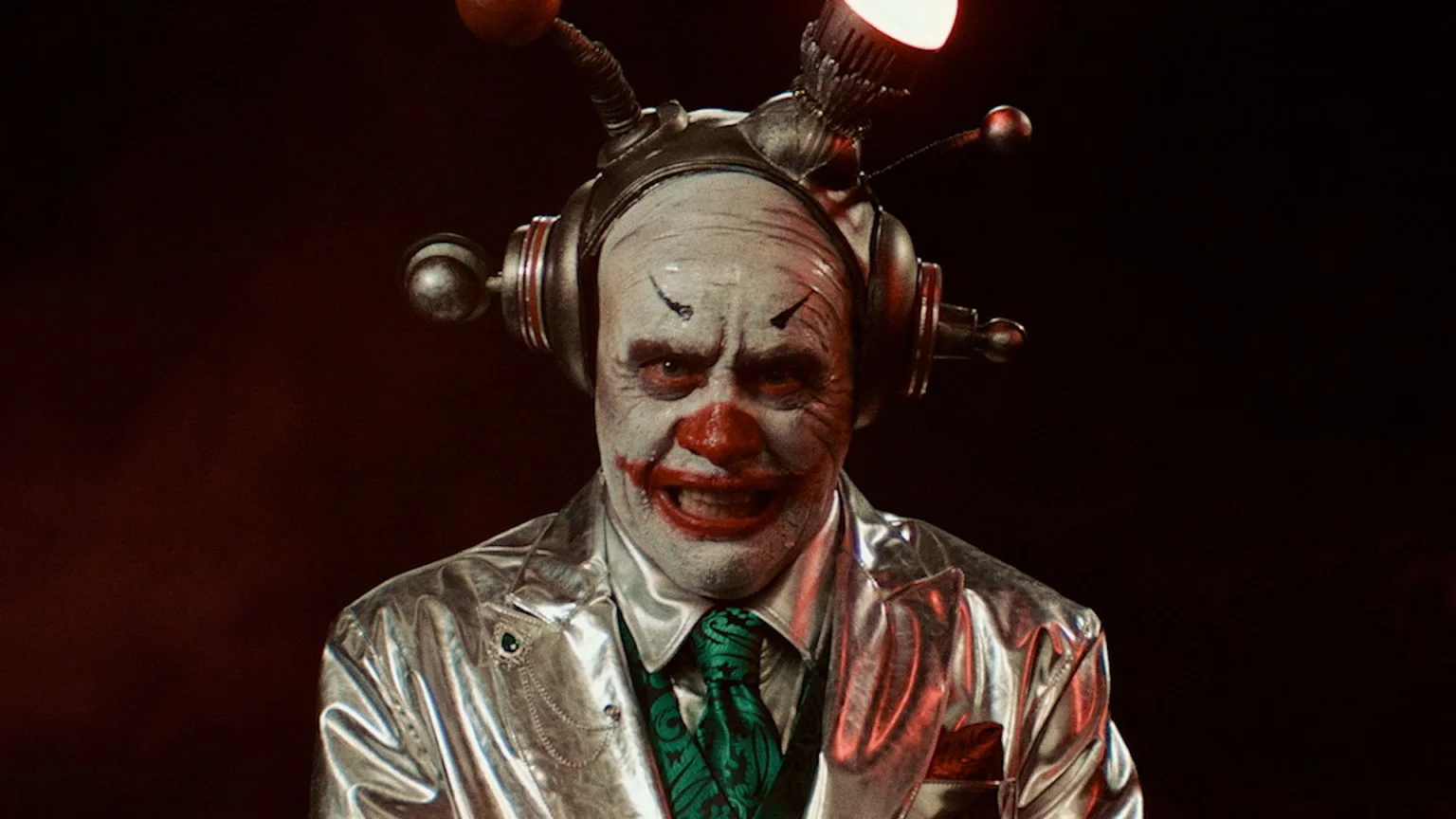
Daniel Jordan plays Jitters with broad gestures, sing-song taunts, and full pantomime energy. He clearly understands the assignment. The screenplay gives him far less to work with. Why does this AI choose a clown? Why does every player appear to encounter the same avatar? What does it actually want from forcing users to confess their fears? Even a line in which Jitters describes his eyes as soulless clashes with Jordan’s performance, since his gaze is practically sparkling with malicious delight. The character has presence, but the mythology around him stays thin.
Too Many Signals
The movie keeps switching frequencies. One scene is about Nick’s strained marriage, the next about Timebomb’s technology, then Jitters appears to issue another riddle, then the story returns to detective work. Editing can create energy through contrast, but here the shifts often reset tension before a sequence has gathered enough force. I kept waiting for the police investigation and the virtual horror to start feeding each other instead of taking turns.
A few performance and world-building choices make that fragmentation harder to ignore. Santino, a British actor, gives Nick an American accent in a London setting populated by British colleagues, yet the script never addresses why. Guillaume Rivaud’s Ben Casey carries a pronounced French accent that receives the same silence. Neither choice is fatal, but both draw attention to details the film seems uninterested in explaining.
Linda-Jean Barry gets one of the cleaner exposition passages as a doctor, largely because she gives the information a calm authority instead of treating it like a data dump. That scene points toward the version of Jitters that works best: one clear idea, one performer given room to sell it, and no competing subplot arriving before the moment can settle.
Jitters debuted on digital platforms on March 17, 2026. The horror film follows a detective investigating a suspicious death that pulls him into a terrifying, AI-driven video game.
Where to Watch Jitters (2026) Online





Full Credits
Title: Jitters
Distributor: Trinity Content Partners
Release date: March 17, 2026
Running time: 1 hour 35 minutes
Director: Marc Zammit
Writers: George Willcox
Producers and Executive Producers: James Fuller, Fabrizio Santino, Marc Zammit
Cast: Fabrizio Santino, Anto Sharp, Daniel Jordan, Boo Miller, Jess Impiazzi, Lauren Budd, Russell Shaw
The Review
Jitters
Jitters has a smart horror engine in the idea of an AI game turning private fears into deadly riddles, and its best scenes are the ones that let that concept breathe inside the virtual spaces. Daniel Jordan gives the clown a knowingly theatrical presence, while Chloe Hews and the family material provide unexpected emotional weight. The trouble is that the police investigation, domestic drama, AI commentary, and killer-clown horror keep competing for attention, leaving the central threat underexplained and rarely frightening. There is a sharper movie buried inside this one.
PROS
- Strong AI-horror premise
- Inventive virtual environments
- Committed Daniel Jordan performance
- Effective family scenes
- Memorable practical effects
CONS
- Underdeveloped villain motivation
- Weak procedural logic
- Uneven performances
- Familiar detective clichés
- Limited genuine scares