































Architect Life presents its core gameplay through a clear and compelling loop in its Career Mode. Each project begins with a client brief, which functions as a narrative prompt and a set of rules for the player. These specifications, ranging from budget limits and total floor space to specific room adjacencies, create a design puzzle to be solved.
The player is not just building a house; they are interpreting a client’s needs and translating them into a functional space. The design process itself happens on a clean, virtual drawing board where you lay out floor plans, walls, and roofing. The game wisely abstracts away the complexities of real-world architecture.
There is no need to consider plumbing, electrical wiring, or structural load, a design choice that keeps the focus squarely on creative expression and spatial reasoning. This accessibility is key to its appeal. Once the blueprint is complete, the player moves to interior finishes, selecting flooring, wall coverings, and furniture to satisfy the client’s checklist.
The ultimate reward is watching a time-lapse of your creation being constructed, followed by a first-person walkthrough of the finished building. This final reveal provides a powerful sense of accomplishment, letting you inhabit the space you envisioned.
Structured Design and Hollow Decisions
The game offers two distinct paths that cater to different player motivations. Career Mode provides a guided experience, presenting a series of contracts with progressively demanding requirements. This mode operates like a linear quest line, offering satisfaction through the methodical completion of tasks and the mastery of its systems.
It appeals to players who enjoy working toward clear goals. In contrast, Free Mode is a pure sandbox, unshackling you from the constraints of clients and budgets. This is where the game’s creative potential is meant to shine, allowing for the construction of elaborate dream homes without compromise, much like the building-focused modes in The Sims.
After a design is finalized in either mode, the game introduces a superficial management phase. You select contractors and respond to random events during the build, like weather delays. These moments present the illusion of meaningful choice, but the decisions lack any real consequence.
Choosing the cheapest contractor is almost always the correct answer, and the problems that arise have a negligible impact on the project’s timeline or budget. This makes the entire construction management system feel like a missed opportunity for strategic depth.
A Flawed but Functional Interface
The hands-on experience of building in Architect Life is a mix of commendable design and frustrating quirks. A significant achievement is its implementation of console controls. The developers have successfully translated a genre that heavily relies on a mouse and keyboard to a controller, making the act of designing feel surprisingly natural and intuitive on a gamepad.
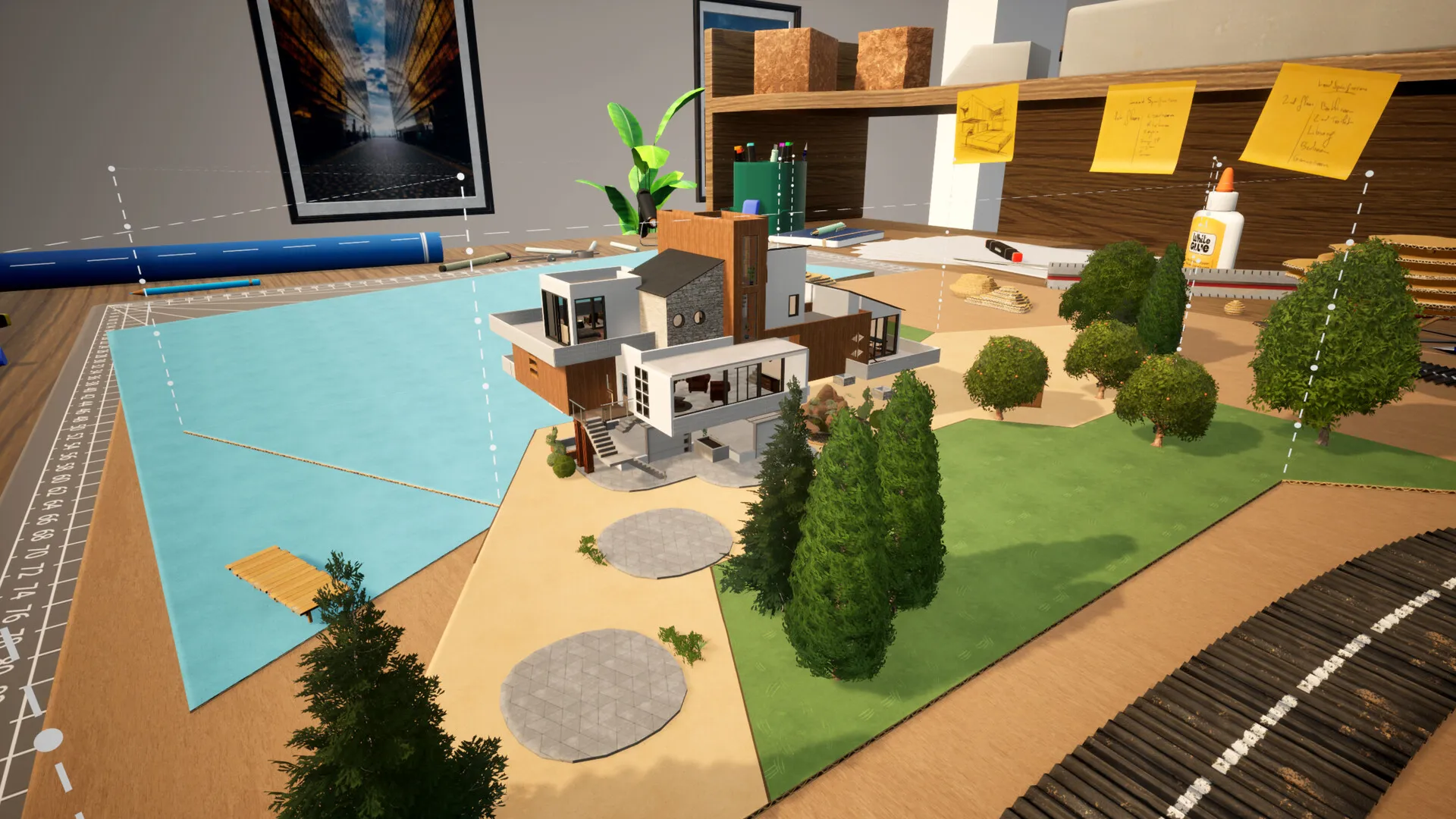
This technical success makes the game highly accessible to a console audience. Before diving in, the tutorial is essential. It effectively teaches the control scheme and menu navigation, and skipping it would likely lead to a frustrating start. However, the interface itself is not without its flaws.
The menu organization is often illogical, creating unnecessary friction. For instance, finding essential kitchen items like countertops or a refrigerator requires digging through the “Decor” category instead of a dedicated “Kitchen” or “Furniture” section. This kind of counter-intuitive design interrupts the creative flow, forcing you to memorize the system’s oddities.
An Incomplete Structure
For a game centered on creativity, Architect Life imposes some severe limitations that undermine its foundation. The catalog of furniture and decorative items is remarkably sparse. The frustration of being limited to a single model of wall painting, with only a few different images, is a perfect example of how the lack of variety leads to repetitive and uninspired interiors.
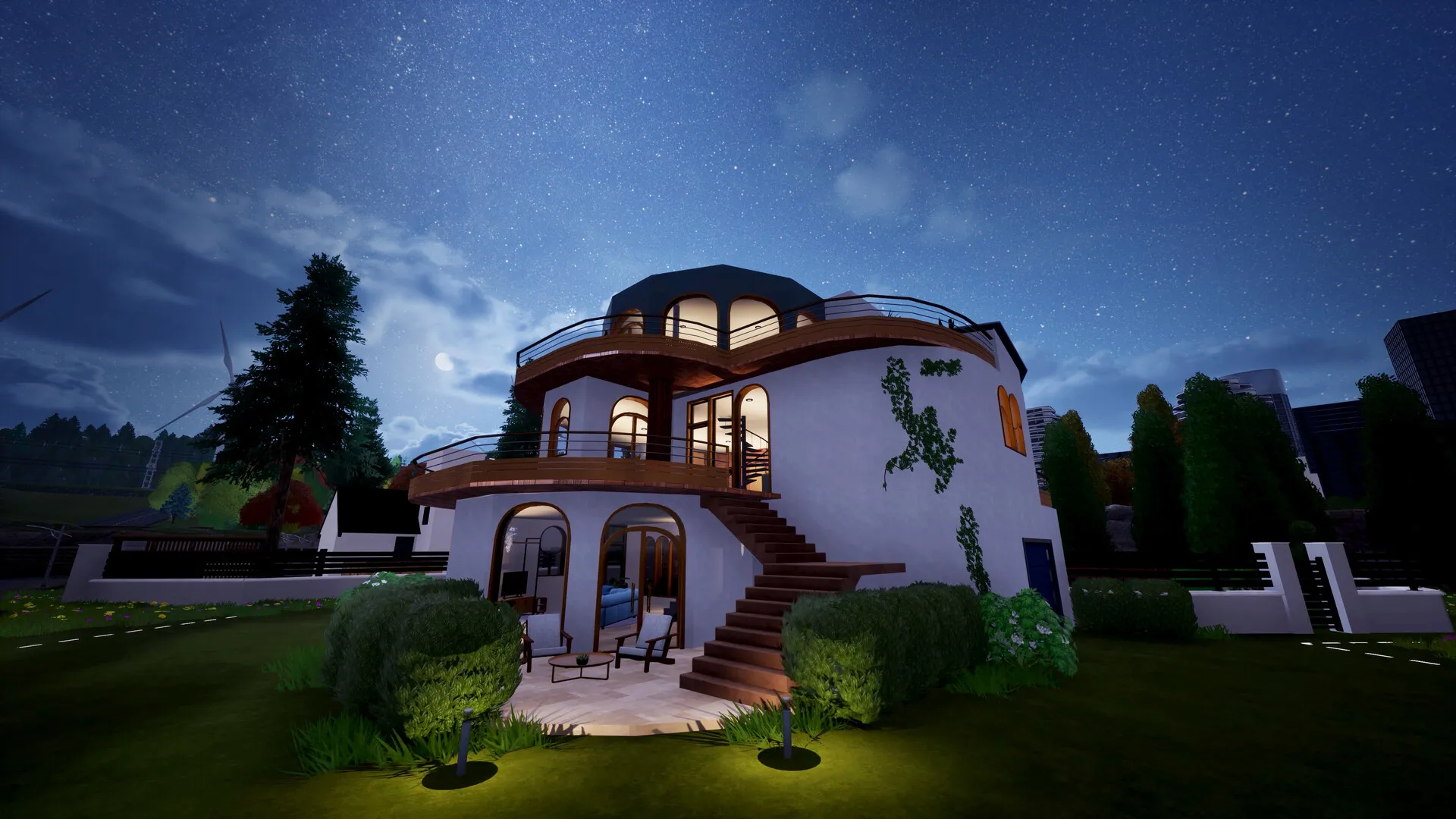
This scarcity of creative tools is made worse by an aggressive approach to paid content. Many desirable items needed to build thematic rooms, such as a home cinema or a games room, are locked behind a day-one DLC paywall. This business decision feels particularly egregious, as it withholds parts of the core experience and punishes players who don’t invest further.
Compared to other building games, the architectural system also feels underdeveloped. The inability to create curved walls, sculpt terrain, or lay foundations makes the toolset feel rigid and dated. While the game provides a competent framework for house design, these significant omissions and content restrictions leave the experience feeling fundamentally incomplete.
The Review
Architect Life A House Design Simulator
Architect Life provides a competent framework for a design simulator, with a satisfying core loop and excellent console controls that make it remarkably accessible. However, this solid foundation is compromised by an incomplete structure. The experience is severely hampered by a sparse item catalog, shallow management systems that offer no meaningful choice, and an aggressive DLC model that walls off essential creative tools. It’s a project with good bones but one that feels far from finished, best suited for those desperate for a design outlet who can tolerate the significant flaws.
PROS
- The core gameplay of designing houses to meet client specs is engaging.
- Intuitive and smooth controls, especially on a console gamepad.
- Accessible design mechanics make it easy to start building quickly.
CONS
- A very limited selection of furniture and decorative items.
- Key content and creative tools are locked behind a paywall from launch.
- Management decisions during construction are superficial and lack impact.
- Missing advanced building options like curved walls or terrain editing.