




























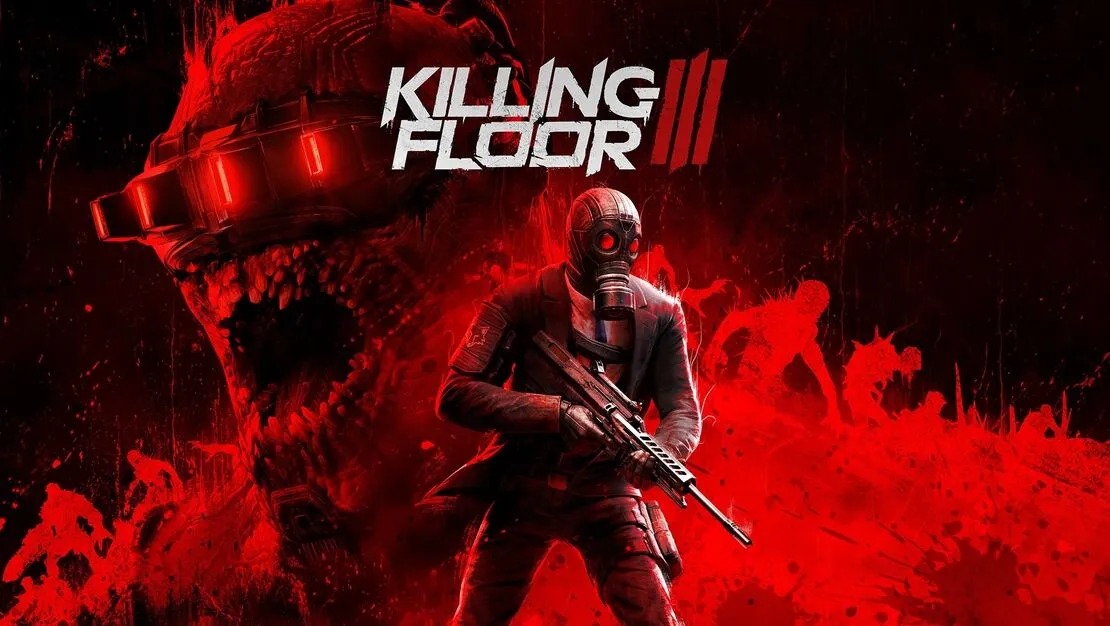

Killing Floor 3 makes a bold leap, catapulting its signature Zed-slaying action from a familiar contemporary world into the far future of 2091. The grungy, makeshift survivalism of the past is gone, replaced by a neon-drenched cyberpunk aesthetic.
Players are no longer just survivors; they are members of Nightfall, a rogue paramilitary group fighting against the monolithic Horzine corporation and its endlessly replenishing armies of biomechanical monstrosities. This thematic shift recasts the entire conflict. The world is not just ending; it has been remade by corporate avarice, and your squad is a wrench in the gears of its horrific new ecosystem.
Beneath the chrome and circuitry, the game’s heart remains a brutally efficient cooperative shooter. It is a game about holding a position with your squad, coordinating fire, and using precision gunplay to dismantle waves of enemies before they can overwhelm you.
The narrative stakes have changed, but the core challenge is timeless: four players against a legion of the damned, with only skill and teamwork standing between them and oblivion. This new setting asks a critical question: what does survival look like in a future that is already lost?
The Heart of the Carnage: Combat and Core Loop
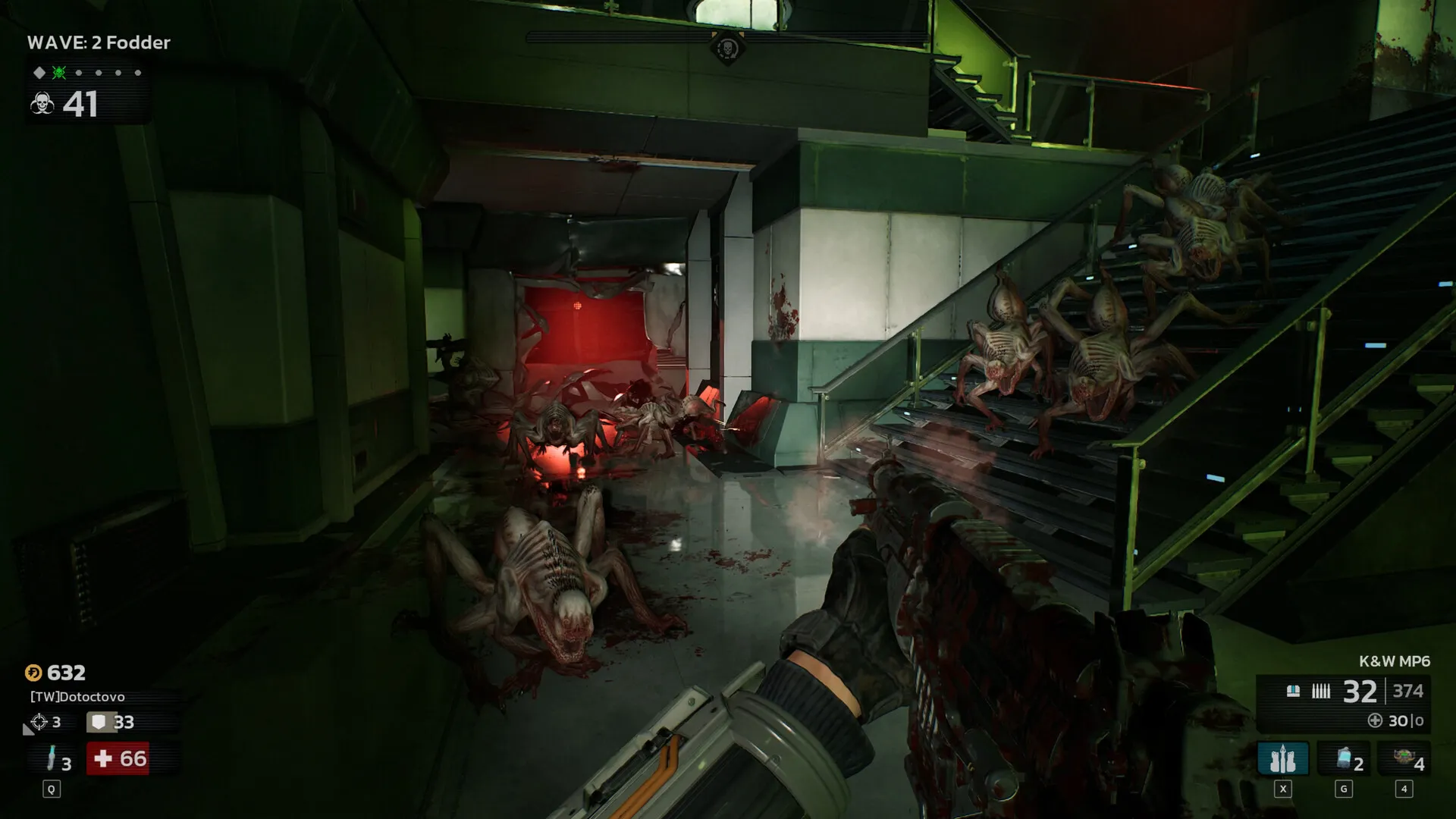
At its mechanical center, Killing Floor 3 operates on a familiar and ruthlessly effective loop. Each match drops your squad into a hostile environment with a single mandate: survive five waves of escalating Zed aggression. The pacing here is deliberate, building from a scattered handful of shambling Clots in the first wave to a torrential, screen-filling flood of elite monstrosities by the fifth.
This structure creates a tense, rising rhythm. The brief intermissions at the Trader Pod are not moments of rest but frantic, thirty-second scrambles for ammo and armor, filled with shouted requests and strategic planning. Unlike the linear, point-A-to-point-B progression of a game like Left 4 Dead, this loop is about fortification and endurance, turning every map into a desperate last stand.
The act of combat itself is a study in contrasts. The weapon handling is superb, with each firearm communicating a satisfying sense of weight and impact through sharp recoil animations and visceral feedback. High-caliber rounds tear through Zeds with authority. Yet, this grounded gunplay feels strangely disconnected from the player’s own movement.
New abilities like a quick dash and a power-slide give you high mobility, but your character glides across the environment with a frictionless quality that lacks a sense of inertia. It feels less like a soldier repositioning under fire and more like a floating camera in a fast-paced arena shooter. This dissonance creates a slight but persistent disconnect from the on-screen action.
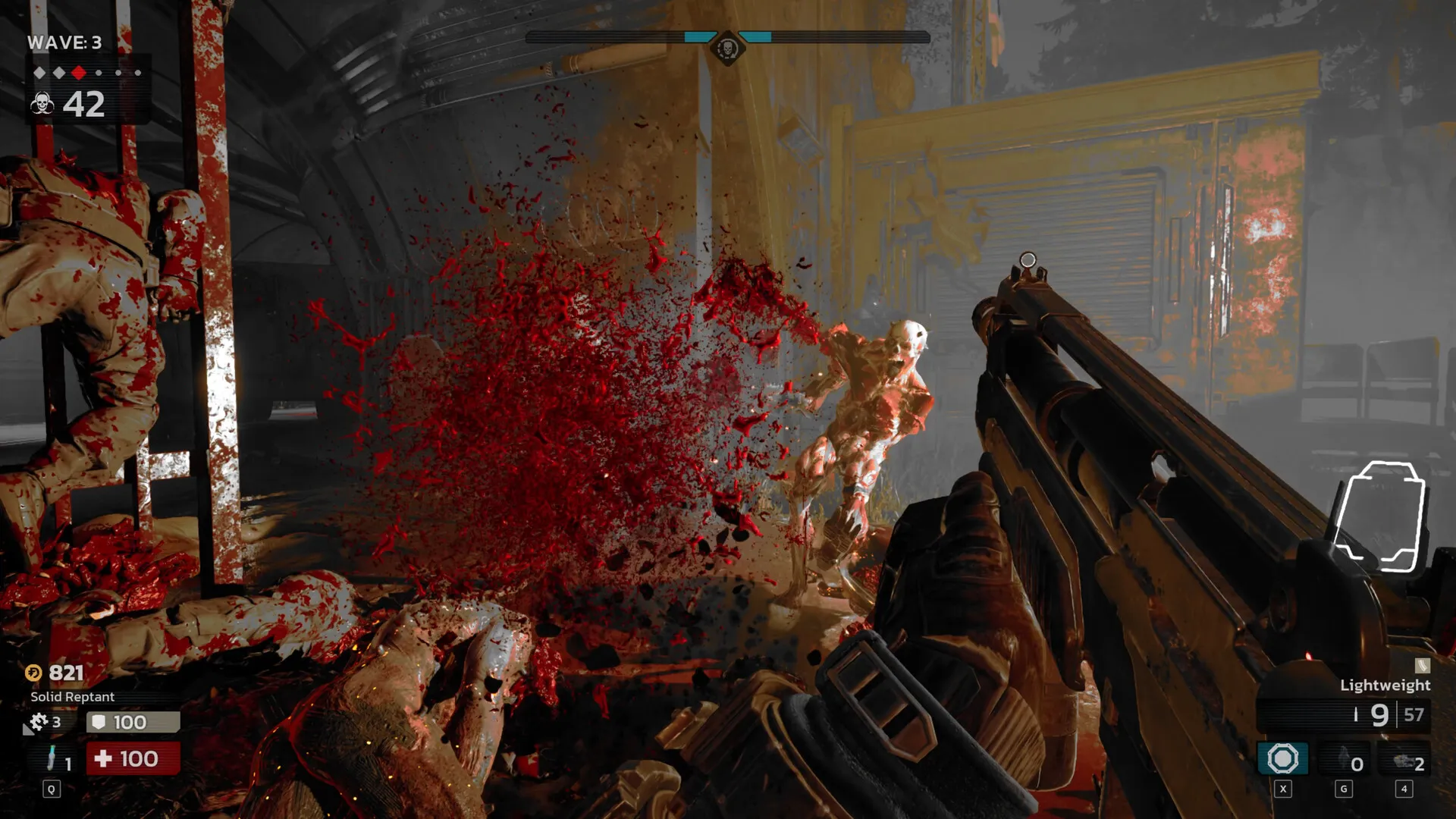
This chaos is rendered in spectacular detail by the new M.E.A.T. system, a gore engine that turns dismemberment into a potent tactical tool. This is not just for show; it is a core mechanic. Blowing the cannon arm off a charging Husk neutralizes its most dangerous attack, while tearing the legs off a lightning-fast Stalker turns it into a harmless crawler.
This introduces a layer of battlefield triage into every encounter: do you aim for the head for a quick kill, or strategically dismantle a larger threat to buy your team precious seconds? The game’s signature Zed Time mechanic also returns, bathing the screen in a stylized monochromatic red for moments of slow-motion gunplay.
Its implementation, however, feels arbitrary. The mechanic activates automatically for the whole team based on a shared meter, removing player agency and often triggering at inopportune moments. It squanders the potential for a player-activated, strategic resource that could turn the tide of a losing battle.
Nightfall’s Roster: Specialists & Progression
Player identity in Killing Floor 3 is channeled through its six distinct Specialists, each offering a unique approach to the Zed apocalypse. The Commando acts as the squad’s anchor, laying down sustained fire and extending Zed Time for the team. The Firebug specializes in area denial, coating the ground in flames to control the flow of enemies.
The Engineer is the master of defense, fortifying positions with automated sentries. The Medic is the crucial backbone, keeping the team alive with healing darts fired from their SMG. At the extremes are the Sharpshooter, a methodical killer who decimates elite targets from afar, and the Ninja, a high-risk, high-reward melee fighter who thrives in the thick of the horde.
This clear division of labor encourages thinking as a unit, echoing the specialist interplay of team shooters like Overwatch but applied to a tense, cooperative context. A good team leverages this synergy instinctively: an Engineer’s turret pins down weaker Zeds while the Sharpshooter lines up a shot on a distant Siren.
Progression is a long-term investment in these roles. With a level cap of 30 for each Specialist, players unlock a choice between new passive perks every two levels. This frequent cadence provides a steady stream of small but meaningful enhancements, allowing you to gradually tailor a class to your preferred style—for example, choosing a perk that grants the Medic’s grenades a damaging effect.
The drawback is the significant time commitment required to fully realize the potential of even one Specialist. It is a system designed for dedication, but it can feel like a daunting grind. A more immediate and baffling limitation is the decision to bind these classes to specific character models.
In an era where player expression is paramount, being unable to play your favorite character with your preferred class feels like a strange step backward. If your team needs a Medic but you prefer the Commando’s design and voice lines, you are forced to choose between aesthetics and team strategy, a restriction that needlessly curtails player freedom.
An Arsenal Undermined: The Weapon System
For a shooter, the tactile feel of its weapons is paramount, and Killing Floor 3 delivers an arsenal of 30 firearms that are immensely satisfying to operate. Each shotgun blast has weight, and each submachine gun spits fire with vigor.
The problem is not with the guns themselves, but with the conflicting systems that govern their acquisition and improvement. The game features two parallel progression tracks: a persistent, out-of-match upgrade system in the Armory hub and a temporary, in-match economy at the Trader Pod. This design choice inadvertently creates a logical flaw that sabotages the classic horde-mode power fantasy.
Here is the central issue: using crafting materials earned over dozens of matches, you can permanently upgrade your basic, grey-tier starting weapons. A fully-modded Tier-1 assault rifle often proves more effective and ammo-efficient than the expensive, purple-tier weapons you are meant to save up for during a match.
Imagine you have painstakingly saved your Dosh for four waves, eyeing the exotic Tier-4 plasma cannon. You finally purchase it, only to find that your trusty, fully-upgraded starter weapon still clears common Zeds faster and has much cheaper ammunition. This creates a bizarre economic disincentive that breaks the in-match progression loop.
The excitement of finally affording a top-tier gun is replaced by the logical, yet profoundly unexciting, decision to stick with what you brought. This flattens the excitement curve of a match. The feeling of “getting stronger” within a single session is a cornerstone of the genre. Killing Floor 3’s system removes that anticipation, discouraging experimentation and robbing the mid-to-late stages of their sense of escalating power. It is a fundamental design choice that feels at odds with the game’s own goals.
Enemies, Bosses, and Battlegrounds
The adversaries of Killing Floor 3 are a gruesome mix of returning favorites and new cybernetic horrors. The 13 enemy types feature familiar silhouettes like the bloated, acid-spewing Bloat and the shrieking Siren, now sporting grim technological enhancements that make them more resilient and dangerous.

The roster is designed to force tactical adaptation. The terrifying, chainsaw-wielding Scrake demands the entire team’s focused fire, while the cloaking ability of the Stalker introduces an element of paranoia, punishing players who fail to check their corners. The constant pressure from these varied threats ensures that no single strategy remains effective for long.
This design philosophy seems to falter when it comes to boss encounters. The two primary bosses, the charging Impaler and the insectoid Queen Crawler, present formidable challenges on their own. However, the game’s approach to scaling difficulty in co-op is clumsy and unimaginative.
Instead of making a single boss entity more powerful, faster, or imbued with new attacks, the game may simply spawn multiple copies. Facing two or three Impalers at once transforms what should be a structured, tactical fight into a chaotic scramble for survival. Kiting one boss is a valid strategy; kiting three is often impossible, leading to frustrating wipes that feel cheap rather than instructive. It turns a potential skill-check into a pure gear-check.
The eight launch maps provide a decent variety of combat arenas, from the misty, atmospheric forests of Radar Station to the tight, vertical corridors of the R&D Lab. Each map contains unique tactical elements, such as automated turrets on Convoy or ziplines that offer a quick escape.
Yet, many of them feel more like sterile arenas than lived-in spaces. They lack a sense of environmental storytelling. The flow of a map is functional, with clear sightlines and chokepoints, but they rarely feel like real places that have been tragically overrun.
Presentation and Performance
Built on Unreal Engine 5, Killing Floor 3 is a visually impressive game when it is allowed to be. On high settings, the cyberpunk aesthetic is striking, with detailed character models and environments that gleam with futuristic polish. The contrast between the sleek, corporate architecture and the visceral, organic gore of a Zed explosion can be stunning.

The game thrives on this spectacle, which makes its technical shortcomings all the more apparent. Severe optimization issues mean that maintaining a stable frame rate requires a powerful machine, and performance degrades noticeably in larger co-op lobbies where the on-screen chaos is at its peak.
Stuttering is not just an annoyance; it is a gameplay impediment that causes missed headshots and failed dodges. This is compounded by specific bugs, like a recurring freeze when navigating the skills menu that forces a hard restart of the entire game.
The most significant presentational weakness, however, is the audio design. In a genre where sound is critical for immersion and situational awareness, the audio here feels remarkably weak and unfinished. The thunderous SCAR rifle from previous games is reduced to a flat, percussive tap. Guns lack the satisfying punch and echo that would ground them in the environment.
Zed screeches and growls are underwhelming, and a lack of crisp positional audio makes reacting to off-screen threats a guessing game rather than a skill. The visuals may paint a picture of a terrifying future, but the sound fails to make you believe it. The game at launch feels like a strong, if thin, foundation, but one that is marred by a lack of polish that gets in the way of its own potential.
The Review
Killing Floor 3
Killing Floor 3 offers a glimpse of greatness with its superb, visceral gunplay and tactical gore system. However, its brilliant core combat is undermined by a series of baffling design choices, most notably a broken weapon progression system that nullifies in-match rewards. Coupled with weak audio, technical instability, and a general lack of polish, the experience feels hollow. It has the foundation of a fantastic co-op shooter, but at launch, it is a game at war with its own best ideas, leaving a fun but deeply flawed experience.
PROS
- Visceral and satisfying gunplay.
- The M.E.A.T. gore system adds a tactical layer to combat.
- Distinct specialist classes encourage team synergy.
- Frequent perk unlocks provide a steady sense of character growth.
CONS
- Flawed weapon progression system devalues in-match rewards.
- Underwhelming and flat audio design.
- Significant performance issues and bugs.
- Perks are restrictively locked to specific characters.
- Unimaginative boss scaling on higher difficulties.